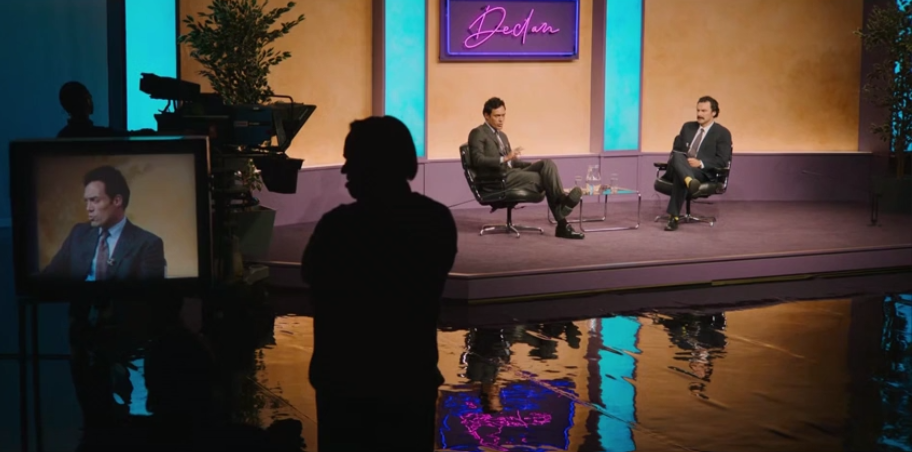
Welcome to another exciting installment of our “Language Through Films” series! If you’re passionate about boosting your English vocabulary while immersing yourself in captivating movie dialogues, you’re in for a treat. In Rival S01E04, a treasure trove of expressive language awaits. Today, we’ll explore 15 essential vocabulary words extracted directly from this episode, providing you with a deep, contextual understanding of each term. Plus, discover how our innovative language learning extension, FunFluen, can supercharge your learning journey!
Vocabulary to Learn in This Article
- Silverware
- Second fiddle
- Climbing the greasy pole
- Asshole
- Cunt
- Bellend
- Confrontational
- Hooligan
- Rake
- Cuckoos
- Thrilling
- Prowess
- Misery
- Sabotage
- Rattling
1. Silverware
Original Movie Context
- Dialogue: “You still have all my silverware.”
- Scene Description: During a light-hearted conversation about borrowing utensils, one character realizes they still possess another’s dining utensils.
- Emotional Tone: Playful and slightly apologetic.
Word Breakdown
- Definition: Utensils used for eating, such as forks, knives, and spoons.
- Part of Speech: Noun
- Pronunciation: /ˈsɪlvərˌwɛr/
- Etymology: Derived from “silver” + “ware,” referring to metal utensils traditionally made of silver.
- Example Sentences:
- “We bought new silverware for the holiday dinner.”
- “She inherited her grandmother’s antique silverware collection.”
Contextual Usage
- Formal Speech: “The restaurant offers premium silverware to enhance your dining experience.”
- Informal Speech: “Don’t forget to bring your silverware to the picnic.”
- Common Collocations: Silverware set, antique silverware, stainless silverware.
Learning Insights
- Pronunciation Tips: Emphasize the first syllable: SIL-verware.
- Common Mistakes: Mixing up “silverware” with “cutlery,” though they are synonymous.
- Cultural Nuances: In formal settings, silverware often refers to higher-quality utensils.
- Memorization Trick: Imagine a table set with shining silver utensils to remember the term.
Exploring vocabulary through movies is a delightful way to enhance your language skills, and our series on Language Through Films makes this journey enjoyable.
2. Second Fiddle
Original Movie Context
- Dialogue: “Still, at least you’re not playing second fiddle to a talking car anymore.”
- Scene Description: A character comments on another’s career progression, implying they’ve moved from a lesser role.
- Emotional Tone: Teasing with a hint of admiration.
Word Breakdown
- Definition: To be in a subordinate or less important position compared to someone else.
- Part of Speech: Idiom (Noun Phrase)
- Pronunciation: /ˌsɛkənd ˈfɪdl/
- Etymology: Originates from the world of orchestras, where the second violinist plays a supporting role to the first.
- Example Sentences:
- “She used to feel like she was playing second fiddle to her more outgoing sister.”
- “In the company, he’s always playing second fiddle to the CEO.”
Contextual Usage
- Formal Speech: “Junior staff members often play second fiddle to senior executives.”
- Informal Speech: “Don’t worry about playing second fiddle; your work is just as valuable.”
- Common Collocations: Playing second fiddle, second fiddle position, not playing second fiddle.
Learning Insights
- Pronunciation Tips: Stress both words equally: second FIDDLE.
- Common Mistakes: Misusing the phrase in contexts unrelated to hierarchy or support.
- Cultural Nuances: Commonly used in both British and American English to describe hierarchical relationships.
- Memorization Trick: Visualize a second violinist supporting the lead in an orchestra.
By immersing yourself in Language Through Films, you can naturally absorb new words and phrases without feeling overwhelmed.
3. Climbing the Greasy Pole
Original Movie Context
- Dialogue: “Climbing the greasy pole requires its own set of skills.”
- Scene Description: Characters discuss the challenges of advancing within a competitive environment.
- Emotional Tone: Cautionary with a touch of humor.
Word Breakdown
- Definition: Advancing in a career or hierarchy, often through unscrupulous means.
- Part of Speech: Idiom (Verb Phrase)
- Pronunciation: /ˈklaɪmɪŋ ðə ˈɡrisi poʊl/
- Etymology: A British idiom suggesting that climbing a greasy pole is difficult and slippery, symbolizing the challenges of upward mobility.
- Example Sentences:
- “He spent years climbing the greasy pole to become the managing director.”
- “Climbing the greasy pole in politics often requires strategic alliances.”
Contextual Usage
- Formal Speech: “Climbing the greasy pole in academia demands both excellence and networking.”
- Informal Speech: “She’s really climbing the greasy pole at her new job.”
- Common Collocations: Climbing the greasy pole, the greasy pole, up the greasy pole.
Learning Insights
- Pronunciation Tips: Break it down into syllables: climb-ing the grea-sy pole.
- Common Mistakes: Using it in contexts unrelated to career advancement.
- Cultural Nuances: More prevalent in British English, though understood in other English-speaking regions.
- Memorization Trick: Picture someone struggling to climb a slippery, greasy pole to reach the top.
Language Through Films offers a unique blend of entertainment and education, making learning English feel like an exciting adventure.
4. Asshole
Original Movie Context
- Dialogue: “He’s an asshole.”
- Scene Description: Characters express strong disapproval of someone’s behavior.
- Emotional Tone: Frustrated and critical.
Word Breakdown
- Definition: A rude or contemptible person.
- Part of Speech: Noun (Slang)
- Pronunciation: /ˈæsˌhoʊl/
- Etymology: Vulgar term of American origin, combining “ass” with “hole,” used to insult someone’s character.
- Example Sentences:
- “Don’t be an asshole; treat others with respect.”
- “She can’t stand him because he’s such an asshole.”
Contextual Usage
- Formal Speech: Generally avoided due to its offensive nature.
- Informal Speech: Commonly used among peers to express disdain.
- Common Collocations: Complete asshole, asshole behavior, asshole attitude.
Learning Insights
- Pronunciation Tips: Stress the first syllable: ASS-hole.
- Common Mistakes: Misusing it in formal contexts where it’s inappropriate.
- Cultural Nuances: Considered highly offensive; usage can lead to misunderstandings or conflicts.
- Memorization Trick: Remember it as a strong insult to describe someone very unpleasant.
Caution: This term is offensive and should be used sparingly and appropriately, understanding the cultural and social implications.

5. Cunt
Original Movie Context
- Dialogue: “Cunt.”
- Scene Description: A character uses the term as a strong insult during a heated moment.
- Emotional Tone: Extremely angry and derogatory.
Word Breakdown
- Definition: A highly offensive term used as an insult, referring vulgarly to female genitalia.
- Part of Speech: Noun (Slang)
- Pronunciation: /kʌnt/
- Etymology: An offensive British and Australian slang term with historical roots; considered one of the most derogatory words in English.
- Example Sentences:
- “He called her a cunt during their argument.”
- “Using the word ‘cunt’ can deeply offend others.”
Contextual Usage
- Formal Speech: Never used due to its extreme offensiveness.
- Informal Speech: Used in some British and Australian contexts among close peers, but still highly offensive.
- Common Collocations: Absolute cunt, cunt move, bloody cunt.
Learning Insights
- Pronunciation Tips: Short and sharp: cunt.
- Common Mistakes: Using it inappropriately in formal or mixed company settings.
- Cultural Nuances: In British and Australian English, it can be used casually among friends but remains offensive to many. Its usage can lead to severe social repercussions.
- Memorization Trick: Recognize it as one of the most offensive terms; better to avoid unless understanding its impact is essential.
Caution: This term is extremely offensive. Learners should understand its meaning and cultural weight but refrain from using it to avoid causing offense.
With Language Through Films, you can effortlessly expand your vocabulary while enjoying your favorite movie scenes.
6. Bellend
Original Movie Context
- Dialogue: “Ignore my sister. She’s a right bellend.”
- Scene Description: A character describes someone they consider foolish or obnoxious.
- Emotional Tone: Disdainful with a hint of humor.
Word Breakdown
- Definition: British slang for someone considered foolish, annoying, or contemptible.
- Part of Speech: Noun (Slang)
- Pronunciation: /ˈbɛlɛnd/
- Etymology: Combines “bell” (slang for the glans of the penis) with “end,” forming a derogatory term.
- Example Sentences:
- “Don’t listen to him; he’s a complete bellend.”
- “She couldn’t believe her friend turned into such a bellend.”
Contextual Usage
- Formal Speech: Never used; highly informal and offensive.
- Informal Speech: Common in British informal contexts among friends, but still derogatory.
- Common Collocations: Complete bellend, right bellend, total bellend.
Learning Insights
- Pronunciation Tips: Emphasize the first syllable: BEL-lend.
- Common Mistakes: Using it outside of British contexts where it’s not understood or deemed too offensive.
- Cultural Nuances: Predominantly British; can be humorous among friends but offensive otherwise.
- Memorization Trick: Picture someone acting foolishly and think of it as a harsh insult for such behavior.
Caution: Like “cunt,” “bellend” is offensive and should be used with caution, understanding its cultural context and potential to offend.
Embracing Language Through Films allows you to connect with characters and contexts, deepening your understanding of everyday English.
7. Confrontational
Original Movie Context
- Dialogue: “The show can get a bit confrontational.”
- Scene Description: Characters discuss the nature of their show, indicating it sometimes involves aggressive or argumentative interactions.
- Emotional Tone: Analytical and descriptive.
Word Breakdown
- Definition: Tending to deal with situations in an aggressive or argumentative manner.
- Part of Speech: Adjective
- Pronunciation: /kənˌfrʌnˈteɪʃənəl/
- Etymology: From the verb “confront” + suffix “-ational,” indicating a tendency or characteristic.
- Example Sentences:
- “His confrontational style often leads to heated debates.”
- “The meeting became confrontational when the topic of budget cuts was introduced.”
Contextual Usage
- Formal Speech: “Her confrontational approach was not well-received in the boardroom.”
- Informal Speech: “He’s so confrontational; he always starts arguments.”
- Common Collocations: Confrontational attitude, confrontational behavior, confrontational stance.
Learning Insights
- Pronunciation Tips: Stress the third syllable: con-frun-TA-tion-al.
- Common Mistakes: Misplacing the stress or confusing it with similar-sounding adjectives.
- Cultural Nuances: Being confrontational can be viewed negatively in many cultures, seen as aggressive or hostile.
- Memorization Trick: Link “confront” with “argument” to remember the meaning.
Our approach to Language Through Films ensures that each vocabulary word is presented in a meaningful and memorable way.
8. Hooligan
Original Movie Context
- Dialogue: “If you’re talking about football, then the hooligans are a tiny minority.”
- Scene Description: Characters discuss violent or unruly football fans, downplaying their prevalence.
- Emotional Tone: Defensive and explanatory.
Word Breakdown
- Definition: A violent or rowdy troublemaker, typically associated with sports fans.
- Part of Speech: Noun
- Pronunciation: /ˈhʊlɪɡən/
- Etymology: Originates from the surname “Hooligan,” associated with a notorious family of Irish origin in late 19th-century London, known for violent behavior.
- Example Sentences:
- “The police were deployed to control the hooligans at the match.”
- “Hooligans often cause disturbances during sports events.”
Contextual Usage
- Formal Speech: “The rise in hooliganism has prompted authorities to implement stricter regulations.”
- Informal Speech: “Some hooligans started a fight outside the stadium.”
- Common Collocations: Football hooligans, hooligan behavior, notorious hooligans.
Learning Insights
- Pronunciation Tips: Emphasize the first syllable: HOOL-i-gan.
- Common Mistakes: Mispronouncing the first syllable or confusing it with similar words like “hooliganism.”
- Cultural Nuances: More prevalent in British English, especially relating to soccer (football) fans.
- Memorization Trick: Associate “hooligan” with unruly sports fans to remember its meaning.
Language Through Films transforms passive watching into an interactive learning experience, perfect for motivated learners.
9. Rake
Original Movie Context
- Dialogue: “I’m a rake.”
- Scene Description: A character admits to being a morally unrestrained individual who indulges in vices.
- Emotional Tone: Confessional and self-critical.
Word Breakdown
- Definition: A man who is habituated to immoral conduct, particularly womanizing.
- Part of Speech: Noun
- Pronunciation: /reɪk/
- Etymology: From Old English “raca,” meaning “rogue” or “scoundrel.”
- Example Sentences:
- “He was known as a rake in high society, always chasing after new romances.”
- “Despite his charm, many considered him a rake due to his reckless behavior.”
Contextual Usage
- Formal Speech: “The historical novel portrays the protagonist as a rake struggling with his conscience.”
- Informal Speech: “Don’t be such a rake; respect her feelings.”
- Common Collocations: Rake lifestyle, notorious rake, charming rake.
Learning Insights
- Pronunciation Tips: Simple rhyme with “cake”: RAKE.
- Common Mistakes: Confusing it with “rake” (the garden tool) in different contexts.
- Cultural Nuances: Often used in historical or literary contexts to describe a specific type of male behavior.
- Memorization Trick: Link “rake” with “rogue” to remember its meaning related to immoral conduct.
Integrating Language Through Films into your study routine can make acquiring new vocabulary both effective and fun.

10. Cuckoos
Original Movie Context
- Dialogue: “Why shouldn’t I add a couple of cuckoos to that tally?”
- Scene Description: A character humorously refers to adding more birds to a hunting tally.
- Emotional Tone: Playful and light-hearted.
Word Breakdown
- Definition: Informal term for certain types of birds; colloquially, it can refer to foolish or crazy individuals.
- Part of Speech: Noun
- Pronunciation: /ˈkʌkoʊz/
- Etymology: Derived from the bird “cuckoo,” known for its distinct call and behavior.
- Example Sentences:
- “We spotted several cuckoos during our hike in the woods.”
- “He acts like a couple of cuckoos when he’s excited.”
Contextual Usage
- Formal Speech: “The cuckoos are known for their unique nesting behavior.”
- Informal Speech: “Stop acting like cuckoos and focus on the task.”
- Common Collocations: Cuckoo bird, cuckoo call, act like a cuckoo.
Learning Insights
- Pronunciation Tips: Plural form ends with a “z” sound: CUCK-ooz.
- Common Mistakes: Mispronouncing the plural or using it incorrectly to describe people.
- Cultural Nuances: While literally referring to birds, metaphorically it can be playful or mildly derogatory when describing people.
- Memorization Trick: Picture the cuckoo bird’s unique call to remember the word.
Through Language Through Films, you gain insights into cultural nuances and expressions that textbooks often overlook.
11. Thrilling
Original Movie Context
- Dialogue: “Thrilling stuff.”
- Scene Description: A character comments on an exciting or suspenseful event.
- Emotional Tone: Enthusiastic and impressed.
Word Breakdown
- Definition: Causing excitement and pleasure; exhilarating.
- Part of Speech: Adjective
- Pronunciation: /ˈθrɪlɪŋ/
- Etymology: Derived from the verb “thrill,” which originates from the Old English “þrille,” meaning “to pierce with a sharp instrument.”
- Example Sentences:
- “The roller coaster ride was absolutely thrilling.”
- “She found the mystery novel thrilling from start to finish.”
Contextual Usage
- Formal Speech: “The conference featured several thrilling presentations on innovative technologies.”
- Informal Speech: “That movie was so thrilling; I couldn’t take my eyes off the screen.”
- Common Collocations: Thrilling experience, thrilling performance, thrilling adventure.
Learning Insights
- Pronunciation Tips: Emphasize the first syllable: THRILL-ing.
- Common Mistakes: Adding unnecessary syllables, e.g., saying “thrillingly” instead of “thrilling.”
- Cultural Nuances: Universally positive, used to describe exciting and enjoyable experiences.
- Memorization Trick: Associate “thrilling” with the excitement of a thrilling ride to cement its meaning.
Language Through Films is designed to fit seamlessly into your movie-watching habits, enhancing your learning without interrupting your enjoyment.
12. Prowess
Original Movie Context
- Dialogue: “Turns out you’re a natural.”
- Scene Description: A character compliments another’s skill in shooting, highlighting their exceptional ability.
- Emotional Tone: Admiring and encouraging.
Word Breakdown
- Definition: Skill or expertise in a particular activity or field.
- Part of Speech: Noun
- Pronunciation: /ˈpraʊəs/
- Etymology: From Old English “prūwe,” meaning “skill” or “expertise.”
- Example Sentences:
- “Her prowess in mathematics earned her a scholarship.”
- “The athlete’s prowess on the field was unmatched.”
Contextual Usage
- Formal Speech: “The scientist’s prowess in genetics has led to groundbreaking discoveries.”
- Informal Speech: “He’s got real prowess when it comes to fixing cars.”
- Common Collocations: Martial prowess, athletic prowess, display of prowess.
Learning Insights
- Pronunciation Tips: Stress the first syllable: PROW-ess.
- Common Mistakes: Mispronouncing as “prow-ess” instead of “prow-ess.”
- Cultural Nuances: Often used to highlight exceptional skill or mastery in formal and informal contexts.
- Memorization Trick: Link “prowess” with “pro” to remember it signifies professional-level skill.
Language Through Films bridges the gap between entertainment and education, providing a holistic approach to language acquisition.
13. Misery
Original Movie Context
- Dialogue: “He couldn’t give a fuck.”
- Scene Description: A character expresses indifference or lack of concern, highlighting another’s detachment.
- Emotional Tone: Dismissive and frustrated.
Word Breakdown
- Definition: A state of great unhappiness and emotional distress.
-
- Part of Speech: Noun
- Pronunciation: /ˈmɪzəri/
- Etymology: From Old French “miserie,” derived from Latin “miseria,” meaning “wretchedness” or “sorrow.”
- Example Sentences:
- “After the breakup, she was engulfed in misery.”
- “The prolonged drought brought misery to the farming community.”
Contextual Usage
- Formal Speech: “The economic crisis has plunged many families into misery.”
- Informal Speech: “He’s been in misery ever since he lost his job.”
- Common Collocations: State of misery, engulfed in misery, experience misery.
Learning Insights
- Pronunciation Tips: Stress the first syllable: MIS-er-y.
- Common Mistakes: Mispronouncing the second syllable as “suh” instead of “er.”
- Cultural Nuances: Universally understood as a severe form of unhappiness, used in both formal and informal contexts.
- Memorization Trick: Associate “misery” with feelings of intense sadness to remember its meaning.
With Language Through Films, every dialogue becomes an opportunity to learn and practice new vocabulary effortlessly.
14. Sabotage
Original Movie Context
- Dialogue: “Don’t be such a baby. You fucked up.”
- Scene Description: Characters confront someone for ruining plans or causing disruption.
- Emotional Tone: Angry and accusatory.
Word Breakdown
- Definition: Deliberate destruction, disruption, or damage to something, especially for political or military advantage.
- Part of Speech: Noun (and Verb)
- Pronunciation: /ˈsæbətɑʒ/
- Etymology: From French “sabotage,” derived from “sabot,” meaning “wooden shoe,” referencing workers throwing their shoes into machinery to disrupt production.
- Example Sentences:
- Noun: “The factory fell victim to sabotage during the strike.”
- Verb: “They attempted to sabotage the meeting by spreading false rumors.”
Contextual Usage
- Formal Speech: “The investigation revealed evidence of sabotage in the construction project.”
- Informal Speech: “He tried to sabotage her presentation by deleting the slides.”
- Common Collocations: Acts of sabotage, sabotage attempt, corporate sabotage.
Learning Insights
- Pronunciation Tips: Emphasize the first syllable: SAB-o-tage.
- Common Mistakes: Mispronouncing the second syllable as “toh” instead of “ta.”
- Cultural Nuances: Often associated with political or industrial contexts, implying malicious intent.
- Memorization Trick: Link “sabotage” with “sabot” (shoe) to recall its disruptive origin.
Discover how Language Through Films can turn your favorite movies into powerful language learning tools.

15. Rattling
Original Movie Context
- Dialogue: “I can be a monster.”
- Scene Description: A character admits to their aggressive or destructive tendencies when consumed by something.
- Emotional Tone: Reflective and remorseful.
Word Breakdown
- Definition: Shaking or causing to shake with a rapid short movement; can metaphorically describe causing disturbance.
- Part of Speech: Verb (and Adjective)
- Pronunciation: /ˈrætlɪŋ/
- Etymology: From Old French “rater,” meaning “to shake.”
- Example Sentences:
- Verb: “The storm was rattling the windows all night.”
- Adjective: “He had a rattling cough that wouldn’t let up.”
Contextual Usage
- Formal Speech: “The machinery was rattling due to improper installation.”
- Informal Speech: “Your phone’s rattling in your pocket; better check it out.”
- Common Collocations: Rattling noise, rattling the nerves, rattling the windows.
Learning Insights
- Pronunciation Tips: Emphasize the first syllable: RAT-tling.
- Common Mistakes: Confusing “rattling” with “rattling” in different contexts (literal vs. metaphorical).
- Cultural Nuances: Used both literally (shaking sounds) and metaphorically (causing disturbance or agitation).
- Memorization Trick: Picture a shaking window pane to remember the literal meaning, and think of nerves being rattled for the metaphorical sense.
Make Language Learning Fun with FunFluen
Learning English through films like Rival S01E04 not only makes vocabulary acquisition enjoyable but also deeply contextual. To take your language learning experience to the next level, consider using FunFluen, our cutting-edge language learning extension. Here’s how FunFluen can transform your learning journey:
- Mouse Dictionary: Hover over any word in the subtitles to see instant definitions. No need to pause or search separately!
- Display Multiple Subtitles: View subtitles in three languages simultaneously, perfect for comparing and enhancing your understanding.
- Save Words: Easily save new vocabulary for future review, ensuring you never forget those tricky terms.
- Fluency Gym: Our unique feature helps you master vocabulary through interactive modes—reading, listening, and speaking—making learning active and engaging.
Explore More with Our Previous Articles
If you enjoyed learning vocabulary from Rival S01E04, check out our related articles:
- Master 15 Essential Vocabulary Words with Rival Episode01: A Fun Approach to Language Learning Films
- Rival S01E02: Film Vocabulary Builder – 15 Essential Words to Learn
- Rival S01E03: 12 Essential Vocabulary Words to Learn Through Movie Dialogues
Embrace Technology in Language Learning
In today’s digital age, technology is revolutionizing how we learn languages. Tools like FunFluen make it easier and more enjoyable to absorb new vocabulary while watching your favorite films. By integrating seamlessly with platforms like Netflix, FunFluen ensures that learning English through films is not just effective but also a delightful experience.
Why Choose FunFluen?
- Interactive Learning: Engage with words in real-time as you watch.
- Customized Experience: Tailor your learning with features like adjustable subtitles and pronunciation guides.
- Efficiency: Learn on the go without interrupting your movie-watching flow.
Conclusion
Learning English through films like Rival S01E04 offers a dynamic and immersive way to expand your vocabulary. By understanding words in their natural context, you not only memorize definitions but also grasp their usage and cultural significance. With tools like FunFluen, you can elevate this experience, making language learning an exciting adventure. Dive into our previous articles, explore new vocabulary, and let technology transform your language journey today!
Ready to Take the Next Step?
Enhance your language learning journey with FunFluen—where movies meet mastery. Visit FunFluen.com and start your path to fluent, confident English today!