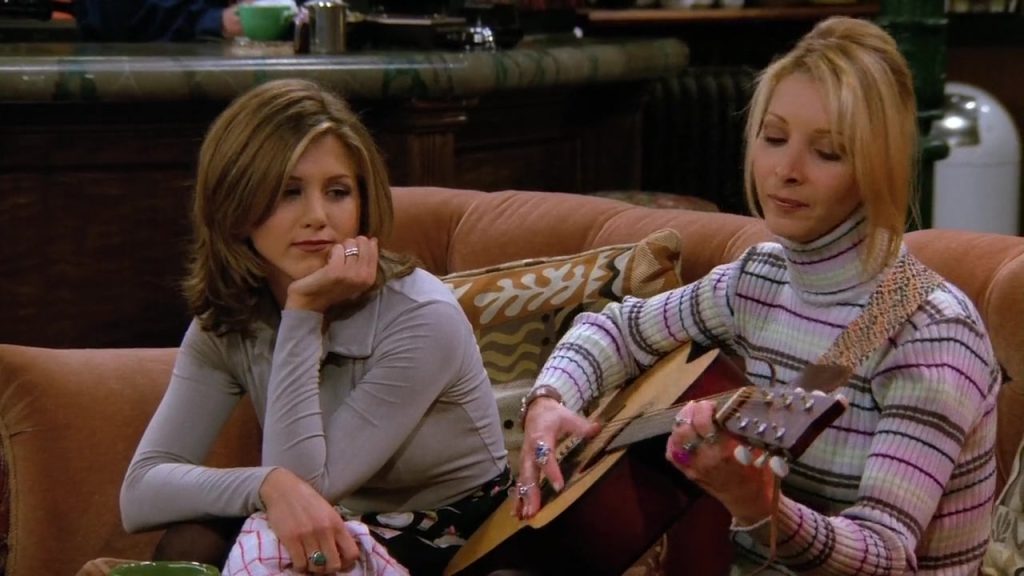
Learning English can be an exciting adventure, especially when you combine it with your favorite TV shows. Movie Learning Tools like our innovative language learning extension make this journey even more enjoyable. In this article, we’ll dive into Friends S02E06, exploring 15 carefully selected vocabulary words that will enhance your language skills. Whether you’re watching through Language Learning with Netflix or using other Movie For Language strategies, these words will enrich your everyday conversations.
Vocabulary to Learn in This Article
- Nuts
- Gonna
- Cool
- Whiff
- Out the window
- Flip for it
- Phobia
- Bruise
- Puncture wound
- Crankypants
- Silly
- Immodest
- Anvil
- Squeeze
- Adorable
Let’s embark on this vocabulary journey, making language learning fun and accessible!
1. Nuts
Original Movie Context
- Dialogue: Chandler: “Monica, will you stop? This is nuts.”
- Scene Description: Chandler expresses frustration as Monica becomes increasingly anxious about their baby, Ben. The emotional tone is tense yet humorous.
Word Breakdown
- Definition: Informal term meaning crazy or unreasonable.
- Part of Speech: Adjective
- Pronunciation: /nʌts/
- Etymology: Originates from the mid-19th century, likely derived from “nut,” a slang term for the head, implying someone is acting irrationally.
- Examples:
- “It’s nuts how much homework we have this week.”
- “She must be nuts to climb that mountain alone.”
Contextual Usage
- Example Sentences:
- “His ideas are a bit nuts, but they’re creative.” (Informal)
- “The weather is nuts today!” (Informal)
- Common Collocations:
- Nuts about something (e.g., “She’s nuts about chocolate.”)
- Potential Idioms or Slang Variations:
- “Go nuts” meaning to become crazy or very enthusiastic.
Learning Insights
- Pronunciation Tips: Emphasize the short “u” sound, making it sound like “nuh-ts.”
- Common Mistakes: Don’t confuse “nuts” (crazy) with “nuts” (edible seeds).
- Cultural Nuances: Using “nuts” is very informal and best suited for casual conversations.
- Memorization Tricks: Associate “nuts” with someone acting irrationally, like a “crazy squirrel” collecting nuts.
2. Gonna
Original Movie Context
- Dialogue: Ross: “I’m gonna grab some coffee before the meeting.”
- Scene Description: Ross uses “gonna” in a casual conversation, reflecting his informal speech style.
Word Breakdown
- Definition: Contraction of “going to,” used to indicate future actions.
- Part of Speech: Auxiliary Verb
- Pronunciation: /ˈgʌnə/ or /ˈɡɒnə/
- Etymology: Derived from the colloquial blending of “going” and “to.”
- Examples:
- “I’m gonna visit my parents this weekend.”
- “She’s gonna start a new job next month.”
Contextual Usage
- Example Sentences:
- “I’m gonna call you later.” (Informal)
- “We’re gonna have a party tonight.” (Informal)
- Common Collocations:
- Gonna do something (e.g., “I’m gonna study tonight.”)
- Potential Idioms or Slang Variations:
- “Gonna make it” meaning to succeed or arrive on time.
Learning Insights
- Pronunciation Tips: Often pronounced quickly in speech; practice blending “going to” into “gonna.”
- Common Mistakes: Avoid using “gonna” in formal writing or professional settings.
- Cultural Nuances: “Gonna” is widely used in spoken English but is considered too informal for formal contexts.
- Memorization Tricks: Think of “gonna” as a shortcut, like taking the highway instead of the scenic route.
3. Cool
Original Movie Context
- Dialogue: Joey: “Cool.”
- Scene Description: Joey uses “cool” to express approval or agreement in a laid-back manner.
Word Breakdown
- Definition: Informal term meaning excellent, impressive, or agreeable.
- Part of Speech: Adjective
- Pronunciation: /kuːl/
- Etymology: Originates from African American Vernacular English (AAVE) in the early 20th century, meaning composed or calm.
- Examples:
- “That new movie was really cool.”
- “You got an A on your test? Cool!”
Contextual Usage
- Example Sentences:
- “That’s a cool idea!” (Informal)
- “He’s a cool guy.” (Informal)
- Common Collocations:
- Cool down (e.g., “Take a break and cool down.”)
- Potential Idioms or Slang Variations:
- “Cool as a cucumber” meaning very calm.
Learning Insights
- Pronunciation Tips: Ensure a long “oo” sound.
- Common Mistakes: Don’t use “cool” to describe something warm.
- Cultural Nuances: “Cool” is versatile and widely accepted in both casual and some formal contexts.
- Memorization Tricks: Imagine something so impressive it makes you say, “Cool!”
4. Whiff
Original Movie Context
- Dialogue: Joey: “Get a whiff of his head.”
- Scene Description: Joey humorously suggests someone smell the baby’s head, lightening the mood in a stressful situation.
Word Breakdown
- Definition: A slight smell or scent.
- Part of Speech: Noun
- Pronunciation: /wɪf/
- Etymology: Derived from Old English “hwif,” meaning breath or air.
- Examples:
- “I caught a whiff of fresh bread baking.”
- “She got a whiff of the perfume as she walked by.”
Contextual Usage
- Example Sentences:
- “There’s a whiff of smoke in the air.” (Formal/Informal)
- “He took a whiff of the flowers.” (Informal)
- Common Collocations:
- Catch a whiff (e.g., “She caught a whiff of the aroma.”)
- Potential Idioms or Slang Variations:
- “Whiff of scandal” meaning a slight hint of something negative.
Learning Insights
- Pronunciation Tips: The “wh” is soft, similar to “w.”
- Common Mistakes: Avoid confusing “whiff” with “whip.”
- Cultural Nuances: “Whiff” is often used metaphorically to describe a slight presence of something.
- Memorization Tricks: Picture yourself taking a quick “whiff” of something to remember it’s a brief smell.
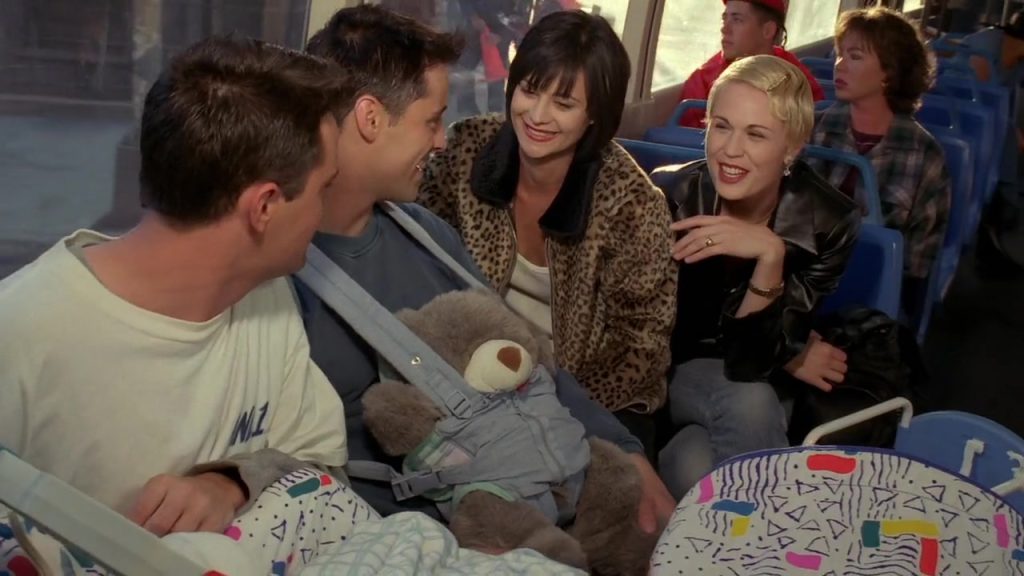
5. Out the Window
Original Movie Context
- Dialogue: Chandler: “I was looking forward to playing basketball, but I guess that’s out the window.”
- Scene Description: Chandler uses the idiom to express that his plans are no longer possible, adding humor to the situation.
Word Breakdown
- Definition: An idiom meaning abandoned or disregarded.
- Part of Speech: Phrase (idiom)
- Pronunciation: /aʊt ðə ˈwɪndoʊ/
- Etymology: Dates back to the early 20th century, implying something is as if thrown out of a window.
- Examples:
- “Our vacation plans went out the window when the hurricane hit.”
- “All my hopes went out the window after the bad news.”
Contextual Usage
- Example Sentences:
- “With the new policy, our project is out the window.” (Informal)
- “Her chance at the promotion is out the window now.” (Formal/Informal)
- Common Collocations:
- Go out the window (e.g., “Rules can sometimes go out the window.”)
- Potential Idioms or Slang Variations:
- “Shot out the window” meaning completely discarded.
Learning Insights
- Pronunciation Tips: Speak smoothly, blending the words naturally.
- Common Mistakes: Don’t take the phrase literally; remember it’s an idiom.
- Cultural Nuances: Widely used in both American and British English to signify plans or expectations being disrupted.
- Memorization Tricks: Imagine literally throwing something out the window to remember the meaning of abandoning plans.
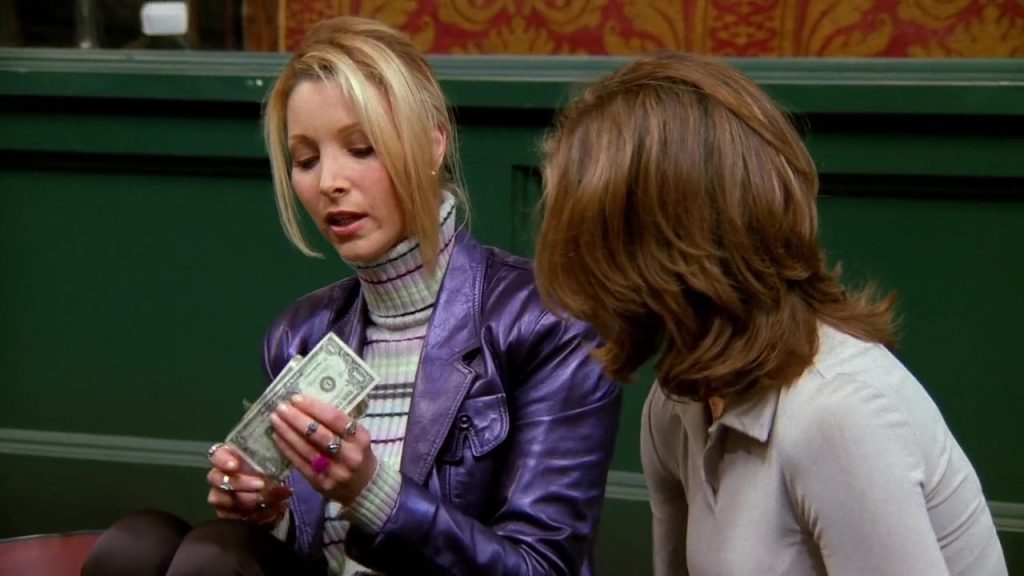
6. Flip for it
Original Movie Context
- Dialogue: Joey: “We’ll flip for it. Ducks or clowns.”
- Scene Description: Joey suggests deciding which baby is theirs by flipping a coin, bringing humor to their frantic search.
Word Breakdown
- Definition: An idiom meaning to decide something by tossing a coin.
- Part of Speech: Phrase (idiom)
- Pronunciation: /flɪp fər ɪt/
- Etymology: “Flip” refers to the action of turning a coin, combined with “for it,” indicating making a decision.
- Examples:
- “Can’t decide where to eat? Let’s flip for it.”
- “They decided to flip for the last ticket.”
Contextual Usage
- Example Sentences:
- “If you’re unsure, we can flip for it.” (Informal)
- “They flipped for who would go first.” (Informal)
- Common Collocations:
- Flip for a decision (e.g., “They flipped for who gets the bigger slice.”)
- Potential Idioms or Slang Variations:
- “Coin toss” is a similar idiom for making decisions.
Learning Insights
- Pronunciation Tips: Ensure clear articulation of “flip” and “for.”
- Common Mistakes: Don’t use “flip” alone; remember it’s part of the phrase “flip for it.”
- Cultural Nuances: Commonly used in informal settings to make quick decisions.
- Memorization Tricks: Visualize flipping a coin to decide something, reinforcing the idiom’s meaning.
7. Phobia
Original Movie Context
- Dialogue: Monica: “My brother has a slight phobia about needles.”
- Scene Description: Monica explains Ross’s fear, adding depth to his character in a serious yet relatable context.
Word Breakdown
- Definition: An extreme or irrational fear of or aversion to something.
- Part of Speech: Noun
- Pronunciation: /ˈfoʊbiə/
- Etymology: Derived from the Greek word “phobos,” meaning fear.
- Examples:
- “She has a phobia of spiders.”
- “His phobia prevents him from flying.”
Contextual Usage
- Example Sentences:
- “His phobia makes it difficult for him to go to the dentist.” (Formal/Informal)
- “They discussed her phobia and how to overcome it.” (Formal)
- Common Collocations:
- Specific phobia (e.g., “Arachnophobia is a common specific phobia.”)
- Potential Idioms or Slang Variations:
- “Phobic reaction” referring to a response driven by fear.
Learning Insights
- Pronunciation Tips: Stress the first syllable: “PHO-bi-a.”
- Common Mistakes: Don’t confuse “phobia” with “philosophy.”
- Cultural Nuances: Understanding phobias can help in empathetic conversations.
- Memorization Tricks: Link “phobia” with “fear of,” such as “claustrophobia” meaning fear of confined spaces.
8. Bruise
Original Movie Context
- Dialogue: Monica: “Wait, what about the time I hit you in the face with the Silvian’s pumpkin?” Ross: “Oh, man. Oh, remember when I stuck that broom in your bike spokes, and you flipped over and hit your head on the curb?” Monica: “No. But I remember people telling me about it.”
- Scene Description: Monica and Ross reminisce about past mishaps, highlighting their playful yet competitive relationship. The emotional tone is nostalgic and humorous.
Word Breakdown
- Definition: An injury appearing as a discolored area on the skin caused by a blow or impact.
- Part of Speech: Noun/Verb
- Pronunciation: /bruːz/
- Etymology: From Old French “bruise,” meaning to crush or break.
- Examples:
- “He got a bruise on his leg from falling off the bike.” (Noun)
- “Don’t bruise the fruit by packing it too tightly.” (Verb)
Contextual Usage
- Example Sentences:
- “She had a bruise on her arm after the accident.” (Noun)
- “Be careful not to bruise the grapes.” (Verb)
- Common Collocations:
- Get a bruise (e.g., “He got a bruise on his shin.”)
- Potential Idioms or Slang Variations:
- “Bruised ego” meaning someone’s pride has been hurt.
Learning Insights
- Pronunciation Tips: The “br” blend should be smooth, and “uise” sounds like “ooz.”
- Common Mistakes: Don’t confuse “bruise” with “brews.”
- Cultural Nuances: Bruises are a common topic in storytelling and humor in casual conversations.
- Memorization Tricks: Visualize a colorful mark on the skin to remember the term “bruise.”
Integrating Movie Learning Tools into your study routine allows you to learn languages in a fun and interactive way.
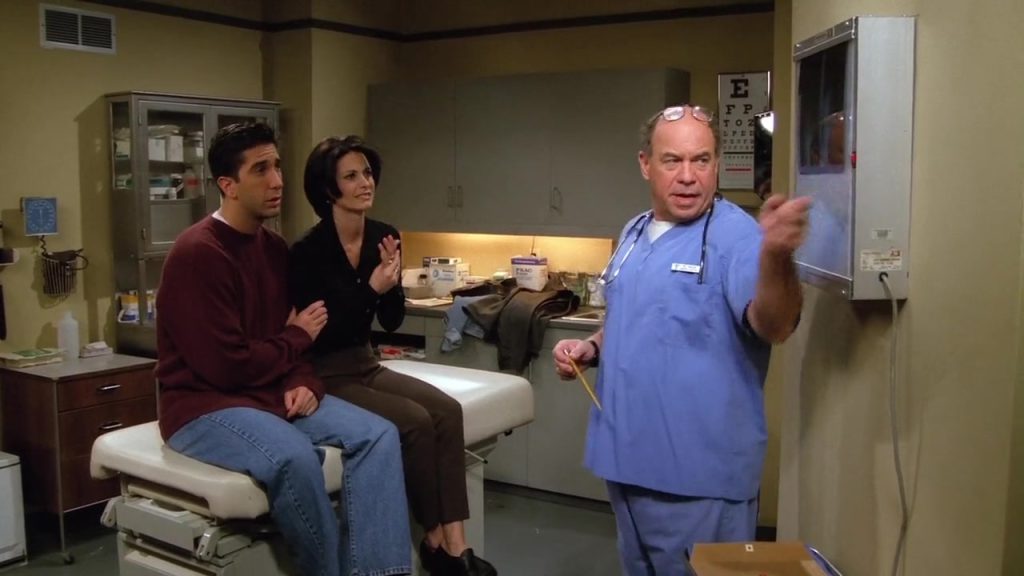
9. Puncture Wound
Original Movie Context
- Dialogue: Doctor: “Here is the puncture wound from your ring.”
- Scene Description: The doctor identifies Ross’s injury, emphasizing the seriousness of his allergic reaction. The emotional tone is clinical and urgent.
Word Breakdown
- Definition: A small hole caused by a sharp object piercing the skin.
- Part of Speech: Noun
- Pronunciation: /ˈpʌŋktʃər ˈwuːnd/
- Etymology: “Puncture” comes from Latin “punctura,” meaning piercing, combined with “wound,” referring to an injury.
- Examples:
- “He suffered a puncture wound from the nail.”
- “Puncture wounds can lead to infections if not treated properly.”
Contextual Usage
- Example Sentences:
- “The doctor cleaned the puncture wound to prevent infection.” (Formal)
- “She has a puncture wound on her finger from the glass.” (Informal)
- Common Collocations:
- Suffer a puncture wound (e.g., “He suffered a puncture wound during the accident.”)
- Potential Idioms or Slang Variations:
- No direct idioms, but often used in medical or emergency contexts.
Learning Insights
- Pronunciation Tips: Emphasize the first syllable in both “puncture” and “wound.”
- Common Mistakes: Don’t say “puncture wound” as “punctured wound.”
- Cultural Nuances: Puncture wounds are discussed in medical scenarios and can denote seriousness in conversations.
- Memorization Tricks: Picture a needle piercing the skin to remember “puncture wound.”
10. Crankypants
Original Movie Context
- Dialogue: Chandler: “You know, I once dated a Miss Crankypants. Lovely girl, kinda moody.”
- Scene Description: Chandler uses the humorous and fictional name “Miss Crankypants” to describe a moody ex-girlfriend, adding light-heartedness to the conversation.
Word Breakdown
- Definition: A playful, fictional term describing someone who is grumpy or easily annoyed.
- Part of Speech: Noun
- Pronunciation: /ˈkræŋkiˌpænts/
- Etymology: A blend of “cranky” (irritable) and “pants,” used humorously to personify a moody individual.
- Examples:
- “Don’t be a crankypants today; it’s sunny outside!”
- “He acted like a crankypants after losing the game.”
Contextual Usage
- Example Sentences:
- “Stop acting like a crankypants!” (Informal)
- “She’s such a crankypants sometimes.” (Informal)
- Common Collocations:
- Be a crankypants (e.g., “Don’t be a crankypants before your morning coffee.”)
- Potential Idioms or Slang Variations:
- No direct idioms, but similar to “grump” or “sourpuss.”
Learning Insights
- Pronunciation Tips: Emphasize the first syllable in both “cranky” and “pants.”
- Common Mistakes: Don’t separate “cranky” and “pants” into two different descriptors.
- Cultural Nuances: Using playful compound words like “crankypants” adds humor and informality to conversations.
- Memorization Tricks: Think of someone wearing “cranky pants” to remember the term’s humorous nature.
Leverage Movie Learning Tools to capture and retain essential vocabulary from every episode you watch.
11. Silly
Original Movie Context
- Dialogue: Ross: “Let me hold him for a sec.” Monica: “Let me see that.” Chandler: “Can I uh see something?”
- Scene Description: The characters engage in playful and sometimes silly antics while trying to calm the baby, adding a light-hearted tone.
Word Breakdown
- Definition: Lacking in seriousness; playful or frivolous.
- Part of Speech: Adjective
- Pronunciation: /ˈsɪli/
- Etymology: From Old English “sælig,” meaning happy or fortunate, evolving to mean foolish or trivial.
- Examples:
- “Don’t be silly; of course, you can do it.”
- “They had a silly argument over nothing.”
Contextual Usage
- Example Sentences:
- “Stop being silly and help me clean up.” (Informal)
- “It was a silly mistake, but it still caused problems.” (Informal/Formal)
- Common Collocations:
- Silly mistake (e.g., “She made a silly mistake on her test.”)
- Potential Idioms or Slang Variations:
- “Silly goose” as a term of endearment for someone acting foolishly.
Learning Insights
- Pronunciation Tips: The “i” sounds like the “i” in “sit.”
- Common Mistakes: Don’t confuse “silly” with “slimy.”
- Cultural Nuances: “Silly” can be endearing or mildly critical, depending on context.
- Memorization Tricks: Picture someone acting playfully to remember “silly.”
With Movie Learning Tools, you can enhance your understanding of new words while immersing yourself in engaging content.
12. Immodest
Original Movie Context
- Dialogue: Chandler: “Well, don’t, don’t think me immodest, but, me?”
- Scene Description: Chandler responds humorously to a compliment, showcasing his self-deprecating humor. The emotional tone is light and playful.
Word Breakdown
- Definition: Lacking humility or decency; not modest.
- Part of Speech: Adjective
- Pronunciation: /ɪmˈmɑːdɪst/
- Etymology: From Latin “im-” (not) and “modestus” (moderate, limited).
- Examples:
- “His immodest remarks annoyed his colleagues.”
- “She was immodest about her achievements.”
Contextual Usage
- Example Sentences:
- “He made an immodest claim about his abilities.” (Formal)
- “Don’t be immodest about your talents.” (Informal/Formal)
- Common Collocations:
- Immodest claims (e.g., “She made immodest claims about her wealth.”)
- Potential Idioms or Slang Variations:
- No direct idioms, but related to terms like “conceited” or “arrogant.”
Learning Insights
- Pronunciation Tips: Stress the second syllable: “im-MOD-est.”
- Common Mistakes: Don’t confuse “immodest” with “immediate.”
- Cultural Nuances: Being immodest is often viewed negatively, as it implies a lack of humility.
- Memorization Tricks: Think of “immodest” as “not modest” to remember the meaning easily.
Discover how Movie Learning Tools can transform your favorite TV shows into powerful language learning sessions.
13. Anvil
Original Movie Context
- Dialogue: Chandler: “You know, I don’t think we brought enough stuff. Did you forget to pack the baby’s anvil?”
- Scene Description: Chandler humorously exaggerates by mentioning an “anvil” as a baby item, adding absurdity and humor to the situation.
Word Breakdown
- Definition: A heavy iron block on which metal can be shaped by hammering.
- Part of Speech: Noun
- Pronunciation: /ˈæn.vəl/
- Etymology: From Old English “anfal,” related to German “Amboss.”
- Examples:
- “The blacksmith used an anvil to shape the metal.”
- “Cartoon characters often get hit with anvils for comedic effect.”
Contextual Usage
- Example Sentences:
- “He lifted the heavy anvil with ease.” (Formal/Informal)
- “Anvils are essential tools in traditional blacksmithing.” (Formal)
- Common Collocations:
- Heavy anvil (e.g., “The heavy anvil was used to forge the sword.”)
- Potential Idioms or Slang Variations:
- “Anvil drop” refers to a sudden heavy impact, often used metaphorically.
Learning Insights
- Pronunciation Tips: Short “a” sound in “an,” and stress on the first syllable: “AN-vil.”
- Common Mistakes: Don’t pronounce “anvil” with a silent “n.”
- Cultural Nuances: Anvils are often associated with blacksmithing and old-fashioned tools.
- Memorization Tricks: Imagine a cartoon character getting hit with an anvil to remember its role in humor.
Our Movie Learning Tools effortlessly blend entertainment with education, making vocabulary acquisition enjoyable.
14. Squeeze
Original Movie Context
- Dialogue: Monica: “You wanna squeeze my hand?”
- Scene Description: Monica offers comfort by letting Ross squeeze her hand during his allergic reaction, showing care and support. The emotional tone is tender and reassuring.
Word Breakdown
- Definition: To apply pressure, typically with the hands, to hold something tightly.
- Part of Speech: Verb/Noun
- Pronunciation: /skwiːz/
- Etymology: From Old English “squīsan,” meaning to press or crush.
- Examples:
- “She gave him a tight squeeze before he left.” (Verb)
- “He felt a squeeze in his wallet after the purchase.” (Noun)
Contextual Usage
- Example Sentences:
- “Can you squeeze me into your seat?” (Informal)
- “She felt a squeeze around her middle.” (Formal/Informal)
- Common Collocations:
- Squeeze hands (e.g., “They squeezed each other’s hands for support.”)
- Potential Idioms or Slang Variations:
- “Squeeze in” meaning to fit something into a tight schedule.
Learning Insights
- Pronunciation Tips: Emphasize the “squ” sound at the beginning.
- Common Mistakes: Don’t confuse “squeeze” with “screws.”
- Cultural Nuances: “Squeeze” can express both physical and emotional pressure.
- Memorization Tricks: Picture squeezing a stress ball to remember the action.
15. Adorable
Original Movie Context
- Dialogue: Girl 1 on bus: “Hey, you. He’s just adorable.”
- Scene Description: A passenger compliments Ben’s cuteness, adding warmth and friendliness to the scene.
Word Breakdown
- Definition: Inspiring great affection; delightful.
- Part of Speech: Adjective
- Pronunciation: /əˈdɔːrəbəl/
- Etymology: From Latin “adorabilis,” meaning worthy of adoration.
- Examples:
- “Your puppy is adorable!”
- “She wore an adorable dress to the party.”
Contextual Usage
- Example Sentences:
- “The baby’s laugh is absolutely adorable.” (Informal/Formal)
- “He found her smile adorable.” (Informal/Formal)
- Common Collocations:
- Absolutely adorable (e.g., “The kitten is absolutely adorable.”)
- Potential Idioms or Slang Variations:
- “Adorbs” as a playful, shortened form of “adorable.”
Learning Insights
- Pronunciation Tips: Stress the second syllable: “a-DOR-a-ble.”
- Common Mistakes: Don’t drop the “e” at the end; keep it as “adorable.”
- Cultural Nuances: “Adorable” is universally positive and widely used to express affection.
- Memorization Tricks: Think of something so cute it makes you say, “Aww, adorable!”
Embrace Language Learning with Movie Learning Tools
Learning English through movies like Friends S02E06 is not only effective but also enjoyable. Our Movie Learning Tools seamlessly integrate with your viewing experience, making language acquisition a breeze. Imagine using features like the Mouse Dictionary to hover over unfamiliar words and get instant definitions, or Fluency Gym to actively engage with dialogues and practice speaking. These tools transform passive watching into an interactive learning session, perfect for intermediate to advanced learners seeking to elevate their skills.
Why Choose Our Language Learning Extension?
- Display First Subtitle: Enhance clarity by seeing the main subtitle on screen.
- Display Second Subtitle: Compare subtitles in two languages simultaneously.
- Mouse Dictionary: Instantly understand new vocabulary by hovering over words.
- Fluency Gym: Master reading, listening, and speaking with real-time movie dialogues.
By leveraging these features, you can save new words, customize your learning environment, and control playback to ensure comprehensive understanding. Whether you’re at home or on the go, our Movie Learning Tools make language learning accessible and fun.
Discover More with Our Previous Articles
- Boost Your English: 15 Essential Vocabulary Words from Friends S01 E09 for Language Learning with Netflix
- Language Learning with Netflix: 15 Essential Vocabulary Words from Friends S01E12
- Mastering English Vocabulary with Friends S01 E15: Fun Lessons from Central Perk
- Learn English via Film: 15 Essential Vocabulary Words from Friends S01E18
Each article explores different episodes, providing a wealth of vocabulary and learning strategies tailored to enhance your English proficiency through beloved TV shows.
Transform Your Language Learning Journey Today
Ready to take your English skills to the next level? Visit AppForLanguage.com and explore our cutting-edge Movie Learning Tools. With features like Fluency Gym, you can turn every movie into a language learning opportunity. Join thousands of motivated learners who have transformed their language skills through our innovative platform. Don’t miss out—start your exciting language journey today!
Conclusion
Combining the charm of Friends S02E06 with our advanced Movie Learning Tools offers a dynamic and effective way to master English vocabulary. By understanding words in context, practicing pronunciation, and engaging with interactive features, you can elevate your language skills while enjoying your favorite shows. Embrace the adventure of language learning with our tools and watch your fluency grow effortlessly.
Happy learning!