
Are you looking to learn English through movies? Friends S01 E09 is not just a classic sitcom episode; it’s a treasure trove of vocabulary that can elevate your language skills. By diving into this episode, you can enhance your understanding of idioms, slang, and everyday phrases, all while enjoying the hilarious antics of Rachel, Ross, Monica, Joey, Chandler, and Phoebe. Whether you’re a fan of the show or new to it, this guide will make language learning with Netflix both fun and effective. Plus, discover how our innovative language learning extension, FunFluen.com, can supercharge your study sessions!
1. Advance
Original Movie Context
- Dialogue: Rachel: “Terry, I was wondering, do you think it would be possible if I got a $100 advance in my salary?”
- Scene Description: Rachel is nervously asking her boss, Terry, for an early payment to spend Thanksgiving with her family.
- Emotional Tone: Hopeful and slightly anxious.
Word Breakdown
- Definition: An amount of money paid before it is due.
- Part of Speech: Noun/Verb
- Pronunciation: /ədˈvæns/
- Etymology: Derived from Latin abante, meaning “forward.”
Contextual Usage
- Example Sentences:
- Noun: “She received an advance on her book royalties.”
- Verb: “He advanced his career by networking extensively.”
- Formal vs. Informal:
- Formal: “The company provided an advance for the project.”
- Informal: “Can I get an advance on my paycheck?”
- Common Collocations: advance payment, salary advance, request an advance
Learning Insights
- Pronunciation Tips: Stress on the second syllable: ad-VANCE.
- Common Mistakes: Confusing “advance” (noun/verb) with “advantage.”
- Memorization Trick: Think of “advance” as moving money forward before it’s due.
2. Busting My Ass
Original Movie Context
- Dialogue: Monica: “Why was I busting my ass to make this delicious Thanksgiving dinner?”
- Scene Description: Monica is frustrated after the Thanksgiving dinner goes wrong.
- Emotional Tone: Exasperated and overwhelmed.
Word Breakdown
- Definition: Working extremely hard or putting in a lot of effort.
- Part of Speech: Idiomatic Expression (Verb Phrase)
- Pronunciation: /ˈbʌstɪŋ maɪ ˈæs/
- Etymology: Slang combining “busting” (breaking) with “ass” (informal for effort or hard work).
Contextual Usage
- Example Sentences:
- “I’ve been busting my ass all week to meet the deadline.”
- “She’s busting her ass to keep up with her studies.”
- Formal vs. Informal:
- Formal: “He has been working diligently on the project.”
- Informal: “He’s busting his ass to finish on time.”
- Common Collocations: busting my ass, busting their ass, busting ass
Learning Insights
- Pronunciation Tips: Rapidly connect “busting” and “ass” for natural flow.
- Common Mistakes: Avoid using in very formal contexts due to its informal and slightly vulgar nature.
- Cultural Nuances: This phrase conveys strong effort and frustration, commonly used among friends.
3. Chip In
Original Movie Context
- Dialogue: Monica: “We all chipped in.”
- Scene Description: Monica explains how the group pooled money to help Rachel.
- Emotional Tone: Supportive and collaborative.
Word Breakdown
- Definition: To contribute money or effort to a common cause.
- Part of Speech: Phrasal Verb
- Pronunciation: /tʃɪp ɪn/
- Etymology: “Chip” as a small piece and “in” indicating inclusion in a group effort.
Contextual Usage
- Example Sentences:
- “Everyone chipped in to buy a gift for their teacher.”
- “They chipped in to cover the unexpected expenses.”
- Formal vs. Informal:
- Formal: “The team contributed to the project funding.”
- Informal: “Let’s all chip in for pizza tonight.”
- Common Collocations: chip in money, chip in effort, chip in support
Learning Insights
- Pronunciation Tips: Ensure a clear “chip” sound followed by a quick “in.”
- Common Mistakes: Misusing the phrase outside of contributing contexts.
- Memorization Trick: Visualize people adding chips to a shared pot.
4. Let Loose
Original Movie Context
- Dialogue: Chandler: “It’s almost never.”
- Contextual Correction: Chandler: “An 80-foot inflatable dog let loose over the city.”
- Scene Description: Chandler explains how the Underdog balloon escaped.
- Emotional Tone: Excited and humorous.
Word Breakdown
- Definition: To release or set free.
- Part of Speech: Phrasal Verb
- Pronunciation: /lɛt lus/
- Etymology: “Let” meaning allow and “loose” meaning free.
Contextual Usage
- Example Sentences:
- “They let loose the balloons at the party.”
- “After the game, everyone let loose and celebrated.”
- Formal vs. Informal:
- Formal: “The manager allowed the staff to take a break.”
- Informal: “She let loose with her friends last night.”
- Common Collocations: let loose balloons, let loose emotions, let loose animals
Learning Insights
- Pronunciation Tips: Ensure “loose” sounds like “loose” (/luːs/), not “lose.”
- Common Mistakes: Mixing up “loose” and “lose.”
- Memorization Trick: Picture something being set free, like balloons flying away.

5. Whip
Original Movie Context
- Dialogue: Monica: “What, Phoebe, did you whip the potatoes?”
- Scene Description: Monica is frustrated that the mashed potatoes lack lumps.
- Emotional Tone: Annoyed and critical.
Word Breakdown
- Definition: To beat vigorously to make smooth or frothy.
- Part of Speech: Verb
- Pronunciation: /wɪp/
- Etymology: Old English hwipian, meaning to move quickly.
Contextual Usage
- Example Sentences:
- “She whipped the cream until it was fluffy.”
- “Don’t whip the eggs too much, or they’ll become tough.”
- Formal vs. Informal:
- Formal: “He whipped the mixture to incorporate air.”
- Informal: “Whip up some eggs for breakfast.”
- Common Collocations: whip cream, whip eggs, whip mixture
Learning Insights
- Pronunciation Tips: Short, crisp “whip” sound.
- Common Mistakes: Confusing “whip” with “whisk.”
- Memorization Trick: Imagine whipping cream with a whisk to remember the vigorous action.
6. Boycotting
Original Movie Context
- Dialogue: Monica: “And I assume, Chandler, you are still boycotting all the pilgrim holidays.”
- Scene Description: Monica comments on Chandler’s unconventional holiday choices.
- Emotional Tone: Playful and teasing.
Word Breakdown
- Definition: To withdraw support from a person, organization, or country as a protest.
- Part of Speech: Verb (Gerund)
- Pronunciation: /ˈbɔɪkɔtɪŋ/
- Etymology: Named after Charles Boycott, an English land agent who was socially ostracized.
Contextual Usage
- Example Sentences:
- “They are boycotting the company due to unethical practices.”
- “Many consumers are boycotting products from that brand.”
- Formal vs. Informal:
- Formal: “The group initiated a boycott against the corporation.”
- Informal: “People are boycotting that store because of their policies.”
- Common Collocations: boycott products, boycott company, boycott events
Learning Insights
- Pronunciation Tips: Emphasize the first syllable: BOY-cot-ting.
- Common Mistakes: Spelling errors, such as “boycoting.”
- Memorization Trick: Remember Charles Boycott’s story to link the term to its meaning.
7. Tradition
Original Movie Context
- Dialogue: Monica: “It’s like a tradition. You get a little piece of turkey on your fork, a little cranberry sauce, and a tot!”
- Scene Description: Joey describes his family’s Thanksgiving customs.
- Emotional Tone: Nostalgic and warm.
Word Breakdown
- Definition: A long-established custom or belief passed down through generations.
- Part of Speech: Noun
- Pronunciation: /trəˈdɪʃən/
- Etymology: From Latin traditio, meaning “handing over.”
Contextual Usage
- Example Sentences:
- “Celebrating Christmas is a family tradition.”
- “They have a tradition of hiking every summer.”
- Formal vs. Informal:
- Formal: “The ceremony is an important tradition in their culture.”
- Informal: “It’s our tradition to watch movies on Friday nights.”
- Common Collocations: holiday tradition, family tradition, cultural tradition
Learning Insights
- Pronunciation Tips: Stress on the second syllable: tra-DI-tion.
- Common Mistakes: Mispronouncing the first syllable as “TRA-dition.”
- Memorization Trick: Connect the word to familiar family customs or celebrations.
8. Skis
Original Movie Context
- Dialogue: Rachel: “Every year we go skiing in Vail…”
- Scene Description: Rachel explains her family’s annual skiing trip.
- Emotional Tone: Reflective and wistful.
Word Breakdown
- Definition: Long, narrow pieces of wood or other material worn on the feet to move over snow.
- Part of Speech: Noun
- Pronunciation: /skiːz/
- Etymology: From Norwegian ski, meaning “a split piece of wood.”
Contextual Usage
- Example Sentences:
- “They went skiing in the Alps last winter.”
- “He bought new skis for the snow season.”
- Formal vs. Informal:
- Formal: “She is proficient in alpine skiing techniques.”
- Informal: “Let’s go skiing this weekend!”
- Common Collocations: ski trip, ski equipment, ski resort
Learning Insights
- Pronunciation Tips: Pronounce “skis” as “skeeze.”
- Common Mistakes: Mispronouncing as “skiss.”
- Memorization Trick: Picture sliding down a snowy mountain with skis.
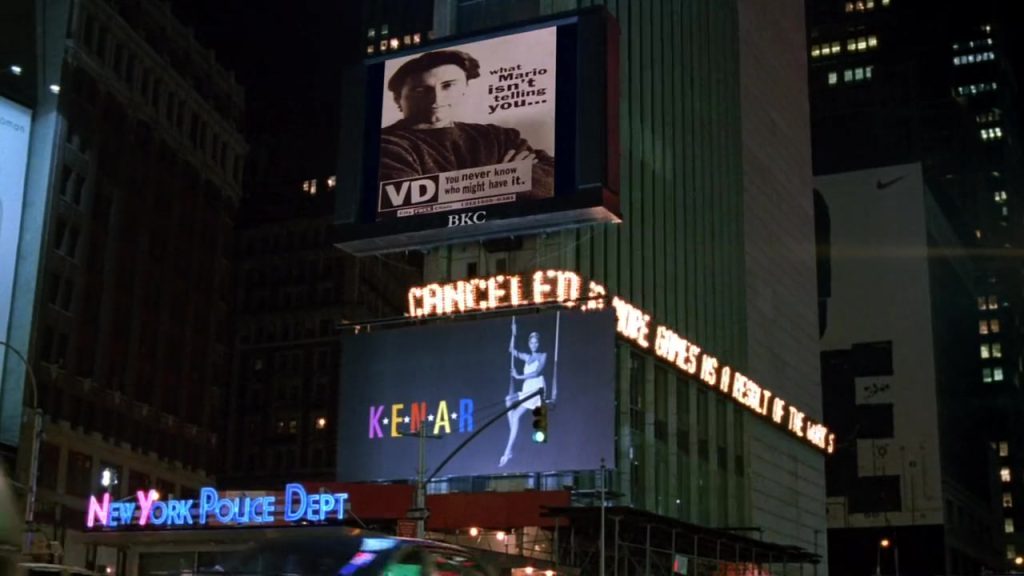
Joey’s iconic VD poster in Friends S01 E09—a hilarious way to understand humor in English.
9. Moping
Original Movie Context
- Dialogue: Ross: “I don’t know. It’s just not the same without Mom in the kitchen.”
- Scene Description: Ross is feeling down about Thanksgiving without his mother.
- Emotional Tone: Sad and melancholic.
Word Breakdown
- Definition: To be in a sad and depressed mood.
- Part of Speech: Verb (Gerund)
- Pronunciation: /ˈmoʊpɪŋ/
- Etymology: From “mop,” possibly referring to the drooping motion associated with sadness.
Contextual Usage
- Example Sentences:
- “He’s been moping around ever since he lost his job.”
- “Stop moping and cheer up!”
- Formal vs. Informal:
- Formal: “She has been feeling despondent lately.”
- Informal: “Don’t mope around; let’s do something fun.”
- Common Collocations: stop moping, start moping, moping around
Learning Insights
- Pronunciation Tips: Ensure a long “o” sound: mo-peeng.
- Common Mistakes: Mixing up “moping” with “moaning.”
- Memorization Trick: Think of someone looking down and looking sad, like holding a mop.
10. Ex-wife
Original Movie Context
- Dialogue: Ross: “Because she’s my ex-wife…”
- Scene Description: Ross refers to his previous marriage during a conversation.
- Emotional Tone: Defensive and slightly bitter.
Word Breakdown
- Definition: A former wife.
- Part of Speech: Noun
- Pronunciation: /ɛks-waɪf/
- Etymology: “Ex” from Latin ex, meaning “former.”
Contextual Usage
- Example Sentences:
- “He bumped into his ex-wife at the grocery store.”
- “Her ex-wife is moving to another city.”
- Formal vs. Informal:
- Formal: “He maintains a cordial relationship with his ex-wife.”
- Informal: “She ran into her ex-wife at the party.”
- Common Collocations: ex-wife relationship, ex-wife and children, ex-wife issues
Learning Insights
- Pronunciation Tips: Short “e” in “ex” and long “i” in “wife.”
- Common Mistakes: Mispronouncing “ex” as “eks.”
- Memorization Trick: Remember “ex” signifies a past relationship, like an “exit.”
11. Unborn
Original Movie Context
- Dialogue: Ross: “I’m off to talk to my unborn child.”
- Scene Description: Ross humorously refers to his baby before it’s born.
- Emotional Tone: Playful and awkward.
Word Breakdown
- Definition: Not yet born; still in the womb.
- Part of Speech: Adjective
- Pronunciation: /ʌnˈbɔrn/
- Etymology: Prefix “un-” meaning “not” combined with “born.”
Contextual Usage
- Example Sentences:
- “The mother was excited to hear her unborn baby’s heartbeat.”
- “She took prenatal classes to prepare for her unborn child.”
- Formal vs. Informal:
- Formal: “Unborn children are a subject of ethical debates.”
- Informal: “He’s talking to his unborn kid every night.”
- Common Collocations: unborn child, unborn baby, unborn offspring
Learning Insights
- Pronunciation Tips: Stress on the second syllable: un-BORN.
- Common Mistakes: Dropping the “n” sound in “unborn.”
- Memorization Trick: Think of “unborn” as “not yet born.”
12. Festivities
Original Movie Context
- Dialogue: Monica: “Just get out of my way and stop moping.”
- Scene Description: Monica is urging Ross to stop feeling sorry for himself.
- Emotional Tone: Frustrated and commanding.
Word Breakdown
- Definition: Celebratory activities or events.
- Part of Speech: Noun
- Pronunciation: /fɛˈstɪvətiz/
- Etymology: From Latin festivitas, meaning “joyfulness.”
Contextual Usage
- Example Sentences:
- “The town’s winter festivities include ice skating and hot cocoa.”
- “They enjoyed the festive festivities during the holiday season.”
- Formal vs. Informal:
- Formal: “The university’s cultural festivities attracted many visitors.”
- Informal: “Let’s join the festivities at the local fair!”
- Common Collocations: holiday festivities, local festivities, festive celebrations
Learning Insights
- Pronunciation Tips: Emphasize the second syllable: fes-TIV-i-ties.
- Common Mistakes: Stressing the wrong syllable or mispronouncing “festivities.”
- Memorization Trick: Link “festivities” to joyful celebrations you attend.

Make Language Learning Fun and Effective
Learning vocabulary through beloved shows like Friends not only makes the process enjoyable but also deeply contextual. By understanding words in their natural settings, you retain them better and gain insights into cultural nuances. Imagine watching Friends S01 E09 with our language learning extension, FunFluen.com. With features like the Mouse Dictionary, you can hover over any word to get instant definitions, making language learning with Netflix seamless and interactive.
Our Fluency Gym feature takes it a step further, allowing you to engage with the language through real-time movie dialogues. Whether you’re in Reading Mode to build your vocabulary, Listening Mode to enhance your comprehension, or Speaking Mode to improve your pronunciation, FunFluen.com transforms passive watching into an active learning adventure.
Why Choose FunFluen.com for Language Learning with Netflix?
- Display First Subtitle: See the main subtitle on screen, enhancing clarity.
- Mouse Dictionary: Instantly understand new words without pausing the video.
- Download Saved Words: Export your vocabulary for offline study.
- Fluency Gym: Engage in dynamic language exercises based on movie dialogues.
Join thousands of learners who have made language learning with Netflix an enjoyable and effective part of their daily routine. Start your journey with FunFluen.com today and watch your English skills soar!
Ready to take your English to the next level? Visit FunFluen.com and discover how our innovative tools can make your language learning with Netflix more engaging and effective than ever before. Embrace the fun side of learning and transform every movie night into a stepping stone toward fluency!