Are you passionate about language learning with Netflix? If so, you’re in for a treat! Watching gripping series like “Squid Game S01 E08” not only keeps you entertained but also serves as a fantastic tool to learn English through movies. In this article, we’ll dive into 15 carefully selected vocabulary words extracted directly from the intense dialogues of Squid Game Season 1, Episode 8. Each word is presented with its movie context, detailed breakdown, contextual usage, and valuable learning insights to make your language journey both fun and effective. Plus, we’ll subtly introduce you to Fluency Gym, our innovative language learning extension that transforms your Netflix binge-watching into a powerful learning experience.
1. Finalists
Original Movie Context
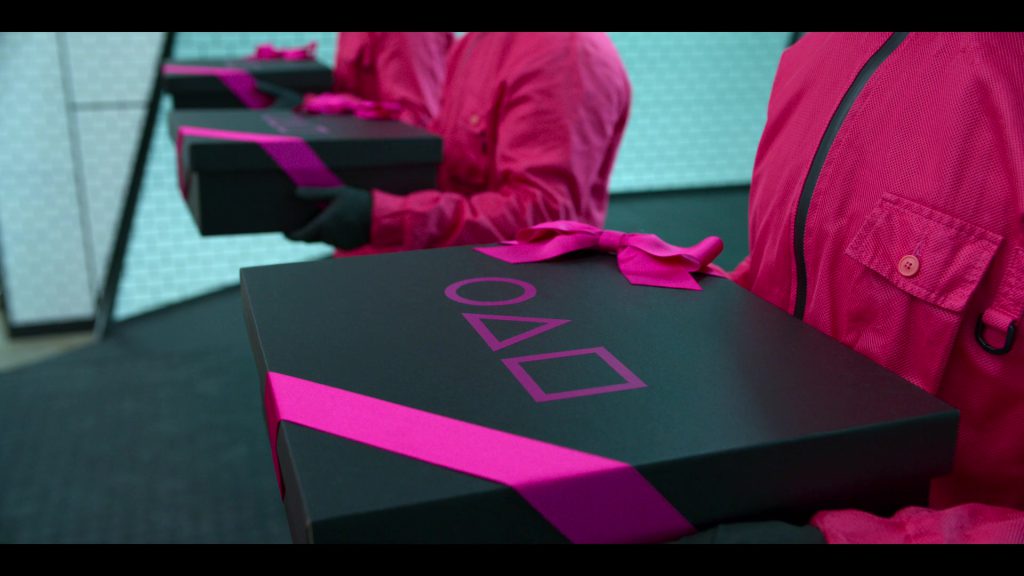
- Subtitle: “The three of you are now the finalists and as such, we have prepared a special gift for each of you.”
- Scene Description: After surviving the initial games, the characters learn they’ve advanced to the final round. The atmosphere is tense and hopeful.
Word Breakdown
- Definition: The last few competitors remaining in a competition.
- Part of Speech: Noun (plural)
- Pronunciation: /faɪˈnæl.tɪs/
- Etymology: Derived from the word “final,” indicating the last stage of a competition.
Contextual Usage
- Example Sentences:
- “She is one of the finalists for the scholarship.”
- “Only five finalists will compete in the grand finale.”
- Formal vs. Informal:
- Formal: “The finalists will present their projects to the board.”
- Informal: “Congrats on making it to the finals!”
- Common Collocations:
- Finalist list
- Finalist selection
Learning Insights
- Pronunciation Tip: Emphasize the second syllable: fi-NAL-tis.
- Common Mistakes: Confusing “finalist” with “final.” Remember, “finalist” refers to a person, while “final” refers to the last part.
- Cultural Nuance: Being a finalist often brings recognition and opportunities, reflecting the high stakes seen in “Squid Game.”
2. Excuses
Original Movie Context
- Subtitle: “Stop with the excuses. I’m not buying it.”
- Scene Description: A heated confrontation where one character challenges another’s justifications for their actions.
Word Breakdown
- Definition: Reasons or explanations put forward to defend or justify a fault or offense.
- Part of Speech: Noun (plural)
- Pronunciation: /ɪkˈskjuzɪz/
- Etymology: From Latin “excūsāre,” meaning to blame or accuse.
Contextual Usage
- Example Sentences:
- “He always has excuses for being late.”
- “No more excuses—finish your homework now.”
- Formal vs. Informal:
- Formal: “The report lacks sufficient excuses for the project’s delays.”
- Informal: “Don’t give me any excuses!”
- Common Collocations:
- Make excuses
- Accept excuses
Learning Insights
- Pronunciation Tip: Stress the second syllable: ex-CU-ses.
- Common Mistakes: Mispronouncing the ‘c’ as /k/ instead of /s/.
- Memorization Trick: Think of “excuses” as “ex” + “cuse,” where “cuse” sounds like “choose,” implying choosing to justify actions.
3. Bullshit
Original Movie Context
- Subtitle: “Come on! Just stop it with this bullshit.”
- Scene Description: A character vents frustration towards another’s deceptive behavior, heightening the emotional tension.
Word Breakdown
- Definition: Nonsense or lies; used to express frustration or disbelief.
- Part of Speech: Noun
- Pronunciation: /ˈbʊl.ʃɪt/
- Etymology: Slang term, origins uncertain, possibly from “bull” (nonsense) + “shit” (excrement).
Contextual Usage
- Example Sentences:
- “I don’t have time for your bullshit today.”
- “That’s a bunch of bullshit!”
- Formal vs. Informal:
- Formal: “The explanations provided were incomplete and misleading.”
- Informal: “Stop talking bullshit and get to the point.”
- Common Collocations:
- Full of bullshit
- Bullshit talk
Learning Insights
- Pronunciation Tip: Pronounce the first syllable like “bull” and the second like “shit.”
- Common Mistakes: Avoid using in formal settings; it’s considered vulgar.
- Cultural Nuance: While commonly used in informal English, it’s often seen as offensive, so use with caution.
4. Dimwit
Original Movie Context
- Subtitle: “Just a dimwit who lives off his mother…”
- Scene Description: A character insults another, highlighting perceived incompetence and dependence.
Word Breakdown
- Definition: A derogatory term referring to someone who is not very smart.
- Part of Speech: Noun
- Pronunciation: /ˈdɪm.wɪt/
- Etymology: Combination of “dim” (not bright) and “wit” (intelligence).
Contextual Usage
- Example Sentences:
- “Don’t be a dimwit; think before you act.”
- “He’s such a dimwit for forgetting his keys again.”
- Formal vs. Informal:
- Formal: “The project was delayed due to the team’s lack of competence.”
- Informal: “You’re acting like a dimwit today.”
- Common Collocations:
- Total dimwit
- Dimwit behavior
Learning Insights
- Pronunciation Tip: Emphasize the first syllable: DIM-wit.
- Common Mistakes: Mixing up with “dim” as an adjective. Remember, “dimwit” is a noun.
- Memorization Trick: Think of “dimwit” as someone whose “wit” is dimmed.
5. Plea Bargain
Original Movie Context
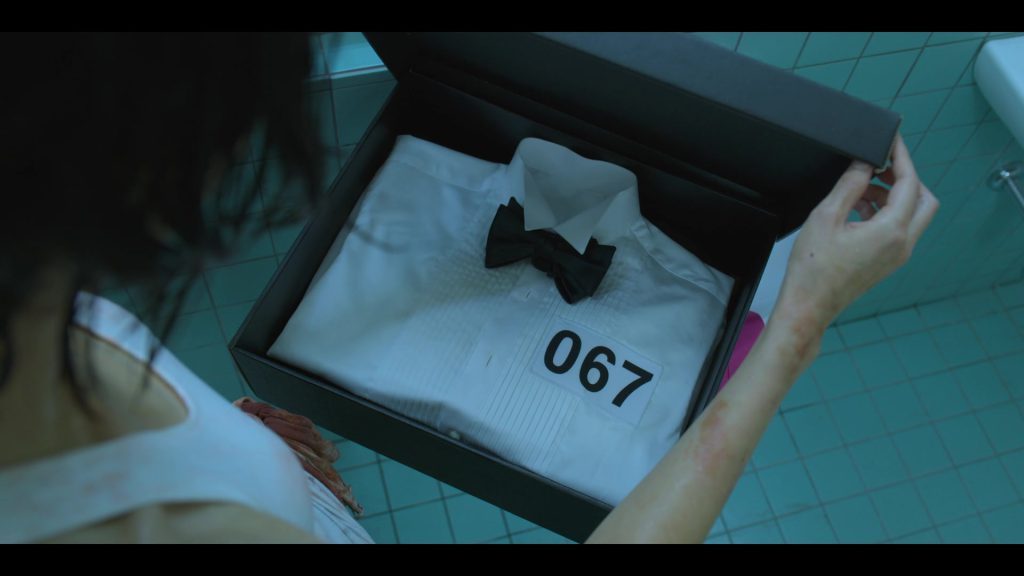
- Subtitle: “Come and turn yourself in. You’ll get a plea bargain with that.”
- Scene Description: A character attempts to negotiate with another, offering a reduced punishment in exchange for surrender.
Word Breakdown
- Definition: An agreement in a criminal case where the defendant agrees to plead guilty to a particular charge in return for some concession from the prosecutor.
- Part of Speech: Noun
- Pronunciation: /pliːə ˈbɑːr.gən/
- Etymology: “Plea” from Old French “plaid,” meaning argument; “bargain” from Old North French “barrege,” meaning negotiation.
Contextual Usage
- Example Sentences:
- “He accepted a plea bargain to reduce his sentence.”
- “The defendant sought a plea bargain to avoid a lengthy trial.”
- Formal vs. Informal:
- Formal: “The court approved the plea bargain offered by the defense attorney.”
- Informal: “He made a deal with the prosecutor for a plea bargain.”
- Common Collocations:
- Negotiate a plea bargain
- Offer a plea bargain
Learning Insights
- Pronunciation Tip: Stress “plea” and “bargain” equally: PLEE-ə BARG-ən.
- Common Mistakes: Confusing “plea” with “plead.” Remember, a “plea bargain” is the agreement itself.
- Cultural Nuance: Plea bargains are a fundamental part of the legal system, often seen as a pragmatic solution in the justice process.
6. Temper Glass
Original Movie Context
- Subtitle: “That last guy could tell the tempered glass apart the whole time…”
- Scene Description: Characters discuss the importance of identifying safe versus dangerous tiles, crucial for their survival.
Word Breakdown
- Definition: Strong, durable glass processed by controlled thermal treatments to increase its strength and safety.
- Part of Speech: Noun
- Pronunciation: /ˈtem.pər ɡlæs/
- Etymology: “Tempered” from Latin “temperare,” meaning to mix in proportion; “glass” from Old English “glæs.”
Contextual Usage
- Example Sentences:
- “The windows are made of tempered glass for added safety.”
- “She broke the tempered glass with ease.”
- Formal vs. Informal:
- Formal: “Tempered glass is often used in automobile windows due to its strength.”
- Informal: “The tempered glass on this table is super sturdy.”
- Common Collocations:
- Tempered glass window
- Break tempered glass
Learning Insights
- Pronunciation Tip: Stress “temper” first: TEM-per glass.
- Common Mistakes: Mispronouncing “tempered” as “temper-ed.” Remember, it’s two syllables: TEM-per.
- Memorization Trick: Think of “tempered” as something made tougher, like tempering steel.
7. Nosy
Original Movie Context
- Subtitle: “I’m a nosy-ass idiot who’s too slow to keep it shut.”
- Scene Description: A character admits to being intrusive and lacking discretion, adding depth to their personality.
Word Breakdown
- Definition: Showing too much curiosity about other people’s affairs.
- Part of Speech: Adjective
- Pronunciation: /ˈnoʊ.zi/
- Etymology: Derived from “nosey,” which comes from “nose,” implying prying into others’ business.
Contextual Usage
- Example Sentences:
- “She’s so nosy; she always wants to know what’s happening in your life.”
- “Don’t be nosy and mind your own business.”
- Formal vs. Informal:
- Formal: “His nosy behavior was deemed unprofessional in the workplace.”
- Informal: “Stop being so nosy and leave me alone.”
- Common Collocations:
- Nosy neighbor
- Nosy questions
Learning Insights
- Pronunciation Tip: Rhymes with “go see.”
- Common Mistakes: Confusing “nosy” with “noisy.” Remember, “nosy” relates to curiosity, while “noisy” refers to loud sounds.
- Memorization Trick: Imagine someone poking their nose into your business—literally being nosy.
8. Shooting Up
Original Movie Context
- Subtitle: “We’ll be killing everyone if we want that money.”
- Scene Description: A tense moment where characters debate the lengths they’ll go to secure the prize money, implying violence.
Word Breakdown
- Definition: Informal term meaning to inject drugs; however, in the given context, it’s used metaphorically to imply violent action.
- Part of Speech: Verb phrase
- Pronunciation: /ˈʃuː.tɪŋ ʌp/
- Etymology: “Shoot” combined with “up,” commonly used in drug-related contexts.
Contextual Usage
- Example Sentences:
- “He was arrested for shooting up drugs in his apartment.”
- “The movie depicted a character shooting up heroin.”
- Formal vs. Informal:
- Formal: “The police found evidence of drug use, including shooting up.”
- Informal: “He’s been shooting up again, just like old times.”
- Common Collocations:
- Shoot up drugs
- Shoot up heroin
Learning Insights
- Pronunciation Tip: Ensure clear articulation of both words: SHOOT-ing UP.
- Common Mistakes: Misunderstanding the metaphorical use in the movie context. Here, it suggests violent actions, not drug use.
- Cultural Nuance: While “shooting up” typically refers to drug injection, context is key—it can metaphorically indicate aggressive actions.
9. Pathetic
Original Movie Context
- Subtitle: “Your life is so damn pathetic, and here’s why.”
- Scene Description: A character harshly criticizes another, highlighting feelings of contempt and frustration.
Word Breakdown
- Definition: Arousing pity, especially through vulnerability or sadness; also, contemptibly inadequate.
- Part of Speech: Adjective
- Pronunciation: /pəˈθet.ɪk/
- Etymology: From Greek “pathētikos,” meaning emotional or suffering.
Contextual Usage
- Example Sentences:
- “It’s pathetic how he treats his friends.”
- “She felt pathetic after failing the exam.”
- Formal vs. Informal:
- Formal: “The company’s performance was deemed pathetic by the investors.”
- Informal: “That’s a pathetic excuse for a meal.”
- Common Collocations:
- Pathetic attempt
- Pathetic performance
Learning Insights
- Pronunciation Tip: Stress the second syllable: puh-THE-tik.
- Common Mistakes: Misplacing the stress; ensure it’s on the second syllable.
- Memorization Trick: Think of someone acting in a way that makes others feel sorry for them—pathetic.
10. Foolhardy
Original Movie Context
- Subtitle: “And if it were me on that tile?”
- Scene Description: A character questions the reckless decisions made by others, implying a critique of their courage.
Word Breakdown
- Definition: Recklessly bold; rashly courageous.
- Part of Speech: Adjective
- Pronunciation: /ˈfuːlˌhɑːr.di/
- Etymology: From “fool” + “hardy,” meaning brave in a foolish way.
Contextual Usage
- Example Sentences:
- “It was foolhardy to climb the mountain without proper gear.”
- “His foolhardy actions led to unnecessary risks.”
- Formal vs. Informal:
- Formal: “The foolhardy expedition resulted in several injuries.”
- Informal: “Don’t be so foolhardy, think things through!”
- Common Collocations:
- Foolhardy decision
- Foolhardy behavior
Learning Insights
- Pronunciation Tip: Break it down as FOOL-har-dee.
- Common Mistakes: Confusing “foolhardy” with “foolish.” “Foolhardy” implies bravery mixed with recklessness.
- Memorization Trick: Imagine a “fool” acting “hardy” or brave, leading to foolish outcomes.
11. Simpleton
Original Movie Context
- Subtitle: “Rolling around this shithole, slamming with us, simpletons, huh!”
- Scene Description: A character derides others, labeling them as foolish or lacking intelligence amidst their dire situation.
Word Breakdown
- Definition: A person who is not very smart; a fool.
- Part of Speech: Noun (plural: simpletons)
- Pronunciation: /ˈsɪm.pl.tən/
- Etymology: From “simple” + “-ton,” implying someone simple-minded.
Contextual Usage
- Example Sentences:
- “Don’t be a simpleton; think before you act.”
- “The con artist targeted simpletons who were easily deceived.”
- Formal vs. Informal:
- Formal: “The scheme was designed to exploit simpletons for financial gain.”
- Informal: “Stop acting like a simpleton and get serious.”
- Common Collocations:
- Total simpleton
- Foolish simpleton
Learning Insights
- Pronunciation Tip: Stress the first syllable: SIM-ple-ton.
- Common Mistakes: Mispronouncing the middle syllable; keep it light.
- Memorization Trick: Picture someone who is “simple” in thinking, thus a “simpleton.”
12. Jealous
Original Movie Context
- Subtitle: “She always got jealous when I talked to other girls.”
- Scene Description: A character expresses feelings of envy and insecurity regarding romantic interactions.
Word Breakdown
- Definition: Feeling or showing envy of someone or their achievements and advantages.
- Part of Speech: Adjective
- Pronunciation: /ˈdʒel.əs/
- Etymology: From Latin “jealousus,” meaning full of jealousy.
Contextual Usage
- Example Sentences:
- “He felt jealous of his friend’s new car.”
- “Don’t be jealous of others’ success.”
- Formal vs. Informal:
- Formal: “Her behavior became increasingly jealous as the relationship progressed.”
- Informal: “She’s so jealous when you hang out with other people.”
- Common Collocations:
- Feel jealous
- Jealous of
Learning Insights
- Pronunciation Tip: The “j” sounds like “j” in “jam,” and the “ous” is pronounced as “us.”
- Common Mistakes: Pronouncing “jealous” with a soft “g” like in “gem.”
- Memorization Trick: Think of “jealous” as “J” + “alous,” someone who starts with “J” feeling envious.
13. Patrol
Original Movie Context
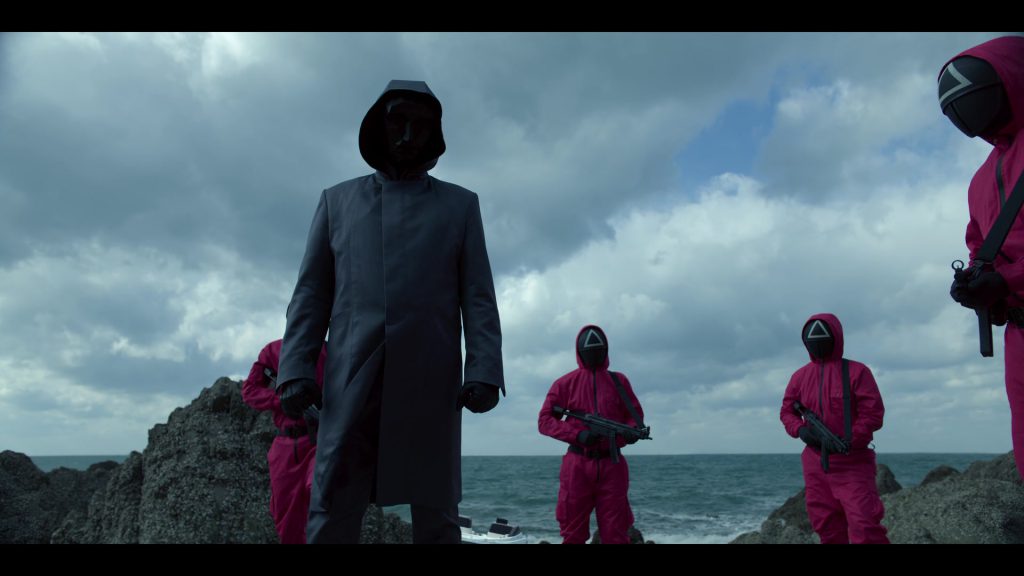
- Subtitle: “The coast guard will be here soon.”
- Scene Description: A character informs others about the imminent arrival of authorities, heightening the sense of urgency.
Word Breakdown
- Definition: A group of officers or guards who keep watch over a particular area.
- Part of Speech: Noun/Verb
- Pronunciation: /pəˈtroʊl/
- Etymology: From French “patrouiller,” meaning to patrol.
Contextual Usage
- Example Sentences:
- Noun: “The police patrol the neighborhood at night.”
- Verb: “They patrol the area to ensure safety.”
- Formal vs. Informal:
- Formal: “The security team conducts patrols every hour.”
- Informal: “Watch out! The patrol is coming.”
- Common Collocations:
- Police patrol
- Patrol route
Learning Insights
- Pronunciation Tip: Emphasize the second syllable: puh-TROL.
- Common Mistakes: Mispronouncing the “a” as in “patrol,” keep it as “uh” (puh-TROL).
- Memorization Trick: Associate “patrol” with “patrolling” an area, ensuring safety.
14. Surrender
Original Movie Context
- Subtitle: “Come and turn yourself in. You’ll get a plea bargain with that.”
- Scene Description: A character is urged to surrender to authorities, presenting it as a viable option.
Word Breakdown
- Definition: To stop resisting and accept defeat; to give oneself up to authorities.
- Part of Speech: Verb/Noun
- Pronunciation: /sərˈɛn.dər/
- Etymology: From Old French “surrendre,” meaning to hand over.
Contextual Usage
- Example Sentences:
- Verb: “He decided to surrender to the police.”
- Noun: “His surrender ended the standoff.”
- Formal vs. Informal:
- Formal: “The suspect agreed to surrender after hours of negotiation.”
- Informal: “It’s time to surrender and give up.”
- Common Collocations:
- Surrender to authorities
- Surrender one’s weapon
Learning Insights
- Pronunciation Tip: Stress the second syllable: sir-EN-der.
- Common Mistakes: Pronouncing as “sur-render.” Ensure it’s “sir-EN-der.”
- Memorization Trick: Think of “surrender” as “sir,” a formal term, implying giving up gracefully.

15. Gratitude
Original Movie Context
- Subtitle: “Tonight’s feast is prepared as a token of gratitude for the sacrifice and effort that you finalists have made…”
- Scene Description: Authorities acknowledge the finalists’ efforts by presenting them with a reward, fostering mixed emotions.
Word Breakdown
- Definition: The quality of being thankful; readiness to show appreciation.
- Part of Speech: Noun
- Pronunciation: /ˈɡræt.ɪ.tjud/
- Etymology: From Latin “gratus,” meaning pleasing or thankful.
Contextual Usage
- Example Sentences:
- “She expressed her gratitude to everyone who helped her.”
- “A note of gratitude was included with the gift.”
- Formal vs. Informal:
- Formal: “We extend our deepest gratitude for your support.”
- Informal: “Thanks a lot! I really appreciate your gratitude.”
- Common Collocations:
- Show gratitude
- Express gratitude
Learning Insights
- Pronunciation Tip: Stress the first syllable: GRAT-i-tude.
- Common Mistakes: Misplacing the stress on the last syllable. Remember, it’s GRAT-i-tude.
- Memorization Trick: Associate “gratitude” with “greatitude,” feeling great about being thankful.
Making Language Learning Fun with Fluency Gym
As you immerse yourself in “Squid Game S01 E08” and explore these vocabulary gems, imagine enhancing this experience with our cutting-edge language learning extension, Fluency Gym. With features like the Mouse Dictionary, you can hover over any word in the subtitles to get instant definitions, making learning seamless and interactive. Our Fluency Gym also offers Reading, Listening, and Speaking Modes, turning passive watching into active learning.
For instance, while watching a tense scene, you can Save Words that catch your attention and review them later, ensuring retention and understanding. Additionally, the Auto-Pause feature lets you absorb each sentence before moving on, perfect for grasping complex dialogues. With Fluency Gym, every episode of Squid Game becomes an opportunity to expand your vocabulary and sharpen your English skills effortlessly.
Conclusion
Leveraging language learning with Netflix through captivating series like “Squid Game S01 E08” is a powerful method to enhance your English proficiency. By dissecting and understanding these 15 essential vocabulary words, you not only enrich your language skills but also gain deeper insights into the cultural and emotional layers of the story. Remember, tools like Fluency Gym can transform your viewing into a dynamic learning adventure, making every scene a step towards fluency.
Ready to take your language learning to the next level? Try Fluency Gym today and turn your favorite shows into your personal language classroom. Happy watching and learning!
Explore More:
- Learn English through other popular Netflix series
- Top 10 Movie Vocabulary Lists for Intermediate Learners
- How to Use Subtitles Effectively for Language Learning
Unlock the full potential of your language learning journey with Fluency Gym—where entertainment meets education.