
Are you looking to learn English through movies? Language learning with Netflix is a fun and effective way to enhance your vocabulary and comprehension skills. In this article, we’ll dive into Friends S01E12, extracting 15 carefully selected vocabulary words that will elevate your English proficiency. Whether you’re an intermediate learner aiming to advance or simply a fan of the show, these words will make your language learning journey both engaging and enjoyable.
1. Fling
Original Movie Context
- Ross: “Wasn’t this supposed to be just a fling, huh? Shouldn’t it be… flung by now?”
Scene Description and Emotional Tone
Ross expresses frustration about a short-term relationship not ending as expected, showcasing his humorous yet exasperated tone.
Word Breakdown
- Definition: A brief, casual romantic relationship without serious commitment.
- Part of Speech: Noun
- Pronunciation: /flɪŋ/
- Etymology: Originates from the Middle English word “fling,” meaning to throw or cast, metaphorically extending to relationships.
Contextual Usage
- Example Sentences:
- After the summer break, their fling ended as quickly as it began.
- She didn’t want a long-term commitment, just a fun fling.
- Variations in Speech:
- Formal: They engaged in a brief romantic relationship.
- Informal: They had a short fling during their trip.
- Common Collocations:
- Casual fling
- Brief fling
- Summer fling
Learning Insights
- Pronunciation Tips: Emphasize the single syllable, ensuring the “i” sounds like /ɪ/.
- Common Mistakes: Avoid confusing “fling” with “fluent.”
- Cultural Nuances: Often used to describe non-serious relationships, reflecting modern dating culture.
Did you know you can make learning English through movies even more effective? Tools like AppForLanguage.com allow you to save words, explore subtitles, and build your vocabulary while watching your favorite shows like Friends.
2. Swoop In
Original Movie Context
- Chandler: “It’s time for you to swoop in!”
Scene Description and Emotional Tone
Chandler encourages Ross to take action in a situation, using a dynamic and supportive tone.
Word Breakdown
- Definition: To intervene quickly and decisively, often to help or take advantage of a situation.
- Part of Speech: Phrasal Verb
- Pronunciation: /swuːp ɪn/
- Etymology: “Swoop” means to move rapidly downward through the air, combined with “in” to imply quick intervention.
Contextual Usage
- Example Sentences:
- The lifeguard swooped in to save the struggling swimmer.
- When the project was in jeopardy, she swooped in and turned it around.
- Variations in Speech:
- Formal: He intervened promptly to resolve the issue.
- Informal: She swooped in just in time to help.
- Common Collocations:
- Swoop in to help
- Swoop in and take charge
- Swoop in during an emergency
Learning Insights
- Pronunciation Tips: Ensure a smooth transition between “swoop” and “in” for fluidity.
- Common Mistakes: Don’t mispronounce “swoop” as “soup.”
- Cultural Nuances: Implies a sense of urgency and efficiency, often used in heroic or rescue contexts.
3. Placenta
Original Movie Context
- Phoebe: “It says in some parts of the world, people actually eat the placenta.”
Scene Description and Emotional Tone
Phoebe shares an unusual fact with a curious and slightly amused tone.
Word Breakdown
- Definition: An organ that develops in the uterus during pregnancy, providing oxygen and nutrients to the growing baby.
- Part of Speech: Noun
- Pronunciation: /pləˈsɛntə/
- Etymology: Derived from Latin “placenta,” meaning flat cake, due to its shape.
Contextual Usage
- Example Sentences:
- The doctor explained the functions of the placenta during pregnancy.
- Some cultures have unique traditions involving the placenta.
- Variations in Speech:
- Formal: The placenta plays a crucial role in fetal development.
- Informal: They talked about the placenta in biology class.
- Common Collocations:
- Placenta previa
- Placenta retention
- Placenta examination
Learning Insights
- Pronunciation Tips: Stress the second syllable: plə-SEN-tə.
- Common Mistakes: Avoid pronouncing it as “place-enta.”
- Cultural Nuances: Discussing the placenta can touch on medical, biological, and cultural practices.
4. Grimace
Original Movie Context
- Phoebe: “Joey grimaces.”
Scene Description and Emotional Tone
Phoebe observes Joey’s unpleasant reaction with a light-hearted tone.
Word Breakdown
- Definition: A facial expression, usually of disgust, disapproval, or pain.
- Part of Speech: Verb/Noun
- Pronunciation: /ˈɡrɪməs/
- Etymology: From Old French “grimace,” meaning a distorted facial expression.
Contextual Usage
- Example Sentences:
- She grimaced after tasting the sour lemon.
- His grimace showed that he wasn’t enjoying the meal.
- Variations in Speech:
- Formal: He displayed a grimace indicating his displeasure.
- Informal: She grimaced when she stubbed her toe.
- Common Collocations:
- Grimace in pain
- Grimace of disgust
- Grimace at the sight
Learning Insights
- Pronunciation Tips: Emphasize the first syllable: GRIM-əs.
- Common Mistakes: Don’t stress the second syllable.
- Cultural Nuances: Often used to describe non-verbal expressions of negative emotions.

5. Nauseous
Original Movie Context
- Ross: “…nauseous, I’m physically nauseous.”
Scene Description and Emotional Tone
Ross describes feeling sick with a frustrated and exasperated tone.
Word Breakdown
- Definition: Feeling the urge to vomit; disgusted.
- Part of Speech: Adjective
- Pronunciation: /ˈnɔːʃəs/
- Etymology: From Latin “nauseosus,” meaning seasick.
Contextual Usage
- Example Sentences:
- After eating the spoiled food, she felt nauseous.
- The horror movie made him feel nauseous.
- Variations in Speech:
- Formal: He felt nauseous after the operation.
- Informal: That smell is making me nauseous.
- Common Collocations:
- Feel nauseous
- Look nauseous
- Become nauseous
Learning Insights
- Pronunciation Tips: Stress the first syllable: NAU-shous.
- Common Mistakes: Confusing “nauseous” with “nauseated.” “Nauseous” should describe causing nausea, while “nauseated” describes feeling it.
- Cultural Nuances: Commonly used in medical and everyday contexts to describe physical discomfort.
If you’re watching Friends and want to pick up every new phrase, try AppForLanguage.com. It offers interactive subtitles, instant definitions, and more, turning Netflix into a powerful language-learning tool.
6. Immigration
Original Movie Context
- Ross: “What am I supposed to do, huh? Call immigration?”
Scene Description and Emotional Tone
Ross expresses concern about dealing with a complicated situation, using a worried and humorous tone.
Word Breakdown
- Definition: The action of coming to live permanently in a foreign country.
- Part of Speech: Noun
- Pronunciation: /ˌɪmɪˈɡreɪʃən/
- Etymology: From Latin “immigratio,” meaning movement into a country.
Contextual Usage
- Example Sentences:
- She works in the field of immigration law.
- Immigration policies have changed significantly in recent years.
- Variations in Speech:
- Formal: The government is revising its immigration policies.
- Informal: He’s dealing with immigration stuff for his new job.
- Common Collocations:
- Immigration law
- Immigration policies
- Immigration officer
Learning Insights
- Pronunciation Tips: Emphasize the third syllable: im-mi-GRA-tion.
- Common Mistakes: Misplacing the stress or confusing it with “migration,” which refers to moving within or between regions.
- Cultural Nuances: A significant topic in discussions about nationality, citizenship, and global movement.
7. Lasagna
Original Movie Context
- Monica: “If you had told me vegetarian lasagna, I would have made vegetarian lasagna.”
Scene Description and Emotional Tone
Monica discusses her cooking preferences with frustration and determination.
Word Breakdown
- Definition: A baked Italian dish made with layers of flat pasta, sauce, cheese, and various fillings.
- Part of Speech: Noun
- Pronunciation: /ləˈzɑːnjə/
- Etymology: From Italian “lasagna,” plural of “lasagna,” referring to the dish.
Contextual Usage
- Example Sentences:
- She prepared a delicious lasagna for dinner.
- Vegetarian lasagna is a great option for non-meat eaters.
- Variations in Speech:
- Formal: Lasagna is a traditional Italian dish enjoyed worldwide.
- Informal: We had lasagna for our family gathering.
- Common Collocations:
- Baked lasagna
- Vegetarian lasagna
- Homemade lasagna
Learning Insights
- Pronunciation Tips: Stress the second syllable: la-SAH-nyə.
- Common Mistakes: Pronouncing it as “lasaña” with a Spanish accent.
- Cultural Nuances: Represents Italian cuisine and is often associated with family meals and comfort food.
8. Vegetarian
Original Movie Context
- Monica: “If you had told me vegetarian lasagna, I would have made vegetarian lasagna.”
Scene Description and Emotional Tone
Monica clarifies dietary preferences with a mix of frustration and practicality.
Word Breakdown
- Definition: A person who does not eat meat, and sometimes other animal products, for health, ethical, or religious reasons.
- Part of Speech: Adjective/Noun
- Pronunciation: /ˌvɛdʒəˈtɛriən/
- Etymology: From “vegetable,” referring to a diet based on plants.
Contextual Usage
- Example Sentences:
- She follows a vegetarian diet for health reasons.
- They offer vegetarian options at the restaurant.
- Variations in Speech:
- Formal: He adheres to a strict vegetarian lifestyle.
- Informal: I’m going vegetarian this month.
- Common Collocations:
- Vegetarian diet
- Vegetarian restaurant
- Vegetarian meal
Learning Insights
- Pronunciation Tips: Stress the third syllable: ve-ge-TA-rian.
- Common Mistakes: Mispronouncing as “veg-etarian” with an extra syllable.
- Cultural Nuances: Increasingly popular due to health and environmental concerns, reflected in diverse culinary options.
9. Amniocentesis (Amnio)
Original Movie Context
- Carol: “I got the results of the amnio today.”
Scene Description and Emotional Tone
Carol shares important medical news with a calm and reassuring tone.
Word Breakdown
- Definition: A medical procedure used during pregnancy to diagnose certain conditions in the fetus by sampling amniotic fluid.
- Part of Speech: Noun
- Pronunciation: /ˌæmnioʊˈsɛntəsɪs/ or /ˌæmniˈoʊsɛntəsɪs/
- Etymology: From “amnion,” the innermost membrane surrounding an embryo, and “centesis,” meaning puncture.
Contextual Usage
- Example Sentences:
- The doctor recommended an amniocentesis to check for genetic disorders.
- Amniocentesis can help determine the health of the fetus.
- Variations in Speech:
- Formal: She underwent amniocentesis as part of her prenatal care.
- Informal: They talked about the amnio results during their visit.
- Common Collocations:
- Perform amniocentesis
- Amniocentesis procedure
- Results of amniocentesis
Learning Insights
- Pronunciation Tips: Break it down into syllables: am-ni-o-CEN-te-si-sis.
- Common Mistakes: Overcomplicating the pronunciation or misplacing stress.
- Cultural Nuances: A critical procedure in prenatal care, often associated with medical discussions about pregnancy.
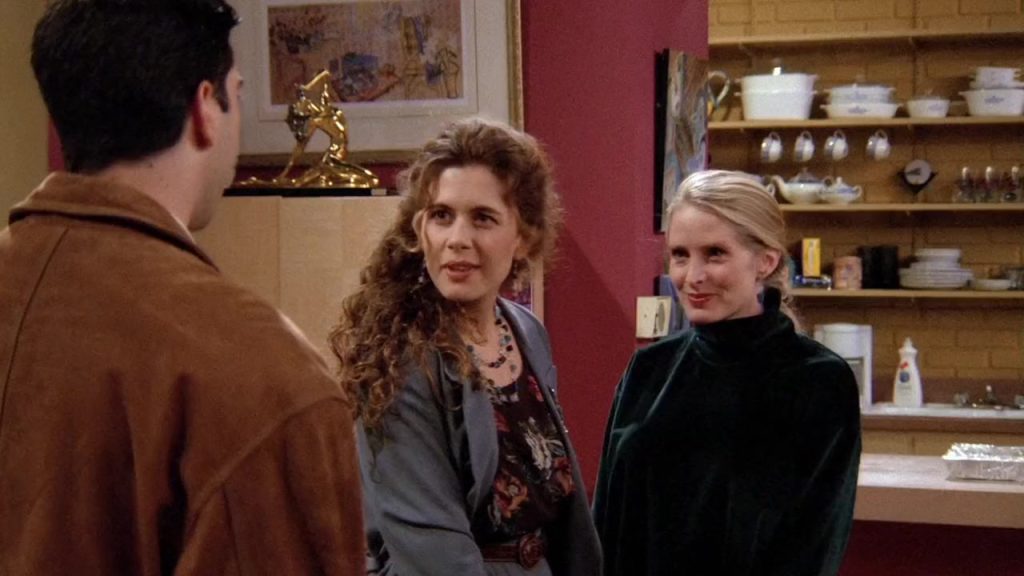
10. Lesbian
Original Movie Context
- Joey: “What’s a lesbian?”
Scene Description and Emotional Tone
Joey asks an innocent question with curiosity and a playful tone.
Word Breakdown
- Definition: A woman who is romantically and sexually attracted to other women.
- Part of Speech: Noun/Adjective
- Pronunciation: /ˈlɛzbɪən/
- Etymology: Derived from “Lesbos,” an island associated with female homosexuality in ancient Greek poetry.
Contextual Usage
- Example Sentences:
- She identifies as a lesbian and is proud of her identity.
- The film features a prominent lesbian character.
- Variations in Speech:
- Formal: He supports his sister’s decision to live as a lesbian.
- Informal: She’s a lesbian and loves her girlfriend.
- Common Collocations:
- Lesbian relationship
- Lesbian community
- Lesbian couple
Learning Insights
- Pronunciation Tips: Stress the first syllable: LES-bi-an.
- Common Mistakes: Mispronouncing as “lez-be-an.”
- Cultural Nuances: Represents an important aspect of LGBTQ+ identity, often discussed in contexts of diversity and inclusion.
Learning English while watching Netflix has never been this easy. With extensions like AppForLanguage.com, you can watch shows, save new words, and even export them for review later
11. Disgusting
Original Movie Context
- Rachel: “He’s like a big disgusting… pig man!”
Scene Description and Emotional Tone
Rachel expresses her strong negative feelings towards someone with frustration and disdain.
Word Breakdown
- Definition: Arousing revulsion or strong disapproval.
- Part of Speech: Adjective
- Pronunciation: /dɪsˈɡʌstɪŋ/
- Etymology: From Latin “disgustus,” meaning a feeling of distaste.
Contextual Usage
- Example Sentences:
- The spoiled food was absolutely disgusting.
- She found his behavior disgusting and decided to distance herself.
- Variations in Speech:
- Formal: The results were disgusting to the committee.
- Informal: That movie was so disgusting!
- Common Collocations:
- Absolutely disgusting
- Find something disgusting
- Disgusting behavior
Learning Insights
- Pronunciation Tips: Emphasize the second syllable: dis-GUS-ting.
- Common Mistakes: Misplacing the stress or omitting syllables.
- Cultural Nuances: Used to express strong negative reactions, often in informal contexts.
12. Embarrassed
Original Movie Context
- Rachel: “Oh, God, I’m so embarrassed!”
Scene Description and Emotional Tone
Rachel admits feeling self-conscious and ashamed with a distressed tone.
Word Breakdown
- Definition: Feeling self-conscious, ashamed, or awkward.
- Part of Speech: Adjective
- Pronunciation: /ɛmˈbærəst/
- Etymology: From Old French “embarrass,” meaning to block or hinder.
Contextual Usage
- Example Sentences:
- She felt embarrassed after tripping in front of everyone.
- He was embarrassed by his poor performance.
- Variations in Speech:
- Formal: He felt embarrassed by his lack of preparation.
- Informal: I was so embarrassed when I forgot my lines.
- Common Collocations:
- Feel embarrassed
- Be embarrassed
- Extremely embarrassed
Learning Insights
- Pronunciation Tips: Stress the second syllable: em-BAR-assed.
- Common Mistakes: Mispronouncing as “embarassed” with an extra syllable.
- Cultural Nuances: Commonly used in social situations to express feelings of shame or awkwardness.
13. Commitment
Original Movie Context
- Chandler: “It’s a pretty big commitment…”
Scene Description and Emotional Tone
Chandler discusses the seriousness of a shared responsibility with a thoughtful tone.
Word Breakdown
- Definition: The state or quality of being dedicated to a cause, activity, or relationship.
- Part of Speech: Noun
- Pronunciation: /kəˈmɪtmənt/
- Etymology: From Latin “committere,” meaning to join or unite.
Contextual Usage
- Example Sentences:
- Marriage requires a strong commitment from both partners.
- He showed great commitment to his studies.
- Variations in Speech:
- Formal: Her commitment to the project was unwavering.
- Informal: Moving in together is a big commitment.
- Common Collocations:
- Make a commitment
- Long-term commitment
- Personal commitment
Learning Insights
- Pronunciation Tips: Stress the second syllable: com-MIT-ment.
- Common Mistakes: Misplacing the stress or mispronouncing syllables.
- Cultural Nuances: Often associated with serious decisions in personal and professional contexts.
14. Obligation
Original Movie Context
- Chandler: “You have to tell her.”
Scene Description and Emotional Tone
Chandler emphasizes the necessity of Ross taking responsibility, using a firm and persuasive tone.
Word Breakdown
- Definition: A duty or commitment; something one is required to do.
- Part of Speech: Noun
- Pronunciation: /ˌɑːblɪˈɡeɪʃən/
- Etymology: From Latin “obligare,” meaning to bind or tie.
Contextual Usage
- Example Sentences:
- She felt a strong obligation to help her friends.
- Paying taxes is a legal obligation.
- Variations in Speech:
- Formal: He fulfilled his obligations as a board member.
- Informal: I have an obligation to attend the meeting.
- Common Collocations:
- Legal obligation
- Moral obligation
- Sense of obligation
Learning Insights
- Pronunciation Tips: Stress the third syllable: ob-li-GA-tion.
- Common Mistakes: Misplacing the stress or adding extra syllables.
- Cultural Nuances: Reflects responsibilities in both personal and societal contexts.

15. Toggle
Original Movie Context
- Fluency Gym Feature Mention: “Plugin On/Off Toggle”
Scene Description and Emotional Tone
Refers to switching a feature on or off, using a technical and straightforward tone.
Word Breakdown
- Definition: To switch between two states, such as on and off.
- Part of Speech: Verb/Noun
- Pronunciation: /ˈtɑːɡəl/
- Etymology: From Old English “togol,” meaning a device for making a change.
Contextual Usage
- Example Sentences:
- You can toggle the settings to customize your experience.
- He toggled between different applications on his computer.
- Variations in Speech:
- Formal: Please toggle the device to the operational mode.
- Informal: Just toggle the switch to turn it off.
- Common Collocations:
- Toggle a switch
- Toggle settings
- Toggle between
Learning Insights
- Pronunciation Tips: Single syllable with a clear “t” sound: TOG-ul.
- Common Mistakes: Adding extra syllables or mispronouncing the “g” sound.
- Cultural Nuances: Common in technology and everyday devices, reflecting its utility in modern life.
Embrace Language Learning with Fluency Gym
As you immerse yourself in language learning with Netflix, tools like Fluency Gym can transform your experience. Imagine watching Friends S01E12 and effortlessly learning these 15 vocabulary words. With features like the Mouse Dictionary, you can hover over any word in the subtitles to see instant definitions. Fluency Gym also offers Fluency Gym: Your Path to Mastering a Language, which includes:
- Reading Mode (Word Builder): View subtitles in your target language first, then reveal native language subtitles after a few seconds.
- Listening Mode (Ear Training): Listen to dialogues without subtitles, write down what you hear, then compare with the actual subtitles.
- Speaking Mode (Speech Challenger): Practice saying sentences aloud and compare your pronunciation with the original.
These features make language learning with Netflix not only effective but also engaging and interactive. By integrating Fluency Gym, you can save new words, hear their pronunciation, and even export them for offline study.
Conclusion
Language learning with Netflix is a dynamic and enjoyable way to expand your English vocabulary. By exploring Friends S01E12, we’ve uncovered 15 essential words that will enhance your understanding and expression. Incorporating tools like Fluency Gym can further elevate your learning, making it interactive and tailored to your needs. Start your journey today and transform how you learn English through your favorite shows!
Ready to take your language learning to the next level? Discover how Fluency Gym can revolutionize your experience by visiting App for Language. Embrace technology and make every movie an opportunity to master a new language!
Tips for Effective Language Learning:
- Contextual Learning: Pay attention to how words are used in different scenarios to grasp their meanings better.
- Practice Regularly: Incorporate new vocabulary into your daily conversations to reinforce learning.
- Cultural Immersion: Engage with English media, such as movies and TV shows, to understand cultural references and humor naturally.
- Use Supplementary Resources: Utilize dictionaries and language apps to explore idioms and phrasal verbs further.
Happy learning!