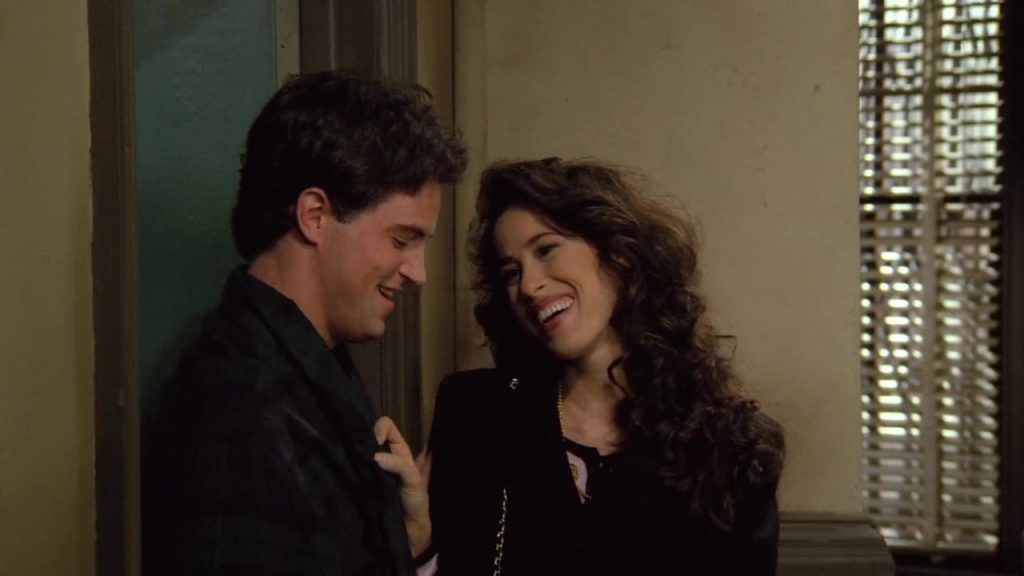
Welcome to the ultimate guide for Cinematic English study using the beloved TV show Friends S01 E14! Whether you’re binge-watching or studying for your next English exam, integrating language learning with your favorite shows makes the process enjoyable and effective. In this article, we’ll explore 15 carefully selected vocabulary words from Friends S01 E14, providing you with deep, contextual understanding to boost your English skills. Plus, discover how our innovative language learning extension, Funfluen, can enhance your learning journey seamlessly.
1. Vulnerable
Original Movie Context
Joey: “She’s needy, she’s vulnerable.”
Scene Description: Joey is encouraging Ross to approach a woman, emphasizing her emotional state to make Ross feel more confident.
Word Breakdown
- Definition: Susceptible to physical or emotional harm; open to attack or criticism.
- Part of Speech: Adjective
- Pronunciation: /ˈvʌlnərəbl/
- Etymology: From Latin vulnerabilis, from vulnerare meaning “to wound.”
Examples:
- After the breakup, she felt vulnerable and needed support.
- It’s important to protect vulnerable wildlife from poachers.
Contextual Usage
- Formal: The report highlights vulnerable populations affected by climate change.
- Informal: I felt vulnerable sharing my true feelings with her.
- Collocations: Vulnerable to, emotionally vulnerable, physically vulnerable
Learning Insights
- Pronunciation Tip: Emphasize the first syllable: VUL-ner-a-ble.
- Common Mistake: Mixing up “vulnerable” with “invulnerable,” which means not vulnerable.
- Memorization Trick: Think of “vulnerable” as “vulnerable hearts” needing protection.
2. Insane
Original Movie Context
Ross: “I think it’s insane.”
Scene Description: Ross expresses his disbelief and frustration about Chandler’s unconventional dating advice.
Word Breakdown
- Definition: Extremely foolish or unreasonable; also refers to mental illness.
- Part of Speech: Adjective
- Pronunciation: /ɪnˈseɪn/
- Etymology: From Old French insain, from Latin insanus, meaning “not healthy.”
Examples:
- That was an insane idea to climb the mountain without gear.
- The roller coaster ride was insane!
Contextual Usage
- Formal: The proposal was deemed insane by the committee.
- Informal: It’s insane how much homework we have this week.
- Collocations: Insane levels, completely insane, insane behavior
Learning Insights
- Pronunciation Tip: Stress the second syllable: in-SANE.
- Common Mistake: Using “insane” to mean “cool” in formal contexts, which can be inappropriate.
- Cultural Nuance: Be cautious using “insane” to describe people due to its connection with mental health.
3. Cleansing Ritual
Original Movie Context
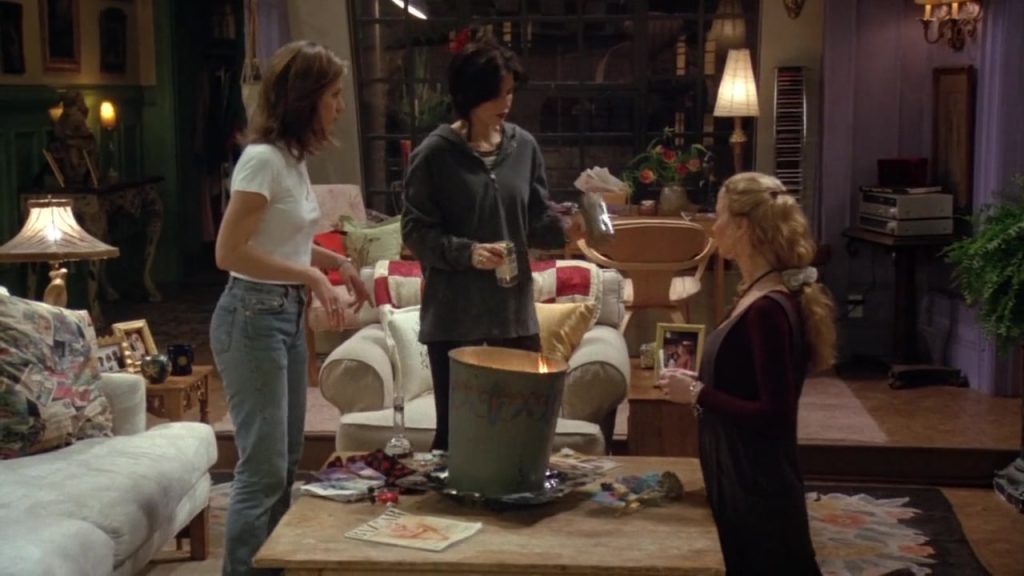
Phoebe: “She said that if you want to break the bad boyfriend cycle, you can do like a cleansing ritual.”
Scene Description: Phoebe suggests a symbolic ritual to help her friends move past bad relationships.
Word Breakdown
- Definition: A ceremonial act intended to purify or cleanse.
- Part of Speech: Noun phrase
- Pronunciation: /ˈklen.zɪŋ ˈrɪtʃ.u.əl/
- Etymology: “Cleansing” from “clean,” and “ritual” from Latin ritualis, meaning “relating to rites.”
Examples:
- They performed a cleansing ritual to remove negative energy.
- Burning sage is a common cleansing ritual in many cultures.
Contextual Usage
- Formal: The ancient cleansing ritual was performed at dawn.
- Informal: Let’s do a cleansing ritual to get rid of the bad vibes.
- Collocations: Perform a cleansing ritual, cleansing ritual practices, spiritual cleansing ritual
Learning Insights
- Pronunciation Tip: Ensure clear articulation of both words: CLEAN-sing RI-TU-AL.
- Common Mistake: Mispronouncing “ritual” as “ritional.”
- Memorization Trick: Visualize a ritual being performed to cleanse a space, reinforcing the meaning.
4. Bonfire
Original Movie Context
Rachel: “We’re good people!”
Monica: “Maybe we’re some kinda magnets.”
Scene Description: The group discusses their series of bad relationships, leading to the idea of a boyfriend bonfire.
Word Breakdown
- Definition: A large controlled outdoor fire, often used for celebrations or rituals.
- Part of Speech: Noun
- Pronunciation: /ˈbɑːn.faɪər/
- Etymology: From Middle English bonefire, combining “bone” (log) and “fire.”
Examples:
- They gathered around the bonfire on the beach.
- The village celebrates with a bonfire every summer.
Contextual Usage
- Formal: The community organized a bonfire to mark the festival.
- Informal: Let’s have a bonfire this weekend and roast some marshmallows.
- Collocations: Beach bonfire, community bonfire, bonfire night
Learning Insights
- Pronunciation Tip: Emphasize the first syllable: BON-fire.
- Common Mistake: Misplacing the stress on the second syllable.
- Cultural Nuance: Bonfires are often associated with specific holidays or events, adding cultural context to the term.
cenes like the bonfire ritual in Friends provide excellent material for Cinematic English study, teaching both vocabulary and cultural reference
5. Cha-ching
Original Movie Context
Joey: “I’m thinkin’, cha-ching!”
Scene Description: Joey humorously refers to dating someone as a potential emotional or financial gain.
Word Breakdown
- Definition: An onomatopoeic expression mimicking the sound of a cash register, symbolizing profit or success.
- Part of Speech: Interjection
- Pronunciation: /tʃɑː-ʧɪŋ/
- Etymology: Derived from the sound cash registers make, representing money.
Examples:
- When she closed the deal, it was pure cha-ching!
- Opening a new store? Cha-ching!
Contextual Usage
- Formal: The investment proved to be a cha-ching moment for the company.
- Informal: Sold my old bike, and it was pure cha-ching!
- Collocations: Cha-ching moment, sound of cha-ching, cha-ching profits
Learning Insights
- Pronunciation Tip: Stress both parts equally: CHA-CHING.
- Common Mistake: Stretching the sounds too long, making it unclear.
- Memorization Trick: Associate “cha-ching” with the sound of money being made.
6. Bail On
Original Movie Context
Joey: “Don’t you dare bail on me.”
Scene Description: Joey pleads with Chandler not to abandon their plans, highlighting their friendship.
Word Breakdown
- Definition: To abandon or leave someone or something abruptly.
- Part of Speech: Phrasal verb
- Pronunciation: /beɪl ɒn/
- Etymology: “Bail” comes from the Middle English bailen, meaning “to carry away.”
Examples:
- She bailed on our dinner plans last minute.
- Don’t bail on me when I need you the most.
Contextual Usage
- Formal: He decided to bail on the project due to unforeseen circumstances.
- Informal: If you bail on the party, I’ll be really upset.
- Collocations: Bail on plans, bail on a date, bail on friends
Learning Insights
- Pronunciation Tip: Ensure “bail” sounds like “bayl” and “on” is clear.
- Common Mistake: Omitting the preposition “on,” which changes the meaning.
- Memorization Trick: Think of “bailing” out of a boat quickly, similar to abandoning plans.
7. Scooch
Original Movie Context
Ross: “These people’ll scooch, won’t you? Let’s try scooching!”
Scene Description: Ross asks others to move slightly to make space at the table.
Word Breakdown
- Definition: To move a small distance or shift slightly.
- Part of Speech: Verb (informal)
- Pronunciation: /skuːʧ/
- Etymology: Derived from a playful variation of “scoot,” meaning to move.
Examples:
- Can you scooch over so I can sit next to you?
- Let’s scooch closer to enjoy the movie better.
Contextual Usage
- Formal: Please adjust your seating to accommodate everyone.
- Informal: Scooch over, I need a little more space.
- Collocations: Scooch over, scooch closer, scooch a bit
Learning Insights
- Pronunciation Tip: Emphasize the “scoo” sound: SCOOCH.
- Common Mistake: Mispronouncing as “scootch.”
- Memorization Trick: Visualize gently pushing someone to make space, reinforcing the meaning.
8. Bonkers
Original Movie Context
Chandler: “It’s suicide. The man’s got an egg.”
Scene Description: Chandler humorously expresses disbelief at Ross’s unconventional romantic approach.
Word Breakdown
- Definition: Crazy; insane.
- Part of Speech: Adjective (informal)
- Pronunciation: /ˈbɒŋ.kərz/
- Etymology: British slang, possibly from “bonk,” meaning to hit the head.
Examples:
- She must be bonkers to quit her job without a backup plan.
- That movie was absolutely bonkers!
Contextual Usage
- Formal: The plan seemed bonkers to the board members.
- Informal: You’re acting bonkers with all these crazy ideas!
- Collocations: Absolutely bonkers, act bonkers, bonkers idea
Learning Insights
- Pronunciation Tip: Stress the first syllable: BON-kers.
- Common Mistake: Overemphasizing the second syllable.
- Memorization Trick: Link “bonkers” to wild, crazy actions to remember its meaning.
Our extension Funfluen is designed to optimize Cinematic English study, helping you turn movie moments into learning opportunities.
9. Needless
Original Movie Context
Chandler: “I don’t think we need a third…”
Scene Description: Chandler is discussing not needing an additional person in the relationship triangle.
Word Breakdown
- Definition: Unnecessary; not needed.
- Part of Speech: Adjective
- Pronunciation: /ˈniːd.ləs/
- Etymology: From Old English niðer, meaning “under,” combined with “less.”
Examples:
- It was a needless complication in an otherwise simple process.
- She felt needless pressure to conform.
Contextual Usage
- Formal: The report identified several needless expenditures.
- Informal: All that arguing was needless; we could have resolved it easily.
- Collocations: Needless to say, needless complication, needless stress
Learning Insights
- Pronunciation Tip: Clearly articulate all syllables: NEED-less.
- Common Mistake: Dropping the “d” sound, making it sound like “neeless.”
- Memorization Trick: Think of something “not needed” to reinforce the meaning.
10. Crappy
Original Movie Context
Chandler: “What a crappy night!”
Scene Description: Chandler expresses his disappointment after a series of failed dates.
Word Breakdown
- Definition: Of poor quality; unpleasant.
- Part of Speech: Adjective (informal)
- Pronunciation: /ˈkræp.i/
- Etymology: Informal variant of “crap,” meaning worthless or bad.
Examples:
- That was a crappy movie; I expected more.
- I had a crappy day at work today.
Contextual Usage
- Formal: The event was a disappointing and subpar experience.
- Informal: My computer is acting crappy lately.
- Collocations: Crappy weather, crappy service, crappy experience
Learning Insights
- Pronunciation Tip: Emphasize the first syllable: CRAP-py.
- Common Mistake: Overemphasizing the second syllable.
- Memorization Trick: Associate “crappy” with negative experiences to remember its meaning.
If you’re a fan of Friends, there’s no better way to improve your English than diving into Cinematic English study with its iconic episodes.
11. Righteous
Original Movie Context
Phoebe: “The semen of a righteous man.”
Scene Description: Phoebe humorously refers to needing pure intentions for their cleansing ritual.
Word Breakdown
- Definition: Morally right or justifiable; virtuous.
- Part of Speech: Adjective
- Pronunciation: /ˈraɪ.tʃəs/
- Etymology: From Old English riht, meaning “right, just,” with the suffix “-ous.”
Examples:
- They admired his righteous actions in helping the community.
- She felt a righteous anger about the unfair treatment.
Contextual Usage
- Formal: The organization is dedicated to righteous causes.
- Informal: He’s got a righteous sense of justice.
- Collocations: Righteous indignation, righteous cause, righteous anger
Learning Insights
- Pronunciation Tip: Stress the first syllable: RIGH-teous.
- Common Mistake: Mispronouncing the second syllable.
- Memorization Trick: Connect “righteous” with heroes or virtuous characters to reinforce its meaning.
Cinematic English study brings language learning to life, making it more engaging and practical than traditional methods.
12. Sweater
Original Movie Context
Rachel: “Hey he’s wearing a sweater.”
Scene Description: Rachel points out a humorous detail about Scotty Jared’s attire during their ritual.
Word Breakdown
- Definition: A knitted garment typically worn on the upper body for warmth.
- Part of Speech: Noun
- Pronunciation: /ˈswɛtər/
- Etymology: From Middle English swettere, from sweten meaning “to sweat.”
Examples:
- She knitted a cozy sweater for the winter.
- He forgot his favorite sweater at home.
Contextual Usage
- Formal: The conference attire includes business suits and sweaters.
- Informal: I need to buy a new sweater for the chilly evenings.
- Collocations: Wool sweater, cozy sweater, knitted sweater
Learning Insights
- Pronunciation Tip: Ensure clear enunciation of both syllables: SWEAT-er.
- Common Mistake: Dropping the “er” sound, making it sound like “sweat.”
- Memorization Trick: Picture yourself wearing a warm sweater to remember its meaning.
13. Pun Intended
Original Movie Context
Ross: “No pun intended. I mean it.”
Scene Description: Ross clarifies that his previous statement was not a play on words, emphasizing sincerity.
Word Breakdown
- Definition: Used to indicate that a pun (a joke exploiting multiple meanings) was not deliberate.
- Part of Speech: Phrase
- Pronunciation: /pʌn ɪnˈtɛndɪd/
- Etymology: “Pun” from Latin punnus, and “intended” from Latin intendĕre.
Examples:
- I was talking about “bear” as an animal, no pun intended.
- She said she was “knot” joking, pun intended.
Contextual Usage
- Formal: The speaker used a play on words, though no pun was intended.
- Informal: Just saying it’s raining cats and dogs, no pun intended.
- Collocations: No pun intended, pun intended jokes, clarify pun intended
Learning Insights
- Pronunciation Tip: Smoothly connect the words: “Pun in-TEN-ded.”
- Common Mistake: Misplacing stress on the wrong word.
- Memorization Trick: Remember it as a disclaimer for unintentional wordplay.
Cinematic English study allows you to immerse yourself in real-life dialogues while enjoying your favorite shows like Friends S01 E14.
14. Scooching
Original Movie Context
Ross: “Let’s try scooching!”
Scene Description: Ross asks the group to move slightly to make space at the table.
Word Breakdown
- Definition: The act of moving a small distance or shifting slightly.
- Part of Speech: Verb (informal)
- Pronunciation: /skuːʧ.ɪŋ/
- Etymology: Derived from “scooch,” meaning to move.
Examples:
- Can we try scooching closer to hear the movie better?
- She was scooching her way through the crowded room.
Contextual Usage
- Formal: Please adjust your seating arrangement to accommodate everyone.
- Informal: Let’s scooch over so I can sit down.
- Collocations: Try scooching, start scooching, scooching closer
Learning Insights
- Pronunciation Tip: Maintain the “scoo” sound: SCOOCH-ing.
- Common Mistake: Dropping the “-ing” ending.
- Memorization Trick: Visualize gently moving to reinforce the meaning.
15. Reunion
Original Movie Context
Janice: “This is like a reunion in the hall.”
Scene Description: Janice comments on the gathering of friends in the hallway after her surprise appearance.
Word Breakdown
- Definition: A gathering of people who have not seen each other for a long time.
- Part of Speech: Noun
- Pronunciation: /ˌriː.juːˈnɪən/
- Etymology: From Old French reunion, from Latin reunio, meaning “a reuniting.”
Examples:
- The high school reunion was filled with nostalgic moments.
- They organized a family reunion every summer.
Contextual Usage
- Formal: The annual company reunion fosters team spirit.
- Informal: It was great catching up at the reunion last night.
- Collocations: School reunion, family reunion, surprise reunion
Learning Insights
- Pronunciation Tip: Stress the last syllable: re-u-NION.
- Common Mistake: Misplacing the stress on the first syllable.
- Memorization Trick: Link “reunion” with happy gatherings to remember its meaning.
Enhance Your Learning with Funfluen
Learning English through Cinematic English study is not just effective—it’s also fun! With Funfluen, you can take your language learning to the next level while watching your favorite shows like Friends S01 E14. Our language learning extension offers features such as:
- Mouse Dictionary: Hover over any word in the subtitle to see instant definitions, boosting your vocabulary in real-time.
- Display Second Subtitle: View subtitles in two languages simultaneously, making it easier to compare and learn.
- Save Words: Save new words you encounter for future review and study.
- Fluency Gym: Engage with real-time dialogues, guess meanings, and practice speaking alongside native speakers.
Imagine watching Friends and effortlessly expanding your vocabulary while enjoying the storyline. Funfluen transforms passive watching into an interactive learning experience. Whether you’re tackling idioms, phrasal verbs, or everyday phrases, our extension ensures you never miss a learning opportunity.
Why Choose Funfluen?
- Interactive Learning: Turn your favorite shows into dynamic learning sessions.
- Flexible Features: Customize your learning experience with adjustable subtitles and instant word definitions.
- Engaging Tools: From saving words to practicing pronunciation, Funfluen makes learning seamless and enjoyable.
Ready to make language learning an adventure? Visit Funfluen today and start mastering English with every episode you watch!