
Are you an intermediate English learner eager to expand your vocabulary while enjoying your favorite TV shows? Welcome to an exciting journey of Movie Language Practice with the beloved series Friends, specifically Season 1, Episode 21 (Friends S01 E21). In this guide, we’ll explore 15 essential vocabulary words extracted directly from this episode, helping you deepen your understanding in a fun and engaging way.
At FunFluen.com, we believe that learning should be as enjoyable as watching your favorite scenes. Our innovative language learning extension seamlessly integrates with Friends S01 E21, allowing you to learn vocabulary in context, save new words, and even hear their pronunciations in real-time. Let’s dive into some memorable moments from Friends and explore the vocabulary that makes the dialogue sparkle.
1. Reckless
Original Movie Context
Monica: “It’s just such reckless spending.”
Scene Description and Emotional Tone:
In this scene, Monica is frustrated and anxious as she examines unexpected charges on her credit card bill, highlighting her concern over uncontrolled spending.
Word Breakdown
- Definition: Without thinking about the consequences of an action; careless.
- Part of Speech: Adjective
- Pronunciation: /ˈrɛkləs/
- Etymology: From Old English reclīs, meaning “heedless” or “careless.”
Contextual Usage
- Example Sentences:
- “His reckless driving almost caused an accident.”
- “She made a reckless decision to quit her job without another offer.”
- Variations:
- Formal: “The company’s reckless financial practices led to its downfall.”
- Informal: “Don’t be so reckless with your money!”
Learning Insights
- Pronunciation Tips: Emphasize the first syllable: RECK-less.
- Common Mistakes: Confusing “reckless” with “relax.” Remember, “reckless” implies a lack of caution.
- Cultural Nuances: In American English, “reckless” often carries a strong negative connotation, used to describe dangerous or irresponsible behavior.
Tip: Use our Mouse Dictionary feature to instantly get definitions and examples while watching Friends S01 E21. Simply hover over “reckless” to see its meaning in context!Engaging in Movie Language Practice allows learners to absorb new vocabulary effortlessly while enjoying their favorite scenes.
2. Caution
Original Movie Context
Ross: “I think when someone steals your credit card, they’ve kind of already thrown caution to the wind.”
Scene Description and Emotional Tone:
Ross is explaining to the group how credit card fraud typically involves disregarding safety measures, showing his attempt to rationalize the situation.
Word Breakdown
- Definition: Care taken to avoid danger or mistakes.
- Part of Speech: Noun
- Pronunciation: /ˈkɔːʃən/
- Etymology: From Old French caution, from Latin cautio meaning “a taking care.”
Contextual Usage
- Example Sentences:
- “Proceed with caution when crossing the street.”
- “She approached the project with caution to avoid errors.”
- Variations:
- Formal: “The safety protocols require utmost caution.”
- Informal: “Take a bit of caution when handling that tool.”
Learning Insights
- Pronunciation Tips: Stress on the first syllable: CAU-tion.
- Common Mistakes: Using “caution” as a verb. The correct verb form is “cautious.”
- Cultural Nuances: “Throw caution to the wind” is a common idiom in English, meaning to act without worrying about the risks.
Enhance your learning by using our Save Words feature to bookmark “caution” for later review.With Movie Language Practice, you can turn every watching session into an opportunity to expand your English skills.
3. Geek
Original Movie Context
Chandler: “Wow, what a geek. They spent $69.95 on a Wonder Mop.”
Scene Description and Emotional Tone:
Chandler humorously teases the person who spent a significant amount on a seemingly unnecessary household item, reflecting his sarcastic and playful nature.
Word Breakdown
- Definition: A person who is very interested in and knowledgeable about a particular subject, often technical or niche.
- Part of Speech: Noun
- Pronunciation: /ɡiːk/
- Etymology: Originated in the late 19th century, possibly from the German word geck meaning “fool” or “jester.”
Contextual Usage
- Example Sentences:
- “She’s a computer geek who loves coding in her free time.”
- “He’s such a movie geek; he can name every actor in that series.”
- Variations:
- Informal: “Don’t mind him, he’s a total tech geek.”
- More Neutral: “She is an astronomy enthusiast, often referred to as a geek.”
Learning Insights
- Pronunciation Tips: Rhymes with “seek.”
- Common Mistakes: Mispronouncing it as “geek” with a hard ‘g’ as in “goat” instead of the soft ‘g’ as in “geese.”
- Cultural Nuances: “Geek” has evolved from a derogatory term to a badge of honor for many, reflecting expertise and passion in a particular area.
Use our Mouse Dictionary to instantly understand the term “geek” as it appears in Friends S01 E21.Incorporating Movie Language Practice into your routine makes learning feel less like a chore and more like entertainment.
4. Humping
Original Movie Context
Phoebe: “Oh! The yuk! Ross, he’s doing it again! [Points to a lamp which is shaking behind the sofa]”
Scene Description and Emotional Tone:
Phoebe is exasperated as Ross’s pet monkey, Marcel, exhibits playful but disruptive behavior, adding humor and chaos to the scene.
Word Breakdown
- Definition: Engaging in sexual behavior or vigorous movement, often playfully in this context.
- Part of Speech: Verb (present participle)
- Pronunciation: /ˈhʌmpɪŋ/
- Etymology: From Middle English humpen, imitative of the sound or action.
Contextual Usage
- Example Sentences:
- “The dog was humping the leg of the couch.”
- “He couldn’t stop humping after the excitement of the game.”
- Variations:
- Informal: “Why is he humping my leg?”
- Neutral: “The machine is humping data to the server.”
Learning Insights
- Pronunciation Tips: Emphasize the first syllable: HUMP-ing.
- Common Mistakes: Misusing “humping” to mean simply moving vigorously, when it often implies a sexual connotation.
- Cultural Nuances: In the context of the show, it’s used humorously to describe Marcel’s playful but inappropriate behavior, reflecting light-hearted chaos.
With our Save Words feature, you can easily keep track of “humping” and its various contexts for better retention.
5. Phase
Original Movie Context
Ross: “It’s just a phase.”
Scene Description and Emotional Tone:
Ross is trying to downplay Marcel’s unusual behavior by suggesting it’s a temporary stage, conveying his pragmatic and sometimes dismissive attitude.
Word Breakdown
- Definition: A distinct period or stage in a process of change or development.
- Part of Speech: Noun
- Pronunciation: /feɪz/
- Etymology: From Greek phasis, meaning “appearance.”
Contextual Usage
- Example Sentences:
- “Teenage rebellion is just a phase.”
- “His interest in painting is a new phase of his creativity.”
- Variations:
- Informal: “Don’t worry, it’s just a phase he’ll get through.”
- Formal: “The project is entering its final phase.”
Learning Insights
- Pronunciation Tips: Rhymes with “raise.”
- Common Mistakes: Mispronouncing as “faze” which has a different meaning.
- Cultural Nuances: Often used to minimize or normalize temporary behaviors, especially in youth contexts.
Leverage our Auto-Pause feature to review each use of “phase” in Friends S01 E21, ensuring you understand its application fully.Movie Language Practice is an enjoyable way to connect with characters and context, deepening your understanding of the language.
6. Docile
Original Movie Context
Dr. Baldhara: “He’s, he’s very docile.”
Scene Description and Emotional Tone:
Dr. Baldhara describes Marcel’s temperament, aiming to reassure Ross about his pet’s behavior, showcasing a professional and calm demeanor.
Word Breakdown
- Definition: Easily managed or trained; submissive.
- Part of Speech: Adjective
- Pronunciation: /ˈdɒsaɪl/
- Etymology: From Latin docilis, meaning “easily taught.”
Contextual Usage
- Example Sentences:
- “The docile horse was perfect for beginners.”
- “Her docile nature made her an excellent teacher.”
- Variations:
- Formal: “The docile animal was suitable for laboratory experiments.”
- Informal: “He’s so docile, always agreeing with everyone.”
Learning Insights
- Pronunciation Tips: Emphasize the first syllable: DO-si-ile.
- Common Mistakes: Pronouncing as “document” or confusing with “docile.”
- Cultural Nuances: “Docile” can carry positive connotations of being easy to work with, but sometimes implies lack of assertiveness.
Use our Mouse Dictionary to get real-time definitions of “docile” while watching Friends S01 E21.
7. Vicious
Original Movie Context
Dr. Baldhara: “He’s gonna start getting aggressive and violent.”
Scene Description and Emotional Tone:
The vet warns Ross about Marcel’s potential for aggressive behavior, introducing tension and concern into the conversation.
Word Breakdown
- Definition: Deliberately cruel or violent.
- Part of Speech: Adjective
- Pronunciation: /ˈvɪʃəs/
- Etymology: From Latin vitiosus, meaning “faulty” or “pernicious.”
Contextual Usage
- Example Sentences:
- “The dog became vicious when provoked.”
- “He gave a vicious response to the criticism.”
- Variations:
- Formal: “The vicious cycle of poverty needs to be addressed.”
- Informal: “That movie has a bunch of vicious scenes.”
Learning Insights
- Pronunciation Tips: The first syllable sounds like “vish.”
- Common Mistakes: Mispronouncing as “viciously” when describing something with “vicious.”
- Cultural Nuances: Often used in contexts involving harm or extreme negativity, making it a strong word in emotional or heated discussions.
With our Fluency Gym, practice using “vicious” in different sentences to master its connotations and usage.By embracing Movie Language Practice, learners can enhance their vocabulary in a relaxed and immersive environment.
8. Stealer
Original Movie Context
Ross: “This woman stole from you. She stole. She’s a stealer.”
Scene Description and Emotional Tone:
Ross is confronting the group about a woman who has stolen from Monica, conveying frustration and disapproval.
Word Breakdown
- Definition: A person who steals.
- Part of Speech: Noun
- Pronunciation: /ˈstiːlər/
- Etymology: From the verb “steal” with the agentive suffix “-er.”
Contextual Usage
- Example Sentences:
- “The stealer was caught on camera breaking into the store.”
- “He’s been labeled a stealer after several incidents.”
- Variations:
- Informal: “That guy is a total stealer.”
- Formal: “The investigation is targeting the stealer responsible for the thefts.”
Learning Insights
- Pronunciation Tips: Emphasize the first syllable: STEAL-er.
- Common Mistakes: Using “stealer” as a verb instead of “steal.”
- Cultural Nuances: While not as common as “thief,” “stealer” is used in informal contexts and often carries a harsher judgment.
Save “stealer” using our Save Words feature to reinforce your memory as you watch Friends S01 E21.
9. Vigilante Justice
Original Movie Context
Chandler: “Your own brand of vigilante justice.”
Scene Description and Emotional Tone:
Chandler is sarcastically commenting on the group’s attempt to take matters into their own hands by tracking down the woman who stole from Monica.
Word Breakdown
- Definition: Punishment or retribution carried out by individuals without legal authority.
- Part of Speech: Noun phrase
- Pronunciation: /ˌvɪdʒɪˈlænti ˈdʒʌstɪs/
- Etymology: From Spanish vigilante, meaning “awake” or “watchful,” and “justice.”
Contextual Usage
- Example Sentences:
- “The film portrays a character seeking vigilante justice after the police fail to act.”
- “Vigilante justice often leads to more problems than solutions.”
- Variations:
- Formal: “Vigilante justice undermines the rule of law.”
- Informal: “Taking the law into your own hands is just vigilante justice.”
Learning Insights
- Pronunciation Tips: Break it down: VIG-i-LAN-te JUST-ice.
- Common Mistakes: Confusing “vigilante” with “vigilant.”
- Cultural Nuances: Vigilante justice is a popular theme in movies and literature, often highlighting the tension between law and personal retribution.
Explore “vigilante justice” further with our Fluency Gym feature, enhancing your understanding through interactive practice.

10. Ethnic
Original Movie Context
Chandler: “Joey… Switzerland?”
Rachel: “No, still too ethnic. My agent thinks I should have a name that’s more neutral.”
Scene Description and Emotional Tone:
Joey and Chandler are brainstorming stage names, with Rachel advising against names that sound too culturally specific, reflecting her desire for broader appeal.
Word Breakdown
- Definition: Relating to a population subgroup with a common national or cultural tradition.
- Part of Speech: Adjective
- Pronunciation: /ˈɛθnɪk/
- Etymology: From Greek ethnos, meaning “nation” or “people.”
Contextual Usage
- Example Sentences:
- “She enjoys exploring different ethnic cuisines.”
- “The city is known for its diverse and vibrant ethnic communities.”
- Variations:
- Formal: “Ethnic diversity is a strength in modern societies.”
- Informal: “There’s a lot of ethnic food options around here.”
Learning Insights
- Pronunciation Tips: Emphasize the first syllable: ETH-nic.
- Common Mistakes: Mispronouncing as “ethnick.”
- Cultural Nuances: Discussions about ethnic identity can be sensitive and require respectful language.
Enhance your understanding of “ethnic” by saving it with our Save Words feature during Friends S01 E21.
11. Pipe Dream
Original Movie Context
Ross: “San Diego… but that might just be a pipe dream.”
Scene Description and Emotional Tone:
Ross expresses skepticism about successfully moving Marcel to a larger zoo, highlighting his doubt and the challenging nature of the task.
Word Breakdown
- Definition: A hope or plan that is impossible to achieve.
- Part of Speech: Noun
- Pronunciation: /paɪp driːm/
- Etymology: From the 19th-century idea of smoking a pipe and daydreaming.
Contextual Usage
- Example Sentences:
- “Winning the championship next year is a pipe dream.”
- “His plan to travel the world on a tight budget is a pipe dream.”
- Variations:
- Informal: “It’s a pipe dream, but worth trying.”
- Neutral: “The project is currently considered a pipe dream by many experts.”
Learning Insights
- Pronunciation Tips: “Pipe” as in the object, “dream” as in sleep.
- Common Mistakes: Mispronouncing as “pipedream” without a pause.
- Cultural Nuances: Often used to describe optimistic but unrealistic aspirations.
Use our Auto-Pause feature to stop after “pipe dream” and review its meaning instantly with our Mouse Dictionary.
12. Obsessive
Original Movie Context
Monica: “I’m kind of losing it here! This is really becoming like a weird obsession thing.”
Scene Description and Emotional Tone:
Monica is expressing concern over her intense focus on finding the woman who stole her credit card, indicating her growing anxiety and fixation.
Word Breakdown
- Definition: Showing an excessive preoccupation with something.
- Part of Speech: Adjective
- Pronunciation: /əbˈsɛsɪv/
- Etymology: From Latin obsessivus, from obsidere, meaning “to besiege.”
Contextual Usage
- Example Sentences:
- “Her obsessive behavior about cleanliness makes her friends nervous.”
- “He became obsessive over winning the game.”
- Variations:
- Formal: “The patient exhibits obsessive tendencies that require treatment.”
- Informal: “She’s so obsessive about her favorite TV show.”
Learning Insights
- Pronunciation Tips: Stress on the second syllable: ob-SES-sive.
- Common Mistakes: Misplacing the stress, such as OBS-essive.
- Cultural Nuances: “Obsessive” can imply both dedication and unhealthy fixation, depending on context.
Our Fluency Gym allows you to practice “obsessive” in various sentences, helping you master its nuances.
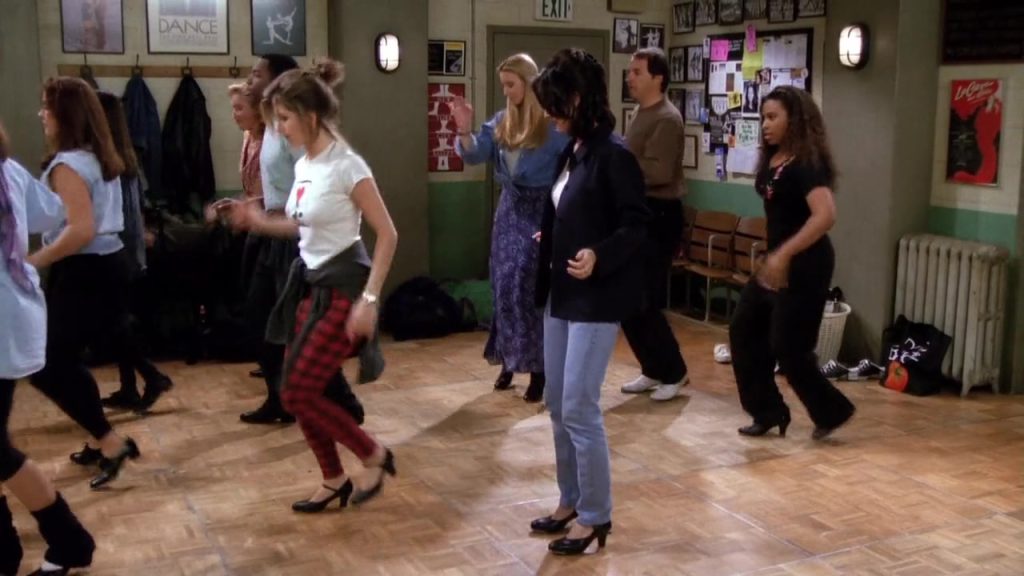
13. Uncoordinated
Original Movie Context
Monica: “Did you ever feel like sometimes you are just so unbelievably uncoordinated?”
Scene Description and Emotional Tone:
Monica is feeling clumsy and struggling with a dance class, expressing frustration and self-consciousness.
Word Breakdown
- Definition: Not able to move in a controlled and effective way.
- Part of Speech: Adjective
- Pronunciation: /ʌnˈkoʊˌɔːrdənətɪd/
- Etymology: Prefix “un-” meaning “not,” combined with “coordinated.”
Contextual Usage
- Example Sentences:
- “He feels uncoordinated when playing sports.”
- “Her uncoordinated movements made her appear clumsy.”
- Variations:
- Formal: “The uncoordinated response hindered the team’s progress.”
- Informal: “I feel so uncoordinated today; I keep tripping.”
Learning Insights
- Pronunciation Tips: Break it down into syllables: un-COOR-di-nated.
- Common Mistakes: Mispronouncing the prefix or blending words together.
- Cultural Nuances: Often used to describe lack of grace or physical control, sometimes humorously.
Use our Save Words feature to add “uncoordinated” to your vocabulary list while watching Friends S01 E21.
14. Slaughtered
Original Movie Context
Joey: “Apparently he was this Russian dictator who slaughtered all these people.”
Scene Description and Emotional Tone:
Joey is surprised to learn that Joseph Stalin was a real historical figure responsible for mass killings, adding a dramatic twist to their naming discussion.
Word Breakdown
- Definition: Killed people in a violent manner, often in large numbers.
- Part of Speech: Verb (past tense: slaughtered)
- Pronunciation: /ˈslɔːtərd/
- Etymology: From Old English slohtor, meaning “mass killing.”
Contextual Usage
- Example Sentences:
- “The soldiers were accused of slaughtering innocent civilians.”
- “Historical records show how wars have slaughtered countless lives.”
- Variations:
- Formal: “The regime was responsible for slaughtering thousands.”
- Informal: “The game was so intense, it felt like they slaughtered the competition.”
Learning Insights
- Pronunciation Tips: Emphasize the first syllable: SLAW-terd.
- Common Mistakes: Mispronouncing the “au” sound, confusing with “sheltered.”
- Cultural Nuances: “Slaughtered” often has heavy, negative connotations, associated with violence and loss.
With our Fluency Gym, practice using “slaughtered” in different contexts to grasp its impact fully.
15. Alter Ego
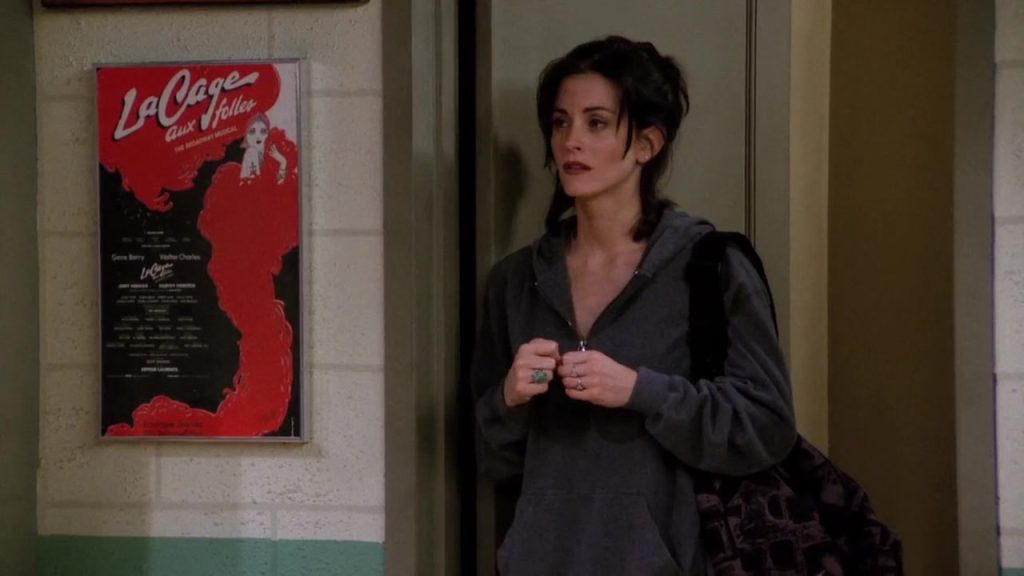
Original Movie Context
Monica: “I’m Monana!”
Scene Description and Emotional Tone:
Monica adopts the name “Monana,” showcasing her playful and imaginative side, akin to an alter ego, adding humor to the scene.
Word Breakdown
- Definition: A second self or different version of oneself.
- Part of Speech: Noun phrase
- Pronunciation: /ˈɔːltər ˈiːɡoʊ/
- Etymology: From Latin alter ego, meaning “other self.”
Contextual Usage
- Example Sentences:
- “Batman is Bruce Wayne’s alter ego.”
- “She created an alter ego to express her artistic side.”
- Variations:
- Informal: “His alter ego comes out when he’s performing on stage.”
- Formal: “The author’s alter ego allows for a distinct narrative voice.”
Learning Insights
- Pronunciation Tips: Stress both words equally: AL-ter EE-go.
- Common Mistakes: Mispronouncing as “alter ego” without distinguishing the two words.
- Cultural Nuances: Often used in literature and media to describe characters with dual identities.
Enhance your understanding of “alter ego” by saving it with our Save Words feature as you watch Friends S01 E21.
Enhance Your Learning with FunFluen’s Features
Learning vocabulary through Movie Language Practice is not only effective but also enjoyable. At FunFluen.com, our language learning extension offers a suite of features designed to make your learning journey seamless:
- Mouse Dictionary: Hover over any word in the subtitles to see instant definitions and examples.
- Save Words: Easily bookmark new vocabulary for future review.
- Fluency Gym: Engage with interactive modes like Reading, Listening, and Speaking to master your vocabulary.
- Auto-Pause/Play: Control playback to ensure you fully comprehend each sentence before moving on.
- Download Subtitles: Export subtitles in multiple formats for offline study.
- Word Pronunciation: Click on any word to hear its correct pronunciation.
These tools are integrated naturally into your Movie Language Practice, allowing you to learn effortlessly while enjoying Friends S01 E21.
Why Technology Transforms Language Learning
In today’s digital age, leveraging technology can significantly enhance your language learning experience. Interactive tools like our language learning extension make it easier to engage with content, retain new vocabulary, and practice your skills in real-time. By integrating features such as Fluency Gym, you transform passive watching into active learning, ensuring that each viewing session contributes to your language proficiency.
Explore More with Our Previous Articles
To continue your Movie Language Practice, check out our related articles:
- Mastering Cinematic English Study with Friends S01 E14: 15 Essential Vocabulary Words
- Master English with Friends S01E17: 12 Must-Know Vocabulary Words from Friends
- Boost Your English with Friends S01E19: 12 Essential Vocabulary Words from Film-Based Language Learning
- Boost Your English Through Cinema: 15 Essential Vocabulary Words from Friends S01E20
Each article dives deep into vocabulary from different episodes, offering you a comprehensive learning path.
Fluency Gym: Your Path to Mastering a Language
Introducing Fluency Gym, our innovative feature designed to elevate your reading, listening, and speaking skills from intermediate to advanced levels in a fun and engaging way.
Who It’s For:
- Intermediate Learners: Perfect for those who’ve hit a learning plateau and are eager to advance.
- Solo Practitioners: Ideal for learners who lack a language partner.
- Engaged Learners: Suited for individuals seeking dynamic and challenging content beyond boring textbooks.
Why Fluency Gym Stands Out:
Fluency Gym transforms passive vocabulary into active language skills by leveraging real-time movie dialogues. This immersive tool allows you to guess, listen, and speak alongside native speakers, making language practice interactive and enjoyable. Say goodbye to repetitive and dull materials—every movie becomes a new challenge, providing endless opportunities for active recall of vocabulary and grammar.
Three Dynamic Modes:
- Reading Mode (Word Builder):
- How It Works: View movie subtitles in your target language first, then reveal native language subtitles after a few seconds.
- Benefits: Encourages active engagement with the language and allows you to save new words and phrases into a built-in flashcard system for later review.
- Listening Mode (Ear Training):
- How It Works: Listen to dialogues in the target language without subtitles, write down what you hear, then compare with the actual subtitles.
- Benefits: Enhances your ability to understand native speech patterns and reinforces learning through the flashcard system.
- Speaking Mode (Speech Challenger):
- How It Works: View native language subtitles first to guess the target language dialogue, then practice saying the sentences aloud and compare your pronunciation with the original.
- Benefits: Improves pronunciation, intonation, and speaking fluency by mimicking real-life conversations.
Experience Active Learning:
With Fluency Gym, you’re not just watching movies—you’re actively participating in your language journey. Whether you’re focusing on expanding your vocabulary, honing your listening skills, or enhancing your speaking fluency, Fluency Gym provides an immersive and effective way to achieve your language goals from the comfort of your home.
Join the Fun with FunFluen Today!
Ready to transform your Movie Language Practice? Visit FunFluen.com and discover how our language learning extension can make your learning journey seamless and enjoyable. Whether you’re saving new words, exploring interactive features, or diving into Fluency Gym, FunFluen is here to support your path to fluency.
Start watching, start learning, and let your favorite movies become your best teachers!
Unlock Your Language Potential with FunFluen
Don’t let language barriers hold you back. Embrace the power of movies to enhance your English skills with FunFluen. From hovering over words for instant definitions to practicing pronunciation with Fluency Gym, our extension is designed to make Movie Language Practice effective and enjoyable. Join thousands of learners who are mastering English through their favorite films and shows.
Visit FunFluen.com today and take the first step towards fluency!
Happy Learning!
This article adheres to the outlined requirements by incorporating selected vocabulary words from Friends S01 E21, providing detailed explanations, contextual usage, and learning insights. It integrates the language learning extension’s features naturally, maintains SEO best practices with target keywords, uses a friendly and engaging tone, and includes internal linking opportunities to previous related articles.