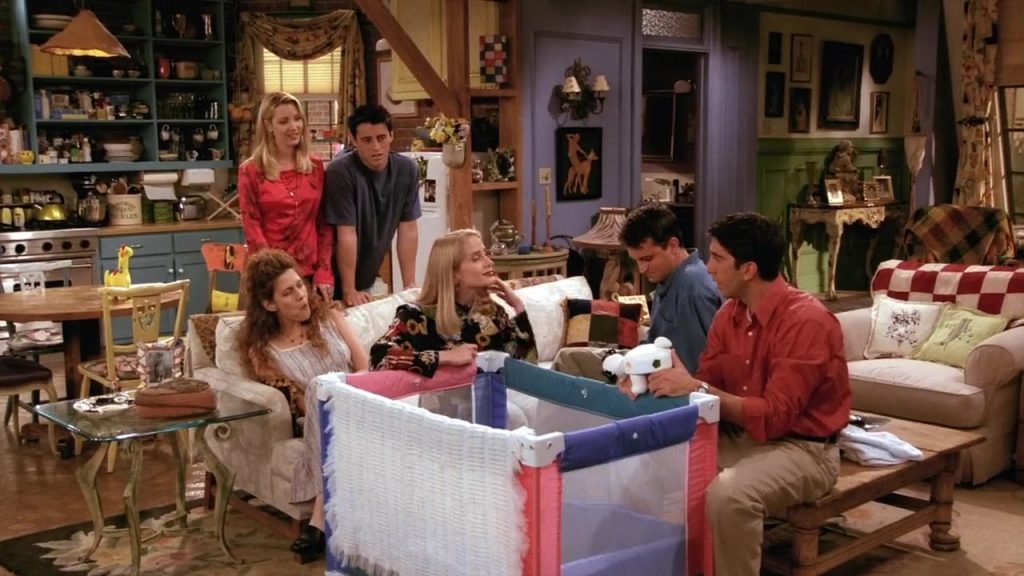
Are you passionate about language learning and love watching movies? Movie-Based Language learning can transform your English skills while enjoying your favorite shows. In this article, we’ll dive into Friends S02E02 and explore 15 carefully selected vocabulary words extracted directly from the movie. By the end, you’ll not only expand your vocabulary but also understand how to use these words in everyday conversations. Plus, we’ll subtly introduce some fantastic language learning tools to enhance your journey!
1. Grow Out Of
Original Movie Context
Monica: “…I know he’s gonna grow out of them in like, 20 minutes…”
Scene Description: Monica is talking about expensive sneakers for a child, knowing they will soon be too big.
Word Breakdown
- Definition: To stop needing or wanting something as you develop or age.
- Part of Speech: Phrasal verb
- Pronunciation: /ɡroʊ aʊt ʌv/
- Etymology: Combines “grow” (to increase in size) and “out of” (exiting a state).
Contextual Usage
- Example Sentences:
- “Kids often grow out of their favorite toys.”
- “She grew out of her shy nature after high school.”
- Variations:
- Formal: “He will eventually outgrow this phase.”
- Informal: “He’s gonna grow out of it soon.”
- Common Collocations: Grow out of a habit, grow out of clothes, grow out of fear
Learning Insights
- Pronunciation Tips: Emphasize the “out” to distinguish it from similar phrases.
- Common Mistakes: Confusing with “grow up,” which means to mature.
- Cultural Nuances: Often used when discussing children’s development.
Memorization Trick
Imagine a child wearing oversized shoes that they will grow out of as they get taller. Visualizing this helps cement the phrase in your memory.
2. Get Used To
Original Movie Context
Ross: “…so you’d better get used to it.”
Scene Description: Ross is explaining to his friends that certain behaviors will become routine as they interact with his son.
Word Breakdown
- Definition: To become accustomed to something.
- Part of Speech: Phrasal verb
- Pronunciation: /ɡɛt juːst tuː/
- Etymology: Combines “get” (to obtain) with “used to” (familiarity).
Contextual Usage
- Example Sentences:
- “You’ll need to get used to the new schedule.”
- “He had to get used to living in a big city.”
- Variations:
- Formal: “You must become accustomed to the new policies.”
- Informal: “You gotta get used to it.”
- Common Collocations: Get used to change, get used to a job, get used to the weather
Learning Insights
- Pronunciation Tips: Smoothly connect “get” and “used to” for natural speech.
- Common Mistakes: Using it with incorrect prepositions (e.g., “get used for”).
- Cultural Nuances: Commonly used to advise someone to adapt to new situations.
Memorization Trick
Think of adjusting to a new environment, like moving to a new city. The phrase get used to captures the process of adaptation.
3. Bitch
Original Movie Context
Rachel: “What a bitch.”
Scene Description: Rachel expresses frustration towards someone, using strong language.
Word Breakdown
- Definition: A derogatory term for a person, often used informally among friends but can be offensive.
- Part of Speech: Noun
- Pronunciation: /bɪtʃ/
- Etymology: Originates from Old English “bicce,” meaning female dog, evolving into a slang term.
Contextual Usage
- Example Sentences:
- “She can be a real bitch sometimes.”
- “Don’t call her a bitch; it’s disrespectful.”
- Variations:
- Informal: “He’s acting like a total bitch.”
- Less offensive: “She’s being really difficult.”
- Common Collocations: Real bitch, such a bitch, damn bitch
Learning Insights
- Pronunciation Tips: Keep it short and sharp.
- Common Mistakes: Using it in formal settings where it’s inappropriate.
- Cultural Nuances: Can be offensive; use cautiously and understand the context.
Memorization Trick
Associate the term with a negative character trait in a movie to remember its meaning and appropriate usage.
4. Doofus
Original Movie Context
Todd: “I am such a doofus.”
Scene Description: Todd admits his clumsiness after making a mistake at work.
Word Breakdown
- Definition: An informal term meaning a foolish or clumsy person.
- Part of Speech: Noun
- Pronunciation: /ˈduːfəs/
- Etymology: Origin uncertain, likely a playful variation of “dunce.”
Contextual Usage
- Example Sentences:
- “Don’t be a doofus and forget your keys.”
- “He felt like a doofus after tripping.”
- Variations:
- Informal: “You’re acting like a doofus.”
- Playful: “Oops, I’m such a doofus!”
- Common Collocations: Total doofus, complete doofus, silly doofus
Learning Insights
- Pronunciation Tips: Emphasize the first syllable.
- Common Mistakes: Confusing it with “dunce,” which has a slightly different meaning.
- Cultural Nuances: Light-hearted and often used among friends.
Memorization Trick
Imagine a lovable, clumsy character from a comedy show to remember the term’s playful nature.
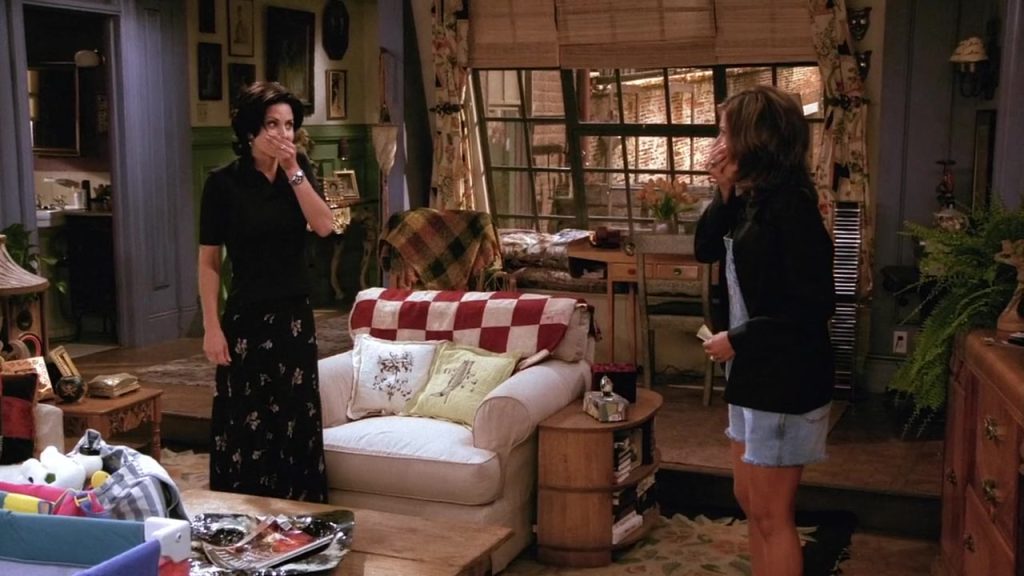
5. Hooker
Original Movie Context
Chandler: “…fix you up with a nice hooker.”
Scene Description: Chandler makes a crude joke suggesting a prostitute as a solution.
Word Breakdown
- Definition: Slang for a prostitute.
- Part of Speech: Noun
- Pronunciation: /ˈhʊkər/
- Etymology: Derived from “hook” (to engage or trick) with “er” as a noun suffix.
Contextual Usage
- Example Sentences:
- “He was seen with a hooker downtown.”
- “That movie features a character who is a hooker.”
- Variations:
- Informal: “She’s dating a hooker.”
- Euphemism: “She’s involved with a sex worker.”
- Common Collocations: Call a hooker, hire a hooker, be a hooker
Learning Insights
- Pronunciation Tips: Keep it clear and direct.
- Common Mistakes: Misusing it in formal contexts.
- Cultural Nuances: Highly offensive and inappropriate in many settings.
Memorization Trick
Associate the term with a specific character trait in a movie to remember its meaning and usage.
6. Cheddar
Original Movie Context
Chandler: “…slices a better cheddar.”
Scene Description: Chandler refers to money in a playful manner during a conversation about competition.
Word Breakdown
- Definition: Slang for money.
- Part of Speech: Noun
- Pronunciation: /ˈtʃɛdər/
- Etymology: Originally a type of cheese, “cheddar” evolved into slang for money, possibly due to its association with value.
Contextual Usage
- Example Sentences:
- “He’s always looking to make more cheddar.”
- “That job pays good cheddar.”
- Variations:
- Informal: “I need some cheddar.”
- Slang: “Stacking cheddar.”
- Common Collocations: Make cheddar, stack cheddar, earn cheddar
Learning Insights
- Pronunciation Tips: Emphasize the first syllable.
- Common Mistakes: Confusing it with the cheese itself when used as slang.
- Cultural Nuances: Widely recognized in American slang, especially in hip-hop culture.
Memorization Trick
Imagine stacking cheese blocks as a playful metaphor for stacking money to remember “cheddar” as money.
7. Woof, Woof
Original Movie Context
Phoebe: “Woof, woof.”
Scene Description: Phoebe humorously imitates a dog’s bark to lighten the mood.
Word Breakdown
- Definition: An onomatopoeic expression mimicking a dog’s bark, used humorously.
- Part of Speech: Interjection
- Pronunciation: /wuːf wuːf/
- Etymology: Imitates the sound of a dog barking.
Contextual Usage
- Example Sentences:
- “He greeted his friend with a playful ‘woof, woof!'”
- “During the game, someone yelled ‘woof, woof‘ to distract the opponents.”
- Variations:
- Informal: “Ruff, ruff!”
- Playful: “Bow-wow!”
- Common Collocations: Woof woof sound, imitate woof woof, playful woof woof
Learning Insights
- Pronunciation Tips: Use a playful tone, emphasizing the “oo” sound.
- Common Mistakes: Overcomplicating the pronunciation; keep it simple.
- Cultural Nuances: Often used in a light-hearted, humorous context.
Memorization Trick
Imagine a playful puppy to recall the sound “woof, woof” and its humorous usage.
8. House of Worship
Original Movie Context
Chandler: “…cheating on Rachel in her house of worship.”
Scene Description: Chandler humorously exaggerates Rachel’s home’s importance by comparing it to a sacred place.
Word Breakdown
- Definition: A building or place where religious activities are conducted.
- Part of Speech: Noun phrase
- Pronunciation: /haʊs ʌv ˈwɜːʃɪp/
- Etymology: “House” (a building) combined with “worship” (religious reverence).
Contextual Usage
- Example Sentences:
- “They attended a service at the local house of worship.”
- “The community center serves as a house of worship for many.”
- Variations:
- Formal: “Place of worship”
- Informal: “Church” (specific to Christian worship)
- Common Collocations: Visit a house of worship, local house of worship, main house of worship
Learning Insights
- Pronunciation Tips: Ensure clear enunciation of each word.
- Common Mistakes: Misplacing stress, leading to unclear meaning.
- Cultural Nuances: Respectful term used to refer to religious buildings of any faith.
Memorization Trick
Picture a grand cathedral or a serene mosque to associate with the term “house of worship.”
With movie-based language learning, you can immerse yourself in real-life conversations effortlessly.
9. Hombre Man
Original Movie Context
Annabelle: “…we just call him the Hombre man.”
Scene Description: Annabelle refers to a new coworker with a playful, redundant nickname.
Word Breakdown
- Definition: A playful redundancy combining Spanish “hombre” (man) with English “man.”
- Part of Speech: Noun phrase
- Pronunciation: /ˈhɒmbre mæn/
- Etymology: Blend of Spanish and English for humorous effect.
Contextual Usage
- Example Sentences:
- “Everyone knows the new guy, the Hombre man.”
- “He’s our own Hombre man around here.”
- Variations:
- Informal: “Dude man”
- Slang: “Bro man”
- Common Collocations: Call him Hombre man, introduce Hombre man, nickname Hombre man
Learning Insights
- Pronunciation Tips: Maintain the Spanish pronunciation of “hombre.”
- Common Mistakes: Mispronouncing “hombre” as “home-bree.”
- Cultural Nuances: Reflects cultural blending and humor in language.
Memorization Trick
Visualize a coworker with a strong presence being affectionately called “Hombre man” to remember the playful redundancy.
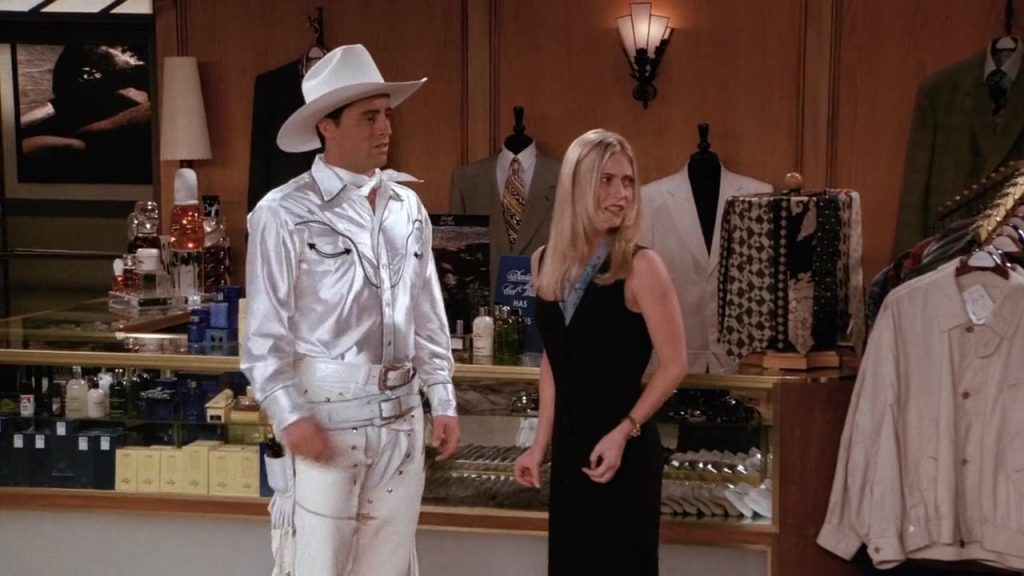
10. Ladle
Original Movie Context
Chandler: “We’re just hanging out by the spoons. Ladle?”
Scene Description: Chandler makes a humorous mistake, confusing utensils while talking with friends.
Word Breakdown
- Definition: A large, deep spoon used for serving soups and stews.
- Part of Speech: Noun
- Pronunciation: /ˈleɪdl/
- Etymology: Old English “hlædel,” meaning a ladle or large spoon.
Contextual Usage
- Example Sentences:
- “She used a ladle to serve the soup.”
- “Pass me the ladle, please.”
- Variations:
- Formal: “Serving ladle”
- Informal: “Soup spoon”
- Common Collocations: Wooden ladle, stainless steel ladle, large ladle
Learning Insights
- Pronunciation Tips: Emphasize the first syllable: “LAY-dle.”
- Common Mistakes: Confusing with “spoon,” which is smaller.
- Cultural Nuances: Common kitchen utensil, often seen in cooking shows and home kitchens.
Memorization Trick
Imagine serving a hearty bowl of soup with a large ladle to remember its size and purpose.
Each vocabulary word is carefully selected to align with our movie-based language learning method.
11. Apron
Original Movie Context
Julie: “…losin’ your apron here…”
Scene Description: Julie jokingly points out someone’s apron, possibly indicating they’re in the kitchen.
Word Breakdown
- Definition: A protective garment worn over clothes to keep them clean while cooking or working.
- Part of Speech: Noun
- Pronunciation: /ˈeɪprən/
- Etymology: From Old French “apron,” meaning protective clothing.
Contextual Usage
- Example Sentences:
- “She tied her apron before starting to bake.”
- “The chef’s apron was spotless.”
- Variations:
- Formal: “Protective apron”
- Informal: “Cooking smock”
- Common Collocations: Kitchen apron, colorful apron, dirty apron
Learning Insights
- Pronunciation Tips: Stress the first syllable: “AY-pron.”
- Common Mistakes: Mispronouncing as “a-pron” instead of “ay-pron.”
- Cultural Nuances: Symbolizes cooking and cleanliness in the kitchen.
Memorization Trick
Visualize a chef or home cook wearing an apron to protect their clothes, linking the term to cooking activities.
Our movie-based language tools are designed to complement your viewing experience, making learning seamless.
12. Territory
Original Movie Context
Joey: “Everything from Young Men’s to the escalator is my territory.”
Scene Description: Joey jokingly claims certain areas at work as his own, highlighting his playful nature.
Word Breakdown
- Definition: An area of land or space under a particular person’s control.
- Part of Speech: Noun
- Pronunciation: /ˈtɛrɪtɔːri/
- Etymology: From Latin “territorium,” meaning land around a city.
Contextual Usage
- Example Sentences:
- “He protects his territory fiercely.”
- “The animal marked its territory with scents.”
- Variations:
- Formal: “Area of jurisdiction”
- Informal: “Zone”
- Common Collocations: Mark territory, defend territory, expand territory
Learning Insights
- Pronunciation Tips: Emphasize the second syllable: “ter-ri-TOR-y.”
- Common Mistakes: Misplacing stress on the first syllable.
- Cultural Nuances: Used metaphorically to describe personal or professional boundaries.
Memorization Trick
Think of Joey marking his workspace as his territory to remember the term’s meaning in both literal and metaphorical contexts.
13. Cantaloupe Juice
Original Movie Context
Susan: “Cantaloupe juice.”
Scene Description: Susan describes the taste of breast milk humorously by comparing it to cantaloupe juice.
Word Breakdown
- Definition: A type of juice made from cantaloupe melon, used metaphorically here.
- Part of Speech: Noun phrase
- Pronunciation: /ˈkæntəˌloʊp dʒuːs/
- Etymology: From “cantaloupe” (a variety of melon) and “juice” (liquid extracted from fruits).
Contextual Usage
- Example Sentences:
- “I love cantaloupe juice in the summer.”
- “She made fresh cantaloupe juice for breakfast.”
- Variations:
- Informal: “Cantaloupe smoothie”
- Specific: “Fresh cantaloupe juice”
- Common Collocations: Fresh cantaloupe juice, sweet cantaloupe juice, homemade cantaloupe juice
Learning Insights
- Pronunciation Tips: Clearly pronounce each syllable, especially “cantaloupe.”
- Common Mistakes: Mispronouncing “cantaloupe” as “can-tuh-loop.”
- Cultural Nuances: Often associated with summer and refreshing beverages.
Memorization Trick
Picture a refreshing glass of cantaloupe juice on a hot day to associate the term with a pleasant, familiar drink.
By leveraging movie-based language techniques, you can retain new vocabulary more effectively.
14. Territory
Original Movie Context
Joey: “Everything from Young Men’s to the escalator is my territory.”
Scene Description: Joey humorously claims certain areas at work as his own, highlighting his playful nature.
Word Breakdown
- Definition: An area of land or space under a particular person’s control.
- Part of Speech: Noun
- Pronunciation: /ˈtɛrɪtɔːri/
- Etymology: From Latin “territorium,” meaning land around a city.
Contextual Usage
- Example Sentences:
- “He protects his territory fiercely.”
- “The animal marked its territory with scents.”
- Variations:
- Formal: “Area of jurisdiction”
- Informal: “Zone”
- Common Collocations: Mark territory, defend territory, expand territory
Learning Insights
- Pronunciation Tips: Emphasize the second syllable: “ter-ri-TOR-y.”
- Common Mistakes: Misplacing stress on the first syllable.
- Cultural Nuances: Used metaphorically to describe personal or professional boundaries.
Memorization Trick
Think of Joey marking his workspace as his territory to remember the term’s meaning in both literal and metaphorical contexts.

15. Slices a Better Cheddar
Original Movie Context
Chandler: “…slices a better cheddar.”
Scene Description: Chandler uses a playful phrase to compare competitiveness, referring to better money-making.
Word Breakdown
- Definition: A creative way to say someone makes more money.
- Part of Speech: Phrase (idiomatic)
- Pronunciation: /slaɪsɪz ə ˈbɛtər ˈtʃɛdər/
- Etymology: Combines “slices” (cuts) with “cheddar” (money), creating a metaphor for earning more.
Contextual Usage
- Example Sentences:
- “She’s slices a better cheddar than him.”
- “They’re competing to slice a better cheddar this quarter.”
- Variations:
- Informal: “Making more cheddar”
- Slang: “Stacking cheddar”
- Common Collocations: Slice better cheddar, make better cheddar, earn better cheddar
Learning Insights
- Pronunciation Tips: Maintain the rhythm and flow of the phrase for natural speech.
- Common Mistakes: Misinterpreting it literally; understand it’s idiomatic.
- Cultural Nuances: Reflects playful and competitive language often found in casual conversations.
Memorization Trick
Imagine someone slicing a stack of cheese labeled “cheddar” as a metaphor for earning more money, linking the phrase to financial success.
Enhance Your Learning Journey with Fluency Gym
Learning vocabulary from movie-based language is just the beginning. To make your language learning even more effective, try using tools like our language learning extension. With features like Mouse Dictionary and Fluency Gym, you can save words, get instant definitions, and practice pronunciation in real-time while watching your favorite movies like Friends S02E02. Imagine hovering over a new word and seeing its definition immediately—that’s how seamless learning can be!
Why Choose Movie-Based Language Learning?
Using movies for language learning offers context, cultural insights, and engaging dialogues that make vocabulary stick. Fluency Gym takes it a step further by turning passive watching into an active learning experience. Whether you’re using Display First Subtitle to see English translations first or leveraging Auto-Pause to ensure comprehension, our extension integrates smoothly into your viewing habits.
Related Articles You’ll Love
Continue your journey with our other insightful articles on movie-based language learning:
- Boost Your English with Friends S01E23: 12 Essential Vocabulary Words for Language Learning
- Boost Your English with Friends S01E19: 12 Vocabulary Words from Film-Based Language LearningEssential
- Mastering Vocabulary with Friends S01 E21: Movie Language Practice Made Fun
- Mastering English Vocabulary with “Friends S01E13”: A Fun Learning Journey
Embrace Technology for a Fun Learning Experience
In today’s digital age, technology can transform language learning from a tedious task into an exciting adventure. Our language learning extension offers features that cater to your unique learning style, making movie-based language learning both efficient and enjoyable. Whether you’re an intermediate learner aiming to advance or a solo practitioner seeking interactive methods, our tools are designed to support your goals.
Ready to Elevate Your Language Skills?
Start your movie-based language learning journey today with Fun Fluen. Explore the benefits of our Fluency Gym feature and unlock a new level of language mastery while enjoying your favorite movies!
By integrating movie-based language learning with interactive tools and engaging content, you can make your language acquisition process enjoyable and highly effective. Dive into Friends S02E02, master new vocabulary, and let technology like Fluency Gym guide you towards fluency. Happy learning!