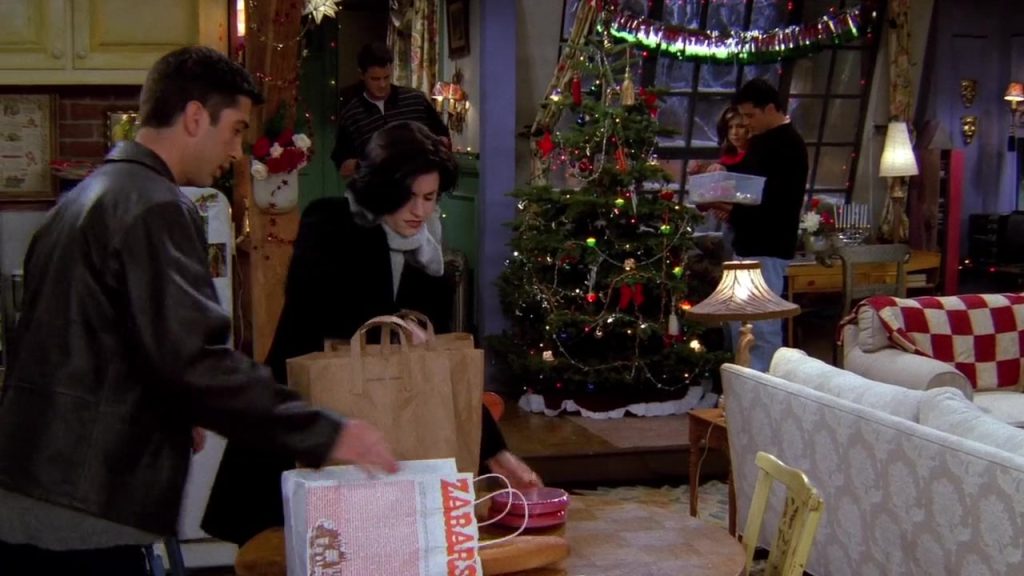
Welcome to the ultimate guide for Streaming Language Lessons! If you’re an intermediate English learner eager to boost your vocabulary while enjoying your favorite shows, you’re in the right place. In this article, we dive into Friends S02E09, extracting 15 essential vocabulary words and idioms that will elevate your language skills. Plus, discover how our innovative language learning extension, FunFluen, can transform your viewing experience into an engaging educational journey.
Vocabulary to Learn in This Article
- Play Hardball
- Seize the Day
- Impersonal
- Authentic
- Hardball
- Smashed
- Collapse
- Pot
- Cheat Sheet
- Obsession
- Tacky
- Hedge
- Collie
- Gremlin
- Pharmacist
Let’s explore each word in depth!
1. Play Hardball
Original Movie Context
- Subtitle/Dialog: “You mean hardball?”
- Scene Description: Monica and Ross are discussing tipping their super. Ross uses a metaphor to emphasize firmness.
- Emotional Tone: Serious and assertive.
Word Breakdown
- Definition: To behave in a tough or uncompromising manner.
- Part of Speech: Verb phrase
- Pronunciation: /pleɪ ˈhɑːrdˌbɔːl/
- Etymology: Originates from baseball, where playing hardball means playing the sport seriously and competitively.
Contextual Usage
- Formal: “In negotiations, she decided to play hardball to secure the best deal.”
- Informal: “If you want that raise, you might have to play hardball with your boss.”
- Common Collocations: Play hardball + negotiations, business, competition.
Learning Insights
- Pronunciation Tips: Stress on the first syllable of both words.
- Common Mistakes: Confusing with “hard luck.”
- Cultural Nuances: Reflects a competitive American business culture.
- Memorization Tricks: Imagine a baseball game where one team is intensely competitive.
2. Seize the Day
Original Movie Context
- Subtitle/Dialog: “You say I never seize the day…”
- Scene Description: Ross urges Rachel to take action and enjoy life.
- Emotional Tone: Encouraging and motivational.
Word Breakdown
- Definition: To take full advantage of the present moment.
- Part of Speech: Verb phrase
- Pronunciation: /siːz ðə deɪ/
- Etymology: Derived from the Latin phrase “carpe diem.”
Contextual Usage
- Formal: “Graduates are encouraged to seize the day and pursue their dreams.”
- Informal: “Let’s seize the day and go hiking this weekend!”
- Common Collocations: Seize the day + opportunities, moment, chance.
Learning Insights
- Pronunciation Tips: Blend “seize” smoothly with “the day.”
- Common Mistakes: Mispronouncing “seize” as “size.”
- Cultural Nuances: Emphasizes the value of living in the present, a common theme in motivational contexts.
- Memorization Tricks: Think of “seizing” an opportunity like grabbing it firmly.
3. Impersonal
Original Movie Context
- Subtitle/Dialog: “Money is so impersonal.”
- Scene Description: Monica explains why they chose to give homemade cookies instead of money as a tip.
- Emotional Tone: Reflective and thoughtful.
Word Breakdown
- Definition: Lacking personal connection or warmth.
- Part of Speech: Adjective
- Pronunciation: /ɪmˈpɜːrsənl/
- Etymology: From Latin “impersonalis,” meaning “not personal.”
Contextual Usage
- Formal: “The company’s approach to customer service was criticized as impersonal.”
- Informal: “Sending a text can feel a bit impersonal compared to a phone call.”
- Common Collocations: Impersonal + communication, gesture, approach.
Learning Insights
- Pronunciation Tips: Emphasize the second syllable: im-PER-sonal.
- Common Mistakes: Misplacing stress on the first syllable.
- Cultural Nuances: Highlights the importance of personal touch in relationships.
- Memorization Tricks: Picture a robotic interaction lacking warmth.
4. Authentic
Original Movie Context
- Subtitle/Dialog: “Look at these authentic fake medals.”
- Scene Description: Monica comments on Ross’s tacky blouse adorned with medals.
- Emotional Tone: Humorous and sarcastic.
Word Breakdown
- Definition: Genuine or real; in this context, humorously refers to fake but convincingly made items.
- Part of Speech: Adjective
- Pronunciation: /ɔːˈθɛntɪk/
- Etymology: From Greek “authentikos,” meaning “original, genuine.”
Contextual Usage
- Formal: “The museum displayed authentic artifacts from ancient Egypt.”
- Informal: “This is an authentic replica of the famous sculpture.”
- Common Collocations: Authentic + experience, cuisine, artifacts.
Learning Insights
- Pronunciation Tips: Stress on the second syllable: au-THEN-tic.
- Common Mistakes: Mispronouncing as “authenticly.”
- Cultural Nuances: Valued for its connotation of originality and quality.
- Memorization Tricks: Think of “authentic” as something truly original versus a copy.

5. Hardball
Original Movie Context
- Subtitle/Dialog: “You mean hardball?”
- Scene Description: Ross clarifies Monica’s statement about being tough.
- Emotional Tone: Corrective and serious.
Word Breakdown
- Definition: A term used to describe a strict or uncompromising approach.
- Part of Speech: Noun
- Pronunciation: /ˈhɑːrdˌbɔːl/
- Etymology: Related to the idiom “play hardball.”
Contextual Usage
- Formal: “The CEO is known for playing hardball during mergers.”
- Informal: “If you want that project, you have to play hardball.”
- Common Collocations: Play hardball, hardball negotiations, hardball tactics.
Learning Insights
- Pronunciation Tips: Ensure a strong “hard” sound followed by “ball.”
- Common Mistakes: Confusing with “baseball.”
- Cultural Nuances: Represents a tough, no-nonsense attitude often admired in competitive environments.
- Memorization Tricks: Visualize someone throwing a hard pitch in baseball as a metaphor for toughness.
6. Smashed
Original Movie Context
- Subtitle/Dialog: “These are cookies smashed in the sports section.”
- Scene Description: Joey shows the torn-up newspaper with smashed cookies.
- Emotional Tone: Frustrated and exasperated.
Word Breakdown
- Definition: Broken into pieces violently.
- Part of Speech: Adjective (past participle)
- Pronunciation: /smæʃt/
- Etymology: From Old English “smascan,” meaning “to break into pieces.”
Contextual Usage
- Formal: “The window was smashed during the storm.”
- Informal: “I was so angry, I smashed my phone.”
- Common Collocations: Smashed + window, car, cookie, pieces.
Learning Insights
- Pronunciation Tips: Short “a” sound, rhyming with “hashed.”
- Common Mistakes: Pronouncing with a long “a” as in “smashed” vs. “smashed.”
- Cultural Nuances: Conveys a sense of destruction, often used metaphorically.
- Memorization Tricks: Imagine cookies being forcefully broken into the newspaper.
Our innovative approach to Streaming Language Lessons ensures that every episode of Friends becomes a valuable learning opportunity.
7. Collapse
Original Movie Context
- Subtitle/Dialog: “He did my crossword puzzle.”
- Scene Description: The group discusses the messed-up newspaper.
- Emotional Tone: Confused and amused.
Word Breakdown
- Definition: To fall down or give way suddenly.
- Part of Speech: Verb
- Pronunciation: /kəˈlæps/
- Etymology: From Latin “collapsus,” meaning “fallen together.”
Contextual Usage
- Formal: “The building may collapse if not properly maintained.”
- Informal: “I feel like I’m going to collapse after that workout.”
- Common Collocations: Collapse + building, bridge, after exertion.
Learning Insights
- Pronunciation Tips: Emphasize the second syllable: col-LAPSE.
- Common Mistakes: Mispronouncing the second syllable.
- Cultural Nuances: Often used in contexts of failure or exhaustion.
- Memorization Tricks: Think of something falling apart under pressure.
Discover how Streaming Language Lessons can help you grasp complex vocabulary and idioms featured in Friends S02E09 effortlessly.
8. Pot
Original Movie Context
- Subtitle/Dialog: “I think they had pot in them.”
- Scene Description: Phoebe speculates that the brownies had marijuana.
- Emotional Tone: Suspicious and humorous.
Word Breakdown
- Definition: Slang for marijuana.
- Part of Speech: Noun
- Pronunciation: /pɑːt/
- Etymology: From Middle English “pot,” referring to a container, later adopted as slang for marijuana.
Contextual Usage
- Formal: “Marijuana use is regulated differently across states.”
- Informal: “He got busted for having pot in his bag.”
- Common Collocations: Use pot, pot brownies, grow pot.
Learning Insights
- Pronunciation Tips: Simple, as it rhymes with “hot.”
- Common Mistakes: Confusing with the cooking utensil “pot.”
- Cultural Nuances: Reflects slang used in casual conversations, often among younger audiences.
- Memorization Tricks: Associate “pot” with its slang meaning by thinking of a pot used in cooking pot brownies.
Enhance your understanding of Friends S02E09 through our Streaming Language Lessons, designed to make language acquisition seamless and enjoyable.
9. Cheat Sheet
Original Movie Context
- Subtitle/Dialog: “That’s my cheat sheet.”
- Scene Description: Phoebe hands Chandler a piece of paper with directions.
- Emotional Tone: Lighthearted and helpful.
Word Breakdown
- Definition: A concise set of notes used for quick reference.
- Part of Speech: Noun
- Pronunciation: /tʃiːt ʃiːt/
- Etymology: “Cheat” combined with “sheet,” implying a shortcut or aid.
Contextual Usage
- Formal: “The professor provided a cheat sheet for the final exam.”
- Informal: “I made a cheat sheet for the game instructions.”
- Common Collocations: Make a cheat sheet, use a cheat sheet, handy cheat sheet.
Learning Insights
- Pronunciation Tips: Ensure clarity between “cheat” and “sheet.”
- Common Mistakes: Mispronouncing as one word.
- Cultural Nuances: Implies a helpful shortcut rather than dishonest cheating in this context.
- Memorization Tricks: Visualize a small sheet of paper with important notes.
Streaming Language Lessons transform your viewing experience into a powerful language learning session, perfect for intermediate learners.
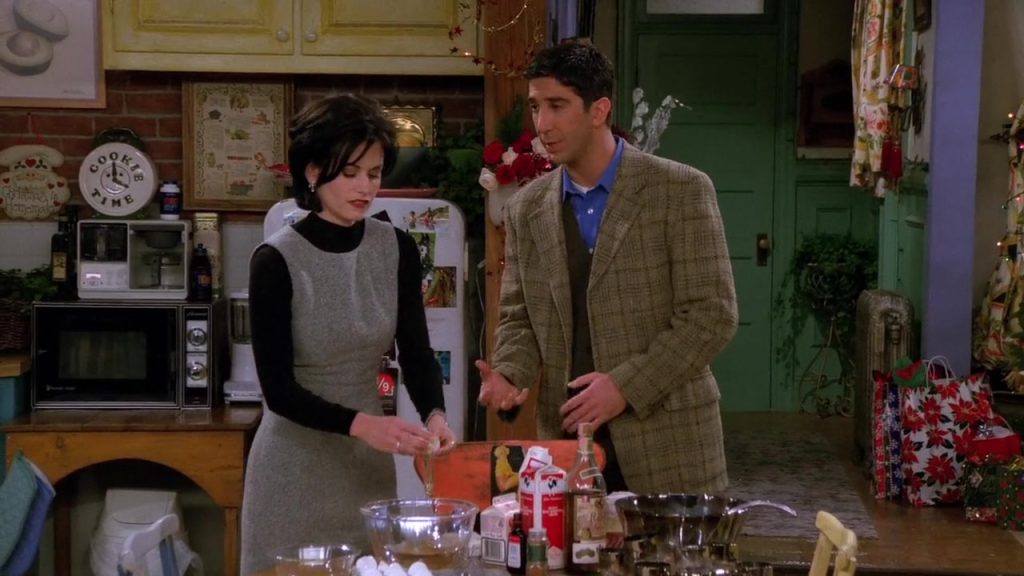
10. Obsession
Original Movie Context
- Subtitle/Dialog: “I do not think you’re obsessive.”
- Scene Description: Monica defends herself against Ross’s comment about being controlling.
- Emotional Tone: Defensive and slightly humorous.
Word Breakdown
- Definition: An idea or thought that continually preoccupies a person’s mind.
- Part of Speech: Noun
- Pronunciation: /əbˈsɛʃən/
- Etymology: From Latin “obsessio,” meaning “a besieging.”
Contextual Usage
- Formal: “Her obsession with perfection sometimes hinders her progress.”
- Informal: “He’s got an obsession with collecting stamps.”
- Common Collocations: Obsession + with, about, over.
Learning Insights
- Pronunciation Tips: Stress the second syllable: ob-SES-sion.
- Common Mistakes: Placing stress on the first syllable.
- Cultural Nuances: Often carries a negative connotation, implying excessive focus.
- Memorization Tricks: Think of someone obsessively checking their phone.
Experience the benefits of Streaming Language Lessons by using our extension to highlight and save new vocabulary as you watch.
11. Tacky
Original Movie Context
- Subtitle/Dialog: “Look at these authentic fake medals.”
- Scene Description: Monica sarcastically describes Ross’s blousy decorations.
- Emotional Tone: Amused and critical.
Word Breakdown
- Definition: In poor taste; lacking style or good judgment.
- Part of Speech: Adjective
- Pronunciation: /ˈtæki/
- Etymology: From the word “tack,” meaning “fashionable,” with a negative twist.
Contextual Usage
- Formal: “The decorations were considered tacky for a formal event.”
- Informal: “Wearing mismatched socks is a bit tacky.”
- Common Collocations: Tacky + decorations, outfit, behavior.
Learning Insights
- Pronunciation Tips: Short “a” sound, rhyming with “backy.”
- Common Mistakes: Mispronouncing with a long “a.”
- Cultural Nuances: Reflects social judgments about taste and style.
- Memorization Tricks: Picture something gaudy or overly flashy as tacky.
With Streaming Language Lessons, you don’t just watch Friends S02E09—you actively learn new words and phrases in context
12. Hedge
Original Movie Context
- Subtitle/Dialog: “You’ll make it past the hedges.”
- Scene Description: Friends encourage Phoebe as she searches for her dad.
- Emotional Tone: Supportive and optimistic.
Word Breakdown
- Definition: A fence or boundary formed by a dense row of shrubs or low trees.
- Part of Speech: Noun
- Pronunciation: /hɛdʒ/
- Etymology: From Old English “hecg,” meaning “fence made of shrubs.”
Contextual Usage
- Formal: “The garden was enclosed by a high hedge.”
- Informal: “We need to trim the hedge in the backyard.”
- Common Collocations: Tall hedge, trim the hedge, hedge boundary.
Learning Insights
- Pronunciation Tips: Sharp “h” sound, rhyming with “edge.”
- Common Mistakes: Pronouncing with a soft “g” like “hedj.”
- Cultural Nuances: Represents boundaries and privacy in residential areas.
- Memorization Tricks: Imagine walking through a thick hedge as a boundary.
Our platform leverages Streaming Language Lessons to make learning English both fun and effective, ensuring you stay engaged every step of the way.
13. Collie
Original Movie Context
- Subtitle/Dialog: “Posing in front of a bright blue screen with a collie.”
- Scene Description: Phoebe’s grandmother mistakenly identifies the person in the picture.
- Emotional Tone: Confused and clarifying.
Word Breakdown
- Definition: A type of dog breed known for herding sheep.
- Part of Speech: Noun
- Pronunciation: /ˈkɒli/
- Etymology: From Scottish Gaelic “còille,” meaning “shepherd dog.”
Contextual Usage
- Formal: “The collie is known for its intelligence and agility.”
- Informal: “I took my collie to the park today.”
- Common Collocations: Border collie, smart collie, collie breed.
Learning Insights
- Pronunciation Tips: Emphasize the first syllable: COLL-ie.
- Common Mistakes: Mispronouncing as “cole-ee.”
- Cultural Nuances: Symbolizes loyalty and intelligence in dogs.
- Memorization Tricks: Think of the famous collie, Lassie, to remember the breed.
By integrating Streaming Language Lessons into your daily routine, you can effortlessly expand your vocabulary while enjoying your favorite shows.
14. Gremlin
Original Movie Context
- Subtitle/Dialog: “Stealed her Gremlin.”
- Scene Description: Phoebe’s grandmother describes the chaos caused by her irresponsible father.
- Emotional Tone: Frustrated and exasperated.
Word Breakdown
- Definition: A mischievous creature from folklore; in this context, likely a metaphor for something stolen or causing trouble.
- Part of Speech: Noun
- Pronunciation: /ˈɡrɛm.lɪn/
- Etymology: From the 1920s, popularized by folklore and media.
Contextual Usage
- Formal: “Folklore often features gremlins as troublemakers.”
- Informal: “My computer has been acting like a gremlin lately.”
- Common Collocations: Gremlin in the works, pesky gremlin, mythical gremlin.
Learning Insights
- Pronunciation Tips: Short “e” sounds, rhyming with “gem-lin.”
- Common Mistakes: Mispronouncing the first syllable.
- Cultural Nuances: Represents minor yet annoying problems.
- Memorization Tricks: Imagine a small, mischievous creature causing trouble.

15. Pharmacist
Original Movie Context
- Subtitle/Dialog: “He was a pharmacist somewhere upstate.”
- Scene Description: Phoebe questions the sudden change in her father’s profession.
- Emotional Tone: Skeptical and curious.
Word Breakdown
- Definition: A healthcare professional who prepares and dispenses medications.
- Part of Speech: Noun
- Pronunciation: /fəˈmɑːsɪst/
- Etymology: From Greek “pharmakon,” meaning “drug.”
Contextual Usage
- Formal: “The pharmacist provided detailed instructions for the medication.”
- Informal: “I need to visit the pharmacist to get my prescription filled.”
- Common Collocations: Licensed pharmacist, community pharmacist, pharmacist training.
Learning Insights
- Pronunciation Tips: Emphasize the second syllable: pha-MA-cist.
- Common Mistakes: Mispronouncing the “phar” as “far.”
- Cultural Nuances: Viewed as trusted healthcare professionals.
- Memorization Tricks: Associate pharmacists with pharmacies and medications.
Make Language Learning Fun and Accessible
Learning new vocabulary doesn’t have to be a chore. By using engaging contexts like Friends S02E09, you can effortlessly integrate language learning into your daily routine. Imagine discussing scenes with your friends and simultaneously expanding your vocabulary! Our language learning extension, FunFluen, enhances this experience by providing features like a mouse dictionary, dual subtitles, and Fluency Gym, making your learning journey both effective and enjoyable.
How FunFluen Transforms Your Learning
- Mouse Dictionary: Simply hover over any word in the subtitles to see instant definitions. No need to pause or search manually!
- Dual Subtitles: View subtitles in two languages side by side, making it easier to compare and learn.
- Fluency Gym: Engage in interactive reading, listening, and speaking exercises directly from your favorite shows.
Learning Insights
- Pronunciation Tips: Use our word pronunciation feature to hear how each vocabulary word is pronounced correctly.
- Common Mistakes: Avoid mispronunciations and incorrect usages with instant feedback from our extension.
- Cultural Nuances: Gain a deeper understanding of cultural references and idioms used in everyday conversations.
Technology Meets Language Learning
In today’s digital age, technology plays a pivotal role in transforming traditional language learning methods. Our language learning extension leverages real-time movie dialogues to provide an immersive learning experience. Whether you’re watching Friends S02E09 or any other show, FunFluen ensures that every viewing session is a step towards fluency.
Related Articles You’ll Love
- Language Learning with Netflix: 15 Essential Vocabulary Words from Friends S01E12
- Master English with Friends S01E17: 12 Must-Know Vocabulary Words from Friends
- Cinema Language Learning: 12 Essential Vocabulary Words from Friends S01E22
- Mastering Vocabulary with Friends S02E05: A Fun Subtitle Language Practice
Explore these articles to continue your journey with engaging content and effective learning strategies!
Embrace the Adventure of Language Learning
Embark on an exciting adventure with Streaming Language Lessons and turn your favorite shows into powerful learning tools. With FunFluen, you’re not just watching—you’re actively engaging, learning, and growing your language skills. Start today and see how technology can make language learning fun, efficient, and deeply rewarding.
Ready to take your language skills to the next level? Visit FunFluen.com and discover how our Fluency Gym and other innovative features can make your learning experience unforgettable. Whether you’re watching Friends S02E09 or any other show, FunFluen is your perfect language learning companion. Join us and transform your screen time into productive learning time!
#FunFluen #LanguageLearning #StreamingLanguageLessons #LearnWithMovies #FluencyGym