
Welcome to your ultimate Film Language Study journey with Friends Season 2, Episode 10! If you’re passionate about Language Learning With Netflix or using movies as your Movie For Language study tool, you’re in the right place. In this article, we’ll dive into 12 essential vocabulary words extracted directly from Friends S02E10, providing you with a fun and engaging way to enhance your English skills. Plus, discover how our innovative language learning extension can make your study sessions even more effective!
Vocabulary to Learn in This Article
- Hit rock bottom
- Kick-you-in-the-crotch
- Scum
- Pal
- Tailor
- Inseam
- Control freak
- Let it slip
- Cupping
- Pathetic
- Silver lining
- Analyzing
1. Hit Rock Bottom
Original Movie Context
- Dialogue: Rachel says, “When I saw him get off that plane with her, I really thought I hit rock bottom.”
- Scene Description: Rachel is expressing her deep disappointment and emotional low after seeing Ross with someone else at the airport.
- Emotional Tone: Sadness and despair.
Word Breakdown
- Definition: To reach the lowest possible point emotionally or situationally.
- Part of Speech: Verb phrase.
- Pronunciation: /hɪt rɒk ˈbɒtəm/
- Etymology: Originates from the idea of hitting the lowest level of a structure, metaphorically representing a low point in life.
- Examples:
- After losing his job, John felt he had hit rock bottom.
- She thought hitting rock bottom was inevitable after the breakup.
Contextual Usage
- Example Sentences:
- He hit rock bottom after his business failed.
- Many people believe that hitting rock bottom is a turning point for positive change.
- Formal vs. Informal:
- Formal: The company has hit rock bottom and needs immediate restructuring.
- Informal: I’ve hit rock bottom ever since the argument.
- Common Collocations: Hit rock bottom, feeling rock bottom, reached rock bottom.
- Potential Idioms or Slang Variations:
- “Down in the dumps” is a similar expression conveying low spirits.
Learning Insights
- Pronunciation Tips: Emphasize the stress on “rock” and “bottom” to convey the intensity of the phrase.
- Common Mistakes: Avoid using “hit rock” without “bottom,” as it changes the meaning.
- Cultural Nuances: Often used in discussions about personal struggles or failures.
- Memorization Tricks: Visualize a person at the very base of a mountain to remember the phrase’s meaning.
2. Kick-You-in-the-Crotch
Original Movie Context
- Dialogue: Rachel exclaims, “Isn’t that just kick-you-in-the-crotch, spit-on-your-neck fantastic?”
- Scene Description: Rachel uses an exaggerated expression to describe a frustrating or negative situation.
- Emotional Tone: Frustration and exasperation.
Word Breakdown
- Definition: An exaggerated way to describe something overwhelmingly negative or frustrating.
- Part of Speech: Compound adjective.
- Pronunciation: /kɪk juː ɪn ðə krɒʧ/
- Etymology: Combines physical actions to emphasize intense negative feelings.
- Examples:
- Getting stuck in traffic on the way to an important meeting was a kick-you-in-the-crotch moment.
- Losing her keys right before the interview felt like a kick-you-in-the-crotch scenario.
Contextual Usage
- Example Sentences:
- Missing the bus was a real kick-you-in-the-crotch experience.
- Forgetting his lines during the play was kick-you-in-the-crotch embarrassing.
- Formal vs. Informal:
- Formal: The unexpected delay was highly inconvenient.
- Informal: The delay was kick-you-in-the-crotch frustrating.
- Common Collocations: Kick-you-in-the-crotch frustration, kick-you-in-the-crotch moment.
- Potential Idioms or Slang Variations:
- “A slap in the face” conveys a similar sense of unexpected negativity.
Learning Insights
- Pronunciation Tips: Stress each word clearly to maintain the phrase’s impact.
- Common Mistakes: Misplacing the hyphens can lead to confusion; always use them in compound adjectives.
- Cultural Nuances: This phrase is informal and can be considered crude; use it cautiously.
- Memorization Tricks: Imagine someone literally being kicked to reinforce the intensity of the phrase.
3. Scum
Original Movie Context
- Dialogue: Ross refers to a guy as “scum.”
- Scene Description: Ross is expressing strong contempt towards someone he dislikes.
- Emotional Tone: Anger and disdain.
Word Breakdown
- Definition: A derogatory term for someone considered worthless or contemptible.
- Part of Speech: Noun.
- Pronunciation: /skʌm/
- Etymology: Derived from Old English “scuma,” meaning refuse or refuse-like material.
- Examples:
- He called his ex-boyfriend scum after their messy breakup.
- The corrupt official was considered scum by the public.
Contextual Usage
- Example Sentences:
- She thought he was scum for betraying her trust.
- The protagonist fought against the scum infesting the city.
- Formal vs. Informal:
- Formal: The individual exhibited highly unethical behavior.
- Informal: That guy is total scum.
- Common Collocations: Total scum, dirty scum, low scum.
- Potential Idioms or Slang Variations:
- “Jerk” or “trash” can be used similarly but are less severe.
Learning Insights
- Pronunciation Tips: Keep it short and sharp to convey the negative emotion.
- Common Mistakes: Avoid confusing “scum” with “scam,” which has a different meaning.
- Cultural Nuances: Highly offensive; should be used carefully to avoid offending others.
- Memorization Tricks: Think of “scum” as the unwanted layer that floats on top of dirty water, symbolizing something undesirable.
4. Pal
Original Movie Context
- Dialogue: Ross says, “It was you, pal.”
- Scene Description: Ross is addressing Chandler in a friendly yet accusatory manner.
- Emotional Tone: Frustration mixed with camaraderie.
Word Breakdown
- Definition: An informal term for a friend or companion.
- Part of Speech: Noun.
- Pronunciation: /pæl/
- Etymology: Shortened form of “palace,” used colloquially to mean friend.
- Examples:
- He’s a great pal and always there when you need him.
- Thanks for helping me out, pal.
Contextual Usage
- Example Sentences:
- She called her best friend pal during their conversation.
- “Come on, pal, you can do better than that,” he encouraged.
- Formal vs. Informal:
- Formal: Thank you for your assistance.
- Informal: Thanks, pal!
- Common Collocations: Best pal, old pal, close pal.
- Potential Idioms or Slang Variations:
- “Buddy” or “mate” are similar informal terms.
Learning Insights
- Pronunciation Tips: Keep it friendly and light.
- Common Mistakes: Don’t use “pal” in formal settings; it’s strictly informal.
- Cultural Nuances: Widely used in casual conversations among friends.
- Memorization Tricks: Associate “pal” with “buddy” to remember its meaning.
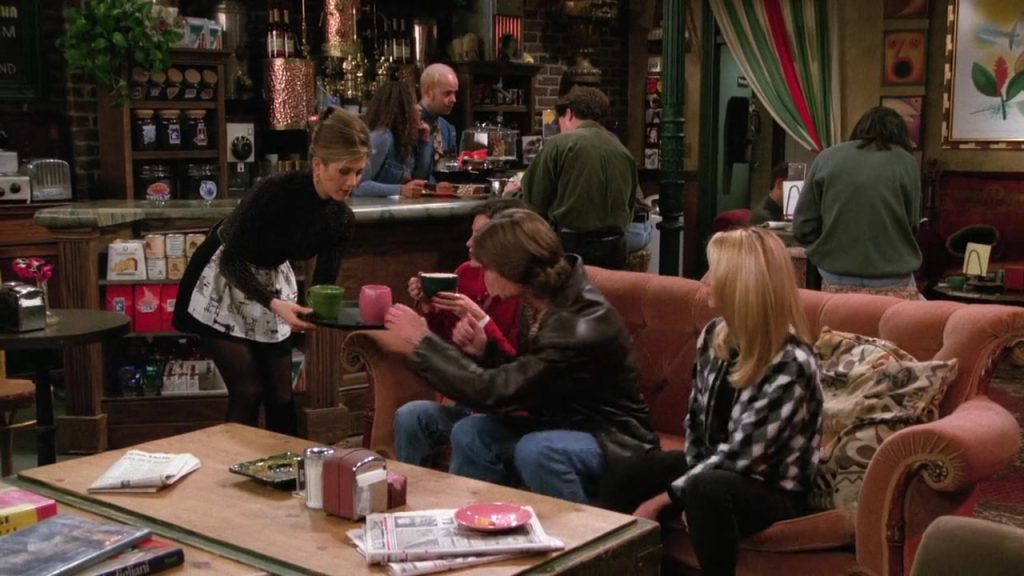
5. Tailor
Original Movie Context
- Dialogue: Chandler asks about a tailor, referring to someone who alters clothing.
- Scene Description: Chandler is seeking someone to alter his pants.
- Emotional Tone: Practical and straightforward.
Word Breakdown
- Definition: A person who makes, repairs, or alters garments professionally.
- Part of Speech: Noun.
- Pronunciation: /ˈteɪlər/
- Etymology: From Middle English “taillour,” derived from “tailor.”
- Examples:
- I need to visit the tailor to fix my suit.
- The tailor adjusted the length of my dress.
Contextual Usage
- Example Sentences:
- She went to the tailor to get her dress hemmed.
- The tailor measured his suit meticulously.
- Formal vs. Informal:
- Formal: The garment requires professional alteration.
- Informal: I’m taking my pants to the tailor.
- Common Collocations: Professional tailor, local tailor, skilled tailor.
- Potential Idioms or Slang Variations:
- No direct idioms, but “suit up” is related to wearing tailored clothing.
Learning Insights
- Pronunciation Tips: Emphasize the first syllable: TAY-lor.
- Common Mistakes: Mispronouncing as “tay-lar” instead of “tay-lor.”
- Cultural Nuances: Tailors are valued for their craftsmanship in many cultures.
- Memorization Tricks: Picture a tailor with a measuring tape to remember the profession.
6. Inseam
Original Movie Context
- Dialogue: Chandler discusses getting his inseam measured by the tailor.
- Scene Description: Chandler is concerned about the proper fit of his pants.
- Emotional Tone: Concerned and slightly humorous.
Word Breakdown
- Definition: The length of the inside of a pair of pants, from the crotch to the bottom of the leg.
- Part of Speech: Noun.
- Pronunciation: /ˈɪnˌsiːm/
- Etymology: Combination of “in-” (inside) and “seam.”
- Examples:
- The inseam of these jeans is too long.
- She measured her inseam to find the perfect fit.
Contextual Usage
- Example Sentences:
- The tailor asked for my inseam to adjust the trousers.
- He preferred a shorter inseam for his casual shorts.
- Formal vs. Informal:
- Formal: Please provide the inseam measurement for accurate tailoring.
- Informal: My pants have a long inseam; they need hemming.
- Common Collocations: Measure inseam, inseam length, inseam adjustment.
- Potential Idioms or Slang Variations:
- No direct idioms, but often used in discussions about clothing fit.
Learning Insights
- Pronunciation Tips: Stress the first syllable: IN-seam.
- Common Mistakes: Confusing “inseam” with “seam.”
- Cultural Nuances: Important in fashion and clothing industry standards.
- Memorization Tricks: Break it down: “in” + “seam” to remember it’s the inside seam.
7. Control Freak
Original Movie Context
- Dialogue: Phoebe describes herself as a control freak and anal, adding humor.
- Scene Description: Phoebe explains why she declined Monica’s haircut offer.
- Emotional Tone: Humorous self-deprecation.
Word Breakdown
- Definition: Someone who insists on having control over others or situations.
- Part of Speech: Noun phrase.
- Pronunciation: /kənˈtroʊl friːk/
- Etymology: Combines “control” and “freak” to describe obsessive behavior.
- Examples:
- She’s such a control freak; she micromanages every project.
- Being a control freak can strain personal relationships.
Contextual Usage
- Example Sentences:
- His friends find him a bit of a control freak.
- Managing the event requires someone who’s not a control freak.
- Formal vs. Informal:
- Formal: Exhibits obsessive control tendencies.
- Informal: He’s a total control freak when it comes to organizing parties.
- Common Collocations: Total control freak, bit of a control freak, strict control freak.
- Potential Idioms or Slang Variations:
- “Micromanager” is a more formal term with a similar meaning.
Learning Insights
- Pronunciation Tips: Emphasize “control” and stress “freak” to highlight the behavior.
- Common Mistakes: Avoid using “control freak” in formal settings as it’s informal.
- Cultural Nuances: Often used humorously among friends to describe someone’s meticulous nature.
- Memorization Tricks: Picture someone literally trying to control every aspect of a situation to remember the meaning.
8. Let It Slip
Original Movie Context
- Dialogue: Chandler let it slip that Ross was in love with Rachel.
- Scene Description: Chandler accidentally reveals Ross’s feelings to Rachel.
- Emotional Tone: Accidental disclosure and surprise.
Word Breakdown
- Definition: To reveal something accidentally.
- Part of Speech: Phrasal verb.
- Pronunciation: /lɛt ɪt slɪp/
- Etymology: Combines “let” with “slip,” implying something slipped out unintentionally.
- Examples:
- She let it slip that she was planning a surprise party.
- Don’t let it slip that you know about the secret meeting.
Contextual Usage
- Example Sentences:
- He let it slip that he won the lottery.
- Be careful not to let it slip how much you dislike the job.
- Formal vs. Informal:
- Formal: Avoid inadvertently disclosing confidential information.
- Informal: I let it slip that I’m moving to a new city.
- Common Collocations: Let it slip accidentally, let something slip, let it slip out.
- Potential Idioms or Slang Variations:
- “Blurt out” is a similar expression with a slightly more forceful connotation.
Learning Insights
- Pronunciation Tips: Keep the phrase smooth and connected to reflect its idiomatic nature.
- Common Mistakes: Misplacing the words can alter the meaning; ensure “let” precedes “it slip.”
- Cultural Nuances: Commonly used in everyday conversations to describe accidental revelations.
- Memorization Tricks: Imagine something slipping out of your hand to remember the accidental nature of the phrase.
Integrating these words into your Film Language Study routine will help solidify your understanding and usage.
9. Cupping
Original Movie Context
- Dialogue: Chandler describes the tailor’s actions as “cupping.”
- Scene Description: Chandler is confused by the tailor’s movements while measuring his pants.
- Emotional Tone: Confusion and mild frustration.
Word Breakdown
- Definition: In this context, likely refers to a technique used by the tailor, though it’s misinterpreted by Chandler.
- Part of Speech: Verb.
- Pronunciation: /ˈkʌpɪŋ/
- Etymology: Derived from “cup,” meaning to shape into a hollow.
- Examples:
- The masseuse used a cupping technique to relieve muscle tension.
- Cupping therapy has been used for centuries in traditional medicine.
Contextual Usage
- Example Sentences:
- She practiced cupping her hands to create a perfect shape.
- Cupping is often used in various massage therapies.
- Formal vs. Informal:
- Formal: The therapeutic cupping method can improve blood flow.
- Informal: He tried cupping his hands to catch the rain.
- Common Collocations: Cupping technique, perform cupping, practice cupping.
- Potential Idioms or Slang Variations:
- No direct idioms, but related to “hand movements” in various contexts.
Learning Insights
- Pronunciation Tips: Ensure clarity on the “cup” sound to avoid confusion with similar words.
- Common Mistakes: Misunderstanding the context can lead to incorrect usage; here, it refers to a physical technique.
- Cultural Nuances: In the show, it humorously highlights Chandler’s misunderstanding of the tailor’s actions.
- Memorization Tricks: Picture the action of cupping your hands to remember the term.
Each vocabulary word we explore today is perfect for enhancing your Film Language Study experience.
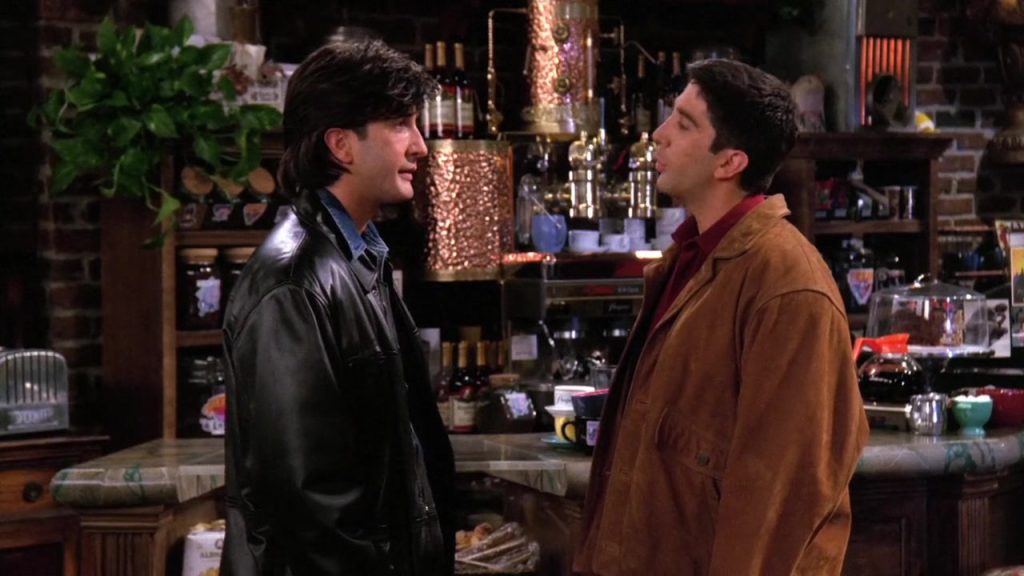
10. Pathetic
Original Movie Context
- Dialogue: Rachel refers to herself as “a pathetic loser.”
- Scene Description: Rachel is expressing low self-esteem after a disappointing event.
- Emotional Tone: Self-deprecation and sadness.
Word Breakdown
- Definition: Deserving or causing pity; contemptibly inadequate.
- Part of Speech: Adjective.
- Pronunciation: /pəˈθɛtɪk/
- Etymology: From Greek “pathētikos,” meaning “capable of suffering.”
- Examples:
- He felt pathetic after failing the exam.
- The team’s performance was pathetic.
Contextual Usage
- Example Sentences:
- She thought her efforts were pathetic compared to others.
- Calling someone pathetic is hurtful and unkind.
- Formal vs. Informal:
- Formal: The attempt was insufficient and failed to meet expectations.
- Informal: That excuse is just pathetic.
- Common Collocations: Pathetic attempt, feel pathetic, pathetic excuse.
- Potential Idioms or Slang Variations:
- “Laughable” can sometimes replace “pathetic” in informal contexts.
Learning Insights
- Pronunciation Tips: Emphasize the second syllable: pa-THE-tic.
- Common Mistakes: Mispronouncing the stress can alter the word’s impact.
- Cultural Nuances: Considered strong language; use carefully to avoid offending.
- Memorization Tricks: Think of “pathetic” as something that evokes pity to remember its meaning.
Film Language Study not only makes learning enjoyable but also deeply contextualizes vocabulary through your favorite shows.
11. Silver Lining
Original Movie Context
- Dialogue: Chandler discusses the situation with a silver lining.
- Scene Description: Chandler tries to find a positive aspect in a disappointing scenario.
- Emotional Tone: Optimistic despite adversity.
Word Breakdown
- Definition: A positive aspect in a difficult or unpleasant situation.
- Part of Speech: Noun phrase.
- Pronunciation: /ˈsɪlvər ˈlaɪnɪŋ/
- Etymology: Derived from the proverb “Every cloud has a silver lining,” meaning every bad situation has some good.
- Examples:
- Even though he lost his job, the silver lining was that he found his true passion.
- The silver lining of the rainstorm was the beautiful rainbow.
Contextual Usage
- Example Sentences:
- The silver lining of moving to a new city was meeting new people.
- Despite the setback, there was a silver lining to the experience.
- Formal vs. Informal:
- Formal: The adverse circumstances presented an unexpected silver lining.
- Informal: Sure, you missed the bus, but the silver lining is you got some fresh air.
- Common Collocations: Find a silver lining, see the silver lining, silver lining in.
- Potential Idioms or Slang Variations:
- “Bright side” is a similar expression conveying optimism.
Learning Insights
- Pronunciation Tips: Ensure smooth transition between “silver” and “lining.”
- Common Mistakes: Mixing up “silver lining” with similar phrases can cause confusion.
- Cultural Nuances: Rooted in positive thinking, often used to encourage optimism.
- Memorization Tricks: Visualize the sun shining behind a cloud to remember the concept of a silver lining.
Embarking on a Film Language Study journey with Friends S02E10 can transform the way you learn English.
12. Analyzing
Original Movie Context
- Dialogue: Chandler refers to analyzing the situation with the tailor.
- Scene Description: Chandler is trying to understand the tailor’s actions and their implications.
- Emotional Tone: Thoughtful and curious.
Word Breakdown
- Definition: Examining something methodically and in detail.
- Part of Speech: Verb (present participle).
- Pronunciation: /ˈænəlaɪzɪŋ/
- Etymology: From Greek “analusis,” meaning “a breaking up,” from “ana-” (up) + “lysis” (a loosening).
- Examples:
- She spent the afternoon analyzing the data for her research.
- The detective was analyzing the clues at the crime scene.
Contextual Usage
- Example Sentences:
- He is analyzing the market trends for his business strategy.
- Analyzing literature helps deepen your understanding of themes.
- Formal vs. Informal:
- Formal: The professor is analyzing the economic impacts of the policy.
- Informal: I’m analyzing what went wrong with our project.
- Common Collocations: Analyzing data, analyzing results, analyzing behavior.
- Potential Idioms or Slang Variations:
- “Digging into” can sometimes replace “analyzing” in informal contexts.
Learning Insights
- Pronunciation Tips: Stress the first syllable: AN-a-ly-zing.
- Common Mistakes: Confusing “analyzing” with “analyzing.”
- Cultural Nuances: Commonly used in academic and professional settings.
- Memorization Tricks: Break it down: “analyze” + “ing” to remember it’s the action of examining something in detail.
Embrace Technology to Elevate Your Film Language Study
As you journey through Film Language Study with Friends S02E10, imagine seamlessly integrating these new vocabulary words into your daily conversations. Our cutting-edge language learning extension, AppForLanguage.com, is designed to enhance your learning experience by providing features that align perfectly with your study habits.
Discover the Power of Fluency Gym
Fluency Gym is our innovative feature that transforms passive vocabulary into active language skills. Whether you’re using Language Learning With Netflix or engaging with your favorite Movie For Language resources, Fluency Gym offers three dynamic modes:
- Reading Mode (Word Builder): View movie subtitles in your target language first, then reveal native language subtitles after a few seconds. Save new words directly into a built-in flashcard system for later review.
- Listening Mode (Ear Training): Listen to dialogues in the target language without subtitles, write down what you hear, then compare with the actual subtitles. Enhance your listening skills and reinforce learning through our flashcard system.
- Speaking Mode (Speech Challenger): Guess the target language dialogue, practice saying the sentences aloud, and compare your pronunciation with the original. Improve your speaking fluency by mimicking real-life conversations.
Seamless Integration with Your Learning Tools
Our extension offers a plethora of features to make your Film Language Study more efficient and enjoyable:
- Mouse Dictionary: Hover over words in the subtitles to see instant definitions, boosting your vocabulary in real-time during video playback.
- Auto-Pause and Play: Control playback with ease, ensuring comprehension by pausing after every sentence.
- Save Words: Save new words you learn for future review and study.
- Download Saved Words: Export your saved vocabulary in different file formats for further study.
- Jump to Sentence Selected from Sidebar: Start playing the video from any subtitle or dialogue selected in the sidebar, allowing for targeted learning.
By integrating these features into your study routine, you can transform your Film Language Study into a dynamic and interactive experience.
Explore More with Our Previous Articles
Don’t stop here! Expand your vocabulary with our related articles that dive into different episodes and seasons of Friends:
- Language Learning with Netflix: 15 Essential Vocabulary Words from Friends S01E12
- Master English with Friends S01E17: 12 Must-Know Vocabulary Words from Friends
- Cinema Language Learning: 12 Essential Vocabulary Words from Friends S01E22
- Mastering Vocabulary with Friends S02E05: A Fun Subtitle Language Practice
Each article is tailored to provide you with context-rich vocabulary and engaging learning methods, perfect for Film Language Study enthusiasts.
Embrace the Future of Language Learning
Technology is revolutionizing the way we learn languages. With tools like AppForLanguage.com, you can immerse yourself in Film Language Study like never before. Whether you’re an intermediate learner aiming to reach advanced levels or a tech-savvy individual seeking interactive learning methods, our extension is your perfect companion.
Why Choose Our Language Learning Extension?
- Interactive Learning: Engage with real-time subtitles and instant definitions.
- Flexible Study Options: Customize your learning with multiple subtitle displays and adjustable playback controls.
- Efficient Vocabulary Building: Save and review words effortlessly with our intuitive flashcard system.
- Enhanced Comprehension: Utilize features like Auto-Pause and Fluency Gym to deepen your understanding.
Join countless learners who have transformed their language skills through our innovative platform. Start your Film Language Study journey today and unlock the full potential of learning with movies!
By embracing these vocabulary words and leveraging advanced tools, your Film Language Study with Friends S02E10 will not only be educational but also an enjoyable adventure. Happy learning!