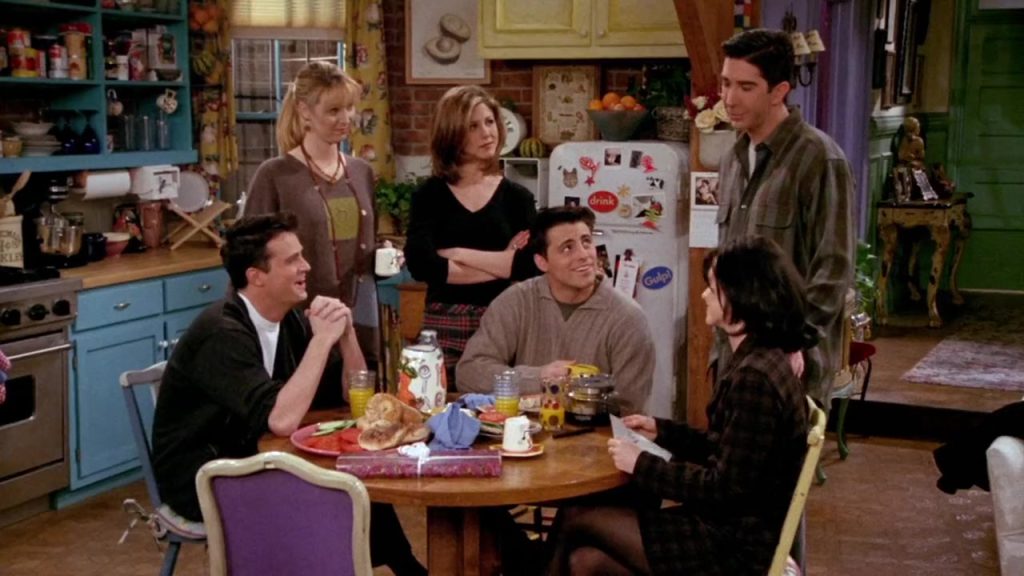
Are you eager to learn English with TV series that not only entertain but also educate? Look no further! In this article, we dive into Friends S02E16, extracting essential vocabulary to boost your language skills. Whether you’re binge-watching or casually enjoying episodes, learn English with TV series like Friends can transform your language learning journey into an engaging adventure.
Vocabulary to Learn in This Article
Here are the vocabulary words you’ll master today:
- Vicariously
- Mid-life crisis
- Fling
- Bimbo
- Twinkie
- Unclog
- Self-cleaning
- Sheepish
- Rejuvenation
- Straddling
- Eccentric
- Phenomenon
- Lick
- Surpass
- Babble
Let’s explore each word in detail!
1. Vicariously
Original Movie Context
- Subtitle/Dialog: “C’mon, tell us. Yeah, tell us, Rich, it’s my birthday, let me live vicariously.”
- Scene Description: Mr. Geller encourages Richard to share his experiences, highlighting his desire to live through others’ adventures with excitement.
- Emotional Tone: Enthusiastic and slightly persuasive.
Word Breakdown
- Definition: Experiencing something indirectly through another person’s actions or feelings.
- Part of Speech: Adverb
- Pronunciation: /vɪˈkɛərɪəsli/
- Etymology: From Latin vicarius meaning “substitute” or “deputy.”
- Examples:
- She lives vicariously through her children’s achievements.
- Reading novels allows me to experience adventures vicariously.
Contextual Usage
- Example Sentences:
- I enjoy traveling vicariously by watching travel documentaries.
- Parents often vicariously fulfill their dreams through their kids.
- Variations in Formal/Informal Speech:
- Formal: He derives joy vicariously from his team’s success.
- Informal: She gets her kicks vicariously from her friends’ parties.
- Common Collocations:
- Live vicariously
- Experience vicariously
- Enjoy vicariously
Learning Insights
- Pronunciation Tips: Emphasize the second syllable: vi-CAR-i-ously.
- Common Mistakes: Confusing with “vicinity.” Remember, “vicariously” relates to experiencing indirectly.
- Cultural Nuances: Often used to describe how people experience lives through media or others.
- Memorization Tricks: Think of “vicare” in Latin, meaning “to substitute,” linking to experiencing indirectly.
2. Mid-life Crisis
Original Movie Context
- Subtitle/Dialog: “Ahh, what’s a little mid-life crisis between friends?”
- Scene Description: Mr. Geller jokingly downplays his actions as part of a typical mid-life crisis.
- Emotional Tone: Humorous and self-deprecating.
Word Breakdown
- Definition: A period of emotional turmoil in middle age characterized by a desire for change.
- Part of Speech: Noun phrase
- Pronunciation: /mɪd-laɪf ˈkraɪsɪs/
- Etymology: Coined in the 1960s, combining “mid-life” and “crisis.”
- Examples:
- Buying a sports car can be a sign of a mid-life crisis.
- She took up surfing during her mid-life crisis.
Contextual Usage
- Example Sentences:
- He went back to school as part of his mid-life crisis.
- During her mid-life crisis, she changed her career completely.
- Variations in Formal/Informal Speech:
- Formal: The CEO’s sudden lifestyle changes may indicate a mid-life crisis.
- Informal: My dad bought a motorcycle out of a mid-life crisis.
- Common Collocations:
- Undergo a mid-life crisis
- Experience a mid-life crisis
- Survive a mid-life crisis
Learning Insights
- Pronunciation Tips: Stress the first word: MID-life crisis.
- Common Mistakes: Not recognizing it as a compound noun phrase.
- Cultural Nuances: Reflects societal views on aging and personal fulfillment.
- Memorization Tricks: Associate “mid-life” with being halfway through life, often leading to reflection and change.
3. Fling
Original Movie Context
- Subtitle/Dialog: “You’re not Bert and Ernie, are we?” (Implying the casual nature of their relationship, contrasting with a fling.)
- Scene Description: Chandler and Joey discuss their living situation, hinting at the transient nature of their relationship like a short-term fling.
- Emotional Tone: Light-hearted and playful.
Word Breakdown
- Definition: A short, casual romantic or sexual relationship.
- Part of Speech: Noun
- Pronunciation: /flɪŋ/
- Etymology: Originates from Old English “flengan,” meaning “to fling or throw.”
- Examples:
- They had a summer fling that lasted only a few weeks.
- She moved on after her brief fling.
Contextual Usage
- Example Sentences:
- Their fling ended when summer was over.
- He regretted his impulsive fling later.
- Variations in Formal/Informal Speech:
- Formal: Their brief relationship was merely a fling.
- Informal: They had a wild fling during the holidays.
- Common Collocations:
- Casual fling
- Brief fling
- Summer fling
Learning Insights
- Pronunciation Tips: Short and sharp: /flɪŋ/.
- Common Mistakes: Confusing with “fling” as in throwing something.
- Cultural Nuances: Often viewed as a non-serious relationship, sometimes with negative connotations.
- Memorization Tricks: Think of a “fling” as something fleeting, like throwing a stone that doesn’t stay.
4. Bimbo
Original Movie Context
- Subtitle/Dialog: “She’s like a new man. It’s like a scene from Cocoon. I just never would have pictured Richard with a bimbo.”
- Scene Description: Mrs. Geller teasing Mr. Geller about Richard’s relationship, using the term bimbo humorously.
- Emotional Tone: Teasing and light-hearted.
Word Breakdown
- Definition: A person, typically a woman, considered to be attractive but unintelligent.
- Part of Speech: Noun
- Pronunciation: /ˈbɪm.boʊ/
- Etymology: Originated in the early 20th century, possibly from Italian “bambino” meaning “child.”
- Examples:
- She was labeled a bimbo because of her looks, despite her intelligence.
- The movie features a bimbo who surprises everyone with her wit.
Contextual Usage
- Example Sentences:
- Don’t call her a bimbo; she’s very smart.
- The character is often mistaken for a bimbo but proves otherwise.
- Variations in Formal/Informal Speech:
- Formal: The derogatory term bimbo is often used unfairly.
- Informal: Stop calling her a bimbo; she’s brilliant!
- Common Collocations:
- Stereotypical bimbo
- Play the bimbo
- Bimbo stereotype
Learning Insights
- Pronunciation Tips: Emphasize the first syllable: BIM-bo.
- Common Mistakes: Mispronouncing as “bim-boh.”
- Cultural Nuances: The term is offensive and should be used cautiously to avoid disrespect.
- Memorization Tricks: Associate “bimbo” with stereotypes in media, often seen in certain movie roles.
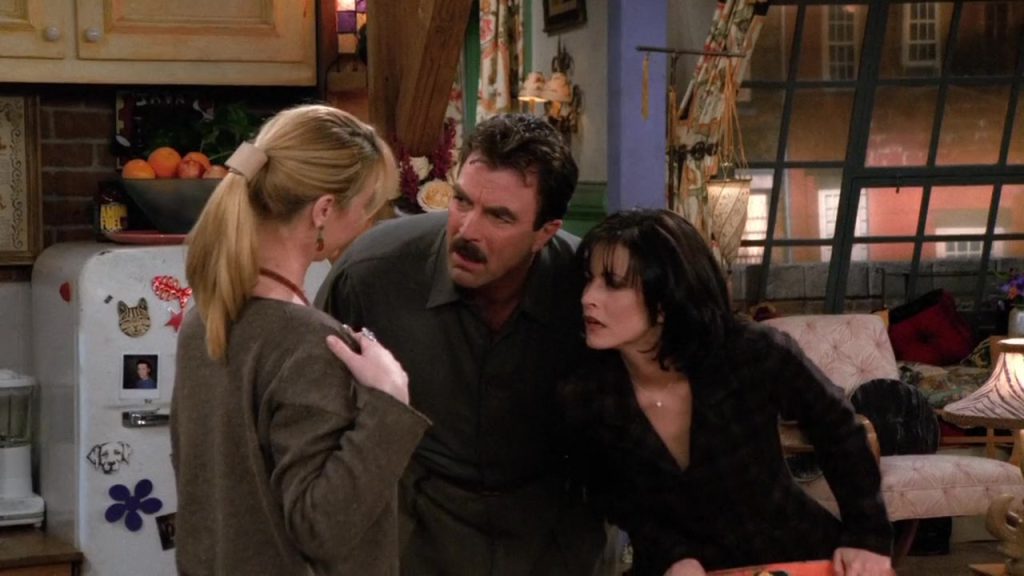
5. Twinkie
Original Movie Context
- Subtitle/Dialog: “I’m a twinkie.”
- Scene Description: Monica humorously refers to herself as a twinkie, echoing Joey’s earlier usage.
- Emotional Tone: Playful and self-deprecating.
Word Breakdown
- Definition: Slang for a young, attractive person, often perceived as superficial.
- Part of Speech: Noun
- Pronunciation: /ˈtwɪŋ.ki/
- Etymology: Named after the popular snack cake “Twinkies,” implying sweetness and superficiality.
- Examples:
- He thinks he’s a twinkie, always focusing on his appearance.
- The club is full of twinkies looking to have fun.
Contextual Usage
- Example Sentences:
- She was labeled a twinkie because of her trendy style.
- Don’t be such a twinkie; look beyond appearances.
- Variations in Formal/Informal Speech:
- Formal: The term twinkie is not commonly used in professional settings.
- Informal: Stop acting like a twinkie, and think for yourself.
- Common Collocations:
- Young twinkie
- Attractive twinkie
- Social twinkie
Learning Insights
- Pronunciation Tips: Keep it light: TWING-kee.
- Common Mistakes: Confusing with “Twinkie,” the snack.
- Cultural Nuances: Often used humorously among friends but can be derogatory.
- Memorization Tricks: Link “twinkie” to the sweet, superficial nature of the snack cake.
6. Unclog
Original Movie Context
- Subtitle/Dialog: “Well, that was only ’cause I used the red one to unclog the drain.”
- Scene Description: Joey explains why he used Chandler’s toothbrush, associating it with trying to fix a clogged drain.
- Emotional Tone: Defensive and casual.
Word Breakdown
- Definition: To remove a blockage from something, especially a drain.
- Part of Speech: Verb
- Pronunciation: /ʌnˈklɑːɡ/
- Etymology: From “un-” meaning “reverse of” and “clog.”
- Examples:
- You need to unclog the sink before the guests arrive.
- He used a plunger to unclog the toilet.
Contextual Usage
- Example Sentences:
- I can’t unclog the drain; it’s completely blocked.
- She showed me how to unclog the shower drain.
- Variations in Formal/Informal Speech:
- Formal: The technician will unclog the main sewer line.
- Informal: I need to unclog my sink this weekend.
- Common Collocations:
- Unclog the drain
- Unclog a pipe
- Unclog a sink
Learning Insights
- Pronunciation Tips: Stress the second syllable: un-CLOG.
- Common Mistakes: Mispronouncing as “uncloged.”
- Cultural Nuances: Common household task, often discussed in casual conversations.
- Memorization Tricks: Think of “clog” as a blockage and “unclog” as removing it.
7. Self-cleaning
Original Movie Context
- Subtitle/Dialog: “Because soap is soap. It’s self-cleaning.”
- Scene Description: Chandler explains why sharing soap is okay, highlighting the self-cleaning nature of soap.
- Emotional Tone: Explanatory and slightly annoyed.
Word Breakdown
- Definition: Capable of cleaning itself without external assistance.
- Part of Speech: Adjective
- Pronunciation: /ˌsɛlfˈkliːnɪŋ/
- Etymology: Combination of “self” and “cleaning.”
- Examples:
- The oven has a self-cleaning feature.
- These shoes are self-cleaning, so you don’t need to wash them frequently.
Contextual Usage
- Example Sentences:
- I bought a self-cleaning litter box for my cat.
- The self-cleaning windows are a great convenience.
- Variations in Formal/Informal Speech:
- Formal: The self-cleaning mechanism ensures hygiene standards.
- Informal: These bottles are self-cleaning—no need to scrub them.
- Common Collocations:
- Self-cleaning feature
- Self-cleaning oven
- Self-cleaning system
Learning Insights
- Pronunciation Tips: Emphasize “clean”: self-CLEAN-ing.
- Common Mistakes: Mispronouncing as “self-cleaningly.”
- Cultural Nuances: Reflects modern convenience and technology in daily life.
- Memorization Tricks: Picture something that cleans itself, like a self-cleaning oven.
8. Sheepish
Original Movie Context
- Subtitle/Dialog: “[Joey gets a sheepish look]”
- Scene Description: Joey looks embarrassed after using Chandler’s toothbrush.
- Emotional Tone: Embarrassed and apologetic.
Word Breakdown
- Definition: Showing embarrassment or shame.
- Part of Speech: Adjective
- Pronunciation: /ˈʃiːpɪʃ/
- Etymology: Derived from “sheep,” implying a timid or shy demeanor.
- Examples:
- She gave a sheepish grin after spilling the drink.
- His sheepish apology made everyone smile.
Contextual Usage
- Example Sentences:
- He had a sheepish expression after forgetting the meeting.
- Her sheepish smile showed she felt bad about the mistake.
- Variations in Formal/Informal Speech:
- Formal: He exhibited a sheepish demeanor during the interview.
- Informal: He looked all sheepish after tripping.
- Common Collocations:
- Sheepish grin
- Sheepish smile
- Sheepish expression
Learning Insights
- Pronunciation Tips: Emphasize the first syllable: SHEEP-ish.
- Common Mistakes: Confusing with “sheepy,” which is incorrect.
- Cultural Nuances: Often used to describe mild embarrassment in social situations.
- Memorization Tricks: Link “sheep” to a shy, timid animal to remember “sheepish.”
9. Rejuvenation
Original Movie Context
- Subtitle/Dialog: “It’s like a scene from Cocoon.”
- Scene Description: Mr. Geller compares Richard’s transformation to a scene of rejuvenation from the movie “Cocoon.”
- Emotional Tone: Reflective and humorous.
Word Breakdown
- Definition: The action or process of making someone or something look or feel younger, fresher, or more lively.
- Part of Speech: Noun
- Pronunciation: /rɪˌdʒuːvəˈneɪʃən/
- Etymology: From Latin “rejuvenare,” meaning “to make young again.”
- Examples:
- The spa offers treatments for rejuvenation.
- Planting trees contributes to the rejuvenation of the environment.
Contextual Usage
- Example Sentences:
- Yoga can lead to physical and mental rejuvenation.
- The city’s downtown area is undergoing rejuvenation.
- Variations in Formal/Informal Speech:
- Formal: The rejuvenation of the historic district was successful.
- Informal: A weekend getaway provided much-needed rejuvenation.
- Common Collocations:
- Rejuvenation process
- Physical rejuvenation
- Mental rejuvenation
Learning Insights
- Pronunciation Tips: Break it down: re-joo-VA-nay-shun.
- Common Mistakes: Mispronouncing as “rejuvenation” with stress on the first syllable.
- Cultural Nuances: Associated with renewal and revitalization in various contexts.
- Memorization Tricks: Think of “juvenate” relating to youth, linking to “rejuvenation.”
10. Straddling
Original Movie Context
- Subtitle/Dialog: “Ross, Ross, you could come in straddling him.”
- Scene Description: Ross jokes about Monica and Richard’s positioning at the party, using straddling humorously.
- Emotional Tone: Playful and teasing.
Word Breakdown
- Definition: Sitting or standing with one leg on each side of something.
- Part of Speech: Verb (present participle)
- Pronunciation: /ˈstræd.lɪŋ/
- Etymology: From Middle English “stradlen,” related to “straddle.”
- Examples:
- He was straddling the bike to fix the chain.
- The cowboy straddled his horse confidently.
Contextual Usage
- Example Sentences:
- She was straddling two jobs to make ends meet.
- The bridge was straddling the river, providing a scenic view.
- Variations in Formal/Informal Speech:
- Formal: The committee is straddling multiple issues simultaneously.
- Informal: He’s straddling between two opinions.
- Common Collocations:
- Straddling a horse
- Straddling two positions
- Straddling a bike
Learning Insights
- Pronunciation Tips: Emphasize the first syllable: STRAD-ling.
- Common Mistakes: Mispronouncing the “strad” part.
- Cultural Nuances: Often used literally for physical positions or metaphorically for balancing between options.
- Memorization Tricks: Imagine someone physically straddling an object to remember the meaning.
11. Eccentric
Original Movie Context
- Subtitle/Dialog: “Apparently, he told Johnny Shapiro that she’s quite a girl. In fact, he told Johnny that he thinks he’s falling in love with her.”
- Scene Description: Mr. Geller describes Richard’s quirky behavior, hinting at his eccentric personality.
- Emotional Tone: Observational and slightly critical.
Word Breakdown
- Definition: Unconventional and slightly strange.
- Part of Speech: Adjective
- Pronunciation: /ɪkˈsɛn.trɪk/
- Etymology: From Greek “ekkentros,” meaning “off-center.”
- Examples:
- Her eccentric fashion sense makes her stand out.
- The artist is known for his eccentric creations.
Contextual Usage
- Example Sentences:
- The eccentric professor had unusual teaching methods.
- They live in an eccentric house with odd decorations.
- Variations in Formal/Informal Speech:
- Formal: His eccentric behavior was noted by his colleagues.
- Informal: She’s super eccentric, always doing weird things.
- Common Collocations:
- Eccentric personality
- Eccentric behavior
- Eccentric habits
Learning Insights
- Pronunciation Tips: Stress the second syllable: ec-CEN-tric.
- Common Mistakes: Pronouncing with stress on the first syllable.
- Cultural Nuances: Often used to describe unique or unconventional individuals.
- Memorization Tricks: Link “eccentric” to “center” to remember “off-center” or unusual.
12. Phenomenon
Original Movie Context
- Subtitle/Dialog: “She’s like a phenomenon.”
- Scene Description: A character describes someone’s remarkable qualities, using phenomenon to emphasize their uniqueness.
- Emotional Tone: Admiring and enthusiastic.
Word Breakdown
- Definition: A fact or situation that is observed to exist or happen, especially one whose cause or explanation is in question.
- Part of Speech: Noun
- Pronunciation: /fəˈnɒm.ɪ.nən/
- Etymology: From Greek “phainomenon,” meaning “that which appears.”
- Examples:
- The Northern Lights are a natural phenomenon.
- Her rapid rise to fame is a phenomenon in the music industry.
Contextual Usage
- Example Sentences:
- The internet became a phenomenon in the late 20th century.
- Climate change is a global phenomenon affecting everyone.
- Variations in Formal/Informal Speech:
- Formal: The phenomenon requires extensive scientific research.
- Informal: That new band is a total phenomenon right now.
- Common Collocations:
- Natural phenomenon
- Social phenomenon
- Unique phenomenon
Learning Insights
- Pronunciation Tips: Emphasize the second syllable: phe-NOM-enon.
- Common Mistakes: Mispronouncing the last syllable.
- Cultural Nuances: Used to describe extraordinary events or individuals.
- Memorization Tricks: Think of “phenomenon” as something phenomenal and remarkable.
13. Lick
Original Movie Context
- Subtitle/Dialog: “I mean, that’s like you using my toothbrush. [Joey licks the spoon.]”
- Scene Description: Chandler reacts to Joey licking a spoon, comparing it to sharing personal items like a toothbrush.
- Emotional Tone: Disgusted and confrontational.
Word Breakdown
- Definition: To pass the tongue over something.
- Part of Speech: Verb
- Pronunciation: /lɪk/
- Etymology: From Old English “liccian,” meaning “to lap or lick.”
- Examples:
- The cat likes to lick its paws.
- She licked the ice cream cone quickly.
Contextual Usage
- Example Sentences:
- Please don’t lick your fingers after eating.
- He licked the stamp before placing it on the envelope.
- Variations in Formal/Informal Speech:
- Formal: The machine licks the metal parts for lubrication.
- Informal: Stop licking the spoon; it’s gross.
- Common Collocations:
- Lick ice cream
- Lick a stamp
- Lick your lips
Learning Insights
- Pronunciation Tips: Short and crisp: /lɪk/.
- Common Mistakes: Pronouncing as “lickk” with a double consonant.
- Cultural Nuances: Can be used literally or metaphorically in expressions.
- Memorization Tricks: Imagine a cat licking its paw to remember the meaning.
14. Surpass
Original Movie Context
- Subtitle/Dialog: “It’s like a scene from Cocoon.”
- Scene Description: Mr. Geller compares Richard’s behavior to surpassing expectations, like the rejuvenation seen in “Cocoon.”
- Emotional Tone: Impressed and approving.
Word Breakdown
- Definition: To exceed or go beyond something.
- Part of Speech: Verb
- Pronunciation: /sərˈpæs/
- Etymology: From Old French “surpasser,” meaning “to exceed.”
- Examples:
- Her performance surpassed all expectations.
- The new model surpasses the previous one in quality.
Contextual Usage
- Example Sentences:
- The athlete’s achievements surpassed those of his peers.
- The company’s revenue surpassed last year’s figures.
- Variations in Formal/Informal Speech:
- Formal: His contributions surpass those of his colleagues.
- Informal: This cake surpasses all the others I’ve tried.
- Common Collocations:
- Surpass expectations
- Surpass limits
- Surpass previous records
Learning Insights
- Pronunciation Tips: Emphasize the second syllable: sur-PASS.
- Common Mistakes: Misplacing the stress, saying sur-pass.
- Cultural Nuances: Used to highlight excellence and achievement.
- Memorization Tricks: Think of “surpass” as “going above and beyond.”

15. Babble
Original Movie Context
- Subtitle/Dialog: “She just babbles non-stop.”
- Scene Description: A character describes someone who talks excessively without meaningful content.
- Emotional Tone: Frustrated and annoyed.
Word Breakdown
- Definition: To talk rapidly and continuously in a foolish, excited, or incomprehensible way.
- Part of Speech: Verb
- Pronunciation: /ˈbæb.əl/
- Etymology: From Middle English “babelen,” imitating the sound of baby talk.
- Examples:
- The toddler babbles happily with her toys.
- He babbles about his day without making a point.
Contextual Usage
- Example Sentences:
- She tends to babble when she’s nervous.
- The speaker babbled so much that no one understood him.
- Variations in Formal/Informal Speech:
- Formal: The candidate babbled during the press conference.
- Informal: Stop babbling and get to the point.
- Common Collocations:
- Babble on
- Babble about
- Babble incessantly
Learning Insights
- Pronunciation Tips: Short and sharp: /BAB-əl/.
- Common Mistakes: Adding extra syllables, e.g., “ba-bble.”
- Cultural Nuances: Often used to describe meaningless or excessive talking.
- Memorization Tricks: Link “babble” to a babbling brook, which makes continuous noise.
How Technology Enhances Language Learning with Netflix
Embracing the power of technology can revolutionize how you learn English with TV series. Our language learning extension, Fluency Gym, seamlessly integrates with your Netflix experience, making it easier than ever to absorb new vocabulary from your favorite shows like Friends S02E16.
Key Features That Make Learning Fun and Effective:
- Mouse Dictionary: Hover over any word in the subtitles to get instant definitions. Imagine watching Friends and immediately understanding words like vicariously or eccentric without missing a beat!
- Dual Subtitles: View subtitles in two languages side-by-side, perfect for comparing and understanding contextually rich dialogues.
- Save Words: Easily save new vocabulary words for later review, ensuring that no word goes unnoticed during your binge-watching sessions.
- Fluency Gym: Engage with interactive modes such as Reading Mode, Listening Mode, and Speaking Mode. Practice vicariously living through the characters and solidify your understanding of complex terms.
By integrating these features, learn English with TV series becomes an immersive and interactive experience, turning every episode into a valuable learning opportunity.
Related Articles to Boost Your Learning Journey
If you enjoyed this deep dive into Friends S02E16, check out our related articles:
- Language Learning with Netflix: Mastering Vocabulary from Friends S01E11
- Master English with Friends S01E17: 12 Must-Know Vocabulary Words from Friends
- Boost Your English with Friends S01E23: 12 Essential Vocabulary Words for Language Learning
- Mastering Vocabulary with Friends S02E05: A Fun Subtitle Language Practice
Each article offers unique insights and vocabulary from different episodes, ensuring a comprehensive learn English with TV series experience.
Embrace the Future of Language Learning with Technology
In today’s digital age, learn English with TV series has never been more accessible and enjoyable. Our innovative language learning extension, Fluency Gym, leverages cutting-edge technology to transform passive watching into active learning. Whether you’re an intermediate learner looking to advance or a solo practitioner seeking interactive methods, Fluency Gym is your perfect companion.
Why Choose Fluency Gym?
- Interactive Learning: Engage with real-time dialogues and practice pronunciation with native-like accuracy.
- Flexible Study Tools: Customize your learning experience with features like auto-pause, sidebar display, and adjustable subtitles.
- Comprehensive Review: Export your saved words for offline study, ensuring you can review anytime, anywhere.
Start Your Language Adventure Today!
Ready to take your English skills to the next level? Explore Fluency Gym and discover how our language learning extension can make learn English with TV series not just effective but also incredibly fun.
Visit FunFluen.com to get started and transform your language learning journey with the power of technology!
Conclusion
Using beloved TV series like Friends S02E16 to learn English with TV series offers an engaging and contextual approach to language acquisition. By mastering vocabulary through relatable scenes and dialogues, you make learning both effective and enjoyable. Incorporate tools like Fluency Gym to enhance your experience, and watch your English skills flourish as you laugh and learn alongside your favorite characters.
Embrace the adventure of learn English with TV series and let technology pave the way to fluency!