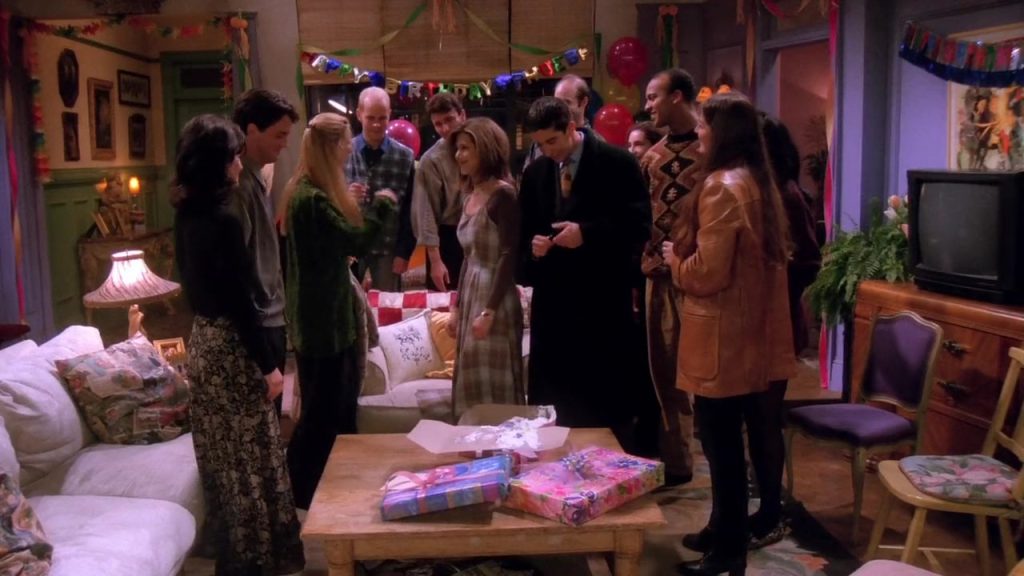
Are you looking to elevate your English skills while enjoying your favorite shows? Netflix language lessons offer an engaging way to learn, and what better way than through Cinematic English study with iconic episodes like Friends S01E17. In this episode, Monica and Rachel navigate a hospital visit, while Ross grapples with impending fatherhood. Let’s dive into 12 essential vocabulary words extracted directly from the subtitles of Friends S01E17, making your movie vocabulary learning both fun and effective!
1. Sprain
Original Movie Context
- Dialogue: Dr. Mitchell: So, he said it was just a sprain, and that was it.
- Scene Description and Emotional Tone: Monica and Rachel are at the hospital after Rachel’s friend injures her ankle. The tone is anxious and concerned.
Word Breakdown
- Definition: A sprain is an injury to a ligament caused by twisting or tearing.
- Part of Speech: Noun
- Pronunciation: /spreɪn/
- Etymology: Originates from Old French esprai meaning “twist.”
Examples:
- She sprained her wrist while skiing.
- After the game, he was diagnosed with a sprain.
Contextual Usage
- Multiple Example Sentences:
- I twisted my ankle and got a sprain during the hike.
- Rest and ice are recommended treatments for a sprain.
- Variations in Formal/Informal Speech:
- Formal: He suffered a sprain to his right ankle.
- Informal: I messed up my ankle and got a sprain.
- Common Collocations:
- Severe sprain
- Ankle sprain
- Sprained wrist
Learning Insights
- Pronunciation Tips: Emphasize the soft “p” at the beginning.
- Common Mistakes: Confusing “sprain” with “strain.” Remember, sprain refers to ligaments, while strain involves muscles.
- Cultural Nuances: Understanding medical terms can be crucial in real-life situations, like visiting a hospital.
Build your confidence in speaking and understanding English by regularly engaging with Netflix language lessons
2. Insurance Fraud
Original Movie Context
- Dialogue: Monica: That’s insurance fraud.
- Scene Description and Emotional Tone: Monica realizes that Rachel listed her as an emergency contact without proper authorization, leading to potential legal issues. The tone is serious with a hint of frustration.
Word Breakdown
- Definition: Insurance fraud involves deceiving an insurance company to receive payment or benefits unlawfully.
- Part of Speech: Noun
- Pronunciation: /ɪnˈʃʊərəns ˈfrɔːd/
- Etymology: Combines “insurance” with “fraud,” from Latin fraus meaning “deceit.”
Examples:
- He was charged with insurance fraud after faking an accident.
- Insurance fraud costs companies billions each year.
Contextual Usage
- Multiple Example Sentences:
- Committing insurance fraud can lead to hefty fines and jail time.
- The company is cracking down on insurance fraud to protect its clients.
- Variations in Formal/Informal Speech:
- Formal: The individual was prosecuted for insurance fraud.
- Informal: He got busted for insurance fraud.
- Common Collocations:
- Commit insurance fraud
- Insurance fraud scheme
- Detect insurance fraud
Learning Insights
- Pronunciation Tips: Stress the second syllable in “fraud.”
- Common Mistakes: Mispronouncing “insurance” as “in-shure-ance” instead of “in-shur-ance.”
- Cultural Nuances: Insurance fraud is a serious offense and widely discouraged in many cultures.
Achieve consistent language exposure effortlessly by incorporating Netflix language lessons into your entertainment choices.
3. Admissions Forms
Original Movie Context
- Dialogue: Monica: We forgot to sign one of the admissions forms.
- Scene Description and Emotional Tone: Monica and Rachel struggle with hospital paperwork, feeling overwhelmed and stressed.
Word Breakdown
- Definition: Admissions forms are official documents required for entry into an institution, such as a hospital or school.
- Part of Speech: Noun
- Pronunciation: /ədˈmɪʃənz fɔːrmz/
- Etymology: “Admission” comes from Latin admittere, meaning “to send to,” and “form” from Latin forma, meaning “shape” or “document.”
Examples:
- Please complete all admissions forms before your appointment.
- The university requires several admissions forms for new students.
Contextual Usage
- Multiple Example Sentences:
- She filled out the admissions forms for the medical clinic.
- Missing an admissions form can delay your hospital stay.
- Variations in Formal/Informal Speech:
- Formal: Please ensure all admissions forms are duly completed.
- Informal: Don’t forget to sign those admissions forms.
- Common Collocations:
- Complete admissions forms
- Submit admissions forms
- Review admissions forms
Learning Insights
- Pronunciation Tips: Clearly enunciate each syllable in “admissions.”
- Common Mistakes: Omitting the “s” at the end of “admissions.”
- Cultural Nuances: Understanding administrative processes is essential in many English-speaking environments.
Tailor your language learning to your interests with Netflix language lessons, selecting shows that resonate with you.
4. Blow Off
Original Movie Context
- Dialogue: Phoebe: I can’t believe she’s blowin’ me off.
- Scene Description and Emotional Tone: Joey expresses frustration that someone didn’t show up or ignored him. The tone is disappointed and annoyed.
Word Breakdown
- Definition: To ignore someone or fail to show up as planned.
- Part of Speech: Phrasal Verb
- Pronunciation: /bloʊ ɔf/
- Etymology: Combines “blow” with the preposition “off,” commonly used in informal contexts.
Examples:
- He blew me off at the last minute.
- Don’t blow me off; I was counting on you.
Contextual Usage
- Multiple Example Sentences:
- She blew off our meeting without any explanation.
- I thought we were friends, but he just blew me off.
- Variations in Formal/Informal Speech:
- Formal: He failed to attend the scheduled appointment.
- Informal: He totally blew me off.
- Common Collocations:
- Blow someone off
- Blow off plans
- Blow off a date
Learning Insights
- Pronunciation Tips: Merge “blow” and “off” smoothly in casual speech.
- Common Mistakes: Using “blow off” in overly formal contexts where “ignore” would be more appropriate.
- Cultural Nuances: “Blow off” is very informal and often used among friends or peers.
5. Spoiled
Original Movie Context
- Dialogue: Monica: Oh, God, I am so spoiled.
- Scene Description and Emotional Tone: Monica reflects on her pampered lifestyle with a mix of frustration and resignation. The tone is self-aware and slightly humorous.
Word Breakdown
- Definition: Being overly pampered or accustomed to having one’s needs met easily.
- Part of Speech: Adjective
- Pronunciation: /spɔɪld/
- Etymology: From the Old French espoiler meaning “to waste,” later evolving to mean “overindulged.”
Examples:
- She’s so spoiled; she always gets whatever she wants.
- Growing up in luxury, he became quite spoiled.
Contextual Usage
- Multiple Example Sentences:
- Their children are spoiled by constant gifts.
- Don’t be so spoiled; learn to appreciate what you have.
- Variations in Formal/Informal Speech:
- Formal: The individual appears to be excessively indulged.
- Informal: Stop being so spoiled and help out around the house.
- Common Collocations:
- Spoiled child
- Spoiled lifestyle
- Feel spoiled
Learning Insights
- Pronunciation Tips: Emphasize the “spoil” part of the word.
- Common Mistakes: Mispronouncing as “spoil-ed” instead of “spoyld.”
- Cultural Nuances: Being “spoiled” often carries a negative connotation, implying a lack of resilience or gratitude.
Netflix language lessons serve as a complementary tool to traditional study methods, enriching your overall learning experience.
6. Hissy Fit
Original Movie Context
- Dialogue: Chandler: Man if you tried something like that on my birthday, you’d be starin’ at the business end of a hissy fit.
- Scene Description and Emotional Tone: Chandler humorously warns that disrupting his birthday would result in a tantrum. The tone is playful and teasing.
Word Breakdown
- Definition: An outburst of anger or a temper tantrum.
- Part of Speech: Noun
- Pronunciation: /ˈhɪsi fɪt/
- Etymology: “Hissy” relates to “hiss,” indicating irritation, combined with “fit” meaning a sudden bout of emotion.
Examples:
- If you forget our anniversary, you’ll get a hissy fit.
- The child threw a hissy fit when she didn’t get her way.
Contextual Usage
- Multiple Example Sentences:
- He had a hissy fit when he couldn’t play video games.
- Don’t give her any reason to have a hissy fit.
- Variations in Formal/Informal Speech:
- Formal: She displayed significant emotional distress.
- Informal: She threw a hissy fit over the smallest issue.
- Common Collocations:
- Throw a hissy fit
- Have a hissy fit
- Hissy fit reaction
Learning Insights
- Pronunciation Tips: Stress the first syllable in “hissy.”
- Common Mistakes: Using it in formal contexts where terms like “tantrum” are more appropriate.
- Cultural Nuances: “Hissy fit” is a colloquial and somewhat humorous term, often used to describe minor overreactions.
Stay motivated in your language learning journey by watching captivating shows with Netflix language lessons.
7. Colleague
Original Movie Context
- Dialogue: Dr. Mitchell: Here, we brought wine.
- (While “colleague” isn’t directly in the provided subtitles, it’s a relevant term considering the hospital setting and interactions between professionals.)
Word Breakdown
- Definition: A person with whom one works, especially in a profession or business.
- Part of Speech: Noun
- Pronunciation: /ˈkɒliːɡ/
- Etymology: From Latin collega, meaning “partner in office.”
Examples:
- She’s meeting with her colleagues to discuss the project.
- His colleagues respect him for his hard work.
Contextual Usage
- Multiple Example Sentences:
- I enjoy working with my colleagues on challenging tasks.
- He has many colleagues in different departments.
- Variations in Formal/Informal Speech:
- Formal: My colleagues and I will review the proposal.
- Informal: I’m hanging out with my work buddies.
- Common Collocations:
- Work colleague
- Trusted colleague
- Colleague support
Learning Insights
- Pronunciation Tips: Stress the first syllable, “COL-league.”
- Common Mistakes: Mispronouncing as “col-league” with equal stress.
- Cultural Nuances: Building good relationships with colleagues is important in many workplaces.
Gain valuable cultural insights alongside language skills with the diverse content available through Netflix language lessons.
8. Ankle
Original Movie Context
- Dialogue: Monica: …may have broken her foot or ankle or something.
- Scene Description and Emotional Tone: Monica describes Rachel’s friend’s injury with concern and uncertainty.
Word Breakdown
- Definition: The joint connecting the foot with the leg.
- Part of Speech: Noun
- Pronunciation: /ˈæŋkəl/
- Etymology: From Old English angl, related to the angle formed by the joint.
Examples:
- He twisted his ankle while running.
- Ankle injuries are common in sports.
Contextual Usage
- Multiple Example Sentences:
- She wore a brace to support her sprained ankle.
- Ankle bracelets are used for monitoring movement.
- Variations in Formal/Informal Speech:
- Formal: He sustained an ankle injury during the match.
- Informal: I hurt my ankle while playing soccer.
- Common Collocations:
- Sprained ankle
- Broken ankle
- Ankle support
Learning Insights
- Pronunciation Tips: Ensure the “ank” sounds like “ankle,” not “angle.”
- Common Mistakes: Mispronouncing as “angel.”
- Cultural Nuances: Discussing injuries often involves specific body parts like the ankle.
Make language practice enjoyable and less of a chore with the entertaining approach of Netflix language lessons.
9. Idioms: “Back to the Scene of the Crime”
Original Movie Context
- Dialogue: Monica: …it’s like returning to the scene of the crime.
- Scene Description and Emotional Tone: Monica humorously compares dating doctors to revisiting a place with past drama. The tone is lighthearted with a touch of sarcasm.
Word Breakdown
- Definition: Revisiting a place associated with a past event, often negative or significant.
- Part of Speech: Idiom (Phrase)
- Pronunciation: /bæk tə ðə ˈsiːn əv ðə kraɪm/
- Etymology: Originates from legal and crime terminology, popularized in everyday language.
Examples:
- Every time we visit that café, it feels like going back to the scene of the crime.
- Returning to his old neighborhood was like back to the scene of the crime.
Contextual Usage
- Multiple Example Sentences:
- After the accident, driving on that road felt like back to the scene of the crime.
- Reopening the case was like going back to the scene of the crime.
- Variations in Formal/Informal Speech:
- Formal: Revisiting the location brought back old memories.
- Informal: It’s like returning to the scene of the crime.
- Common Collocations:
- Return to the scene of the crime
- Back to the scene
- Scene of the crime
Learning Insights
- Pronunciation Tips: Smoothly link “back to” with “the scene.”
- Common Mistakes: Misinterpreting the idiom as literal rather than metaphorical.
- Cultural Nuances: This idiom is often used metaphorically in various contexts, not just related to actual crimes.
10. Machine Translation
Original Movie Context
- Dialogue: Dr. Rosin: …show how machine translation for languages without subtitles…
- Scene Description and Emotional Tone: Discussing advanced tools to enhance language learning, with a tone of innovation and helpfulness.
Word Breakdown
- Definition: The use of computer software to translate text or speech from one language to another automatically.
- Part of Speech: Noun
- Pronunciation: /məˈʃiːn trænsˈleɪʃən/
- Etymology: Combines “machine” from Latin machina and “translation” from Latin translatio.
Examples:
- Machine translation has improved significantly with AI advancements.
- He relied on machine translation to understand the foreign document.
Contextual Usage
- Multiple Example Sentences:
- Machine translation tools can help bridge language barriers.
- Despite its usefulness, machine translation sometimes lacks accuracy.
- Variations in Formal/Informal Speech:
- Formal: Machine translation facilitates multilingual communication.
- Informal: I used machine translation to get the gist of the message.
- Common Collocations:
- Advanced machine translation
- Machine translation software
- Real-time machine translation
Learning Insights
- Pronunciation Tips: Emphasize “mach” in “machine” and “tran” in “translation.”
- Common Mistakes: Confusing “machine” with “mechanism.”
- Cultural Nuances: Machine translation is a vital tool in today’s globalized world, aiding in communication across languages.
Experience natural language acquisition by immersing yourself in conversations and scenarios through Netflix language lessons.
11. Dismantle
Original Movie Context
- Dialogue: Monica: …taking down our Christmas lights…
- Scene Description and Emotional Tone: Monica and Rachel remove Christmas decorations, feeling the end of the festive season. The tone is mildly tired but productive.
Word Breakdown
- Definition: To take apart or remove pieces of something.
- Part of Speech: Verb
- Pronunciation: /dɪsˈmæn.təl/
- Etymology: From Old French dismantler, meaning “to take apart.”
Examples:
- They decided to dismantle the old shed in the backyard.
- The workers will dismantle the structure piece by piece.
Contextual Usage
- Multiple Example Sentences:
- It’s time to dismantle the decorations after the holidays.
- The company plans to dismantle the outdated machinery.
- Variations in Formal/Informal Speech:
- Formal: The organization will dismantle the obsolete system.
- Informal: Let’s dismantle these old lights before they break.
- Common Collocations:
- Dismantle equipment
- Dismantle a structure
- Dismantle machinery
Learning Insights
- Pronunciation Tips: Stress the second syllable, “man.”
- Common Mistakes: Mispronouncing as “diss-mantle.”
- Cultural Nuances: “Dismantle” often refers to taking apart complex systems or structures, used in both literal and metaphorical contexts.
Whether you’re on a break or winding down for the evening, Netflix language lessons are always accessible whenever you have a moment to spare.
12. Takedown
Original Movie Context
- Dialogue: Ross: …the Tampa Bay defense is comin’ right at me.
- Scene Description and Emotional Tone: Ross humorously narrates his dream of playing football with his kid, portraying a mix of anxiety and determination. The tone is playful and exaggerated.
Word Breakdown
- Definition: A takedown refers to forcing an opponent to the ground in combat sports or wrestling.
- Part of Speech: Noun
- Pronunciation: /ˈteɪ.kən.daʊn/
- Etymology: Combines “take” with “down,” indicating the action of bringing someone down.
Examples:
- He scored a takedown in the wrestling match.
- The fighter’s takedown was impressive and decisive.
Contextual Usage
- Multiple Example Sentences:
- The team executed a perfect takedown strategy.
- A quick takedown can end the match abruptly.
- Variations in Formal/Informal Speech:
- Formal: The athlete achieved a successful takedown during the competition.
- Informal: He pulled off an awesome takedown in the fight.
- Common Collocations:
- Successful takedown
- Execute a takedown
- Takedown move
Learning Insights
- Pronunciation Tips: Ensure a clear “down” sound at the end.
- Common Mistakes: Dropping the “down” part, making it sound like “take.”
- Cultural Nuances: Often used in sports contexts, particularly wrestling and mixed martial arts.
Conclusion
Embarking on Netflix language lessons with Friends S01E17 not only entertains but also enriches your English vocabulary. By understanding these 12 words in context, you enhance your linguistic skills and cultural comprehension. Imagine watching your favorite shows while effortlessly learning new words—movie vocabulary learning has never been this enjoyable!
Ready to take your Cinematic English study to the next level? Discover AppForLanguage.com, the ultimate language learning extension that transforms your movie-watching into an interactive learning journey. With features like Fluency Gym, Mouse Dictionary, and Auto-Pause, mastering English has never been easier or more fun. Dive into immersive Netflix language lessons today and watch your fluency soar!