Have you ever binged your favorite show in English, laughed at jokes, cried at twists — and still felt stuck when speaking? You’re not alone. What if AI for language learning could turn your watching, reading, and listening into real speaking power? What if artificial intelligence in language learning became your 24/7 tutor, conversation partner, and memory booster — all at once?
In this article, you’ll learn how to use AI to learn a language — from basic tips to pro strategies. We’ll explore AI language learning tools (especially those in FunFluen), show you what’s possible today, and give you a hands-on roadmap. By the end, you’ll see exactly how AI for language learning can reshape how you speak, think, and remember in English.
1. Why AI Is a Game Changer for Language Learning
Traditional language learning often means memorizing lists, repeating drills, and hoping you “absorb” naturally. But that’s mostly passive. With AI for language learning, things change:
-
Personalized feedback instead of one-size-fits-all lessons
-
Interactive practice instead of passive reading or listening
-
Context-based learning instead of random vocabulary
-
Ongoing motivation through tracking and smart reminders
Here’s a short comparison:
| Traditional Learning | AI-Powered Learning |
|---|---|
| One-size-fits-all lessons | Personalized feedback |
| Passive watching/reading | Interactive practice |
| Repetition in isolation | Context-based learning |
| Hard to see progress | Clear analytics & progress |
So when you use AI for language learning, you go from “memorizing” to actually using the language.
2. How AI Works in Language Learning (In Simple Terms)
You don’t need to be a techie to understand this — here’s how AI supports your learning:
-
Natural Language Processing (NLP): AI “understands” what you say or write, recognizing errors or awkward phrasing.
-
Machine Learning: The system learns from you — your weaknesses, patterns, and pace — and adapts lessons.
-
Speech Recognition: AI hears your pronunciation and gives real-time feedback.
-
Generative AI: It can create example sentences, dialogues, or correct your writing almost instantly.
Think of AI as a mirror for your language — showing what sounds natural and what doesn’t, guiding you gently toward fluency.
3. How to Use AI for Language Learning — A Step-by-Step Tutorial
Here’s a simple plan you can start today:
Step 1. Find your AI coach
Choose a tool (like FunFluen’s AI Coach) that listens to your speaking, writing, and listening. Let it analyze your language habits and tell you where to improve.
Step 2. Practice with an AI chat partner
Use an AI chat partner (like FunFluen’s AI Buddy) to chat in realistic dialogues. You can choose modes: spoiler-free (so the AI doesn’t talk about parts you haven’t seen) or open discussion mode. That helps you talk freely, build confidence, and get instant feedback.
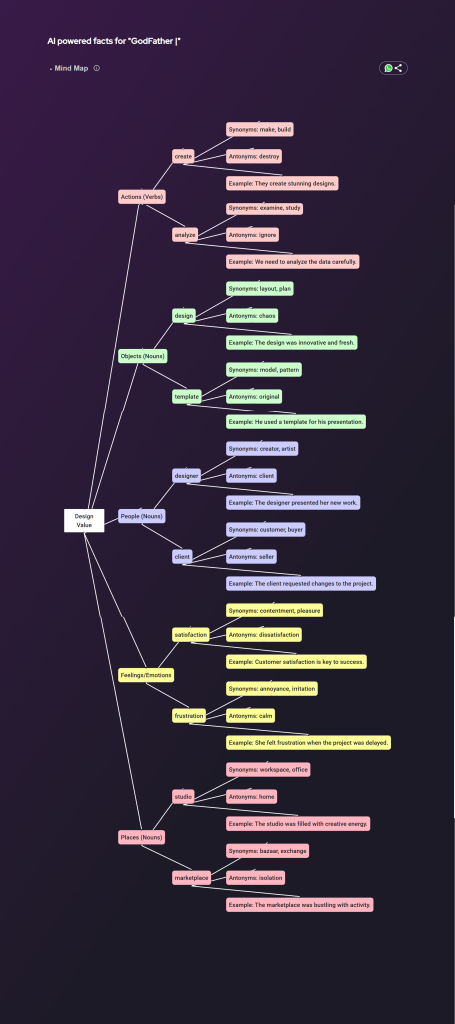
Step 3. Visualize with AI Mind Maps
After watching a clip or reading text, let AI generate mind maps — linking vocabulary, idioms, and grammar. This gives structure and helps your memory.
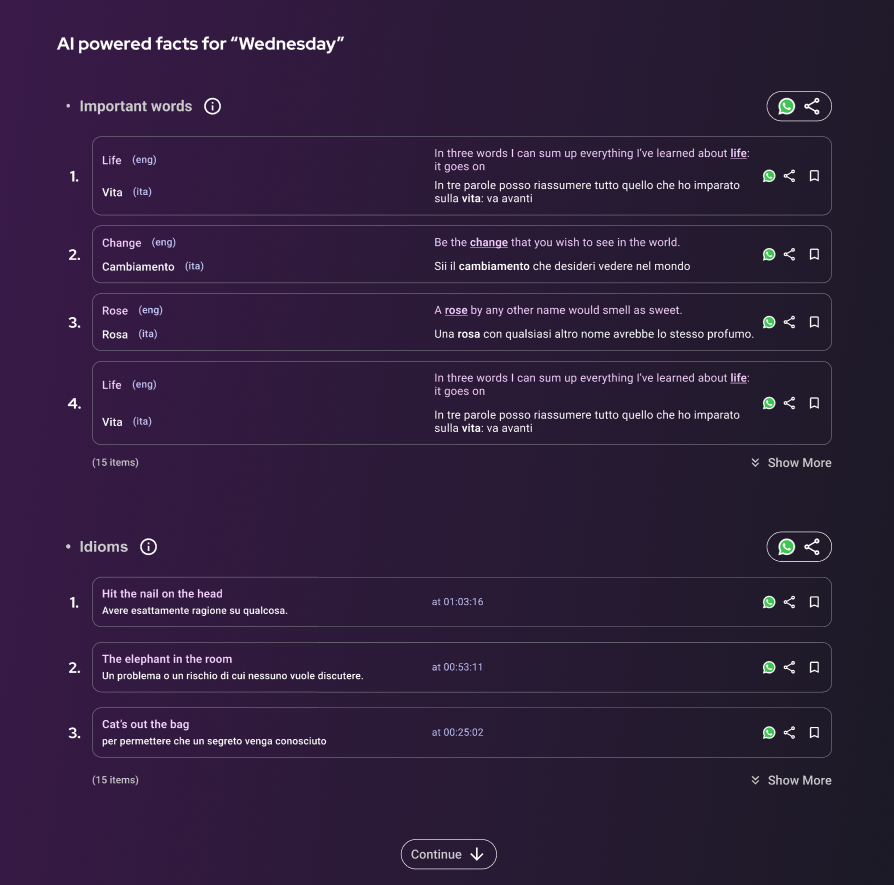
Step 4. Learn real expressions (Idioms, Collocations, Proverbs)
Let AI detect and explain natural collocations, idioms, and proverbs from the content you enjoy. You’ll understand how native speakers really speak — not how textbooks teach.
By repeating these steps regularly, AI for language learning becomes your daily habit.
4. Deep Dive: FunFluen’s AI Features
Now let’s see how FunFluen uses AI for language learning with its suite of tools:
🧑🏫 AI Coach — Learn Smarter, Not Harder
What it is: Your personal AI mentor.
What it does:
-
Gives personalized tips and corrections
-
Adjusts to your goals (fluency, exam prep, casual talk)
-
Tracks your progress
Why it helps: You don’t waste time on what you already know. Your growth is efficient.
🤖 AI Buddy — Practice Write Naturally
What it is: 24/7 conversational partner.
What it does:
-
Chats in natural tone
-
Adapts style (casual, business, fun)
-
Has modes to avoid spoilers
Why it helps: You practice speaking often — even when no teacher is available.
🕸️ AI Mind Maps — See How Language Connects
What it is: Visual diagrams of language elements.
What it does:
-
Connects words, idioms, grammar in clusters
-
Helps you spot patterns (e.g., “make up,” “make out,” “make over”)
Why it helps: You remember more when language is structured, not random.
🧩 AI Collocations — Sound Native Instantly
What it is: A tool that shows natural word pairs.
What it does:
-
Highlights native pairings (e.g. “make a decision,” not “do a decision”)
-
Corrects your phrasing
-
Generates mini flashcards
Why it helps: You stop sounding textbook-ish and start sounding natural.
💬 AI Idioms — Speak with Flavor
What it is: Idiom detector/explainer.
What it does:
-
Finds idioms in context
-
Explains meaning, usage, and emotion
-
Gives examples from your content
Why it helps: You catch jokes, sarcasm, and style — not just the words.
🌍 AI Proverbs — Learn Cultural Wisdom
What it is: Proverb finder and explainer.
What it does:
-
Finds and explains proverbs used by native speakers
-
Links them to similar proverbs in your language
-
Uses real examples
Why it helps: You sound culturally aware and wise, not just grammatically correct. -
Click the AI Packages tab to access your custom learning bundle
5. Pro Tips: Getting the Most Out of AI for Language Learning
Here are extra tricks to supercharge your progress:
-
Mix tools: Use Mind Maps + Buddy + Coach together for richer practice.
-
Set micro goals: For example, “Learn 20 new idioms this week.”
-
Review actively: Don’t just consume — use expressions in your own speaking/writing.
-
Use analytics: Check AI feedback to track weak spots.
-
Don’t over-rely: AI guides you, but real fluency comes from real conversation and usage.
6. Common Mistakes When Using AI for Language Learning
Watch out for these traps:
-
Relying on translation: Avoid using AI just to translate — context is key.
-
Ignoring pronunciation feedback: If you skip that, your speaking won’t improve.
-
Skipping review: Vocabulary forgotten is opportunity lost.
-
Treating AI as an all-knowing teacher: AI is a coach and helper — not a replacement for practice.
Remember: AI is a tool — not a shortcut, but a supercharger.
7. Final Thoughts & The Future
When you use AI for language learning, you shift from passive to active, from guessing to mastering, from forgetting to remembering. AI is reshaping not just how we learn, but how we think in another language.
We’re heading toward tools that can detect emotional tone, offer multimodal learning (images, voice, video), and adapt in real time as you speak. Tools like FunFluen, with its Coach, Buddy, Mind Maps, Collocations, Idioms, and Proverbs, are just the start.
If you’re ready to turn your favorite shows, movies, and readings into your smartest language tutor, try FunFluen today. With FunFluen, AI for language learning isn’t just a phrase — it’s your path to fluency.