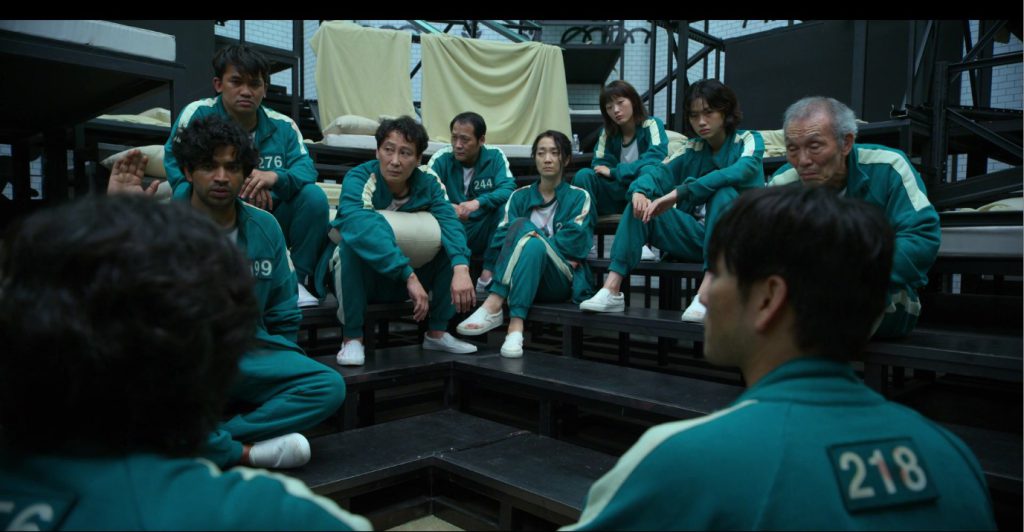
Are you passionate about language learning with Netflix? Do you love Squid Game S01 E05 and want to boost your English skills simultaneously? You’re in the right place! Learning English through movies like Squid Game S01 E05 makes vocabulary acquisition exciting and memorable. Let’s dive into some powerful words from this gripping episode and explore how you can master them effortlessly. Plus, discover how our innovative extension, FunFluen.com, can transform your language learning journey.
Vocabulary List from Squid Game S01 E05
1. Egalitarian
Original Movie Context:
“Building an egalitarian society!”
Scene Description and Emotional Tone: In a tense moment, a character emphasizes the importance of equality within the group, reflecting a desire for fairness amidst chaos.
Word Breakdown:
- Definition: Believing in or based on the principle that all people are equal and deserve equal rights and opportunities.
- Part of Speech: Adjective
- Pronunciation: /ˌɛɡəˈleɪtəriən/
- Etymology: From French égalitaire, from égalité meaning equality.
Examples:
- “The new company policy promotes an egalitarian work environment.”
- “They strive to create an egalitarian society where everyone has a voice.”
Contextual Usage:
- Formal: “The committee adopted an egalitarian approach to decision-making.”
- Informal: “Our group is really egalitarian; everyone gets a say.”
- Common Collocations: Egalitarian principles, egalitarian society, egalitarian values
Learning Insights:
- Pronunciation Tips: Stress on the third syllable: e-ga-LAI-te-ri-an.
- Common Mistakes: Mispronouncing the stress or confusing it with similar-sounding words.
- Cultural Nuances: Often used in discussions about social justice and equality.
- Memorization Tricks: Associate “egalitarian” with “egalité,” the French word for equality.
2. Restructuring
Original Movie Context:
“Guess I’d better do some major restructuring while I’m here.”
Scene Description and Emotional Tone: A character plans to reorganize the team’s strategy to enhance their chances of survival, indicating urgency and determination.
Word Breakdown:
- Definition: The act of organizing something again or differently, especially to make it more effective.
- Part of Speech: Noun
- Pronunciation: /ˌriːˈstrʌktʃərɪŋ/
- Etymology: From “re-” meaning again + “structure.”
Examples:
- “The company is undergoing restructuring to improve efficiency.”
- “After the merger, the organization faced significant restructuring.”
Contextual Usage:
- Formal: “Restructuring the department will help streamline our operations.”
- Informal: “We need some restructuring in our project plan to meet the deadline.”
- Common Collocations: Organizational restructuring, financial restructuring, major restructuring
Learning Insights:
- Pronunciation Tips: Emphasize the second syllable: re-STRUCT-uring.
- Common Mistakes: Confusing it with “constructing” or “deconstructing.”
- Cultural Nuances: Common in business and organizational contexts.
- Memorization Tricks: Think of “restructuring” as “rebuilding the structure.”
3. Bullshit
Original Movie Context:
“Bullshit. You killed those guys out there.”
Scene Description and Emotional Tone: A character expresses intense frustration and disbelief towards another’s claims, using strong language to convey anger.
Word Breakdown:
- Definition: Nonsense; something that is false or not true.
- Part of Speech: Noun (also used as a verb)
- Pronunciation: /ˈbʊlʃɪt/
- Etymology: Origin unclear, possibly American slang from the early 20th century.
Examples:
- “He said he could finish the work in one day, but that’s bullshit.”
- “Don’t believe his bullshit; he’s always making excuses.”
Contextual Usage:
- Formal: Rarely used in formal settings due to its profanity.
- Informal: Commonly used among friends or in casual conversations.
- Common Collocations: Full of bullshit, call bullshit, utter bullshit
Learning Insights:
- Pronunciation Tips: Short and sharp: BUL-shit.
- Common Mistakes: Misplacing the stress or elongating the vowels.
- Cultural Nuances: Considered vulgar; use with caution in professional settings.
- Memorization Tricks: Remember it as a strong way to reject false statements.
4. Scumbag
Original Movie Context:
“How can I trust someone like you, scumbag?”
Scene Description and Emotional Tone: A character uses this term to express deep mistrust and contempt towards another, heightening the emotional tension.
Word Breakdown:
- Definition: A contemptible or unpleasant person.
- Part of Speech: Noun
- Pronunciation: /ˈskʌm.bæɡ/
- Etymology: Informal American English, combining “scum” (low or worthless person) with “bag” (a derogatory suffix).
Examples:
- “You’re such a scumbag for betraying us.”
- “Don’t be a scumbag and help out instead of running away.”
Contextual Usage:
- Formal: Not appropriate; it’s a strong insult.
- Informal: Used among peers or in heated arguments.
- Common Collocations: Total scumbag, absolute scumbag, acting like a scumbag
Learning Insights:
- Pronunciation Tips: Emphasize the first syllable: SCUM-bag.
- Common Mistakes: Mixing up the stress or mispronouncing “scum.”
- Cultural Nuances: Highly offensive; best used sparingly and in appropriate contexts.
- Memorization Tricks: Think of “scumbag” as “scum” + “bag” to remember its derogatory nature.
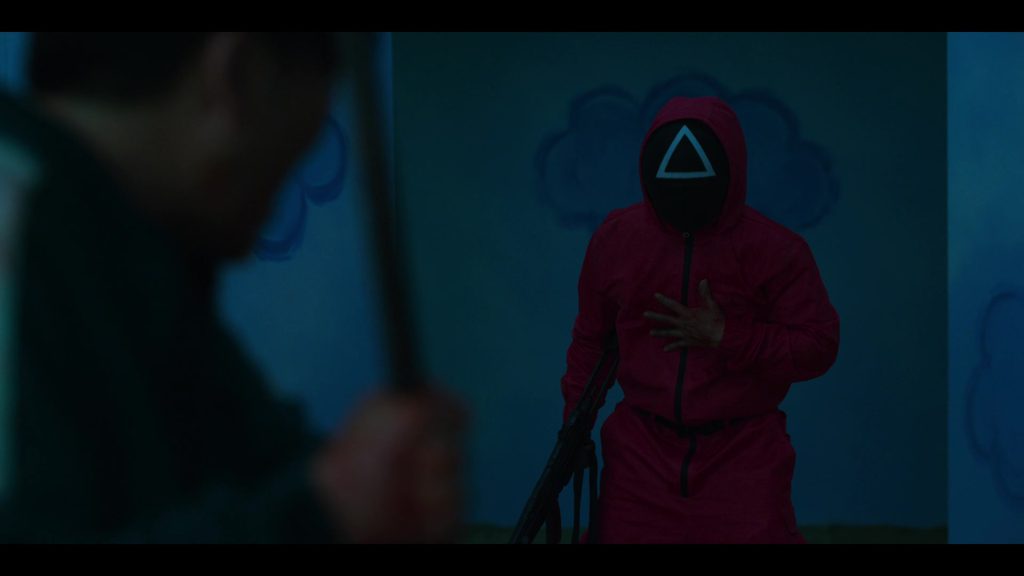
5. Barricade
Original Movie Context:
“Had a barricade just like this one.”
Scene Description and Emotional Tone: Characters discuss using physical barriers to protect themselves, highlighting tension and survival instincts.
Word Breakdown:
- Definition: A barrier or obstruction set up to prevent or delay passage.
- Part of Speech: Noun (can also be a verb)
- Pronunciation: /ˌbærɪˈkeɪd/
- Etymology: From French barricade, from barrique meaning barrel.
Examples:
- “They built a barricade to block the entrance.”
- “During the protest, demonstrators used furniture as a barricade.”
Contextual Usage:
- Formal: “The police set up a barricade to control the crowd.”
- Informal: “Let’s put up a barricade to keep them out.”
- Common Collocations: Build a barricade, set up a barricade, heavy barricade
Learning Insights:
- Pronunciation Tips: Emphasize the second syllable: bar-ri-CADE.
- Common Mistakes: Mispronouncing the stress or blending syllables.
- Cultural Nuances: Common in contexts of protests, emergencies, and tactical scenarios.
- Memorization Tricks: Visualize a wall or barrier when you hear “barricade.”
6. Sniper
Original Movie Context:
“Everyone who got eliminated in Red Light, Green Light was shot by a sniper rifle.”
Scene Description and Emotional Tone: Characters explain how eliminations occur, introducing a high-stakes and ominous element to the game.
Word Breakdown:
- Definition: A person who shoots targets from a concealed position, especially from long distances.
- Part of Speech: Noun
- Pronunciation: /ˈsnaɪpər/
- Etymology: From “snipe,” meaning to hunt or shoot birds, combined with the agent noun suffix “-er.”
Examples:
- “The sniper took aim and fired silently.”
- “He trained extensively to become a skilled sniper.”
Contextual Usage:
- Formal: “The military unit included an elite sniper for reconnaissance missions.”
- Informal: “Watch out for that sniper hiding over there.”
- Common Collocations: Elite sniper, trained sniper, sniper rifle
Learning Insights:
- Pronunciation Tips: Emphasize the first syllable: SNAI-per.
- Common Mistakes: Confusing “sniper” with “slider” or mispronouncing the “sn” sound.
- Cultural Nuances: Often associated with military or tactical operations.
- Memorization Tricks: Link “sniper” with “snipe,” the bird, to remember stealth and precision.
7. Rhetorical
Original Movie Context:
“How can I trust someone like you, scumbag?”
Scene Description and Emotional Tone: The question posed is more of a rhetorical nature, highlighting frustration without expecting an answer.
Word Breakdown:
- Definition: Relating to or concerned with the art of rhetoric; a question asked to make a point rather than to receive an answer.
- Part of Speech: Adjective
- Pronunciation: /rəˈtɔːrɪkəl/
- Etymology: From Greek rhētorikós, from rhētor, meaning speaker.
Examples:
- “Isn’t it a bit late to start studying?” (a rhetorical question)
- “Her speech was full of rhetorical devices to persuade the audience.”
Contextual Usage:
- Formal: “The professor explained the difference between rhetorical questions and genuine inquiries.”
- Informal: “He asked a rhetorical question just to make his point.”
- Common Collocations: Rhetorical question, rhetorical device, purely rhetorical
Learning Insights:
- Pronunciation Tips: Emphasize the second syllable: re-TOR-ical.
- Common Mistakes: Mispronouncing the “rhe” as “ree.”
- Cultural Nuances: Used in speeches, debates, and persuasive communication.
- Memorization Tricks: Associate “rhetorical” with “rhetoric,” the art of effective speaking.
8. Disbelief
Original Movie Context:
“Bullshit. You killed those guys out there.”
Scene Description and Emotional Tone: A character expresses astonishment and skepticism towards another’s claims, emphasizing their incredulity.
Word Breakdown:
- Definition: Inability or refusal to accept that something is true or real.
- Part of Speech: Noun
- Pronunciation: /dɪsˈbɪliːf/
- Etymology: From “disbelieve,” combining “dis-” (not) + “believe.”
Examples:
- “She looked at him in disbelief after hearing the shocking news.”
- “His sudden generosity was met with disbelief by his friends.”
Contextual Usage:
- Formal: “The committee listened in disbelief to the unexpected proposal.”
- Informal: “I was in disbelief when I saw the final results.”
- Common Collocations: Looked in disbelief, expressed disbelief, met with disbelief
Learning Insights:
- Pronunciation Tips: Emphasize the second syllable: dis-BI-lef.
- Common Mistakes: Mispronouncing the stress or blending syllables.
- Cultural Nuances: Common in reactions to surprising or unexpected events.
- Memorization Tricks: Imagine someone shaking their head in disbelief.
9. Sinner
Original Movie Context:
“I pray to the Lord on behalf of all us sinners.”
Scene Description and Emotional Tone: A character reflects on their moral state, invoking religious sentiments amidst a life-or-death situation.
Word Breakdown:
- Definition: A person who commits a sin; someone who behaves in a morally wrong way.
- Part of Speech: Noun
- Pronunciation: /ˈsɪnər/
- Etymology: From Old English synner, related to “sin.”
Examples:
- “He confessed his sins and sought forgiveness as a sinner.”
- “Despite his actions, he believed everyone is a sinner in need of redemption.”
Contextual Usage:
- Formal: “The pastor preached about forgiveness for every sinner.”
- Informal: “Don’t think you’re a sinner just because you made a mistake.”
- Common Collocations: Repentant sinner, true sinner, lost sinner
Learning Insights:
- Pronunciation Tips: Short and clear: SIN-ner.
- Common Mistakes: Confusing with “cinnamon” or mispronouncing the “er” ending.
- Cultural Nuances: Often used in religious contexts but can be generalized to moral discussions.
- Memorization Tricks: Link “sinner” with “sin” to remember its meaning.

10. Sacrifice
Original Movie Context:
“They sacrificed themselves for us.”
Scene Description and Emotional Tone: Characters acknowledge the selfless actions of others, highlighting themes of survival and camaraderie.
Word Breakdown:
- Definition: An act of giving up something valued for the sake of something else regarded as more important or worthy.
- Part of Speech: Noun (can also be a verb)
- Pronunciation: /ˈsækrɪfaɪs/
- Etymology: From Latin sacrificium, from sacer (sacred) + facere (to make/do).
Examples:
- “Her sacrifice saved the entire team.”
- “They made a great sacrifice to ensure our safety.”
Contextual Usage:
- Formal: “The soldiers’ sacrifice will never be forgotten.”
- Informal: “I had to sacrifice my weekend to finish the project.”
- Common Collocations: Selfless sacrifice, ultimate sacrifice, personal sacrifice
Learning Insights:
- Pronunciation Tips: Emphasize the first syllable: SAC-ri-fice.
- Common Mistakes: Mispronouncing the “ci” as /sɪ/.
- Cultural Nuances: Often associated with heroism, altruism, and significant loss.
- Memorization Tricks: Think of “sacrifice” as giving something up for a greater good.
11. Distrust
Original Movie Context:
“I don’t trust one person here.”
Scene Description and Emotional Tone: A character voices skepticism towards the entire group, emphasizing fear and uncertainty.
Word Breakdown:
- Definition: Lack of trust or confidence in someone or something.
- Part of Speech: Noun (can also be a verb)
- Pronunciation: /dɪˈstrʌst/
- Etymology: From “dis-” (not) + “trust.”
Examples:
- “His constant lies led to widespread distrust among his peers.”
- “There is growing distrust in the government.”
Contextual Usage:
- Formal: “Distrust in leadership can undermine an organization’s effectiveness.”
- Informal: “I have a real distrust of his promises.”
- Common Collocations: Widespread distrust, growing distrust, distrust of
Learning Insights:
- Pronunciation Tips: Emphasize the second syllable: dis-TRUST.
- Common Mistakes: Confusing “distrust” with “distress.”
- Cultural Nuances: Relevant in discussions about relationships, politics, and society.
- Memorization Tricks: Associate “distrust” with “not trust.”
12. Confrontational
Original Movie Context:
“How can I trust someone like you, scumbag?”
Scene Description and Emotional Tone: A character adopts a confrontational stance, showing hostility and directness in communication.
Word Breakdown:
- Definition: Tending to deal with disputes in a hostile or aggressive manner.
- Part of Speech: Adjective
- Pronunciation: /ˌkɒnfrənˈteɪʃənəl/
- Etymology: From “confront,” from Latin confrontare (to face together).
Examples:
- “Her confrontational approach often leads to heated arguments.”
- “He became confrontational when questioned about his actions.”
Contextual Usage:
- Formal: “The manager’s confrontational style was not well-received by the team.”
- Informal: “Don’t be so confrontational; let’s try to resolve this peacefully.”
- Common Collocations: Confrontational attitude, confrontational behavior, confrontational approach
Learning Insights:
- Pronunciation Tips: Emphasize the third syllable: con-fron-TA-tion-al.
- Common Mistakes: Misplacing the stress or mispronouncing “tion.”
- Cultural Nuances: Often viewed negatively; associated with conflict and aggression.
- Memorization Tricks: Link “confrontational” with “confront,” meaning to face directly.
13. Derogatory
Original Movie Context:
“You’re an illegal alien.”
Scene Description and Emotional Tone: A character uses derogatory language to insult another, highlighting prejudice and hostility.
Word Breakdown:
- Definition: Showing a critical or disrespectful attitude.
- Part of Speech: Adjective
- Pronunciation: /ˌdɛr.əˈɡɔːr.i/
- Etymology: From Latin derogare, from de- (away) + rogare (to ask).
Examples:
- “He made derogatory remarks about her appearance.”
- “Using derogatory language is unacceptable in a professional setting.”
Contextual Usage:
- Formal: “The report highlighted several derogatory comments made by the official.”
- Informal: “Don’t use derogatory terms when talking about others.”
- Common Collocations: Derogatory remarks, derogatory comments, derogatory language
Learning Insights:
- Pronunciation Tips: Emphasize the third syllable: der-o-GO-ra-tory.
- Common Mistakes: Confusing with “decorative” or “derivative.”
- Cultural Nuances: Highly offensive; linked to discrimination and disrespect.
- Memorization Tricks: Think of “derogatory” as “derogate,” meaning to belittle.
14. Murmuring
Original Movie Context:
“[all murmur]”
Scene Description and Emotional Tone: Background sounds of characters softly speaking, creating an atmosphere of tension and unease.
Word Breakdown:
- Definition: Speaking softly and indistinctly.
- Part of Speech: Verb (gerund) and Noun
- Pronunciation: /ˈmɜːrmərɪŋ/
- Etymology: From Old French murmurer, from Latin murmurare (to murmur).
Examples:
- “She was murmuring to herself while walking down the street.”
- “There was a constant murmur of conversation in the café.”
Contextual Usage:
- Formal: “The audience was murmuring in anticipation of the performance.”
- Informal: “I could hear the murmur of voices from the next room.”
- Common Collocations: Soft murmuring, background murmuring, gentle murmuring
Learning Insights:
- Pronunciation Tips: Emphasize the first syllable: MUR-muring.
- Common Mistakes: Mispronouncing the double “r” or the ending.
- Cultural Nuances: Creates a sense of ambient noise or secrecy.
- Memorization Tricks: Associate “murmuring” with the sound of gentle rain.
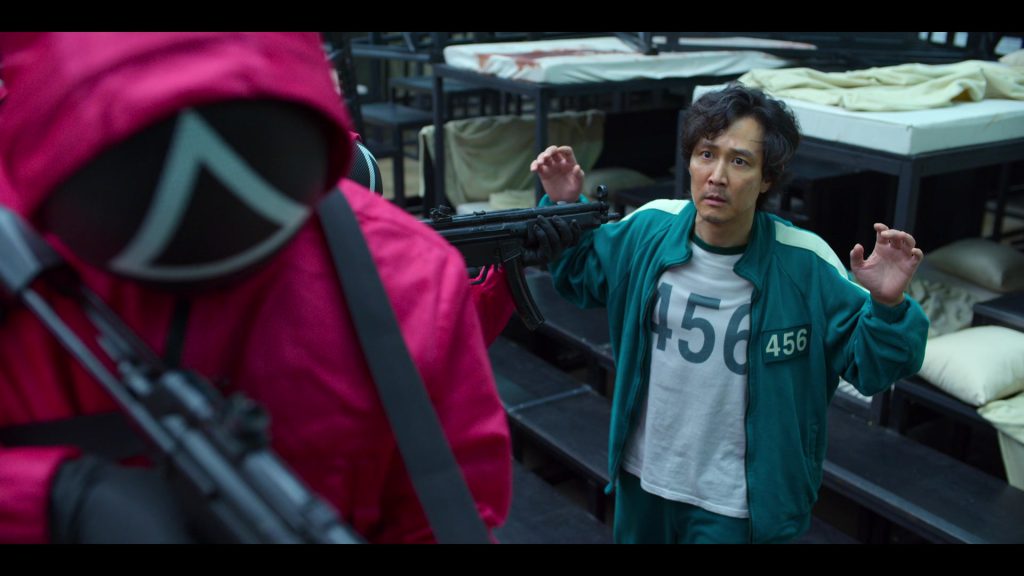
15. Whimpering
Original Movie Context:
“[all whimpering]”
Scene Description and Emotional Tone: Characters express vulnerability and fear through soft, pitiful sounds, enhancing the scene’s emotional weight.
Word Breakdown:
- Definition: Making low, feeble sounds expressive of fear, pain, or discontent.
- Part of Speech: Verb (gerund) and Noun
- Pronunciation: /ˈwɪmpərɪŋ/
- Etymology: From Old English hwimperian, related to “whimpers.”
Examples:
- “The dog was whimpering in the corner.”
- “She couldn’t stop whimpering after hearing the bad news.”
Contextual Usage:
- Formal: “He was whimpering for help during the ordeal.”
- Informal: “Don’t whimper; stand up for yourself!”
- Common Collocations: Soft whimpering, constant whimpering, desperate whimpering
Learning Insights:
- Pronunciation Tips: Emphasize the first syllable: WHIM-per-ing.
- Common Mistakes: Mispronouncing the “wh” sound or the middle syllable.
- Cultural Nuances: Conveys helplessness and emotional distress.
- Memorization Tricks: Link “whimpering” with the sound of a small animal in distress.
Conclusion
Learning English through movies like Squid Game S01 E05 is not only effective but also incredibly enjoyable. By immersing yourself in the intense dialogues and emotional scenes, you can naturally absorb new vocabulary and understand its contextual usage. Each word you learn becomes a building block in your language proficiency journey, making conversations smoother and more engaging.
Imagine watching your favorite shows while seamlessly integrating new words into your vocabulary. With language learning with Netflix, this dream becomes a reality. Our extension, FunFluen.com, offers features like a mouse dictionary to instantly define words, and the Fluency Gym to practice pronunciation and speaking. These tools are designed to make your learning experience interactive and fun, ensuring you stay motivated and make steady progress.
Start Your Language Learning Journey Today
Ready to take your English skills to the next level? Dive into Squid Game S01 E05 and explore our carefully selected vocabulary list to enhance your learning. Don’t forget to try FunFluen.com, where Fluency Gym and other innovative features await to transform your language learning experience. Embrace the adventure of mastering English with the power of movies and cutting-edge technology!
Tips for Maximizing Your Learning
- Use Contextual Clues: Always pay attention to how words are used in scenes to grasp their meanings better.
- Engage with the Content: Try repeating lines from the movie to improve pronunciation and retention.
- Leverage Technology: Utilize features like the mouse dictionary to quickly understand and save new words.
- Stay Consistent: Regularly watch episodes and review your saved vocabulary to reinforce learning.
- Have Fun: Enjoy the process by connecting emotionally with the characters and their stories.
By integrating these strategies and leveraging tools like FunFluen.com, your journey in language learning with Netflix will be both effective and enjoyable. Happy learning!
Explore More:
- Top Tips for Learning English with Squid Game
- How to Use Movie Subtitles for Vocabulary Building
- Enhance Your Learning with Fluency Gym
#UnlockYourFluency #LanguageLearningWithNetflix #FunFluen