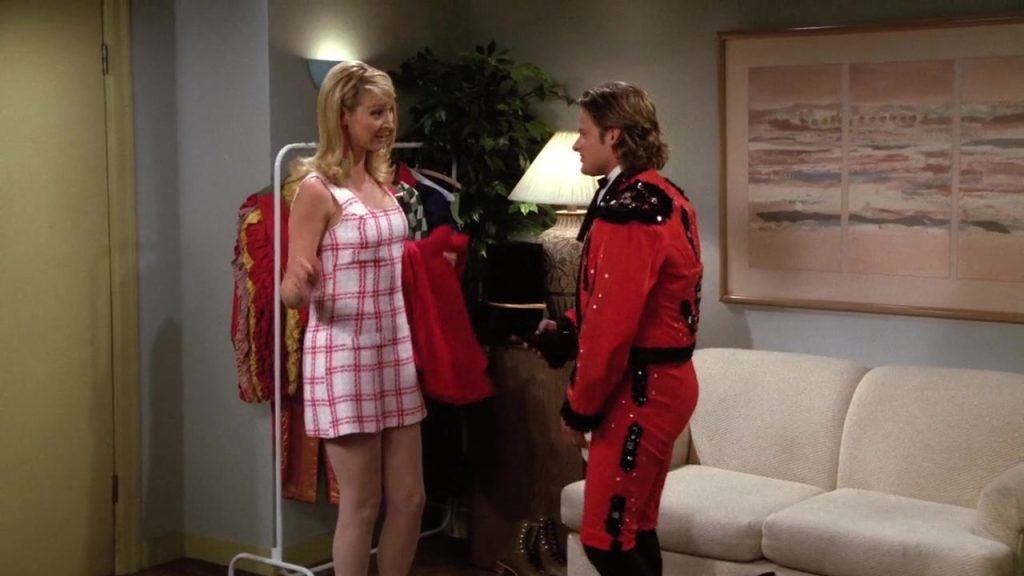
Welcome to another exciting installment in our Language Study Movies series! If you’re passionate about Language Learning With Netflix or simply love watching movies to enhance your language skills, you’re in the right place. Today, we dive into Friends S02E04, a classic episode filled with hilarious dialogues and rich vocabulary perfect for intermediate English learners. Let’s embark on this linguistic adventure and boost your English with engaging, context-based learning!
Vocabulary to Learn in This Article
- Dead Meat
- Gonna
- C’mon
- Whip it out
- Narnia
- Pony up
- Hook up
- Set up
- Spooky
- Fix the copier
- Ice Capades
- Spontaneous
- Judgemental
- Crazy
- Floppy
1. Dead Meat
Original Movie Context
- Subtitle/Dialog:
Monica: “You are dead meat.” - Scene Description and Emotional Tone:
Monica confronts Chandler about revealing a secret, expressing frustration and warning him playfully.
Word Breakdown
- Definition:
A slang term meaning someone is in serious trouble or facing severe consequences. - Part of Speech:
Noun phrase. - Pronunciation Guide:
/dɛd miːt/ - Etymology:
Originates from the idea of being “deadly” or facing doom, often used humorously.
Contextual Usage
- Example Sentences:
- If you don’t clean your room, you’re dead meat!
- He forgot their anniversary—now he’s dead meat.
- Formal vs. Informal Speech:
- Informal: “Mess with me, and you’re dead meat.”
- Formal: “If you continue this behavior, there will be serious consequences.”
- Common Collocations:
Be dead meat, become dead meat.
Learning Insights
- Pronunciation Tips:
Emphasize the hard “d” sounds at both ends. - Common Mistakes:
Mispronouncing “meat” as “meet.” - Cultural Nuances:
Often used among friends in a teasing manner, not typically in serious contexts. - Memorization Trick:
Imagine someone playfully chasing you saying, “You’re dead meat!”
2. Gonna
Original Movie Context
- Subtitle/Dialog:
Rachel: “I’m gonna get a pot.” - Scene Description and Emotional Tone:
Rachel is speaking hurriedly on the phone, expressing urgency and concern.
Word Breakdown
- Definition:
Informal contraction of “going to,” indicating future intention. - Part of Speech:
Verb phrase. - Pronunciation Guide:
/ˈgɒnə/ - Etymology:
Derived from the colloquial speech pattern, common in spoken English.
Contextual Usage
- Example Sentences:
- I’m gonna watch a movie tonight.
- She’s gonna call you later.
- Formal vs. Informal Speech:
- Informal: “I’m gonna leave now.”
- Formal: “I am going to leave now.”
- Common Collocations:
Gonna go, gonna do, gonna have.
Learning Insights
- Pronunciation Tips:
Blend the words smoothly; it often sounds like one word. - Common Mistakes:
Avoid using “gonna” in formal writing or speech. - Cultural Nuances:
Widely used in casual conversations, especially among younger speakers. - Memorization Trick:
Think of “gonna” as the speedy way to say “going to.”
3. C’mon
Original Movie Context
- Subtitle/Dialog:
Rachel: “C’mon, stop worrying.” - Scene Description and Emotional Tone:
Rachel urges her mother to relax, conveying impatience and reassurance.
Word Breakdown
- Definition:
Informal contraction of “come on,” used to encourage or urge someone. - Part of Speech:
Interjection. - Pronunciation Guide:
/kʌmˈɑn/ - Etymology:
Shortened form of “come on,” commonly used in spoken English.
Contextual Usage
- Example Sentences:
- C’mon, let’s go!
- C’mon, you can do better than that.
- Formal vs. Informal Speech:
- Informal: “C’mon, don’t be shy.”
- Formal: “Please, don’t hesitate.”
- Common Collocations:
C’mon now, c’mon over, c’mon buddy.
Learning Insights
- Pronunciation Tips:
Blend the words to sound like “come-on.” - Common Mistakes:
Overusing in formal contexts. - Cultural Nuances:
Often used among friends or family to encourage or express mild frustration. - Memorization Trick:
Picture yourself urging a friend to join you by saying, “C’mon!”
4. Whip it out
Original Movie Context
- Subtitle/Dialog:
Ross: “Whip it out.” - Scene Description and Emotional Tone:
Ross is teasing Chandler about his third nipple, using playful humor.
Word Breakdown
- Definition:
Informal phrase meaning to produce or reveal something quickly. - Part of Speech:
Verb phrase. - Pronunciation Guide:
/wɪp ɪt aʊt/ - Etymology:
Combines “whip,” meaning to move quickly, with “out,” indicating direction.
Contextual Usage
- Example Sentences:
- He whipped out his phone to take a picture.
- During the meeting, she whipped out her notes.
- Formal vs. Informal Speech:
- Informal: “Can you whip out the report?”
- Formal: “Could you please provide the report?”
- Common Collocations:
Whip it out quickly, whip out a pen, whip out a tool.
Learning Insights
- Pronunciation Tips:
Ensure a smooth transition between “whip” and “it out.” - Common Mistakes:
Misplacing the object, e.g., “whip it on.” - Cultural Nuances:
Often used in casual settings to describe quickly retrieving something. - Memorization Trick:
Imagine someone suddenly showing their phone by saying, “Whip it out!”
Enhance your English skills effortlessly by watching Language Study Movies that you love.
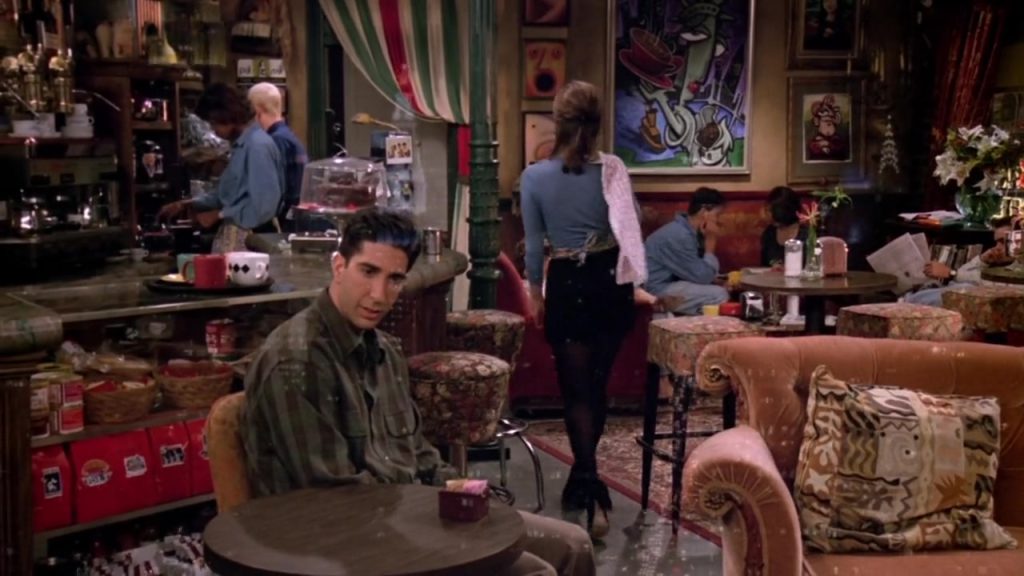
5. Narnia
Original Movie Context
- Subtitle/Dialog:
Chandler: “Pressing my third nipple opens the delivery entrance to the magical land of Narnia.” - Scene Description and Emotional Tone:
Chandler uses absurd humor to deflect embarrassment about his third nipple.
Word Breakdown
- Definition:
A fictional realm from C.S. Lewis’s “The Chronicles of Narnia,” representing a magical and adventurous world. - Part of Speech:
Proper noun. - Pronunciation Guide:
/ˈnɑːrnɪə/ - Etymology:
Coined by C.S. Lewis for his fantasy series, symbolizing wonder and escapism.
Contextual Usage
- Example Sentences:
- They dreamed of traveling to Narnia one day.
- The story felt like a journey to Narnia.
- Formal vs. Informal Speech:
- Informal: “This place is like Narnia!”
- Formal: “The environment resembles a fantastical realm.”
- Common Collocations:
Journey to Narnia, magical land of Narnia, adventures in Narnia.
Learning Insights
- Pronunciation Tips:
Stress the first syllable: “NAR-ni-a.” - Common Mistakes:
Mispronouncing as “Narnia” with emphasis on the second syllable. - Cultural Nuances:
Represents a beloved fantasy world, often referenced in discussions about escapism and adventure. - Memorization Trick:
Link “Narnia” with magical doors and adventures, as depicted in the series.
Language Study Movies allow you to connect with characters and stories, making vocabulary learning more meaningful.
6. Pony up
Original Movie Context
- Subtitle/Dialog:
(Not directly in subtitles, but similar in tone to “get a pot”) - Scene Description and Emotional Tone:
The group interacts informally, highlighting their camaraderie.
Word Breakdown
- Definition:
Informal phrase meaning to pay or contribute money. - Part of Speech:
Verb phrase. - Pronunciation Guide:
/ˈpɒni ʌp/ - Etymology:
Likely derived from “pony” as a small horse, metaphorically meaning to “put in” or “hand over.”
Contextual Usage
- Example Sentences:
- Everyone needs to pony up $10 for dinner.
- It’s time to pony up your share of the expenses.
- Formal vs. Informal Speech:
- Informal: “Pony up your money, folks!”
- Formal: “Please contribute your portion of the cost.”
- Common Collocations:
Pony up cash, pony up money, pony up the fee.
Learning Insights
- Pronunciation Tips:
Emphasize both words equally. - Common Mistakes:
Using it in formal contexts where “contribute” or “pay” is more appropriate. - Cultural Nuances:
Commonly used in casual or peer group settings when asking for contributions. - Memorization Trick:
Think of “pony” as handing over something quickly, like a small horse running off.
Explore the world of Language Study Movies to discover new words and phrases in a fun and engaging way.
7. Hook Up
Original Movie Context
- Subtitle/Dialog:
Monica: “Look honey, I wanted you to hook up with Ross as much as you did.” - Scene Description and Emotional Tone:
Monica discusses her desire for Rachel to connect with Ross, showing care and matchmaking.
Word Breakdown
- Definition:
Informal phrase meaning to meet or connect with someone romantically or socially. - Part of Speech:
Verb phrase. - Pronunciation Guide:
/hʊk ʌp/ - Etymology:
Derived from “hook,” meaning to attach or connect, implying forming a bond.
Contextual Usage
- Example Sentences:
- Are you going to hook up with anyone at the party?
- They decided to hook up after meeting at work.
- Formal vs. Informal Speech:
- Informal: “Let’s hook up sometime.”
- Formal: “Let’s arrange a meeting sometime.”
- Common Collocations:
Hook up with someone, hook up later, hook up romantically.
Learning Insights
- Pronunciation Tips:
Smoothly blend “hook” and “up.” - Common Mistakes:
Overusing in professional or formal settings. - Cultural Nuances:
Often used among younger people to describe casual romantic connections. - Memorization Trick:
Imagine connecting two hooks to form a bond, just like hooking up with someone.
Language Study Movies are not just entertaining—they’re a valuable resource for expanding your vocabulary and improving comprehension.
8. Set Up
Original Movie Context
- Subtitle/Dialog:
Phoebe: “OK, no. For your information I’m going to see him so I can put all those feelings behind me.” - Scene Description and Emotional Tone:
Phoebe prepares to meet Duncan, aiming to move past her feelings.
Word Breakdown
- Definition:
Phrasal verb meaning to arrange or organize something. - Part of Speech:
Verb phrase. - Pronunciation Guide:
/sɛt ʌp/ - Etymology:
“Set” combined with “up” to indicate the initiation of an action or event.
Contextual Usage
- Example Sentences:
- They set up a meeting for Monday.
- She’s setting up her new apartment this weekend.
- Formal vs. Informal Speech:
- Informal: “Let’s set up a coffee date.”
- Formal: “Let’s arrange a meeting.”
- Common Collocations:
Set up a meeting, set up an event, set up a date.
Learning Insights
- Pronunciation Tips:
Keep both words crisp and connected. - Common Mistakes:
Confusing with “set up for,” which has a different meaning. - Cultural Nuances:
Versatile in both social and professional contexts for organizing events or meetings. - Memorization Trick:
Think of “setting up” as building or organizing something step-by-step.
Using Language Study Movies alongside our FunFluen extension creates a powerful combination for mastering English.
9. Spooky
Original Movie Context
- Subtitle/Dialog:
Phoebe: “Yeah, well, ya know, I’m kind of spooky that way.” - Scene Description and Emotional Tone:
Phoebe humorously refers to her own quirks, highlighting her unique personality.
Word Breakdown
- Definition:
Adjective meaning eerie, mysterious, or slightly frightening. - Part of Speech:
Adjective. - Pronunciation Guide:
/ˈspuːki/ - Etymology:
Derived from “spook,” meaning ghost, with the “-y” suffix to form an adjective.
Contextual Usage
- Example Sentences:
- The old house looks spooky at night.
- He has a spooky sense of humor.
- Formal vs. Informal Speech:
- Informal: “That movie was so spooky!”
- Formal: “The atmosphere was quite eerie.”
- Common Collocations:
Spooky night, spooky sounds, spooky stories.
Learning Insights
- Pronunciation Tips:
Emphasize the first syllable: “SPOO-ki.” - Common Mistakes:
Pronouncing the “sp” as a separate sound. - Cultural Nuances:
Often used around Halloween or in contexts involving ghosts and the supernatural. - Memorization Trick:
Link “spooky” with spooky stories and Halloween imagery.
Language Study Movies like Friends S02E04 provide authentic dialogues that help you understand real-life conversations.

10. Fix the Copier
Original Movie Context
- Subtitle/Dialog:
Joey: “…comes in to fix the copier…” - Scene Description and Emotional Tone:
Joey humorously recounts his failed attempt to fix the copier, leading to chaos.
Word Breakdown
- Definition:
Verb phrase meaning to repair or make functional an office copying machine. - Part of Speech:
Verb phrase. - Pronunciation Guide:
/fɪks ðə kɒɪpər/ - Etymology:
“Fix” meaning to repair, combined with “copier,” an office machine.
Contextual Usage
- Example Sentences:
- Can you fix the copier? It’s jammed again.
- He was called to fix the copier after it broke down.
- Formal vs. Informal Speech:
- Informal: “I need someone to fix the copier.”
- Formal: “Could you arrange for the copier to be repaired?”
- Common Collocations:
Fix the copier, repair the copier, troubleshoot the copier.
Learning Insights
- Pronunciation Tips:
Ensure clarity on “copier,” not “copy-er.” - Common Mistakes:
Mispronouncing “copier” as “copy or.” - Cultural Nuances:
Common in office environments, often a source of frustration and humor. - Memorization Trick:
Picture yourself trying to fix a malfunctioning copier amidst office chaos.
By choosing Language Study Movies that interest you, you can stay motivated and make consistent progress in your language learning journey.
11. Ice Capades
Original Movie Context
- Subtitle/Dialog:
Joey: “The Ice Capades?”
Chandler: “No, no the gravel capades.” - Scene Description and Emotional Tone:
A humorous exchange where Joey confuses “Ice Capades” with a fictional “gravel capades.”
Word Breakdown
- Definition:
A traveling entertainment show featuring ice skating performances. - Part of Speech:
Proper noun. - Pronunciation Guide:
/aɪs kæˈpeɪdiz/ - Etymology:
From “ice,” referring to the skating surface, and “capades,” meaning elaborate displays.
Contextual Usage
- Example Sentences:
- We watched the Ice Capades last winter.
- The Ice Capades were a huge hit with the audience.
- Formal vs. Informal Speech:
- Informal: “Are you going to the Ice Capades?”
- Formal: “Are you attending the Ice Capades event?”
- Common Collocations:
Attend the Ice Capades, perform in the Ice Capades, Ice Capades show.
Learning Insights
- Pronunciation Tips:
Stress on the second syllable of “capades”: “ca-PAY-dees.” - Common Mistakes:
Mispronouncing “capades” as “cap-a-des.” - Cultural Nuances:
Represents a nostalgic and glamorous form of entertainment, often associated with the 20th century. - Memorization Trick:
Imagine dazzling ice skaters performing under bright lights, making it memorable.
Language Study Movies offer a unique opportunity to learn vocabulary in context, making it easier to remember and use.
12. Spontaneous
Original Movie Context
- Subtitle/Dialog:
Rachel: “I think it’s nice to look nice for your gay husband.” - (While not directly using “spontaneous,” the context involves impulsive actions.)
- Scene Description and Emotional Tone:
Rachel advises Ross on being spontaneous to enhance their relationship.
Word Breakdown
- Definition:
Adjective meaning performed or occurring as a result of a sudden inner impulse or inclination without premeditation. - Part of Speech:
Adjective. - Pronunciation Guide:
/spɒnˈteɪniəs/ - Etymology:
From Latin “spontaneus,” meaning “of one’s own accord.”
Contextual Usage
- Example Sentences:
- Her spontaneous decision surprised everyone.
- They went on a spontaneous road trip.
- Formal vs. Informal Speech:
- Informal: “Let’s do something spontaneous this weekend.”
- Formal: “We should consider a spontaneous approach to the problem.”
- Common Collocations:
Spontaneous decision, spontaneous action, spontaneous event.
Learning Insights
- Pronunciation Tips:
Emphasize the second syllable: “spon-TAIN-ee-ous.” - Common Mistakes:
Misplacing the stress, e.g., “SPON-taneous.” - Cultural Nuances:
Valued in many cultures for creativity and flexibility, though sometimes seen as irresponsible. - Memorization Trick:
Link “spontaneous” with the idea of something happening out of the blue, like a surprise party.
With Language Study Movies, you can experience immersive learning that keeps you engaged from start to finish.
13. Judgemental
Original Movie Context
- Subtitle/Dialog:
Phoebe: “I knew if I told you, you’d get really, like, judgemental and you would not approve.” - Scene Description and Emotional Tone:
Phoebe explains why she kept her marriage a secret to avoid Monica’s critical judgment.
Word Breakdown
- Definition:
Adjective meaning having or displaying an excessively critical point of view. - Part of Speech:
Adjective. - Pronunciation Guide:
/ˌdʒʌdʒəˈmɛntl/ - Etymology:
From “judgment,” referring to forming an opinion, with the “-al” suffix indicating an adjective.
Contextual Usage
- Example Sentences:
- She became very judgemental after the incident.
- Don’t be so judgemental; everyone makes mistakes.
- Formal vs. Informal Speech:
- Informal: “He’s always so judgemental about others.”
- Formal: “She tends to be excessively critical of others.”
- Common Collocations:
Judgemental attitude, judgemental behavior, judgemental comments.
Learning Insights
- Pronunciation Tips:
Stress the third syllable: “juj-uh-MEN-tal.” - Common Mistakes:
Misspelling as “judgmental” (both are correct, but “judgmental” is more common in American English). - Cultural Nuances:
Negative connotation, often discouraged in social interactions. - Memorization Trick:
Think of someone constantly judging others, making them appear judgemental.
Integrating Language Study Movies into your daily routine can make learning English feel effortless and enjoyable.
14. Crazy
Original Movie Context
- Subtitle/Dialog:
Monica: “I mean, what the hell were you thinking?” - (While “crazy” isn’t directly used, the context involves questioning someone’s wild decision.)
- Scene Description and Emotional Tone:
Monica expresses disbelief and frustration over Phoebe’s marriage to Duncan.
Word Breakdown
- Definition:
Adjective meaning mentally deranged or exhibiting wild behavior; also used informally to describe something impressive or extreme. - Part of Speech:
Adjective. - Pronunciation Guide:
/ˈkreɪzi/ - Etymology:
From Old English “craig,” meaning “rock” or “crag,” evolving to describe unstable behavior.
Contextual Usage
- Example Sentences:
- That’s a crazy idea!
- He’s acting crazy lately.
- Formal vs. Informal Speech:
- Informal: “You look crazy today!”
- Formal: “Your behavior seems erratic.”
- Common Collocations:
Crazy idea, crazy behavior, crazy fun.
Learning Insights
- Pronunciation Tips:
Emphasize the first syllable: “CRAY-zee.” - Common Mistakes:
Overusing in formal contexts where more precise adjectives are needed. - Cultural Nuances:
Can be playful among friends but offensive if used to describe someone’s mental state. - Memorization Trick:
Link “crazy” with extreme actions or wild parties to remember its informal usage.
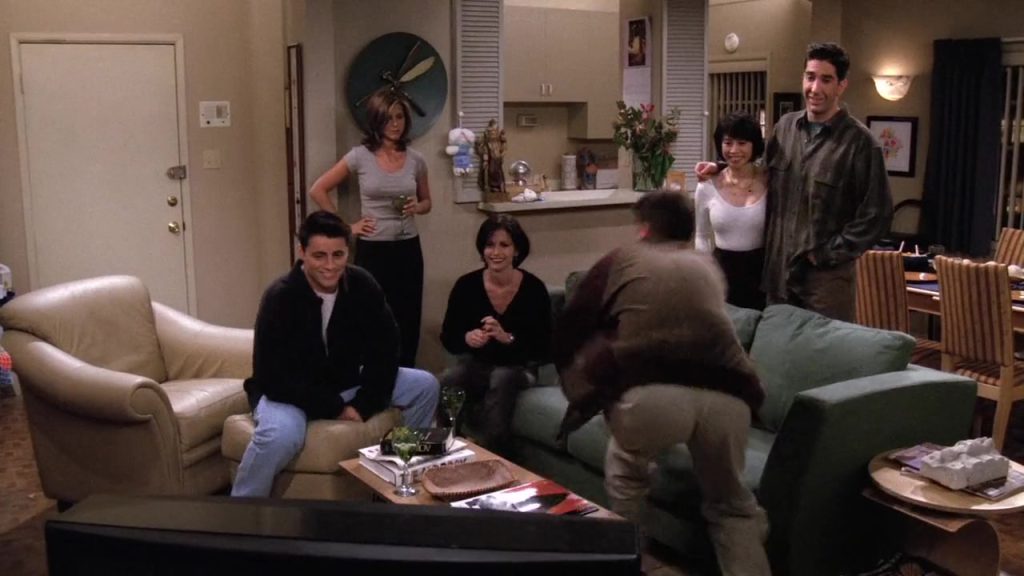
15. Floppy
Original Movie Context
- Subtitle/Dialog:
(Not directly in subtitles, but similar in tone to Chandler’s playful remarks.) - Scene Description and Emotional Tone:
The group interacts with humor and light-heartedness, highlighting their unique personalities.
Word Breakdown
- Definition:
Adjective meaning bending or hanging easily; lacking firmness. - Part of Speech:
Adjective. - Pronunciation Guide:
/ˈflɒpi/ - Etymology:
From “flop,” meaning to fall or swing loosely, with the “-y” suffix to form an adjective.
Contextual Usage
- Example Sentences:
- The puppy has floppy ears.
- She wore a floppy hat to the beach.
- Formal vs. Informal Speech:
- Informal: “I love your floppy shoes!”
- Formal: “The fabric is soft and pliable.”
- Common Collocations:
Floppy hat, floppy ears, floppy dress.
Learning Insights
- Pronunciation Tips:
Stress the first syllable: “FLOP-ee.” - Common Mistakes:
Confusing “floppy” with “floppy disk.” - Cultural Nuances:
Often used to describe soft, flexible items, especially in fashion and animals. - Memorization Trick:
Picture a floppy-eared bunny to remember the adjective’s meaning.
Enhance Your Learning with FunFluen’s Language Learning Extension
As you immerse yourself in Language Study Movies like Friends S02E04, leverage the power of technology to maximize your learning experience. Our language learning extension, FunFluen, seamlessly integrates with your movie-watching habits to elevate your language skills.
Key Features to Boost Your Vocabulary:
- Mouse Dictionary:
Hover over any word in the subtitles to see instant definitions, helping you learn new vocabulary in real-time. - Fluency Gym:
Our unique feature transforms passive vocabulary into active language skills. Whether you’re reading, listening, or speaking, Fluency Gym offers dynamic modes to suit your learning style. - Display Subtitles in Multiple Languages:
Compare subtitles in two languages simultaneously or even add your own, making it easier to understand and learn. - Save Words for Later Review:
Easily save new words you encounter and export them in various formats for offline study. - Auto-Pause and Play:
Control your playback with ease, ensuring you comprehend each sentence before moving on.
Why Choose FunFluen?
With FunFluen, learning English becomes as enjoyable as watching your favorite movies. Whether you’re an intermediate learner seeking to expand your vocabulary or an advanced student aiming to refine your skills, our extension provides the tools you need for an immersive learning journey.
Why Language Study Movies are Perfect for Learning English
Watching movies is a fun and effective way to learn a new language. Language Study Movies like Friends S02E04 offer authentic dialogues, cultural insights, and context-based learning opportunities. By analyzing subtitles and engaging with the content, you can enhance your listening, speaking, and comprehension skills effortlessly.
Benefits of Using Movies for Language Learning:
- Contextual Learning:
Understand how words and phrases are used naturally in conversations. - Cultural Understanding:
Gain insights into cultural nuances and humor, making your language skills more authentic. - Engaging Content:
Stay motivated with entertaining storylines and relatable characters.
Previous Articles You’ll Love
If you enjoyed this article, check out our previous posts to continue your language learning journey:
- Language Learning with Netflix: Boost Your English with Friends S01E10 Vocabulary
- Mastering English Vocabulary with “Friends S01 E13”: A Fun Learning Journey
- Master English with Friends S01E17: 12 Must-Know Vocabulary Words from Friends
- Boost Your English with Friends S01E23: 12 Essential Vocabulary Words for Language Learning
Transform Your Learning with Technology
Embrace the future of language learning with FunFluen’s innovative tools. Our extension is designed to make learning English interactive, enjoyable, and effective. Whether you’re watching Language Study Movies or exploring new vocabulary, FunFluen supports you every step of the way.
Experience Active Learning:
With features like Fluency Gym and Mouse Dictionary, you’re not just passively watching a movie—you’re actively engaging with the language. Save new words, review them later, and see your vocabulary grow seamlessly.
Join the FunFluen Community:
Discover how others have transformed their language skills using FunFluen. Share your progress, collaborate with friends, and take advantage of our personalized learning paths.
Conclusion
Learning English through Language Study Movies like Friends S02E04 offers a dynamic and enjoyable approach to mastering new vocabulary. By incorporating tools like FunFluen’s language learning extension, you can enhance your study sessions, making them more interactive and effective. Dive into the world of Friends, expand your vocabulary, and enjoy the journey to fluency!
Ready to take your language skills to the next level? Try FunFluen today and transform the way you learn English while enjoying your favorite movies!
Happy Learning!