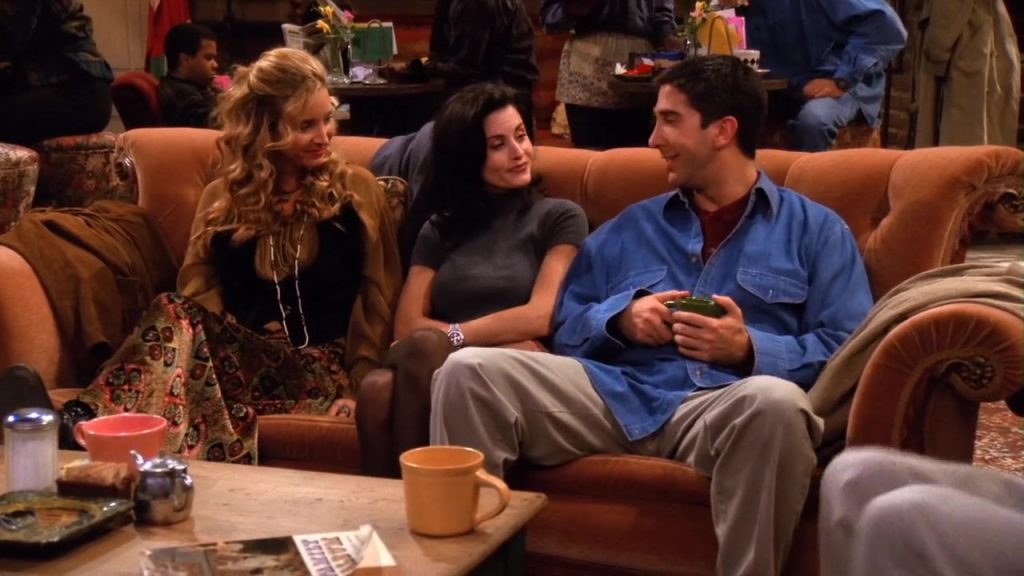
Are you an avid Netflix binger looking to boost your English skills at the same time? Language learning with Netflix is not only effective but also incredibly fun! In this article, we’ll dive into Friends Season 1, Episode 6, using it as a springboard to explore 12 essential vocabulary words. These words are carefully selected to enhance your language proficiency, all while you enjoy the hilarious antics of Ross, Rachel, and the gang. Plus, we’ll subtly introduce how FunFluen.com, our innovative language learning extension, can elevate your learning experience. Let’s embark on this linguistic adventure together!
Top Vocabulary Words from Friends Episode 6
1. Violated
Original Movie Context
- Subtitle/Dialogues:
- Rachel: “God. I feel violated.”
- Scene Description and Emotional Tone: After watching Joey’s play, Rachel expresses her discomfort and dissatisfaction, using strong emotions to convey her feelings.
Word Breakdown
- Definition: Treated someone in a way that disregards their rights or feelings; breached a rule or agreement.
- Part of Speech: Verb (past participle of “violate”)
- Pronunciation: /ˈvaɪəˌleɪtɪd/
- Etymology: Derived from the Latin word violare, meaning “to use force against.”
- Examples:
- The privacy policy was violated when user data was shared without consent.
- She felt her personal space was violated during the meeting.
Contextual Usage
- Example Sentences:
- He felt violated after discovering his friend shared his secret.
- The contract was violated when the company changed the terms without notice.
- Formal/Informal Variations:
- Formal: The agreement was violated by the third party.
- Informal: I felt totally violated when you snooped through my stuff.
- Common Collocations:
- Feel violated
- Rights violated
- Privacy violated
Learning Insights
- Pronunciation Tips: Emphasize the first syllable: VI-o-lated.
- Common Mistakes: Confusing “violated” with “violently.” Remember, “violated” pertains to breach or disrespect, not physical force.
- Cultural Nuances: Using “violated” often carries a strong emotional weight, so it’s typically reserved for serious situations.
- Memorization Trick: Associate “violate” with “viola,” a string instrument, imagining someone breaking a viola to remember the disruptive nature of the word.
2. Haphazard
Original Movie Context
- Subtitle/Dialogues:
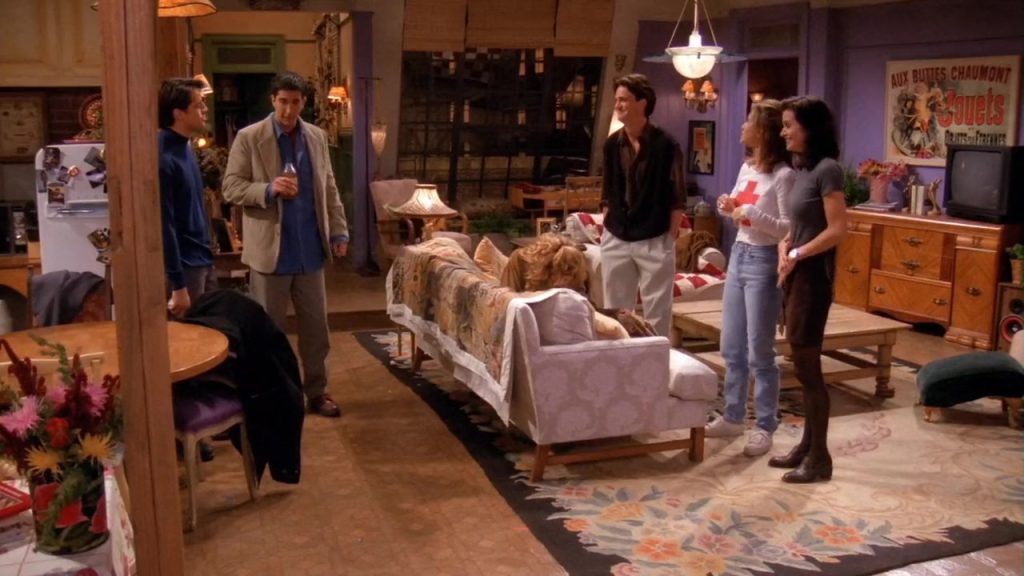
- Rachel: “Really? Just casually strewn about in that reckless haphazard manner?”
- Scene Description and Emotional Tone: Rachel critiques the messy arrangement of furniture, expressing frustration with the disorganized setup.
Word Breakdown
- Definition: Lacking any obvious organization or planning; random.
- Part of Speech: Adjective
- Pronunciation: /ˌhæp.hæˈzɑrd/
- Etymology: From the noun “haphazard,” first recorded in the early 19th century, likely combining “hap” (chance) and “hazard” (risk).
- Examples:
- The books were piled in a haphazard manner on the desk.
- Her haphazard approach to studying resulted in poor grades.
Contextual Usage
- Example Sentences:
- The project was completed in a haphazard way, leading to numerous errors.
- His haphazard travel plans left him without accommodations.
- Formal/Informal Variations:
- Formal: The files were organized in a haphazard system.
- Informal: His room is always a haphazard mess.
- Common Collocations:
- Haphazard manner
- Haphazard arrangement
- Haphazard approach
Learning Insights
- Pronunciation Tips: Stress the last syllable: hap-ha-ZARD.
- Common Mistakes: Not distinguishing “haphazard” from “hazard.” Remember, “haphazard” describes a lack of order, while “hazard” refers to danger.
- Cultural Nuances: Often used to criticize poor organization or planning.
- Memorization Trick: Think of “hap” (chance) and “hazard” (risk) together to remember the randomness and lack of structure.
3. Crappy
Original Movie Context
- Subtitle/Dialogues:
- Joey: “I’ve done nothing but crappy plays for six years.”
- Scene Description and Emotional Tone: Joey laments his lack of success in acting, expressing frustration and disappointment.
Word Breakdown
- Definition: Of poor quality; bad.
- Part of Speech: Adjective (informal/slang)
- Pronunciation: /ˈkræpi/
- Etymology: Derived from “crap,” a slang term for worthless or poor quality.
- Examples:
- The food at the new restaurant was really crappy.
- I had a crappy day at work today.
Contextual Usage
- Example Sentences:
- He bought a crappy phone that kept breaking.
- She felt crappy after staying up all night studying.
- Formal/Informal Variations:
- Formal: The performance was subpar.
- Informal: That movie was crappy.
- Common Collocations:
- Crappy weather
- Crappy service
- Crappy situation
Learning Insights
- Pronunciation Tips: Short and sharp: CRAP-py.
- Common Mistakes: Overusing in formal contexts. “Crappy” is best reserved for casual conversations.
- Cultural Nuances: Considered informal and slightly vulgar; use with friends or in relaxed settings.
- Memorization Trick: Associate “crappy” with “crap” to remember it signifies something undesirable or of low quality.
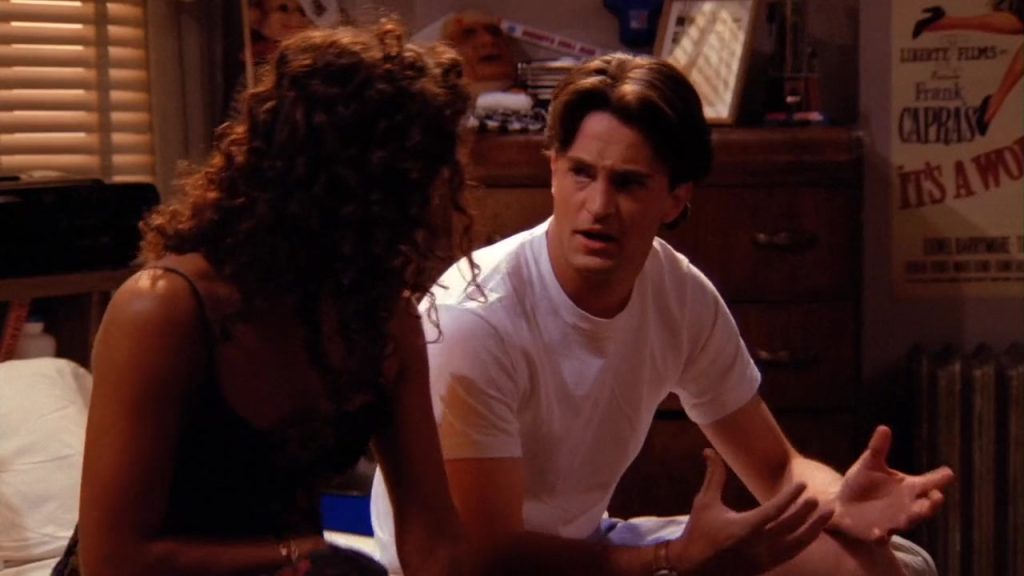
4. Resentment
Original Movie Context
- Subtitle/Dialogues:
- Rachel: “Ooh, do I sense a little bit of resentment?”
- Scene Description and Emotional Tone: Rachel picks up on underlying tension among her friends, sensing unspoken frustration.
Word Breakdown
- Definition: Bitter indignation at having been treated unfairly.
- Part of Speech: Noun
- Pronunciation: /rɪˈzɛntmənt/
- Etymology: From Old French resentir, meaning “to feel again,” combined with the suffix “-ment.”
- Examples:
- He felt a deep resentment towards his colleagues for not acknowledging his efforts.
- There was visible resentment in her voice when she spoke about the issue.
Contextual Usage
- Example Sentences:
- Her constant criticism fostered resentment among her team members.
- He couldn’t hide his resentment after being passed over for the promotion.
- Formal/Informal Variations:
- Formal: There was evident resentment regarding the new policy changes.
- Informal: She was holding onto some resentment about the argument.
- Common Collocations:
- Feel resentment
- Harbor resentment
- Resentment towards
Learning Insights
- Pronunciation Tips: Emphasize the second syllable: re-SENT-ment.
- Common Mistakes: Confusing with “resent.” Remember, “resentment” is the noun form, while “resent” is the verb.
- Cultural Nuances: Often linked to long-term negative feelings; can impact relationships and workplace dynamics.
- Memorization Trick: Think of “resent” as the root, and “resentment” as the enduring state of that feeling.
5. Pronounces
Original Movie Context
- Subtitle/Dialogues:
- Aurora: “She pronounces my name ’Chand-lrr’.”
- Scene Description and Emotional Tone: Chandler discusses how Aurora accentuates his name, highlighting cultural influences in pronunciation.
Word Breakdown
- Definition: Articulates or says a word or name in a particular way.
- Part of Speech: Verb (third person singular of “pronounce”)
- Pronunciation: /prəˈnaʊnsəz/
- Etymology: From Latin pronuntiare, meaning “to announce publicly.”
- Examples:
- He pronounces her name correctly, showing his attention to detail.
- The teacher pronounces difficult words slowly to aid student understanding.
Contextual Usage
- Example Sentences:
- Can you pronounce this French word for me?
- She pronounces her last name differently than how it’s spelled.
- Formal/Informal Variations:
- Formal: The speaker pronounces each term with precision.
- Informal: How do you pronounce that word?
- Common Collocations:
- Pronounces a name
- Pronounces correctly
- Pronounces differently
Learning Insights
- Pronunciation Tips: Focus on the stress in the second syllable: pro-NOUNC-es.
- Common Mistakes: Misplacing the stress or adding extra syllables. Practice saying the word slowly first.
- Cultural Nuances: Pronunciation can vary significantly across different regions and cultures, often leading to unique accents.
- Memorization Trick: Link “pronounce” with “announce” to remember it involves speaking or saying something out loud.
6. Haphazard
(Note: This word was already covered as number 2. Let’s choose another word instead. Let’s pick “Monogamy.”)
6. Monogamy
Original Movie Context
- Subtitle/Dialogues:
- Ross: “Well, y’know, monogamy can be a, uh, tricky concept.”
- Scene Description and Emotional Tone: Ross discusses the complexities of monogamous relationships, reflecting on the group’s romantic dynamics.
Word Breakdown
- Definition: The practice or state of being married to or in a sexual relationship with one person at a time.
- Part of Speech: Noun
- Pronunciation: /ˈmɒnəˌgæmi/
- Etymology: From Greek monos (single) and gamos (marriage).
- Examples:
- Monogamy is the most common relationship structure in many cultures.
- They decided to commit to monogamy after dating for several years.
Contextual Usage
- Example Sentences:
- Monogamy requires trust and commitment between partners.
- He has reservations about monogamy due to past experiences.
- Formal/Informal Variations:
- Formal: The study explores the psychological aspects of monogamy.
- Informal: They’re into monogamy and believe in having just one partner.
- Common Collocations:
- Practice monogamy
- Commit to monogamy
- Monogamous relationship
Learning Insights
- Pronunciation Tips: Break it down into syllables: mo-no-GA-my.
- Common Mistakes: Mispronouncing the syllables or stressing the wrong part of the word.
- Cultural Nuances: Monogamy is often seen as the societal norm, but attitudes toward it can vary widely.
- Memorization Trick: Think of “mono” (one) and “gamy” (marriage) to remember it refers to a one-partner relationship.
7. Kook
Original Movie Context
- Subtitle/Dialogues:
- Ross: “She is a kook.”
- Scene Description and Emotional Tone: Ross describes Monica’s quirky and unpredictable behavior, using a playful insult.
Word Breakdown
- Definition: A crazy or eccentric person.
- Part of Speech: Noun
- Pronunciation: /kuːk/
- Etymology: Originates from American slang, popularized in the early 20th century.
- Examples:
- That guy who sings in the shower is such a kook.
- Don’t mind her; she’s a bit of a kook but harmless.
Contextual Usage
- Example Sentences:
- He’s known as a kook among his friends for his odd hobbies.
- She may seem like a kook, but she’s incredibly creative.
- Formal/Informal Variations:
- Formal: His unconventional methods may seem eccentric.
- Informal: She’s a total kook, always wearing mismatched socks.
- Common Collocations:
- Total kook
- Act like a kook
- Kook behavior
Learning Insights
- Pronunciation Tips: Simple and short: KOO-k.
- Common Mistakes: Mispronouncing it as “kook” with a hard ‘k’ at the end, which is correct. Avoid confusing with “cook.”
- Cultural Nuances: “Kook” is informal and can be playful or mildly derogatory. Use it carefully to avoid offending.
- Memorization Trick: Associate “kook” with “cooky,” imagining someone acting strangely or whimsically.
8. Out of My League
Original Movie Context
- Subtitle/Dialogues:
- Chandler: “Oh please, could she be more out of my league?”
- Scene Description and Emotional Tone: Chandler admires a beautiful woman, expressing his insecurity about approaching her.
Word Breakdown
- Definition: Someone who is perceived to be more attractive or desirable than oneself, making them seem unattainable.
- Part of Speech: Idiomatic Phrase
- Pronunciation: /aʊt əv maɪ liːɡ/
- Etymology: Originates from sports, where a “league” denotes a level of skill or status.
- Examples:
- She works at a big company; he thinks she’s out of his league.
- He feels like the star athlete is out of his league for dating.
Contextual Usage
- Example Sentences:
- I like her, but she’s way out of my league.
- He thought the scholarship was out of his league, but he applied anyway.
- Formal/Informal Variations:
- Formal: He believes the opportunity is beyond his current capabilities.
- Informal: She’s totally out of his league, but he can’t stop thinking about her.
- Common Collocations:
- Out of someone’s league
- Feel out of my league
- Considered out of my league
Learning Insights
- Pronunciation Tips: Smooth transition between words: out-of-my-LEAGUE.
- Common Mistakes: Using it literally (e.g., sports leagues) instead of the idiomatic meaning.
- Cultural Nuances: Often reflects societal standards of attractiveness and status; can impact self-esteem.
- Memorization Trick: Visualize a sports league where different players belong to different levels, symbolizing varying degrees of desirability.
9. Hustle
Original Movie Context
- Subtitle/Dialogues:
- Joey: “You deserve this, after all your years of struggling, you’ve finally been able to crack your way into showbusiness.”
- Scene Description and Emotional Tone: Chandler praises Joey for finally succeeding in the competitive acting industry, emphasizing his hard work and persistence.
Word Breakdown
- Definition: To work energetically and rapidly; to push or drive forward.
- Part of Speech: Verb
- Pronunciation: /ˈhʌsəl/
- Etymology: Originates from Middle English husselen, possibly of Scandinavian origin.
- Examples:
- She hustled all day to finish the project on time.
- They had to hustle to catch the last train.
Contextual Usage
- Example Sentences:
- He hustled through his studies to graduate early.
- The street vendor had to hustle to attract customers.
- Formal/Informal Variations:
- Formal: She worked diligently to complete her assignments.
- Informal: He had to hustle to make it to the meeting on time.
- Common Collocations:
- Hustle hard
- Hustle through
- Hustle to do something
Learning Insights
- Pronunciation Tips: Emphasize the first syllable: HUS-tle.
- Common Mistakes: Mispronouncing as “hussle” instead of “hustle.”
- Cultural Nuances: “Hustle” often implies determination and relentless effort, sometimes with a sense of urgency or pressure.
- Memorization Trick: Think of “hustle” as pushing forward energetically, much like hustling in a busy marketplace.
10. Reckless
Original Movie Context
- Subtitle/Dialogues:
- Monica: “You got a glass on the coffee table. There’s no coaster. It’s a cold drink, it’s a hot day. Little beads of condensation are inching their way closer and closer to the surface of the wood…”
- Scene Description and Emotional Tone: Chandler humorously describes Monica’s reckless behavior regarding the placement of a glass, highlighting his irritation.
Word Breakdown
- Definition: Without thinking or caring about the consequences of an action; rash.
- Part of Speech: Adjective
- Pronunciation: /ˈrɛkləs/
- Etymology: From Middle English reckles, related to “reck” meaning care or heed.
- Examples:
- Driving at high speeds without a seatbelt is reckless.
- Her reckless spending led to financial troubles.
Contextual Usage
- Example Sentences:
- He made a reckless decision without considering the risks.
- The company faced consequences due to its reckless policies.
- Formal/Informal Variations:
- Formal: His actions were deemed irresponsible and reckless.
- Informal: She’s so reckless with her money.
- Common Collocations:
- Reckless behavior
- Reckless driving
- Reckless actions
Learning Insights
- Pronunciation Tips: Emphasize the first syllable: REC-less.
- Common Mistakes: Confusing “reckless” with “reckon.” Remember, “reckless” relates to lack of care.
- Cultural Nuances: Often used in contexts involving safety, finance, and personal behavior.
- Memorization Trick: Associate “reckless” with “reckon less,” meaning less care is taken.
11. Fickle
Original Movie Context
- Subtitle/Dialogues:
- Phoebe: “I can’t believe you tried to move the green ottoman.”
- Scene Description and Emotional Tone: Monica and Rachel discuss the instability and inconsiderate nature of repeatedly moving furniture, indirectly touching on fickleness.
Word Breakdown
- Definition: Changing frequently, especially in regards to loyalties or interests; inconstant.
- Part of Speech: Adjective
- Pronunciation: /ˈfɪkəl/
- Etymology: From Old English ficc (cunning) combined with a diminutive suffix.
- Examples:
- His fickle nature makes it hard to rely on him.
- The weather in spring is notoriously fickle.
Contextual Usage
- Example Sentences:
- She is fickle in her career choices, changing jobs often.
- Their relationship was brief due to his fickle temperament.
- Formal/Informal Variations:
- Formal: Her fickle preferences make decision-making challenging.
- Informal: He’s too fickle to stick with one hobby.
- Common Collocations:
- Fickle nature
- Fickle mood
- Fickle opinions
Learning Insights
- Pronunciation Tips: Stress the first syllable: FICK-le.
- Common Mistakes: Pronouncing as “fickle” with a hard ‘c’ like “fick-cle” instead of “fick-le.”
- Cultural Nuances: “Fickle” often implies unpredictability and unreliability, particularly in personal relationships or preferences.
- Memorization Trick: Think of “fickle” as something that flips or flicks easily, symbolizing changeability.
12. Impending Doom
Original Movie Context
- Subtitle/Dialogues:
- Chandler: “Notice, no fear, no sense of impending doom…”
- Scene Description and Emotional Tone: Chandler humorously remarks on the absence of tension before Joey’s play begins, contrasting the usual anxiety.
Word Breakdown
- Definition: The feeling or sense that something bad or unpleasant is going to happen.
- Part of Speech: Noun Phrase
- Pronunciation: /ɪmˈpɛndɪŋ duːm/
- Etymology: “Impending” from Latin impendere (to hang upon), and “doom” from Old English dom (judgment, fate).
- Examples:
- As the deadline approached, he felt a sense of impending doom.
- The dark clouds signaled impending doom for the outdoor event.
Contextual Usage
- Example Sentences:
- She couldn’t shake the feeling of impending doom before the exam.
- The silence in the room was filled with impending doom.
- Formal/Informal Variations:
- Formal: There was an air of impending doom regarding the project’s outcome.
- Informal: I had this creepy feeling of impending doom about the whole situation.
- Common Collocations:
- Sense of impending doom
- Impending doom for
- Feel impending doom
Learning Insights
- Pronunciation Tips: Emphasize “pen” in “impending” and “doom.”
- Common Mistakes: Mispronouncing “impending” as “im-pending” instead of “im-pend-ing.”
- Cultural Nuances: Often used in contexts involving anxiety, fear, or foreboding situations.
- Memorization Trick: Visualize dark clouds looming over to symbolize the approach of something bad.
Enhance Your Learning Journey with FunFluen.com
Learning vocabulary through your favorite shows like Friends can transform your language acquisition into an enjoyable and memorable experience. To make this journey even more effective, FunFluen.com offers a suite of innovative features designed to complement your learning:
- Mouse Dictionary: Hover over any word in the subtitles to see instant definitions, helping you understand new vocabulary in real-time.
- Save Words: Easily save new words you encounter during your viewing sessions for future review and study.
- Fluency Gym: Engage with interactive exercises that turn passive vocabulary into active language skills, making your learning dynamic and fun.
Imagine watching Friends Season 1, Episode 6, and effortlessly expanding your vocabulary with just a few clicks. Whether you’re intrigued by Joey’s acting struggles or Chandler’s witty remarks, FunFluen.com ensures that every moment contributes to your language mastery.
Conclusion
Embarking on the path of language learning with Netflix is a delightful way to enhance your English skills while enjoying beloved shows like Friends. By integrating vocabulary from Friends Season 1, Episode 6, you’ve not only learned new words but also understood their contextual usage and cultural significance. Remember, language learning is an adventure filled with discovery, humor, and personal growth.
Ready to take your learning to the next level? Visit FunFluen.com and explore our unique features designed to make your language journey as entertaining as it is educational. With tools like Fluency Gym and our Mouse Dictionary, you’ll find that mastering English has never been more engaging. Start today and transform your Netflix time into a powerful learning experience!
#FunFluen #LanguageLearning #LearnEnglish #Friends #NetflixAndLearn #VocabularyBuilding