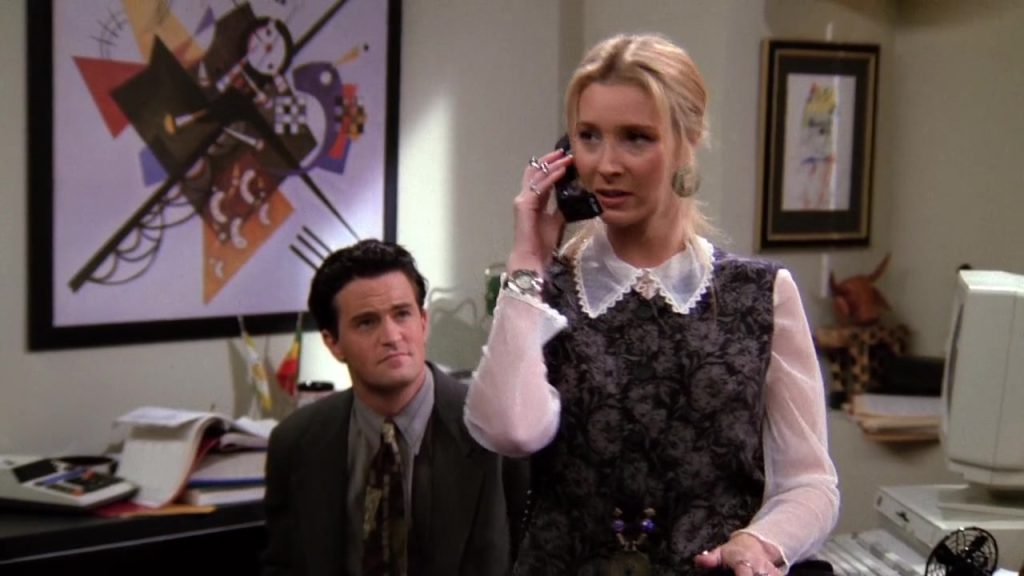
Welcome to Cinema Language Learning, where your favorite movies and TV shows become your ultimate language tutors! Today, we’re diving into Friends S01E22, a classic episode brimming with engaging dialogues and rich vocabulary. Whether you’re binge-watching on Netflix or using our innovative language learning extension, this guide will help you master 12 essential English words seamlessly woven into the show’s humor and charm.
1. Sarcastically
Original Movie Context
- Dialogue:
Chandler: “[sarcastically] Oh, come on tell me.”
- Scene Description and Emotional Tone:
In Central Perk, Chandler responds to Monica’s plea with a touch of sarcasm, highlighting his frustration but also keeping the mood light and humorous.
Word Breakdown
- Definition:
In a manner that uses irony to mock or convey contempt. - Part of Speech:
Adverb - Pronunciation Guide:
/sɑːrˈkæstɪkli/ - Etymology:
Derived from the Greek word sarkasmos, meaning “to tear flesh,” which reflects the biting nature of sarcasm. - Examples:
- She responded sarcastically when asked about her “great” day.
- “Oh, fantastic!” he said sarcastically after spilling his coffee.
Contextual Usage
- Example Sentences:
- He sarcastically thanked her for the “helpful” advice.
- The teacher spoke sarcastically about the students’ sudden interest in homework.
- Formal vs. Informal:
- Formal: The speaker responded sarcastically to the proposal.
- Informal: “Yeah, right,” she said sarcastically.
- Common Collocations:
- Speak sarcastically
- Respond sarcastically
- Tone sarcastically
- Potential Idioms or Slang Variations:
- “Sarcasm is the lowest form of wit.”
Learning Insights
- Pronunciation Tips:
Emphasize the second syllable: sar-CA-sti-cally. - Common Mistakes:
Confusing “sarcastically” with “enthusiastically.” Remember, sarcasm often conveys the opposite of what’s being said. - Cultural Nuances:
Sarcasm is widely used in English-speaking cultures, especially in humor and casual conversations. - Memorization Tricks:
Associate “sarcastically” with Chandler’s witty remarks to remember its meaning.
2. Inadequate
Original Movie Context
- Dialogue:
Chandler: “Interesting, cause in my dreams, I’m always surprisingly inadequate.”
- Scene Description and Emotional Tone:
Chandler reflects humorously on his feelings of inadequacy, blending self-deprecation with light-heartedness.
Word Breakdown
- Definition:
Not sufficient or satisfactory; lacking the necessary quality or quantity. - Part of Speech:
Adjective - Pronunciation Guide:
/ɪnˈædɪkwət/ - Etymology:
From Latin inadequatus, meaning “not properly provided for.” - Examples:
- She felt inadequate in her new job.
- The meal was inadequate to satisfy their hunger.
Contextual Usage
- Example Sentences:
- His performance was inadequate for the role.
- She felt inadequate compared to her peers.
- Formal vs. Informal:
- Formal: The report was deemed inadequate by the committee.
- Informal: I feel so inadequate sometimes.
- Common Collocations:
- Feel inadequate
- Inadequate support
- Inadequate resources
- Potential Idioms or Slang Variations:
- “Not cutting the mustard” (meaning not meeting expectations)
Learning Insights
- Pronunciation Tips:
Stress the second syllable: in-AD-e-qua-te. - Common Mistakes:
Mispronouncing the prefix in- as im-. - Cultural Nuances:
Expressing inadequacy is common in self-reflective or humble contexts. - Memorization Tricks:
Link “inadequate” with Chandler’s dream of not measuring up to remember its meaning.
3. Felon
Original Movie Context
- Dialogue:
Monica: “My lie didn’t make one of us a felon in 48 states.”
- Scene Description and Emotional Tone:
Monica reassures that her deceit hasn’t led to any serious legal consequences, blending relief with sarcasm.
Word Breakdown
- Definition:
A person who has been found guilty of a serious crime. - Part of Speech:
Noun - Pronunciation Guide:
/ˈfɛlən/ - Etymology:
From Latin felonus, meaning “crooked, deceitful.” - Examples:
- The felon was sentenced to five years in prison.
- She tried to avoid becoming a felon by staying out of trouble.
Contextual Usage
- Example Sentences:
- After the trial, he was declared a felon.
- Felons are often required to register with local authorities.
- Formal vs. Informal:
- Formal: The felon was prosecuted under federal law.
- Informal: He’s a felon, so he can’t vote anymore.
- Common Collocations:
- Convicted felon
- First-time felon
- Felonious activities
- Potential Idioms or Slang Variations:
- “Bad apple” (referring to a person who negatively influences others)
Learning Insights
- Pronunciation Tips:
Ensure the first syllable is stressed: FEL-on. - Common Mistakes:
Confusing “felon” with “felony,” which refers to the crime itself. - Cultural Nuances:
The term “felon” carries significant legal and social implications in English-speaking countries. - Memorization Tricks:
Associate “felon” with serious crimes like Chandler’s sarcastic reference to emphasize its severity.
4. Subconscious
Original Movie Context
- Dialogue:
Chandler: “I was somebody else’s subconscious.”
- Scene Description and Emotional Tone:
Chandler humorously blames his actions on his subconscious mind, adding a layer of self-awareness and wit.
Word Breakdown
- Definition:
The part of the mind that is not fully aware but influences actions and feelings. - Part of Speech:
Noun - Pronunciation Guide:
/səbˈkɒnʃəs/ - Etymology:
From Latin sub, meaning “under,” and conscious, meaning “aware.” - Examples:
- Her subconscious often guides her decisions.
- He tried to suppress his subconscious fears.
Contextual Usage
- Example Sentences:
- Dreams are a reflection of the subconscious.
- He explored his subconscious through meditation.
- Formal vs. Informal:
- Formal: The therapist analyzed her subconscious motives.
- Informal: Sometimes, my subconscious tells me what to do.
- Common Collocations:
- Subconscious mind
- Subconscious thoughts
- Access the subconscious
- Potential Idioms or Slang Variations:
- “Mind tricks” (referring to subconscious influences)
Learning Insights
- Pronunciation Tips:
Break it down into syllables: sub-CON-shus. - Common Mistakes:
Mispronouncing the third syllable; remember it’s “shus,” not “suss.” - Cultural Nuances:
The concept of the subconscious is often explored in psychology and pop culture, making it a relatable term. - Memorization Tricks:
Link “subconscious” with Chandler’s hidden thoughts to remember its meaning.
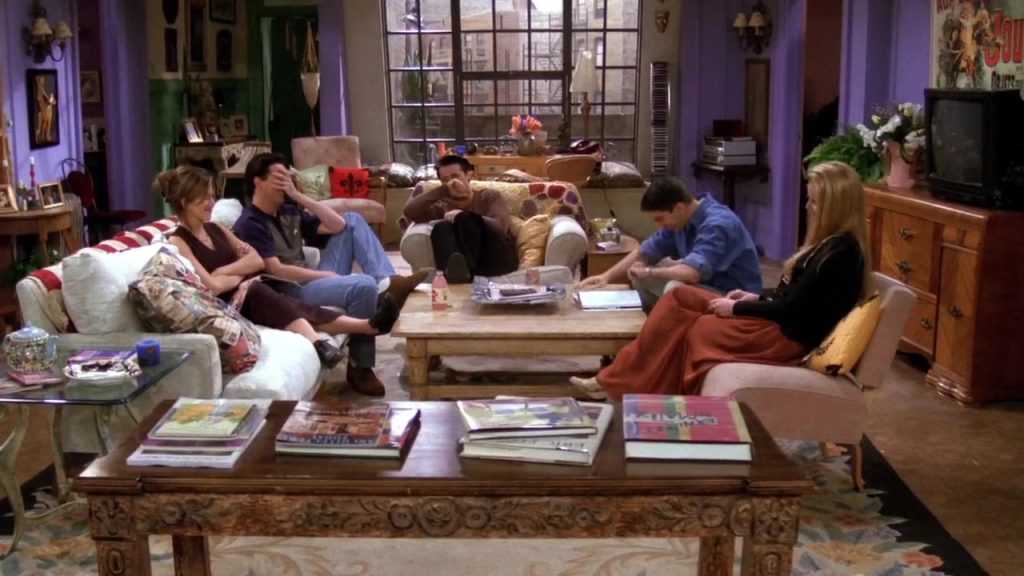
5. Moist
Original Movie Context
- Dialogue:
Joey: “My scones.”
Phoebe, Joey & Ross: “My scones.” - Scene Description and Emotional Tone:
During a humorous exchange, Joey holds a scone, and the group reacts playfully, highlighting the word’s usage in a light-hearted context.
Word Breakdown
- Definition:
Slightly wet; damp or humid. - Part of Speech:
Adjective - Pronunciation Guide:
/mɔɪst/ - Etymology:
From Old English mōist, meaning “most, very.” - Examples:
- The cake was moist and delicious.
- Please keep the towel moist while washing.
Contextual Usage
- Example Sentences:
- She prefers her muffins moist rather than dry.
- The soil needs to stay moist for the plants to grow.
- Formal vs. Informal:
- Formal: The environment should remain moist to sustain the vegetation.
- Informal: I love my pancakes moist!
- Common Collocations:
- Moist cake
- Moist climate
- Keep moist
- Potential Idioms or Slang Variations:
- “Moist to the touch” (commonly used in descriptive contexts)
Learning Insights
- Pronunciation Tips:
Emphasize the first syllable: MOIST. - Common Mistakes:
Mispronouncing as “moi-ost.” Remember, it rhymes with “host.” - Cultural Nuances:
“Moist” is sometimes considered an awkward word in English, often eliciting humorous reactions. - Memorization Tricks:
Connect “moist” with the scone scene to recall its meaning and usage.
6. Exhilarating
Original Movie Context
- Dialogue:
Joey: “Excellent dream score.”
- Scene Description and Emotional Tone:
Joey praises the dream’s “score” in an excited and enthusiastic tone, conveying his excitement humorously.
Word Breakdown
- Definition:
Making one feel very happy, animated, or elated. - Part of Speech:
Adjective - Pronunciation Guide:
/ɪɡˈzɪləreɪtɪŋ/ - Etymology:
From Latin exhilarare, meaning “to make cheerful.” - Examples:
- The roller coaster ride was exhilarating.
- Skydiving is an exhilarating experience.
Contextual Usage
- Example Sentences:
- Running a marathon is both challenging and exhilarating.
- The concert was truly exhilarating.
- Formal vs. Informal:
- Formal: The keynote speech was an exhilarating success.
- Informal: That movie was so exhilarating!
- Common Collocations:
- Exhilarating experience
- Exhilarating ride
- Exhilarating feeling
- Potential Idioms or Slang Variations:
- “Heart-pounding” (similar in expressing excitement)
Learning Insights
- Pronunciation Tips:
Break it down: ex-HIL-ar-a-ting. - Common Mistakes:
Overemphasizing the second syllable; ensure smooth pronunciation. - Cultural Nuances:
Often used to describe activities that provide a rush of adrenaline or intense enjoyment. - Memorization Tricks:
Link “exhilarating” with Joey’s excited praise to remember its vibrant meaning.
7. Extravagance
Original Movie Context
- Dialogue:
Phoebe: “I know. That’s a part of the whole, you know, them-not-liking-you-extravagance.”
- Scene Description and Emotional Tone:
Phoebe explains Chandler’s changed demeanor with a humorous twist, highlighting their friendship dynamic.
Word Breakdown
- Definition:
Lack of restraint in spending money or using resources. - Part of Speech:
Noun - Pronunciation Guide:
/ɛkˌstrævəˈɡɑːns/ - Etymology:
From Latin extravagantia, meaning “wandering beyond.” - Examples:
- Her extravagance shocked her family.
- The event was marked by extravagance and luxury.
Contextual Usage
- Example Sentences:
- He was known for his extravagance and lavish parties.
- The company’s extravagance was unsustainable.
- Formal vs. Informal:
- Formal: The project was canceled due to financial extravagance.
- Informal: Their house is full of extravagance.
- Common Collocations:
- Extravagant spending
- Financial extravagance
- Extravagance and luxury
- Potential Idioms or Slang Variations:
- “Living high on the hog” (meaning living in luxury)
Learning Insights
- Pronunciation Tips:
Emphasize the third syllable: ex-trav-a-GAN-ce. - Common Mistakes:
Confusing “extravagance” with “exaggeration.” Remember, it relates to excessive spending or use. - Cultural Nuances:
Often associated with wealth and opulence, sometimes viewed negatively as wasteful. - Memorization Tricks:
Connect “extravagance” with Phoebe’s explanation of Chandler’s over-the-top behavior.
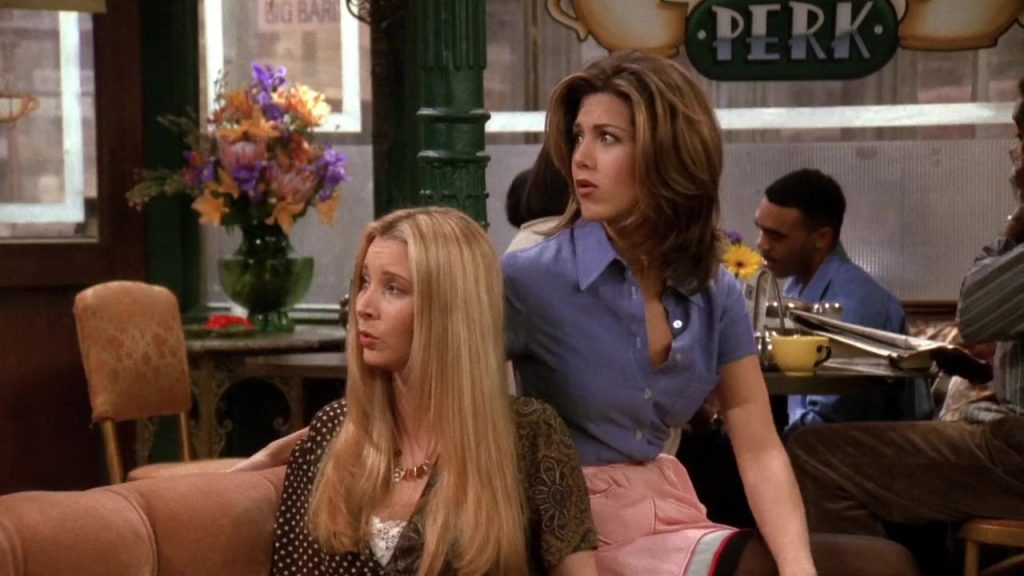
8. Geeks
Original Movie Context
- Dialogue:
Phoebe: “I don’t wanna be the geek that invited the boss.”
- Scene Description and Emotional Tone:
Phoebe expresses her reluctance to attend a party with Chandler’s colleagues, using the term humorously to describe herself.
Word Breakdown
- Definition:
A person who is very interested in technical or niche subjects, often perceived as socially awkward. - Part of Speech:
Noun - Pronunciation Guide:
/ɡiːks/ - Etymology:
Originates from the late 19th century, possibly from the German word geck, meaning “fool” or “idiot.” - Examples:
- He’s a computer geek who loves coding.
- The movie attracts many science fiction geeks.
Contextual Usage
- Example Sentences:
- She’s a total fashion geek.
- Geeks often excel in technology-related fields.
- Formal vs. Informal:
- Formal: Many geeks contribute significantly to technological advancements.
- Informal: Don’t be such a geek; join us for the game!
- Common Collocations:
- Computer geek
- Science geek
- Geek culture
- Potential Idioms or Slang Variations:
- “Nerd alert” (similar in describing someone very into niche interests)
Learning Insights
- Pronunciation Tips:
Ensure the long “ee” sound: geeks rhymes with “peeks.” - Common Mistakes:
Pluralization can be tricky; remember it’s “geeks,” not “geekses.” - Cultural Nuances:
“Geek” has evolved from a derogatory term to one of pride within certain communities. - Memorization Tricks:
Link “geek” with Phoebe’s quirky personality to remember its meaning.
9. Felonious
Original Movie Context
- Dialogue:
Ross: “No, sir. I don’t perform those kind of services.”
- Scene Description and Emotional Tone:
Ross, frustrated, responds firmly to Joey’s misunderstanding, emphasizing his serious demeanor.
Word Breakdown
- Definition:
Relating to or involved in crime, especially serious crime. - Part of Speech:
Adjective - Pronunciation Guide:
/fəˈloʊniəs/ - Etymology:
From Latin feloniosus, meaning “criminal.” - Examples:
- Felonious activities are punishable by law.
- The felonious intent was clear in his actions.
Contextual Usage
- Example Sentences:
- The company faced charges for its felonious practices.
- He was arrested for felonious assault.
- Formal vs. Informal:
- Formal: The felonious behavior was thoroughly investigated.
- Informal: His actions were definitely felonious.
- Common Collocations:
- Felonious conduct
- Felonious intent
- Felonious activities
- Potential Idioms or Slang Variations:
- “Breaking the law” (similar in meaning)
Learning Insights
- Pronunciation Tips:
Emphasize the second syllable: fe-LON-i-ous. - Common Mistakes:
Confusing “felonious” with “felony.” Remember, “felonious” is an adjective, while “felony” is a noun. - Cultural Nuances:
Used primarily in legal contexts to describe serious crimes. - Memorization Tricks:
Connect “felonious” with Ross’s serious tone to remember its meaning.
10. Icky
Original Movie Context
- Dialogue:
Monica: “It’s icky.”
- Scene Description and Emotional Tone:
Monica expresses her distaste humorously, adding to the light-hearted nature of the conversation.
Word Breakdown
- Definition:
Unpleasant or distasteful. - Part of Speech:
Adjective - Pronunciation Guide:
/ˈɪki/ - Etymology:
Informal term, likely derived from “icky” as a diminutive of “ick,” an expression of disgust. - Examples:
- The slime was so icky.
- He found the situation icky and walked away.
Contextual Usage
- Example Sentences:
- The bathroom was messy and really icky.
- She felt icky after eating too much junk food.
- Formal vs. Informal:
- Formal: The environment was unsanitary and unpleasant.
- Informal: That food is so icky!
- Common Collocations:
- Icky feeling
- Icky situation
- Icky taste
- Potential Idioms or Slang Variations:
- “Gross out” (similar in expressing disgust)
Learning Insights
- Pronunciation Tips:
Simple pronunciation: ICK-ee. - Common Mistakes:
Overcomplicating the pronunciation; keep it straightforward. - Cultural Nuances:
“Icky” is a playful and informal way to express discomfort or disgust. - Memorization Tricks:
Relate “icky” to Monica’s reaction to remember its meaning.
11. Subtitles
Original Movie Context
- Dialogue:
Phoebe: “I’ll see that he gets the message. Bye bye.”
Chandler: “What?” - Scene Description and Emotional Tone:
Phoebe’s response implies she’s handling the situation, tying into how our language learning extension uses subtitles for better understanding.
Word Breakdown
- Definition:
Text displayed at the bottom of a movie or television screen that translates or transcribes dialogue. - Part of Speech:
Noun - Pronunciation Guide:
/ˈsʌbˌtaɪtlz/ - Etymology:
From “sub,” meaning “under,” and “title.” - Examples:
- I always watch foreign films with subtitles.
- Subtitles help me understand the dialogue better.
Contextual Usage
- Example Sentences:
- She prefers to read subtitles when watching Italian movies.
- The subtitles were in English to aid comprehension.
- Formal vs. Informal:
- Formal: The film included subtitles in multiple languages.
- Informal: I forgot to turn on the subtitles.
- Common Collocations:
- Foreign subtitles
- English subtitles
- Subtitles track
- Potential Idioms or Slang Variations:
- “Captions” (similar meaning)
Learning Insights
- Pronunciation Tips:
Pronounce clearly: SUB-ti-tlz. - Common Mistakes:
Mispronouncing the second syllable; ensure it’s short and clear. - Cultural Nuances:
Subtitles are essential for understanding foreign media, making them a crucial tool in cinema language learning. - Memorization Tricks:
Connect “subtitles” with our language learning extension’s features to enhance comprehension.

12. Morbid
Original Movie Context
- Dialogue:
Ross: “The hills were alive with the sound of music.”
- Scene Description and Emotional Tone:
Ross uses a phrase from a classic movie, adding a touch of irony, making the term relevant to the humor in the scene.
Word Breakdown
- Definition:
Characterized by an abnormal and unhealthy interest in disturbing and unpleasant subjects, especially death and disease. - Part of Speech:
Adjective - Pronunciation Guide:
/ˈmɔːrbɪd/ - Etymology:
From Latin morbidus, meaning “diseased.” - Examples:
- His morbid fascination with crime shows is concerning.
- The novel has a morbid theme.
Contextual Usage
- Example Sentences:
- She has a morbid curiosity about horror movies.
- The conversation took a morbid turn when they discussed accidents.
- Formal vs. Informal:
- Formal: The study focuses on morbid obesity.
- Informal: His jokes are a bit morbid for my taste.
- Common Collocations:
- Morbid fascination
- Morbid thoughts
- Morbid humor
- Potential Idioms or Slang Variations:
- “Dark humor” (similar in context)
Learning Insights
- Pronunciation Tips:
Emphasize the first syllable: MOR-bid. - Common Mistakes:
Misplacing the stress; keep it on the first syllable. - Cultural Nuances:
“Morbid” often relates to topics considered taboo or unsettling, used carefully in conversations. - Memorization Tricks:
Link “morbid” with the ironic use of Ross’s quote to remember its meaning.
Fluency Gym: Your Path to Mastering a Language
As you journey through Cinema Language Learning, tools like our Fluency Gym can transform your learning experience. Fluency Gym offers dynamic modes such as Reading Mode, Listening Mode, and Speaking Mode, allowing you to engage with movie dialogues actively. Whether you’re watching Friends S01E22 or any other episode, Fluency Gym ensures that vocabulary like sarcastically, inadequate, and felonious become second nature.
Enhance Your Learning with Our Language Extension
Our language learning extension is designed to make Cinema Language Learning effortless and enjoyable. Here’s how you can benefit:
- Mouse Dictionary: Hover over any word in the subtitles, like sarcastically, to see instant definitions and enhance your vocabulary in real-time.
- Display Second Subtitle: Compare two languages side by side, perfect for learning words like inadequate within context.
- Auto-Pause/Auto-Play: Control playback to ensure you fully grasp each sentence before moving on.
- Save Words: Easily save new vocabulary words like felonious for future review and practice.
- Fluency Gym Integration: Engage with interactive features that turn passive watching into active learning.
By using our extension, you seamlessly integrate Cinema Language Learning into your daily routine, making language improvement a fun and interactive part of your entertainment.
Explore More with Our Previous Articles
Continue your Cinema Language Learning journey with our related articles:
- Language Learning with Netflix: Boost Your English with Friends S01E10 Vocabulary
- Mastering English with Friends S01E07: Unlock 15 Essential Vocabulary Words
- Master English with Friends S01E17: 12 Must-Know Vocabulary Words from Friends
- Boost Your English Through Cinema: 15 Essential Vocabulary Words from Friends S01E20
Each article offers unique insights and vocabulary from different episodes, enriching your Cinema Language Learning experience.
Why Choose Cinema Language Learning?
Cinema Language Learning leverages the power of movies and TV shows to create an immersive and effective learning environment. Our language learning extension, combined with features like Fluency Gym, ensures that you not only watch but actively participate in your language acquisition journey. Embrace the fun, engage with authentic dialogues, and watch your English skills soar!
Join the Language Learning Revolution Today
Ready to take your Cinema Language Learning to the next level? Try our language learning extension here and discover how seamlessly technology can transform your language learning experience. With tools like Fluency Gym and a host of other features, you’ll find learning English as enjoyable as watching your favorite shows.
Cinema Language Learning is your gateway to mastering English through engaging and entertaining content. Start today and make every movie night a step towards fluency!