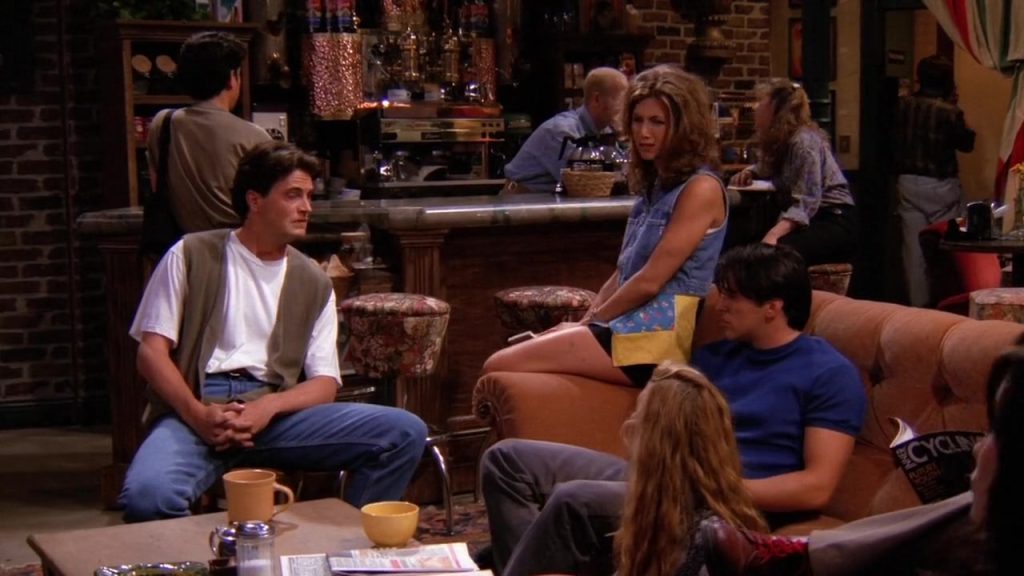
Are you passionate about language learning with Netflix? Imagine transforming your favorite Friends episodes into a dynamic English learning experience! In this article, we dive into Friends Season 1, Episode 5, extracting key vocabulary words that will elevate your language skills. Whether you’re an intermediate or advanced learner, these carefully selected words, presented in engaging contexts, will make your learning journey both effective and enjoyable. Plus, discover how FunFluen.com, our innovative language learning extension, can seamlessly enhance your experience.
1. Maneuver
Original Movie Context
- Dialogue: Ross: “You just reach in there, there’s one little maneuver, and bam, a bra right out the sleeve.”
- Scene Description & Emotional Tone: Central Perk. Ross is excitedly explaining a technique, displaying enthusiasm and a hint of frustration.
Word Breakdown
- Definition: A movement or series of moves requiring skill and care.
- Part of Speech: Noun/Verb
- Pronunciation: /məˈnuː.vər/
- Etymology: Derived from the French word “manœuvre,” meaning “to handle or manipulate.”
Examples:
- Noun: The driver’s maneuver to avoid the pothole was impressive.
- Verb: She had to maneuver her way through the crowded market.
Contextual Usage
- Formal: The surgeon performed a delicate maneuver during the operation.
- Informal: He made a quick maneuver to snag the last slice of pizza.
- Common Collocations: perform a maneuver, strategic maneuver, skillful maneuver
Learning Insights
- Pronunciation Tips: Emphasize the second syllable: muh-NOO-vur.
- Common Mistakes: Confusing “maneuver” with “manoeuvre” (British spelling).
- Cultural Nuances: Often used in both literal and metaphorical contexts, such as strategic moves in business or sports.
- Memorization Trick: Picture Ross “maneuvering” to retrieve the bra, associating the word with movement and skill.
2. Sophisticated
Original Movie Context
- Dialogue: Joey: “He’s smart, he’s sophisticated, and he has a real job.”
- Scene Description & Emotional Tone: Central Perk. Joey is admiring Bob, showcasing admiration and a touch of envy.
Word Breakdown
- Definition: Having a refined knowledge of the world; cultured and stylish.
- Part of Speech: Adjective
- Pronunciation: /səˈfɪs.tɪ.keɪ.tɪd/
- Etymology: From the Latin “sophisticatus,” meaning “invented, artful.”
Examples:
- She has a sophisticated taste in art.
- The new smartphone boasts a sophisticated design.
Contextual Usage
- Formal: The gala featured a sophisticated ambiance with elegant decorations.
- Informal: His sophisticated jokes always make everyone laugh.
- Common Collocations: sophisticated technology, sophisticated system, sophisticated approach
Learning Insights
- Pronunciation Tips: Stress the third syllable: so-fi-STI-ca-ted.
- Common Mistakes: Mispronouncing the second syllable as “soph-FI-sticated.”
- Cultural Nuances: Often associated with elegance, complexity, and high-level refinement.
- Memorization Trick: Link “sophisticated” with “sophomore,” a student progressing to a higher level, symbolizing growth and refinement.
3. Eager
Original Movie Context
- Dialogue: Joey: “I’m tryin’ that.”
- Scene Description & Emotional Tone: Central Perk. Chandler responds with enthusiasm, indicating eagerness to try something new.
Word Breakdown
- Definition: Wanting to do or have something very much.
- Part of Speech: Adjective
- Pronunciation: /ˈiː.gər/
- Etymology: From Old English “geger,” meaning “desirous.”
Examples:
- She was eager to start her new job.
- The children were eager for the holiday break.
Contextual Usage
- Formal: The candidate was eager to contribute to the company’s success.
- Informal: I’m eager to see the new movie tonight!
- Common Collocations: eager to learn, eager anticipation, eager participation
Learning Insights
- Pronunciation Tips: The “ea” sounds like a long “e”: EE-ger.
- Common Mistakes: Confusing “eager” with “edger,” which is unrelated.
- Cultural Nuances: Expresses positive anticipation and readiness.
- Memorization Trick: Think of someone “eagerly” reaching out for something they want.
In continuing our exploration of language learning with Netflix, you can read our previous article: Mastering English Vocabulary with Friends S01, E05: A Fun Learning Journey . This article provides valuable insights that will enhance your understanding as we move forward.
4. Scrunchy
Original Movie Context
- Dialogue: Phoebe: “What’s the matter? Why so scrunchy?”
- Scene Description & Emotional Tone: Central Perk. Phoebe notices Rachel looking disheveled, conveying concern with a touch of humor.
Word Breakdown
- Definition: Disheveled or messy in appearance.
- Part of Speech: Adjective (informal)
- Pronunciation: /ˈskrʌn.tʃi/
- Etymology: Likely derived from “scrunch,” meaning to compress or crush.
Examples:
- After the long hike, her hair was all scrunchy.
- He woke up with a scrunchy face after the party.
Contextual Usage
- Formal: Not commonly used in formal contexts.
- Informal: “Your hair is a bit scrunchy today!”
- Common Collocations: scrunchy hair, scrunchy appearance, scrunchy look
Learning Insights
- Pronunciation Tips: Emphasize the first syllable: SCRUN-chy.
- Common Mistakes: Mispronouncing as “scrunch-ee” instead of “scrunchy.”
- Cultural Nuances: Often used to describe a playful or endearing messiness.
- Memorization Trick: Associate “scrunchy” with “scrunching” your hair, leading to a messy look.
5. Fluffy
Original Movie Context
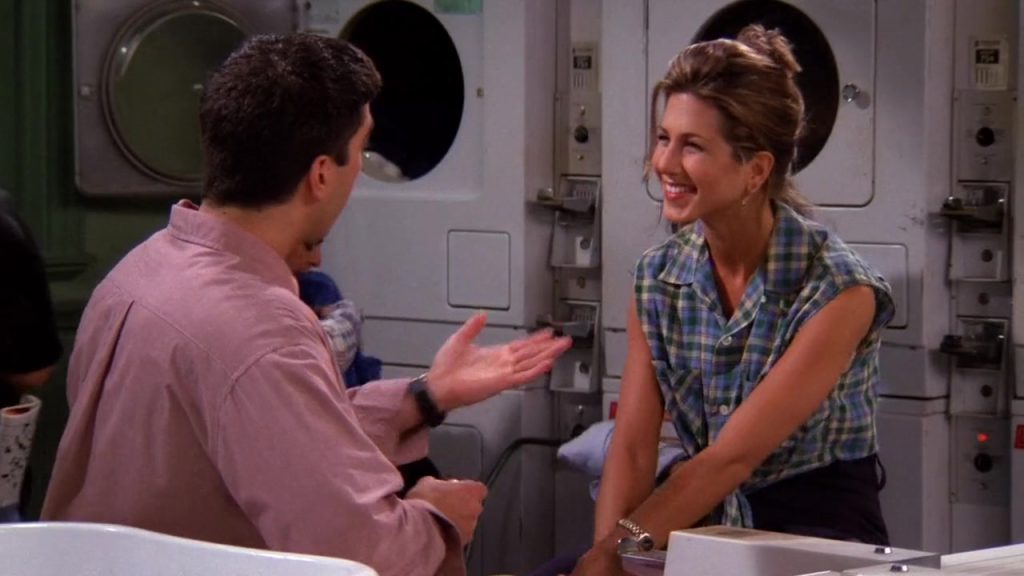
- Dialogue: Ross: “Apparently they’re attracted to the dryer sheets, and they’re goin’ in fine, but they’re comin’ out all…. fluffy.”
- Scene Description & Emotional Tone: Laundromat. Ross explains a quirky laundry problem, showing confusion and mild frustration.
Word Breakdown
- Definition: Soft and light; having a lot of hair or fur.
- Part of Speech: Adjective
- Pronunciation: /ˈflʌf.i/
- Etymology: From Middle English “fluff,” meaning “soft down.”
Examples:
- The cat’s fur is so fluffy.
- She bought a fluffy blanket for the winter.
Contextual Usage
- Formal: The pillow is filled with fluffy down feathers.
- Informal: I love my new fluffy slippers!
- Common Collocations: fluffy pillow, fluffy fur, fluffy texture
Learning Insights
- Pronunciation Tips: Short “u” sound: FLU-ffy.
- Common Mistakes: Overemphasizing the second syllable.
- Cultural Nuances: Conveys warmth, softness, and comfort.
- Memorization Trick: Visualize a fluffy bunny to remember the softness associated with the word.
One effective way to boost your language proficiency is learning language with Netflix, as it provides a diverse range of genres and accents to suit your learning preferences.
6. Disgusting
Original Movie Context
- Dialogue: Monica: “Ugly Naked Guy’s laying kitchen tile. Eww!”
- Scene Description & Emotional Tone: Monica expresses revulsion upon witnessing an odd neighbor’s activity, adding humor through exaggeration.
Word Breakdown
- Definition: Arousing revulsion or strong disapproval.
- Part of Speech: Adjective
- Pronunciation: /dɪsˈɡʌs.tɪŋ/
- Etymology: From Latin “disgustus,” meaning “a distaste.”
Examples:
- The spoiled food smelled disgusting.
- He found the idea disgusting.
Contextual Usage
- Formal: The report described the living conditions as disgusting.
- Informal: That movie scene was so disgusting!
- Common Collocations: absolutely disgusting, find something disgusting, disgusting smell
Learning Insights
- Pronunciation Tips: Stress the second syllable: dis-GUST-ing.
- Common Mistakes: Misplacing stress on the first syllable.
- Cultural Nuances: Strong negative emotion; often used hyperbolically in casual conversations.
- Memorization Trick: Link “disgusting” with something universally unpleasant, like spoiled milk.
7. Grieve
Original Movie Context
- Dialogue: Phoebe: “Have a good break-up.”
Chandler: “I hit her in the eye! This is the worst break-up in the history of the world.” - Scene Description & Emotional Tone: Central Perk. Chandler is struggling emotionally after a clumsy breakup, conveying frustration and sadness.
Word Breakdown
- Definition: To feel grief or sorrow.
- Part of Speech: Verb
- Pronunciation: /ɡriːv/
- Etymology: From Old French “grief,” meaning “sorrow.”
Examples:
- She needed time to grieve after the loss.
- It’s important to allow yourself to grieve.
Contextual Usage
- Formal: The community came together to grieve the loss.
- Informal: He’s still grieving over the breakup.
- Common Collocations: grieve for, deeply grieve, grieve over
Learning Insights
- Pronunciation Tips: Long “e” sound: GRIEVE.
- Common Mistakes: Confusing with “grief,” which is the noun form.
- Cultural Nuances: Reflects deep emotional states, often related to loss or heartbreak.
- Memorization Trick: Associate “grieve” with the act of mourning, such as “grieving for a lost pet.”
8. Gangin’ Up On
Original Movie Context
- Dialogue: Chandler: “Oh, thanks, but I think she’d feel like we’re gangin’ up on her.”
- Scene Description & Emotional Tone: Central Perk. Chandler hesitates to team up with Phoebe, showing concern and hesitation.
Word Breakdown
- Definition: To conspire or team up against someone.
- Part of Speech: Phrasal Verb
- Pronunciation: /ˈɡæŋ.ɪn ˌʌp ˈɒn/
- Etymology: “Gang” combined with “up on” to imply forming a gang-like alliance.
Examples:
- They felt like their classmates were gangin’ up on them.
- Don’t gang up on him; just give him a chance.
Contextual Usage
- Formal: It’s unfair to gang up on a single individual.
- Informal: Stop gangin’ up on me, guys!
- Common Collocations: gang up on someone, fear of being ganged up on, don’t gang up
Learning Insights
- Pronunciation Tips: “Gangin’” is a colloquial contraction of “ganging,” pronounced GAN-in.
- Common Mistakes: Mispronouncing “gangin’” as “ganging.”
- Cultural Nuances: Informal and often used in peer group dynamics.
- Memorization Trick: Picture a small gang teaming up against someone to remember the collaborative aspect.
9. Embarrassing
Original Movie Context
- Dialogue: Chandler: “I hit her in the eye! This is the worst break-up in the history of the world.”
- Scene Description & Emotional Tone: Central Perk. Chandler realizes the awkwardness of his actions, expressing embarrassment and self-awareness.
Word Breakdown
- Definition: Causing someone to feel awkward, ashamed, or self-conscious.
- Part of Speech: Adjective
- Pronunciation: /ɪmˈbær.əs.ɪŋ/
- Etymology: From Old French “embarrasser,” meaning “to block, hinder.”
Examples:
- It was embarrassing when he forgot her name.
- She felt embarrassing about the mistake.
Contextual Usage
- Formal: The incident was highly embarrassing for the company.
- Informal: Tripping in front of everyone was so embarrassing!
- Common Collocations: extremely embarrassing, find something embarrassing, make someone embarrassed
Learning Insights
- Pronunciation Tips: Emphasize the second syllable: im-BARE-assing.
- Common Mistakes: Incorrect stress placement, such as “em-barr-ass-ING.”
- Cultural Nuances: Used universally to describe socially awkward situations.
- Memorization Trick: Link “embarrassing” with a personal awkward moment to evoke the feeling.
10. Phonetics
Original Movie Context
- Dialogue: Our product feature: “Phonetics for Chinese, Japanese, Korean”
- Scene Description & Emotional Tone: While not directly from the movie, phonetics enhance language learning, akin to understanding character dialogues in Friends.
Word Breakdown
- Definition: The study and classification of speech sounds.
- Part of Speech: Noun
- Pronunciation: /fəˈnet.ɪks/
- Etymology: From Greek “phone,” meaning “sound,” and “-etics,” indicating a field of study.
Examples:
- She specializes in phonetics to help students with pronunciation.
- Understanding phonetics can improve your speaking skills.
Contextual Usage
- Formal: Phonetics plays a crucial role in linguistic research.
- Informal: Learning phonetics helps me sound more natural when speaking English.
- Common Collocations: study of phonetics, phonetic analysis, phonetic transcription
Learning Insights
- Pronunciation Tips: Emphasize the second syllable: pho-NE-tics.
- Common Mistakes: Mispronouncing the “pho” as “faw.”
- Cultural Nuances: Essential for accurate pronunciation across different languages.
- Memorization Trick: Associate “phonetics” with “phones” (sounds) to remember it’s about speech sounds.
Utilizing features like subtitles and playback speed adjustments, learning language with Netflix becomes a personalized and flexible approach to mastering a new language.
11. Delicate
Original Movie Context
- Dialogue: Ross: “He’s got a real job, but Bob is–“
- Scene Description & Emotional Tone: Central Perk. Ross is carefully comparing Joey and Bob, showing a delicate balance in his assessment.
Word Breakdown
- Definition: Easily broken or damaged; requiring careful handling.
- Part of Speech: Adjective
- Pronunciation: /ˈdel.ɪ.kət/
- Etymology: From Latin “delicatus,” meaning “pleasing, delightful.”
Examples:
- The antique vase is very delicate.
- They discussed the delicate matter privately.
Contextual Usage
- Formal: Handling the negotiations required a delicate approach.
- Informal: Be careful with that glass; it’s delicate.
- Common Collocations: delicate situation, delicate balance, delicate tissue
Learning Insights
- Pronunciation Tips: Stress the first syllable: DEL-i-cate.
- Common Mistakes: Overpronouncing the “i” as a long “ee.”
- Cultural Nuances: Often used metaphorically to describe sensitive topics.
- Memorization Trick: Picture a delicate flower that needs gentle care.
12. Soggy
Original Movie Context
- Dialogue: Rachel: “I can’t live on my own! I can’t even do laundry!”
- Scene Description & Emotional Tone: Laundromat. Rachel’s frustration highlights her struggle with everyday tasks, akin to clothes being soggy when not handled properly.
Word Breakdown
- Definition: Wet and soft; soaked.
- Part of Speech: Adjective
- Pronunciation: /ˈsɒɡ.i/
- Etymology: From Middle English “soggy,” meaning “wet.”
Examples:
- The bread was soggy after being left in milk overnight.
- His shoes were soggy from walking in the rain.
Contextual Usage
- Formal: The documents became soggy due to the flood.
- Informal: My clothes got soggy in the sudden downpour.
- Common Collocations: soggy bottom, soggy clothes, soggy weather
Learning Insights
- Pronunciation Tips: Emphasize the first syllable: SOG-gy.
- Common Mistakes: Mispronouncing the “o” as a long “o.”
- Cultural Nuances: Often used to describe food textures or weather conditions.
- Memorization Trick: Link “soggy” with soggy cereal to remember it means wet and soft.
As we delve deeper into language learning with Netflix, make sure to revisit our past article on Mastering English with Friends S01 E03: 12 Essential Vocabulary Words to refresh your knowledge and get the most out of today’s content.
13. Ravishing
Original Movie Context
- Dialogue: Joey: “You look good.”
Angela: “That’s because I’m wearing a dress that accents my boobs.” - Scene Description & Emotional Tone: Central Perk. Joey compliments Angela, expressing admiration and attraction, bordering on being ravishing.
Word Breakdown
- Definition: Delightful; entrancingly beautiful.
- Part of Speech: Adjective
- Pronunciation: /ˈræv.ɪ.ʃɪŋ/
- Etymology: From Old French “ravissant,” meaning “delightful.”
Examples:
- She looked ravishing in her evening gown.
- The sunset was absolutely ravishing.
Contextual Usage
- Formal: The actress was a ravishing sight on the red carpet.
- Informal: Wow, you look ravishing today!
- Common Collocations: ravishing beauty, ravishing smile, ravishing appearance
Learning Insights
- Pronunciation Tips: Stress the first syllable: RAV-ishing.
- Common Mistakes: Mispronouncing the “a” as in “cat” instead of the short “a.”
- Cultural Nuances: Used to describe extraordinary beauty, often in a romantic or affectionate context.
- Memorization Trick: Associate “ravishing” with a breathtaking scene in Friends to remember its meaning.
14. Embarrassing
Original Movie Context
- Dialogue: Chandler: “I hit her in the eye! This is the worst break-up in the history of the world.”
- Scene Description & Emotional Tone: Central Perk. Chandler realizes the awkwardness of his actions, expressing embarrassment and self-awareness.
Word Breakdown
- Definition: Causing someone to feel awkward, ashamed, or self-conscious.
- Part of Speech: Adjective
- Pronunciation: /ɪmˈbær.əs.ɪŋ/
- Etymology: From Old French “embarrasser,” meaning “to block, hinder.”
Examples:
- It was embarrassing when he forgot her name.
- She felt embarrassing about the mistake.
Contextual Usage
- Formal: The incident was highly embarrassing for the company.
- Informal: Tripping in front of everyone was so embarrassing!
- Common Collocations: extremely embarrassing, find something embarrassing, embarrassing mistake
Learning Insights
- Pronunciation Tips: Emphasize the second syllable: im-BARE-assing.
- Common Mistakes: Incorrect stress placement, such as “em-barr-ass-ING.”
- Cultural Nuances: Used universally to describe socially awkward situations.
- Memorization Trick: Link “embarrassing” with a personal awkward moment to evoke the feeling.
15. Coincidence
Original Movie Context
- Dialogue: Ross: “You wanna hear a freaky coincidence? Guess who’s doing laundry there too?”
- Scene Description & Emotional Tone: Central Perk. Ross shares an unexpected connection with Rachel, showing surprise and amusement.
Word Breakdown
- Definition: A remarkable concurrence of events or circumstances without apparent causal connection.
- Part of Speech: Noun
- Pronunciation: /kəʊˈɪn.sɪ.dəns/
- Etymology: From Latin “coincidentia,” meaning “agreement in position.”
Examples:
- It was pure coincidence that we ran into each other in Paris.
- Their meeting was no coincidence; it was planned.
Contextual Usage
- Formal: The overlap of these events is merely a coincidence.
- Informal: What a coincidence! I didn’t expect to see you here.
- Common Collocations: strange coincidence, pure coincidence, interesting coincidence
Learning Insights
- Pronunciation Tips: Emphasize the second syllable: co-IN-ci-dence.
- Common Mistakes: Mispronouncing as “coin-sid-ence.”
- Cultural Nuances: Often used to express surprise or the unexpected alignment of events.
- Memorization Trick: Think of Ross and Rachel’s laundry story as a quirky coincidence.
Learning language with Netflix is a convenient way to practice anytime and anywhere, turning your leisure time into productive language study sessions.
Enhance Your Learning with FunFluen.com
Embracing language learning with Netflix becomes even more effective with FunFluen.com, our cutting-edge language learning extension. Imagine watching Friends and effortlessly:
- Mouse Dictionary: Hover over any word in the subtitles to get instant definitions. Encountering “maneuver” or “sophisticated” has never been easier!
- Save Words: Easily save new vocabulary words for later review, ensuring retention and active usage.
- Fluency Gym: Dive into our interactive features like Reading, Listening, and Speaking Modes. Practice real-time dialogues from Friends and transform passive vocabulary into active language skills.
- Auto-Pause and Play: Control playback to ensure you fully comprehend each sentence before moving on.
- Sidebar Display: Access all your saved words, settings, and more without interrupting your viewing experience.
By integrating these features, FunFluen.com transforms your favorite shows into a personalized language learning playground. Whether you’re dissecting Chandler’s awkward breakups or Joey’s humorous observations, every moment becomes a learning language with Netflix opportunity.
Conclusion: Make Learning an Exciting Discovery with Learning Language with Netflix
Learning English through Friends Season 1, Episode 5 not only enriches your vocabulary but also immerses you in cultural nuances and relatable dialogues. With words like maneuver, sophisticated, and coincidence, you’re equipped to handle everyday conversations with confidence and flair.
Ready to elevate your language learning journey? Explore FunFluen.com and unlock a world where watching your favorite shows becomes an engaging, interactive, and highly effective way to master English. Embrace technology and make every episode a step towards fluency!
Explore More Language Learning Tips
- 10 Tips to Learn English Faster with Movies
- How to Use Subtitles Effectively for Language Learning
- Top 5 TV Shows for English Vocabulary Building
Join our community of motivated, tech-savvy learners and transform your language skills with the power of entertainment!