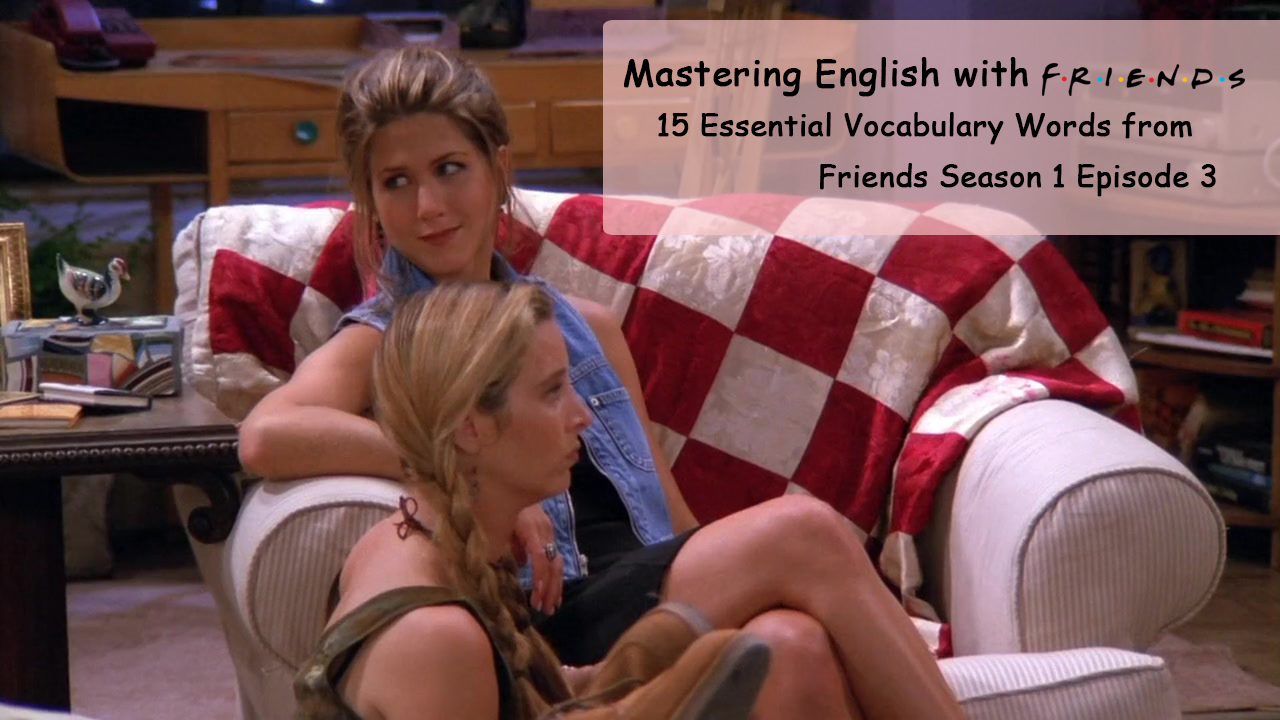
Learning a new language with Netflix can feel like navigating a bustling coffeehouse—full of vibrant conversations, quirky characters, and unexpected twists. What better way to immerse yourself in English than through the beloved sitcom Friends, specifically Season 1 Episode 3? In this episode, the gang navigates the ups and downs of relationships, humor, and everyday challenges at their favorite hangout spot, Central Perk. Let’s dive into 12 carefully selected vocabulary words from this episode that will elevate your English skills while keeping the learning process fun and engaging.
1. Cushion
Original Movie Context
Phoebe: “Yeah. Cushions the blow.”
Scene Description and Emotional Tone: In a conversation about polite phrases used in dating, Joey uses “cushions the blow” to describe how certain expressions soften the reality of rejection. The tone is light-hearted and slightly humorous as the friends discuss the nuances of dating language.
Word Breakdown
- Definition: To soften or mitigate the impact of something unpleasant.
- Part of Speech: Verb
- Pronunciation: /ˈkʊʃən/
- Etymology: Derived from the noun “cushion,” which refers to a padded support for sitting or leaning.
Examples:
- Soft Speech: “She cushioned the blow by explaining her reasons gently.”
- Business Communication: “The manager cushioned the blow when delivering the bad news to the team.”
Contextual Usage
- Example Sentences:
- “He cushioned the blow by giving constructive feedback instead of harsh criticism.”
- “Using humor can help cushion the blow when delivering difficult news.”
- Formal/Informal Variations:
- Formal: “The spokesperson cushioned the blow with a statement of regret.”
- Informal: “She cushioned the blow with a joke to make everyone feel better.”
- Common Collocations: Cushion the impact, cushion the effect, cushion the disappointment
Learning Insights
- Pronunciation Tips: Emphasize the first syllable: CUSH-ion.
- Common Mistakes: Avoid confusing “cushion” with “cushon” (a common misspelling).
- Cultural Nuances: Often used in both personal and professional settings to ease difficult conversations.
- Memorization Trick: Imagine wrapping a hard object in a soft cushion to soften its impact—just like softening bad news.
2. Relieved
Original Movie Context
Alan: “Yeah, well, I have one now and then.” Chandler: “Oh, she’s sorry! I feel better!”
Scene Description and Emotional Tone: After Monica breaks up with Alan, he expresses a sense of relief despite the breakup. The tone shifts from sadness to a humorous realization of newfound freedom.
Word Breakdown
- Definition: Feeling reassured and happy because something unpleasant has not happened or has ended.
- Part of Speech: Adjective
- Pronunciation: /rɪˈliːvd/
- Etymology: From the Latin “reliefare,” meaning to alleviate or lighten.
Examples:
- “I felt relieved after finishing my exams.”
- “She was relieved to hear that her friend was safe.”
Contextual Usage
- Example Sentences:
- “He was relieved when the test results came back negative.”
- “They felt relieved after the storm passed.”
- Formal/Informal Variations:
- Formal: “The committee was relieved to conclude the lengthy process.”
- Informal: “I’m so relieved you’re okay!”
- Common Collocations: Feel relieved, be relieved, relieved of
Learning Insights
- Pronunciation Tips: Stress the second syllable: re-LIEVED.
- Common Mistakes: Confusing “relieved” with “relieved” (wrong tense).
- Cultural Nuances: Commonly used to express emotional relief in various contexts, from personal to professional.
- Memorization Trick: Picture a weight being lifted off your shoulders—feeling lighter and relieved.
3. Dejectedly
Original Movie Context
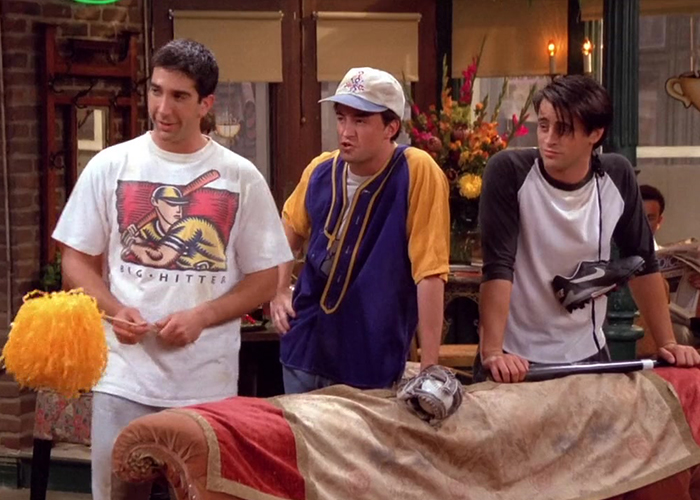
Ross, Rachel, Chandler, and Joey enter Central Perk dejectedly.
Scene Description and Emotional Tone: After an unsuccessful attempt to meet Alan, the friends enter Central Perk looking sad and downhearted. The tone is somber, reflecting their disappointment.
Word Breakdown
- Definition: In a sad and disheartened manner.
- Part of Speech: Adverb
- Pronunciation: /dɪˈdʒektɪli/
- Etymology: From “dejected,” meaning sad and disheartened.
Examples:
- “She walked dejectedly out of the room after the argument.”
- “He sighed dejectedly when he saw the empty streets.”
Contextual Usage
- Example Sentences:
- “After losing the game, the team left the field dejectedly.”
- “He dejectedly accepted the news of his job rejection.”
- Formal/Informal Variations:
- Formal: “She dejectedly acknowledged the committee’s decision.”
- Informal: “He walked away dejectedly after the breakup.”
- Common Collocations: Enter dejectedly, leave dejectedly, act dejectedly
Learning Insights
- Pronunciation Tips: Break it down into syllables: de-JECT-ed-ly.
- Common Mistakes: Mispronouncing as “dejected-ly” with a hard ‘t’ instead of a soft ‘c’ sound.
- Cultural Nuances: Often used in narrative descriptions to convey a character’s emotional state.
- Memorization Trick: Think of “dejected” as being “ejected” from happiness, hence sad.
4. Unbelievable
Original Movie Context
Ross: “He was unbelievable. He was like that-that-that Bugs Bunny cartoon where Bugs is playing all the positions.”
Scene Description and Emotional Tone: Ross praises Alan’s exceptional softball skills, comparing him to a versatile Bugs Bunny character. The tone is enthusiastic and admiring.
Word Breakdown
- Definition: Difficult to believe; extraordinary.
- Part of Speech: Adjective
- Pronunciation: /ˌʌnbɪˈliːvəbəl/
- Etymology: From “un-” (not) + “believable” (able to be believed).
Examples:
- “The magician’s tricks were simply unbelievable.”
- “Her performance in the play was unbelievable.”
Contextual Usage
- Example Sentences:
- “It’s unbelievable how much progress she’s made.”
- “The view from the top of the mountain is unbelievable.”
- Formal/Informal Variations:
- Formal: “The data presented is unbelievable in its accuracy.”
- Informal: “That concert was unbelievable!”
- Common Collocations: Unbelievable performance, unbelievable story, absolutely unbelievable
Learning Insights
- Pronunciation Tips: Emphasize the third syllable: un-be-LIEV-able.
- Common Mistakes: Overemphasizing the “e” in “believable.”
- Cultural Nuances: Used to express amazement or astonishment in both casual and formal contexts.
- Memorization Trick: Break it down: “Un-” (not) + “believable”—something so amazing it’s hard to believe.
5. Snort
Original Movie Context
Monica: “And Ross, with his over-pronouncing every single word?”
Ross: “…So I think Alan will become the yardstick against which all future boyfriends will be measured.”
Scene Description and Emotional Tone: Monica and Ross discuss their quirks, leading to Joey’s humorous imitation and Chandler’s sarcastic remarks. The tone is playful and teasing.
Word Breakdown
- Definition: To make a sudden sound through the nose, often expressing amusement or irritation.
- Part of Speech: Verb (also noun)
- Pronunciation: /snɔːrt/
- Etymology: Onomatopoeic, mimicking the sound made.
Examples:
- Verb: “She couldn’t help but snort when she heard the joke.”
- Noun: “He let out a loud snort of laughter.”
Contextual Usage
- Example Sentences:
- “He tried to hold back his laughter but ended up snorting.”
- “Her snort was so loud that everyone turned to look.”
- Formal/Informal Variations:
- Formal: “His sudden snort disrupted the meeting.”
- Informal: “I couldn’t stop snorting at that funny meme.”
- Common Collocations: Snort with laughter, snort loudly, involuntary snort
Learning Insights
- Pronunciation Tips: Short and sharp: snort.
- Common Mistakes: Confusing with “short” due to similar spelling.
- Cultural Nuances: Often associated with expressing amusement or disbelief in an informal setting.
- Memorization Trick: Imagine laughing so hard you snort—connecting the sound with the emotion.
6. Endearing
Original Movie Context
Joey: “Oh, now, don’t listen to him, Pheebs, I think it’s endearing.”
Scene Description and Emotional Tone: Ross defends Phoebe’s quirky habit of chewing her hair, describing it as endearing. The tone is warm and affectionate.
Word Breakdown
- Definition: Inspiring affection or warm feelings.
- Part of Speech: Adjective
- Pronunciation: /ɪnˈdiːrɪŋ/
- Etymology: From Old French “endere,” meaning to make dear.
Examples:
- “Her childlike curiosity is endearing.”
- “He found her nervousness endearing rather than off-putting.”
Contextual Usage
- Example Sentences:
- “The puppy’s clumsy antics were utterly endearing.”
- “His sincere apology was endearing to everyone involved.”
- Formal/Informal Variations:
- Formal: “Her endearing personality made her a favorite among her colleagues.”
- Informal: “That little gesture was so endearing!”
- Common Collocations: Endearing quality, endearing smile, find something endearing
Learning Insights
- Pronunciation Tips: Stress the second syllable: en-DEAR-ing.
- Common Mistakes: Mispronouncing as “in-dear-ing” instead of “en-dear-ing.”
- Cultural Nuances: Used to describe charming or lovable traits, often in personal relationships.
- Memorization Trick: Link “endearing” to “dear”—something or someone dear is endearing.
7. Karmic
Original Movie Context
Phoebe: “Okay. I’d just never be able to enjoy it. It would be like this giant karmic debt.”
Scene Description and Emotional Tone: Phoebe explains her ethical dilemma about keeping unearned money, referring to it as a “karmic debt.” The tone is reflective and philosophical.
Word Breakdown
- Definition: Relating to karma, the spiritual principle of cause and effect.
- Part of Speech: Adjective
- Pronunciation: /ˈkɑːrmɪk/
- Etymology: From “karma,” derived from Sanskrit “karman,” meaning action.
Examples:
- “He believed that his actions had karmic consequences.”
- “The movie explores the protagonist’s karmic journey.”
Contextual Usage
- Example Sentences:
- “She felt a karmic obligation to help those in need.”
- “Their reunion felt like a karmic event, destined by fate.”
- Formal/Informal Variations:
- Formal: “The theory suggests that all actions have karmic repercussions.”
- Informal: “It’s like a karmic balance—you do good, good comes back.”
- Common Collocations: Karmic cycle, karmic consequences, karmic relationship
Learning Insights
- Pronunciation Tips: Emphasize the first syllable: KAR-mic.
- Common Mistakes: Pronouncing the second syllable with a long ‘e’ (karm-ee-ic) instead of a short ‘i’.
- Cultural Nuances: Rooted in Eastern philosophies, often used in discussions about fate and moral actions.
- Memorization Trick: Associate “karmic debt” with the idea of owing something due to past actions.

8. Reluctantly
Original Movie Context
Chandler: “I think this is probably why Damone smokes in his cell alone.” Joey: “What?” Chandler: “Relax your hand!” Joey: “Whoah!” Chandler: “Hey!” Joey: “Hey!” Chandler: “Alright, now try taking a puff.” Joey: “Alright.. okay. No. Give it to me.” Chandler: “No no no, I am not giving you a cigarette.”
Scene Description and Emotional Tone: Chandler persuades Joey to take a puff of a cigarette reluctantly. The tone is playful and slightly tense as Joey hesitates but eventually complies.
Word Breakdown
- Definition: In an unwilling or hesitant manner.
- Part of Speech: Adverb
- Pronunciation: /rɪˈlʌktəntli/
- Etymology: From “reluctant,” derived from Latin “reluctari,” meaning to struggle against.
Examples:
- “She reluctantly agreed to help with the project.”
- “He reluctantly handed over his phone during the meeting.”
Contextual Usage
- Example Sentences:
- “They reluctantly accepted the terms of the contract.”
- “He reluctantly left the party early.”
- Formal/Informal Variations:
- Formal: “The committee reluctantly approved the proposal despite reservations.”
- Informal: “I reluctantly ate the last slice of pizza.”
- Common Collocations: Reluctantly agree, reluctantly accept, reluctantly comply
Learning Insights
- Pronunciation Tips: Stress the second syllable: re-LUCT-ant-ly.
- Common Mistakes: Pronouncing as “reluck-tantly” instead of “reluctantly.”
- Cultural Nuances: Indicates a lack of enthusiasm or hesitation, often used in personal and professional contexts.
- Memorization Trick: Think of “reluctant” as “not eager,” so “reluctantly” means doing something without eagerness.
9. Dubious
Original Movie Context
Phoebe: “I brought you alphabet soup. Did you pick out the vowels?” Monica: “No, no, no. They say it’s the same as the distance from the tip of a guy’s thumb to the tip of his index finger.” Joey: “That’s ridiculous!” Ross: “Can I use.. either thumb?”
Scene Description and Emotional Tone: The friends debate the meaning behind a mysterious bank statement, leading to skeptical and doubtful reactions. The tone is curious and doubtful, reflecting their uncertainty.
Word Breakdown
- Definition: Hesitating or doubting; not to be relied upon.
- Part of Speech: Adjective
- Pronunciation: /ˈduː.bi.əs/
- Etymology: From Latin “dubiosus,” meaning full of doubt.
Examples:
- “She gave him a dubious look when he made the strange request.”
- “The company’s financial statements were dubious at best.”
Contextual Usage
- Example Sentences:
- “He offered a dubious excuse for his lateness.”
- “The authenticity of the document remains dubious.”
- Formal/Informal Variations:
- Formal: “The research findings are dubious and require further verification.”
- Informal: “I have a dubious feeling about this plan.”
- Common Collocations: Dubious claim, dubious reasoning, look dubious
Learning Insights
- Pronunciation Tips: Emphasize the first syllable: DU-bi-ous.
- Common Mistakes: Pronouncing as “duby-ous” instead of “dubious.”
- Cultural Nuances: Often used to express skepticism or doubt about something’s validity or truthfulness.
- Memorization Trick: Link “dubious” with “dubiousness”—the state of being doubtful.
10. Endure
Original Movie Context
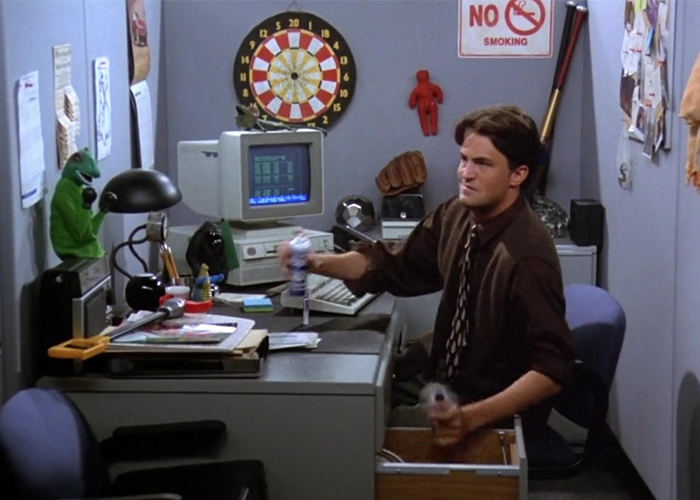
Chandler: “I’m smoking. I’m smoking, I’m smoking.”
Scene Description and Emotional Tone: Chandler struggles with quitting smoking, expressing his frustration and inability to endure the craving. The tone is exasperated and desperate.
Word Breakdown
- Definition: To suffer patiently; to continue in the face of difficulty.
- Part of Speech: Verb
- Pronunciation: /ɪnˈdjʊər/
- Etymology: From Latin “indurare,” meaning to harden.
Examples:
- “She had to endure long hours of training.”
- “They endured harsh weather conditions during their hike.”
Contextual Usage
- Example Sentences:
- “He had to endure the pain until the doctor arrived.”
- “The community endured years of economic hardship.”
- Formal/Informal Variations:
- Formal: “The soldiers endured extreme conditions during the mission.”
- Informal: “I can’t endure another minute of this traffic.”
- Common Collocations: Endure hardship, endure pain, endure the heat
Learning Insights
- Pronunciation Tips: Stress the second syllable: en-DURE.
- Common Mistakes: Confusing with “endure” and “ensure.”
- Cultural Nuances: Implies resilience and the ability to withstand challenges, often used in both personal and professional contexts.
- Memorization Trick: Think of “endure” as “enduring tough times,” linking the word with perseverance.
11. Persuade
Original Movie Context
Chandler: “Don’t think of it as a cigarette. Think of it as the thing that’s been missing from your hand. When you’re holding it, you feel right. You feel complete.”
Scene Description and Emotional Tone: Chandler attempts to persuade Joey to take a puff of a cigarette by framing it as something that makes him feel complete. The tone is manipulative yet humorous.
Word Breakdown
- Definition: To convince someone to do something through reasoning or argument.
- Part of Speech: Verb
- Pronunciation: /pərˈsweɪd/
- Etymology: From Latin “persuadere,” meaning to persuade or convince.
Examples:
- “She tried to persuade him to join the team.”
- “They successfully persuaded the committee to approve their proposal.”
Contextual Usage
- Example Sentences:
- “He persuaded his friends to go on a road trip.”
- “The advertisement aims to persuade consumers to buy the product.”
- Formal/Informal Variations:
- Formal: “The lawyer persuaded the jury of his client’s innocence.”
- Informal: “I managed to persuade my parents to let me stay out late.”
- Common Collocations: Persuade someone to do something, persuade through logic, attempt to persuade
Learning Insights
- Pronunciation Tips: Stress the second syllable: per-SUADE.
- Common Mistakes: Mispronouncing as “per-swayd” instead of “per-swayd.”
- Cultural Nuances: Essential in both personal relationships and professional negotiations, highlighting the importance of effective communication.
- Memorization Trick: Link “persuade” with “persuasive”—using convincing arguments to change someone’s mind.
12. Hesitate
Original Movie Context
Chandler: “I have to exhale a mouthful of smoke.” All: “Oh! Oh, God!”
Scene Description and Emotional Tone: Chandler hesitates to smoke again despite trying to quit, showing his internal conflict. The tone is conflicted and urgent.
Word Breakdown
- Definition: To pause before saying or doing something, often due to uncertainty or reluctance.
- Part of Speech: Verb
- Pronunciation: /ˈhez.ɪ.teɪt/
- Etymology: From Old French “hesiter,” meaning to waver or pause.
Examples:
- “She hesitated before accepting the job offer.”
- “He hesitated to ask for help when he needed it.”
Contextual Usage
- Example Sentences:
- “They hesitated at the entrance, unsure of what they would find.”
- “Don’t hesitate to contact us if you have any questions.”
- Formal/Informal Variations:
- Formal: “The committee hesitated to make a decision without further information.”
- Informal: “I hesitated to jump into the pool because it looked deep.”
- Common Collocations: Hesitate to do something, hesitate before acting, hesitate for a moment
Learning Insights
- Pronunciation Tips: Stress the first syllable: HES-i-tate.
- Common Mistakes: Mispronouncing as “hesitate” with a long ‘e’ sound in the first syllable.
- Cultural Nuances: Often used to describe moments of uncertainty or indecision, relevant in both personal and professional contexts.
- Memorization Trick: Imagine pausing to think—hesitating before making a choice.
Conclusion: Enhance Your Language Learning Journey with FunFluen.com
Exploring the rich dialogues of Friends Season 1 Episode 3 not only brings laughter and nostalgia but also offers a treasure trove of vocabulary to boost your English skills. By understanding and using words like cushion, relieved, and dubious, you can navigate conversations with greater confidence and flair.
Ready to take your language learning to the next level? FunFluen.com offers an innovative language learning extension that seamlessly integrates with your favorite shows and movies. With features like the Mouse Dictionary, you can hover over unfamiliar words to see instant definitions, making your learning experience interactive and effortless. Save new vocabulary, practice pronunciation, and immerse yourself in language like never before.
Discover Fluency Gym: Your Path to Mastering English
Our unique Fluency Gym feature transforms passive watching into active learning. Engage with real-time movie dialogues, guess meanings, and speak alongside native speakers. Whether you’re expanding your vocabulary, honing your listening skills, or enhancing your speaking fluency, Fluency Gym makes learning English an exciting adventure.
Join the countless learners who have made their language journey enjoyable and effective. Embrace technology to transform your language learning—visit FunFluen.com today and start mastering English with your favorite shows!
Ready to transform your language learning experience? Dive into the world of interactive and immersive learning with FunFluen.com. Whether you’re watching Friends or any other favorite series, our extension ensures you never miss a beat while expanding your English vocabulary effortlessly.
Happy learning!