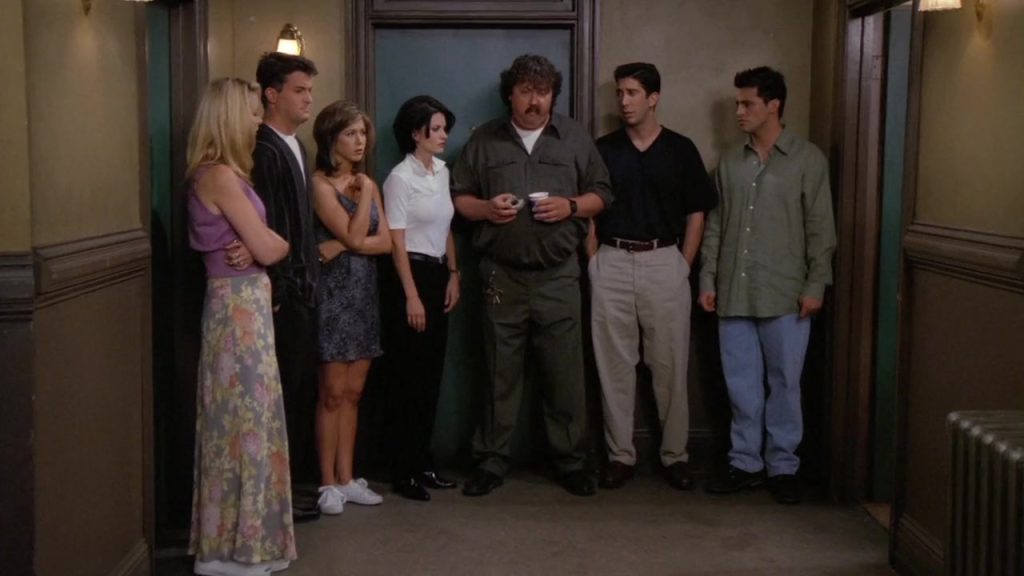
Are you ready to learn language cinema and boost your English skills while enjoying your favorite shows? Today, we dive into Friends S02E03, a classic episode packed with engaging dialogues and rich vocabulary. Whether you’re watching through Language Learning With Netflix or using our innovative language learning extension, this article will help you master 12 essential words from the episode. Let’s embark on this fun and educational journey together!
Vocabulary to Learn in This Article
- Superficial
- Possession
- Revenge
- Tacky
- Adam’s apple
- Nuts
- Let something hang up
- Break up with
- Opposable thumbs
- Clown
- Excessive
- Eccentric
1. Superficial
Original Movie Context
Monica: “How many perfectly fine women are you gonna reject over the most superficial insignificant things?”
Scene Description: Monica is questioning Chandler’s tendency to end relationships over minor issues, highlighting a mix of frustration and concern.
Word Breakdown
- Definition: Concerned only with the obvious or apparent; shallow.
- Part of Speech: Adjective
- Pronunciation: /ˌsuː.pərˈfɪʃ.əl/
- Etymology: From Latin superficialis, from superficies meaning “surface.”
Examples:
- Her interest in fashion is quite superficial.
- Don’t judge people based on superficial traits.
Contextual Usage
- Example Sentences:
- She prefers superficial conversations over deep discussions.
- His superficial understanding of the topic was evident.
- Variations:
- Formal: The report provided a superficial analysis of the issue.
- Informal: Don’t be so superficial; dig a little deeper!
- Common Collocations:
- Superficial knowledge
- Superficial reasons
- Superficial beauty
Learning Insights
- Pronunciation Tip: Emphasize the second syllable: su-PER-fi-cial.
- Common Mistakes: Confusing with “superficial” and “suspicious.”
- Cultural Nuance: In American culture, being called superficial can imply a lack of depth or sincerity.
- Memorization Trick: Think of “superficial” as something only on the surface, not going deeper.
2. Possession
Original Movie Context
Mr. Boyle: “According to my client’s will, he wants to leave all his earthly possessions to ‘the noisy girls in the apartment above mine’.”
Scene Description: Mr. Boyle explains Mr. Heckles’ will, revealing the bequeathing of his belongings to the main characters.
Word Breakdown
- Definition: Something that is owned or controlled by someone.
- Part of Speech: Noun
- Pronunciation: /pəˈzeʃ.ən/
- Etymology: From Latin possessio, from possessus meaning “holding, possessing.”
Examples:
- She inherited several possessions from her grandparents.
- The museum displayed ancient possessions.
Contextual Usage
- Example Sentences:
- He takes great care of his possessions.
- Their possessions were damaged in the fire.
- Variations:
- Formal: The estate manager handled all of his possessions meticulously.
- Informal: Don’t leave your stuff around; keep track of your possessions.
- Common Collocations:
- Personal possessions
- Material possessions
- Valuable possessions
Learning Insights
- Pronunciation Tip: Emphasize the second syllable: po-SSESS-ion.
- Common Mistakes: Mixing up “possession” with “permission.”
- Cultural Nuance: In many cultures, possessions are seen as symbols of status and success.
- Memorization Trick: Remember “possessions” as things you possess or own.
Learning language cinema provides a dynamic and enjoyable way to expand your vocabulary and improve comprehension.
3. Revenge
Original Movie Context
Monica: “This is his final revenge!”
Scene Description: Monica reacts to Mr. Heckles’ actions, interpreting them as a form of vengeance against the main characters.
Word Breakdown
- Definition: The action of inflicting hurt or harm on someone for an injury or wrong suffered.
- Part of Speech: Noun
- Pronunciation: /rɪˈvɛnʤ/
- Etymology: From Old French revenge, from Latin vindicare meaning “to avenge.”
Examples:
- He sought revenge after being betrayed by his friend.
- The story is about a hero’s quest for revenge.
Contextual Usage
- Example Sentences:
- She plotted her revenge meticulously.
- Revenge is a dish best served cold.
- Variations:
- Formal: The act of revenge can lead to prolonged conflicts.
- Informal: He’s out for revenge after losing the game.
- Common Collocations:
- Seek revenge
- Vengeance and revenge
- Acts of revenge
Learning Insights
- Pronunciation Tip: Stress the second syllable: re-VENGE.
- Common Mistakes: Using “revenge” when “vengeance” is more appropriate in formal contexts.
- Cultural Nuance: Revenge is often portrayed in media as a strong motivator for characters.
- Memorization Trick: Associate “revenge” with the phrase “Revenge is sweet.”
Choose to learn language cinema and watch your language skills grow alongside the stories you love.

4. Tacky
Original Movie Context
Rachel: “Is this tacky or what? We have to have this.”
Scene Description: Rachel debates with Monica over purchasing a lamp, questioning its style.
Word Breakdown
- Definition: Lacking in style or good taste; cheap or gaudy.
- Part of Speech: Adjective
- Pronunciation: /ˈtæk.i/
- Etymology: Possibly from the Middle English tak, meaning “bad” or “failing.”
Examples:
- She thought the decorations were a bit tacky.
- Wearing bright neon colors can sometimes look tacky.
Contextual Usage
- Example Sentences:
- The outfit was too tacky for the formal event.
- He avoided buying tacky souvenirs from his trips.
- Variations:
- Formal: The design was considered tacky by the art critics.
- Informal: That shirt is so tacky!
- Common Collocations:
- Tacky clothes
- Tacky decorations
- Tacky behavior
Learning Insights
- Pronunciation Tip: Short “a” sound: TACK-y.
- Common Mistakes: Confusing “tacky” with “tactile.”
- Cultural Nuance: What is considered tacky can vary widely between cultures and generations.
- Memorization Trick: Think of “tacky” as something you’d stick to a surface, implying it’s not easily removable or appealing.
Discover how easy it is to learn language cinema by leveraging your favorite TV shows and movies as effective learning tools.
5. Adam’s apple
Original Movie Context
Joey: “…but she had the biggest Adam’s apple. It made me nuts.”
Scene Description: Joey humorously criticizes a girl’s physical feature, leading to light-hearted banter.
Word Breakdown
- Definition: A prominent lump in the throat, more noticeable in males.
- Part of Speech: Noun
- Pronunciation: /ˈæd.əmz ˈæp.əl/
- Etymology: Named after the biblical Adam, referring to the “forbidden fruit” symbol.
Examples:
- His Adam’s apple is quite prominent.
- She noticed her boyfriend’s Adam’s apple during their conversation.
Contextual Usage
- Example Sentences:
- During puberty, boys typically develop a more noticeable Adam’s apple.
- He touched his Adam’s apple nervously before speaking.
- Variations:
- Formal: The patient has an enlarged Adam’s apple, which may require medical attention.
- Informal: Look at his big Adam’s apple!
- Common Collocations:
- Prominent Adam’s apple
- Visible Adam’s apple
- Move your Adam’s apple
Learning Insights
- Pronunciation Tip: Emphasize both words: ADAM’S APPLE.
- Common Mistakes: Mispronouncing “Adam” as “A-dam” instead of “A-dum.”
- Cultural Nuance: The Adam’s apple is often associated with masculinity in Western cultures.
- Memorization Trick: Link “Adam’s apple” to the story of Adam and Eve, symbolizing the throat area.
Our platform allows you to learn language cinema in a way that feels natural, blending seamlessly with your daily entertainment.
6. Nuts
Original Movie Context
Joey: “It made me nuts.”
Scene Description: Joey expresses his frustration and irritation over a girl’s physical feature.
Word Breakdown
- Definition: Extremely annoyed or frustrated; crazy.
- Part of Speech: Adjective (informal)
- Pronunciation: /nʌts/
- Etymology: Slang usage deriving from the idea of being “crazy” or “unhinged.”
Examples:
- The constant noise from the construction site is making me nuts.
- He went nuts when he lost his wallet.
Contextual Usage
- Example Sentences:
- She went nuts when she saw the surprise party.
- Don’t make me nuts with your complaints.
- Variations:
- Formal: He was extremely irritated by the delay.
- Informal: That movie made me nuts!
- Common Collocations:
- Go nuts
- Make someone nuts
- Drive someone nuts
Learning Insights
- Pronunciation Tip: Short “u” sound: NUHTS.
- Common Mistakes: Using “nuts” to mean actual nuts (the food).
- Cultural Nuance: “Nuts” is a casual, often humorous way to express irritation.
- Memorization Trick: Imagine someone going “nuts” like crazy to remember the meaning.
When you learn language cinema, you gain not only new vocabulary but also a deeper understanding of cultural nuances.

7. Let Something Hang Up
Original Movie Context
Chandler: “I’m not gonna let that stuff hang me up anymore.”
Scene Description: Chandler decides not to let criticism about his large head affect him, showing personal growth.
Word Breakdown
- Definition: To allow something to bother or impede you.
- Part of Speech: Verb phrase (idiom)
- Pronunciation: /lɛt ˈsʌm.θɪŋ hæŋ ʌp/
- Etymology: Combines “let” (allow) with “hang up,” meaning to cling onto something emotionally.
Examples:
- Don’t let their comments hang you up; keep moving forward.
- She decided to let the past hang up and start fresh.
Contextual Usage
- Example Sentences:
- He let the negative feedback hang him up instead of using it constructively.
- Try not to let small mistakes hang you up.
- Variations:
- Formal: Do not allow minor issues to impede your progress.
- Informal: Don’t let that hang you up, buddy.
- Common Collocations:
- Let something hang up on you
- Let criticism hang up
- Let negative thoughts hang up
Learning Insights
- Pronunciation Tip: Smoothly connect the words: let SUM-thing hang UP.
- Common Mistakes: Misunderstanding the idiom to mean physically hanging something.
- Cultural Nuance: This phrase is commonly used in conversational English to encourage resilience.
- Memorization Trick: Visualize hanging something on a hook and then deciding not to hold onto it.
Embrace the journey to fluency by choosing to learn language cinema through engaging and relatable movie scenes.
8. Break Up With
Original Movie Context
Chandler: “I broke up with her.”
Scene Description: Chandler casually informs Monica that he ended his relationship with Joan, highlighting his relationship struggles.
Word Breakdown
- Definition: To end a romantic relationship with someone.
- Part of Speech: Verb phrase
- Pronunciation: /breɪk ʌp wɪð/
- Etymology: “Break up” meaning to dissolve, combined with “with” indicating the person.
Examples:
- He decided to break up with his girlfriend after a long argument.
- They broke up last month due to irreconcilable differences.
Contextual Usage
- Example Sentences:
- She broke up with her partner because of trust issues.
- I’m thinking of breaking up with him.
- Variations:
- Formal: They decided to terminate their relationship.
- Informal: I’m breaking up with her.
- Common Collocations:
- Break up with someone
- Decide to break up
- Break up amicably
Learning Insights
- Pronunciation Tip: Emphasize “break”: BREAK up with.
- Common Mistakes: Using “break up” without specifying “with” when needed.
- Cultural Nuance: Breaking up is a significant emotional event often portrayed in media.
- Memorization Trick: Think of “breaking” a relationship like breaking an object into pieces.
Learning language cinema has never been more accessible, thanks to interactive features that engage you directly with the content.
9. Opposable Thumbs
Original Movie Context
Ross: “Without evolution, how do you explain opposable thumbs?”
Scene Description: Ross defends the theory of evolution by highlighting human anatomical features like opposable thumbs.
Word Breakdown
- Definition: Thumbs that can move to touch the other fingers, allowing humans to grasp objects.
- Part of Speech: Noun phrase
- Pronunciation: /ˈɑp.ə.sə.bəl θʌmz/
- Etymology: From Latin opponere meaning “to place opposite.”
Examples:
- Opposable thumbs give humans the ability to manipulate tools.
- Many primates have opposable thumbs, but they vary in functionality.
Contextual Usage
- Example Sentences:
- The development of opposable thumbs was crucial for human evolution.
- Having opposable thumbs allows for finer motor skills.
- Variations:
- Formal: Opposable thumbs are a significant trait in primate species.
- Informal: Thanks to opposable thumbs, we can text on our phones.
- Common Collocations:
- Opposable thumbs feature
- Opposable thumbs capability
- Possess opposable thumbs
Learning Insights
- Pronunciation Tip: Break it down: OP-po-sa-ble THUMBS.
- Common Mistakes: Mispronouncing “opposable” as “opposite.”
- Cultural Nuance: Opposable thumbs are often discussed in the context of human uniqueness.
- Memorization Trick: Visualize how your thumb moves to touch other fingers.
With our tools, you can easily learn language cinema without interrupting your favorite shows, making learning both fun and efficient.
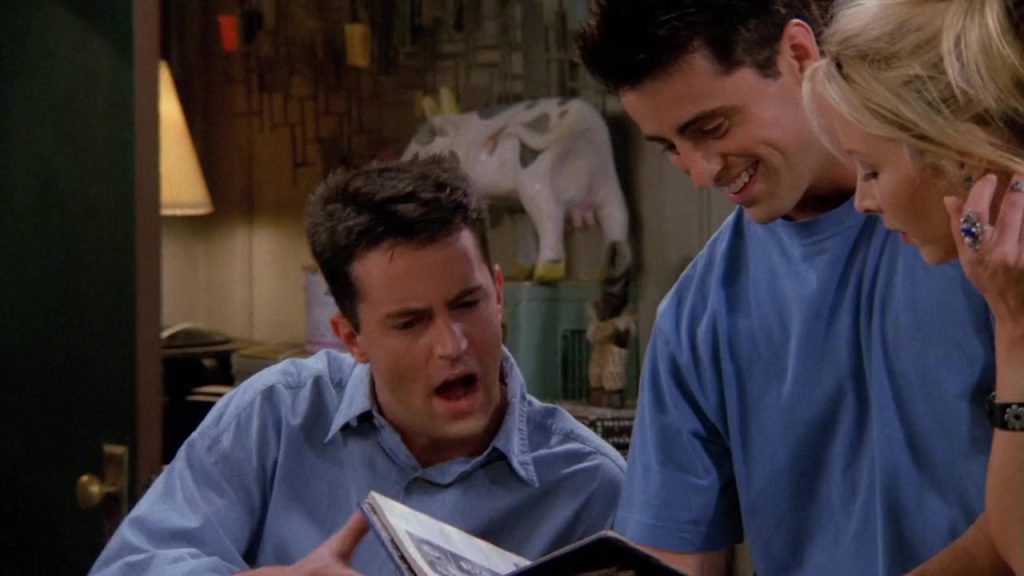
10. Clown
Original Movie Context
Joey: “Heckles was a nut case.”
Scene Description: Joey refers to Mr. Heckles as a clown, emphasizing his eccentric behavior.
Word Breakdown
- Definition: A performer in a circus who entertains by acting silly or ridiculous.
- Part of Speech: Noun
- Pronunciation: /klaʊn/
- Etymology: From the German clown, possibly from the Irish clúin meaning “a tuft of wool.”
Examples:
- The clown made the children laugh with his funny antics.
- Don’t be a clown; take the meeting seriously.
Contextual Usage
- Example Sentences:
- She dressed up as a clown for the Halloween party.
- Stop acting like a clown and focus on your work.
- Variations:
- Formal: The performer exhibited clown-like behavior to entertain the audience.
- Informal: He’s always clowning around in class.
- Common Collocations:
- Funny clown
- Clown around
- Clown behavior
Learning Insights
- Pronunciation Tip: Clear “cl” sound: CLOWN.
- Common Mistakes: Mispronouncing “clown” as “clan.”
- Cultural Nuance: Clowns can symbolize humor or, in some contexts, fear (coulrophobia).
- Memorization Trick: Imagine a traditional circus clown to remember the meaning.
Our extension is designed to help you learn language cinema effortlessly, turning every movie night into a productive learning session.
11. Excessive
Original Movie Context
Chandler: “Actually, I think this apartment sullies the good name of crap.”
Scene Description: Chandler humorously criticizes the apartment’s state, implying it’s excessively messy.
Word Breakdown
- Definition: More than is necessary, normal, or desirable; immoderate.
- Part of Speech: Adjective
- Pronunciation: /ɪkˈsɛs.ɪv/
- Etymology: From Latin excessivus, from excedere meaning “to go beyond.”
Examples:
- The noise was excessive and kept me awake all night.
- She spent an excessive amount of money on designer clothes.
Contextual Usage
- Example Sentences:
- Excessive drinking can lead to health problems.
- He was criticized for his excessive workload.
- Variations:
- Formal: The policy was deemed excessive by the committee.
- Informal: That’s excessive, man!
- Common Collocations:
- Excessive noise
- Excessive spending
- Excessive force
Learning Insights
- Pronunciation Tip: Stress the second syllable: ex-SES-sive.
- Common Mistakes: Using “excessive” when “extreme” is more appropriate.
- Cultural Nuance: Excessiveness is often criticized in social and professional settings.
- Memorization Trick: Link “excessive” with “exceeding” normal limits.
By choosing to learn language cinema, you immerse yourself in authentic dialogues that make vocabulary retention effortless.
12. Eccentric
Original Movie Context
Chandler: “I figure I’ll be Crazy Man with a Snake, y=know. Crazy Snake Man.”
Scene Description: Chandler humorously contemplates becoming an eccentric character to avoid loneliness.
Word Breakdown
- Definition: Unconventional and slightly strange.
- Part of Speech: Adjective
- Pronunciation: /ɛkˈsɛn.trɪk/
- Etymology: From Greek ekkentros meaning “out of the center.”
Examples:
- The artist was known for his eccentric lifestyle.
- Her eccentric behavior often confused her colleagues.
Contextual Usage
- Example Sentences:
- He has an eccentric fashion sense that sets him apart.
- The mansion was filled with eccentric decor.
- Variations:
- Formal: The subject displayed eccentric tendencies during the study.
- Informal: She’s a bit eccentric, but that’s what makes her interesting.
- Common Collocations:
- Eccentric personality
- Eccentric habits
- Eccentric individual
Learning Insights
- Pronunciation Tip: Emphasize the second syllable: ec-CEN-tric.
- Common Mistakes: Mispronouncing “eccentric” with the stress on the first syllable.
- Cultural Nuance: Eccentricity is often viewed positively in creative fields.
- Memorization Trick: Think of “eccentric” as someone who is not centered in behavior or style.
Imagine being able to learn language cinema while laughing along with your favorite Friends episodes – it’s that simple and enjoyable!
Make Language Learning Fun and Accessible
Learning vocabulary through language learning cinema not only enhances your understanding of words but also immerses you in cultural contexts and real-life conversations. Imagine watching Friends S02E03 and effortlessly picking up new words like “superficial” or “eccentric.” With our innovative language learning extension, you can transform your favorite shows into interactive learning experiences.
How Our Language Learning Extension Enhances Your Journey
- Mouse Dictionary: Hover over any word in the subtitles to see instant definitions. No need to pause and search—learn in real-time!
- Save Words: Easily save new vocabulary for future review, ensuring you never forget a word you’ve learned.
- Fluency Gym: Our unique feature allows you to practice reading, listening, and speaking alongside native speakers. Engage with real dialogues and turn passive vocabulary into active language skills.
- Auto-Pause and Play: Control playback with ease, pausing after each sentence to absorb new information.
- Download Subtitles: Export subtitles in multiple formats for offline study, perfect for reinforcing your learning.
By integrating these features, our extension makes learning language cinema an enjoyable and efficient process. Whether you’re using Language Learning With Netflix or our own tool, you’ll find that expanding your vocabulary has never been this fun!
Explore More with Our Previous Articles
Interested in diving deeper into language learning cinema? Check out our related articles:
- Language Learning with Netflix: Mastering Vocabulary from Friends S01E11
- Mastering Cinematic English Study with Friends S01 E14: 15 Essential Vocabulary Words
- Master English with Friends S01E17: 12 Must-Know Vocabulary Words from Friends
- Boost Your English with Friends S01E19: 12 Essential Vocabulary Words from Film-Based Language Learning
These articles complement your language learning cinema journey, offering targeted vocabulary and strategies to enhance your proficiency.
Embrace Technology in Language Learning
In today’s digital age, technology is revolutionizing how we learn languages. Our language learning extension exemplifies this transformation by integrating seamlessly with your favorite streaming platforms. Imagine watching Friends S02E03 and having every new word and phrase at your fingertips. With features like Fluency Gym, you’re not just passively watching—you’re actively engaging with the language.
Join the Language Learning Revolution
Ready to take your English to the next level? Start learning language cinema with our advanced extension and enjoy an immersive, interactive, and enjoyable learning experience. Visit App for Language today and discover how our tools can make mastering English a breeze!
Soft Introductions to Our Language Learning Extension
- Discover how our Mouse Dictionary can make your favorite shows a learning hub.
- Imagine saving new words effortlessly while binge-watching Friends.
- Experience Fluency Gym and turn passive watching into active learning.
- Control your learning pace with auto-pause and play features.
- Export subtitles for offline study and review anytime.
- Customize your learning environment with adjustable subtitles and colors.
- Enhance your pronunciation with instant word pronunciations.
- Use our sidebar display to keep track of all your learning tools in one place.
- Jump to any sentence from the sidebar to focus on tricky dialogues.
- Share your favorite subtitles with friends and learn together.
Embrace the future of language learning with our comprehensive extension and make every movie night a step towards fluency!
Conclusion
Learn language cinema with Friends S02E03 and master new vocabulary in a fun, engaging way. By understanding words like “superficial” and “eccentric” in their natural context, you enhance both your language skills and cultural knowledge. Pairing this method with our innovative language learning extension ensures an effective and enjoyable journey to English fluency. So, grab your popcorn, start watching, and let’s make learning English an exciting adventure!
Unlock Your Language Potential Today!
Don’t wait—enhance your language learning with cinema by trying our extension. Visit App for Language and explore how our features like Fluency Gym can transform your learning experience. Happy learning!