Are you looking to learn English through movies? Language learning with Netflix is a fun and effective way to boost your vocabulary while enjoying your favorite shows. In this article, we’ll dive into Friends Season 1, Episode 11, and explore 15 essential vocabulary words. Each word comes with real movie contexts, detailed explanations, and practical usage tips to make your learning journey both engaging and memorable.
1. Horoscope
Original Movie Context
Phoebe: “Just wanna check my horoscope, see if it was right.”
Scene Description: Phoebe is playfully curious about her daily horoscope while walking with Monica, adding a light-hearted and whimsical tone to the conversation.
Word Breakdown
- Definition: A forecast of a person’s future based on the positions of celestial bodies.
- Part of Speech: Noun
- Pronunciation: /ˈhɒrəˌskoʊp/
- Etymology: Derived from the Greek words “hora” (time) and “skopein” (to look).
Examples:
- “She reads her horoscope every morning for guidance.”
- “His horoscope predicted a day full of surprises.”
Contextual Usage
- Formal: “According to your horoscope, you might face significant changes this month.”
- Informal: “I checked my horoscope today, and it says I’ll meet someone interesting.”
- Common Collocations: daily horoscope, astrology horoscope, accurate horoscope
Learning Insights
- Pronunciation Tip: Stress the first syllable: HOR-o-scope.
- Common Mistake: Mispronouncing the “scope” part; remember it sounds like “skohp.”
- Cultural Nuance: Horoscopes are widely popular and often discussed in casual conversations.
Pro Tip: Use FunFluen.com’s Mouse Dictionary feature to hover over “horoscope” while watching to get instant definitions and examples!
2. Coma
Original Movie Context
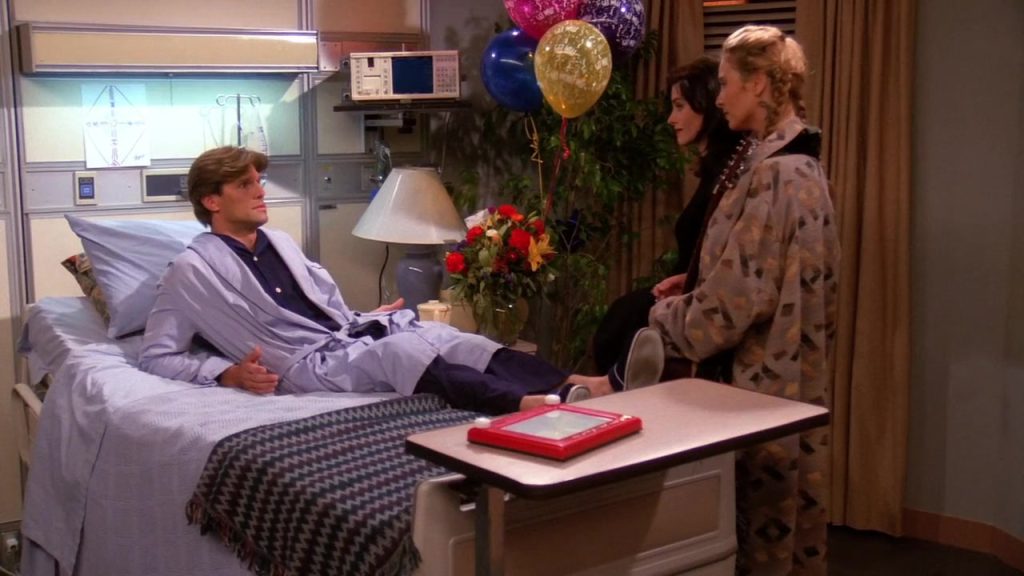
Scene: The guy is in a coma in the hospital, and Monica and Phoebe visit him, adding a serious yet hopeful tone to their interactions.
Word Breakdown
- Definition: A state of deep unconsciousness, often caused by illness or injury.
- Part of Speech: Noun
- Pronunciation: /ˈkoʊmə/
- Etymology: From Latin “coma,” meaning “deep sleep.”
Examples:
- “After the accident, he was in a coma for two weeks.”
- “Doctors are hopeful he will wake from his coma soon.”
Contextual Usage
- Formal: “The patient remained in a coma despite intensive care.”
- Informal: “He was knocked out and ended up in a coma.”
- Common Collocations: fall into a coma, emerge from a coma, induce a coma
Learning Insights
- Pronunciation Tip: Emphasize the first syllable: CO-ma.
- Common Mistake: Confusing “coma” with “come.”
- Cultural Nuance: Coma is a medical term often used in dramatic contexts in movies and TV shows.
Learning Hack: Utilize FunFluen.com‘s Fluency Gym to practice sentences using “coma” and reinforce your understanding through interactive exercises.
3. Deficit
Original Movie Context
Monica: “Congress is debating a new deficit reduction bill…”
Scene Description: Monica discusses political matters, introducing a serious and informative tone.
Word Breakdown
- Definition: The amount by which something, especially a sum of money, is too small.
- Part of Speech: Noun
- Pronunciation: /ˈdɛfəsɪt/
- Etymology: From Latin “deficere,” meaning “to fail or be lacking.”
Examples:
- “The company is trying to reduce its budget deficit.”
- “Government deficits can impact the economy significantly.”
Contextual Usage
- Formal: “The deficit in the national budget requires immediate attention.”
- Informal: “We need to cut down the deficit in our monthly expenses.”
- Common Collocations: budget deficit, trade deficit, fiscal deficit
Learning Insights
- Pronunciation Tip: The stress is on the first syllable: DEF-i-cit.
- Common Mistake: Mispronouncing the ending; remember it’s pronounced “sit,” not “cite.”
- Cultural Nuance: Deficit is a common term in discussions about economics and politics.
Memorization Trick: Think of “deficit” as something deficient or lacking, helping you remember its meaning.
Quick Tip: With FunFluen.com’s Auto-Pause feature, you can pause the video after Monica’s line to review “deficit” and its usage.
4. Flustered
Original Movie Context
Rachel: “Sorry we’re late, we kinda just, y’know, lost track of time.”
Scene Description: Rachel and Paolo arrive flustered, adding a chaotic and rushed emotion to the scene.
Word Breakdown
- Definition: Agitated or confused, especially due to stress.
- Part of Speech: Adjective
- Pronunciation: /ˈflʌstərd/
- Etymology: From the verb “fluster,” meaning to agitate or confuse.
Examples:
- “She felt flustered before her big presentation.”
- “He gets flustered easily when things don’t go as planned.”
Contextual Usage
- Formal: “The unexpected questions left her feeling flustered during the interview.”
- Informal: “Don’t get flustered, everything will be fine.”
- Common Collocations: feel flustered, become flustered, look flustered
Learning Insights
- Pronunciation Tip: Emphasize the first syllable: FLUS-terd.
- Common Mistake: Overpronouncing the second syllable; keep it light.
- Cultural Nuance: Being flustered is a relatable human emotion often portrayed in comedic and dramatic scenes.
Study Smart: Use the Save Words feature on FunFluen.com to save “flustered” and review it later with interactive flashcards.
5. Freudian Nightmare
Original Movie Context
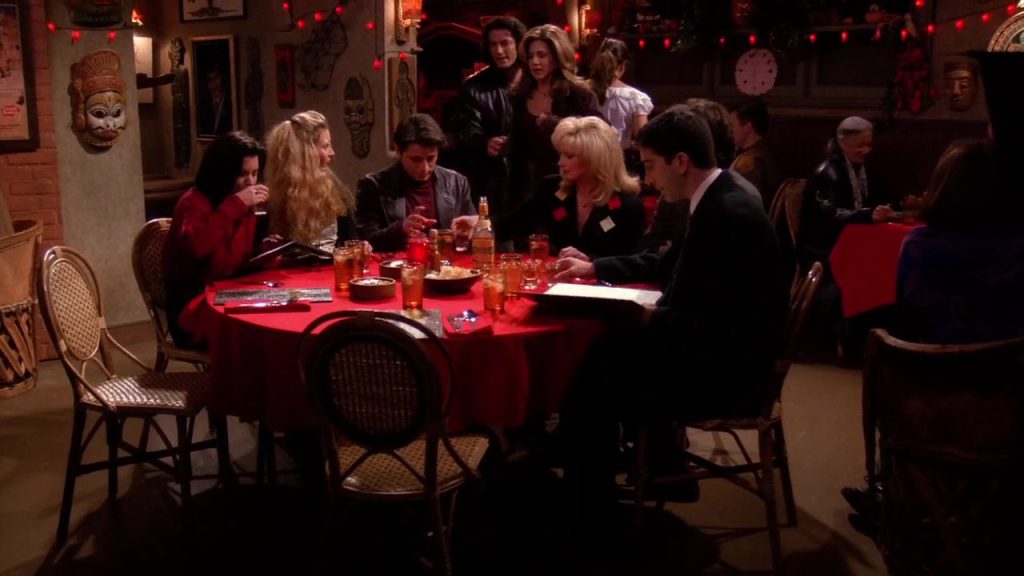
Chandler: “She’s always been a Freudian nightmare.”
Scene Description: Chandler describes his mother’s behavior with a mix of humor and frustration, adding depth to his character.
Word Breakdown
- Definition: A situation or experience reminiscent of Freudian psychology, often involving subconscious conflicts or complex emotions.
- Part of Speech: Noun Phrase
- Pronunciation: /ˈfʳaɪdiən ˈnaɪtmɛər/
- Etymology: Named after Sigmund Freud, the father of psychoanalysis.
Examples:
- “His recurring dreams are like a Freudian nightmare, filled with hidden fears.”
- “The play portrays a Freudian nightmare of the protagonist’s inner turmoil.”
Contextual Usage
- Formal: “The novel delves into the protagonist’s Freudian nightmares, exploring deep psychological themes.”
- Informal: “Dealing with her was a real Freudian nightmare.”
- Common Collocations: Freudian analysis, Freudian slip, Freudian dream
Learning Insights
- Pronunciation Tip: Stress “Freudian” on the first syllable: FREU-di-an.
- Common Mistake: Mispronouncing “Freudian” as “Freudian,” with an incorrect emphasis.
- Cultural Nuance: The term combines psychological theory with everyday expressions, often used humorously.
Enhance Learning: Let FunFluen.com‘s Fluency Gym challenge you to create sentences using “Freudian nightmare,” reinforcing your grasp through practice.
6. Euphemism
Original Movie Context
Mrs. Bing: “Throw in thirty euphemisms for male genitalia…”
Scene Description: Mrs. Bing humorously describes her writing style, adding wit and playfulness to the conversation.
Word Breakdown
- Definition: A mild or indirect word or expression substituted for one considered to be too harsh or blunt.
- Part of Speech: Noun
- Pronunciation: /ˈjuːfəˌmɪzəm/
- Etymology: From Greek “euphemismos,” meaning “to speak well.”
Examples:
- “Using ‘passed away’ instead of ‘died’ is a common euphemism.”
- “He used euphemisms to soften the impact of his criticism.”
Contextual Usage
- Formal: “The report used several euphemisms to address sensitive topics.”
- Informal: “She said he was ‘between jobs,’ a euphemism for being unemployed.”
- Common Collocations: use a euphemism, euphemistic language, euphemism for
Learning Insights
- Pronunciation Tip: Emphasize the first syllable: EU-phe-mism.
- Common Mistake: Pronouncing it as “you-phe-mism” instead of “eu-phe-mism.”
- Cultural Nuance: Euphemisms are widely used to discuss delicate subjects politely.
Memorization Trick: Remember that “euphemism” makes language easier and softer, helping you recall its meaning.
Tool Tip: With FunFluen.com’s Mouse Dictionary, hover over “euphemism” during the episode to instantly grasp its meaning and usage.
7. Deficit Reduction Bill
Original Movie Context
Monica: “Congress is debating a new deficit reduction bill…”
Scene Description: Monica talks about politics, introducing a serious and informative tone to the conversation.
Word Breakdown
- Definition: Legislation aimed at reducing the budget deficit by cutting spending or increasing revenue.
- Part of Speech: Noun Phrase
- Pronunciation: /ˈdɛfəsɪt rɪˈdʌkʃən bɪl/
- Etymology: Combination of “deficit” (shortfall) and “reduction bill” (legislative action).
Examples:
- “The government introduced a deficit reduction bill to manage national debt.”
- “Debates over the deficit reduction bill were heated in Congress.”
Contextual Usage
- Formal: “The deficit reduction bill aims to balance the national budget by 2025.”
- Informal: “They’re talking about the new deficit reduction bill in Congress today.”
- Common Collocations: pass a deficit reduction bill, propose a deficit reduction bill, implement a deficit reduction bill
Learning Insights
- Pronunciation Tip: Say each word clearly: DEF-i-cit re-DUC-tion bill.
- Common Mistake: Merging the words too quickly, leading to confusion.
- Cultural Nuance: Political terms like “deficit reduction bill” are frequently used in news and discussions about government policies.
Study Smart: Use FunFluen.com’s Download Saved Words feature to export “deficit reduction bill” for offline review and practice.
8. Knuckles
Original Movie Context
Monica: “Did you see the dents in his knuckles? That means he’s artistic.”
Scene Description: Monica and Phoebe observe physical traits to infer someone’s personality, adding a humorous and speculative tone.
Word Breakdown
- Definition: The joints of the fingers, especially those where they bend.
- Part of Speech: Noun
- Pronunciation: /ˈnʌklz/
- Etymology: From Old English “cnucle,” meaning “knot of flesh.”
Examples:
- “He had bruises on his knuckles after boxing.”
- “Her knuckles were rough from years of gardening.”
Contextual Usage
- Formal: “The patient’s knuckles showed signs of arthritis.”
- Informal: “He cracked his knuckles before the game.”
- Common Collocations: break knuckles, crack knuckles, bruised knuckles
Learning Insights
- Pronunciation Tip: Make sure to pronounce the “k” sound: KNUH-klz.
- Common Mistake: Dropping the “k” and saying “nuckles.”
- Cultural Nuance: References to knuckles often appear in physical descriptions and activities involving manual work or sports.
Quick Tip: Save “knuckles” using FunFluen.com’s Save Words feature to practice through interactive flashcards in the Fluency Gym.
9. Whistle
Original Movie Context
Phoebe: “We should do something. Whistle.”
Scene Description: Phoebe encourages Monica to whistle, adding a playful and mischievous tone before the comedic outcome.
Word Breakdown
- Definition: To produce a clear, high-pitched sound by forcing breath through a small opening between partially closed lips.
- Part of Speech: Verb
- Pronunciation: /ˈwɪsl/
- Etymology: From Old English “hwistil,” related to sounds produced by birds.
Examples:
- “He loves to whistle while working.”
- “She couldn’t resist whistling her favorite tune.”
Contextual Usage
- Formal: “The coach advised players to whistle for coordination.”
- Informal: “Whistle a happy song to lift your spirits.”
- Common Collocations: whistle a tune, whistle loudly, whistle for attention
Learning Insights
- Pronunciation Tip: Ensure the “wh” sound is clear: WHIS-le.
- Common Mistake: Not fully closing the lips, leading to an unclear whistle sound.
- Cultural Nuance: Whistling can convey different emotions, from happiness to signaling.
Learning Hack: Practice the verb “whistle” using FunFluen.com’s Speaking Mode in Fluency Gym to improve pronunciation and usage.
10. Plunge
Original Movie Context
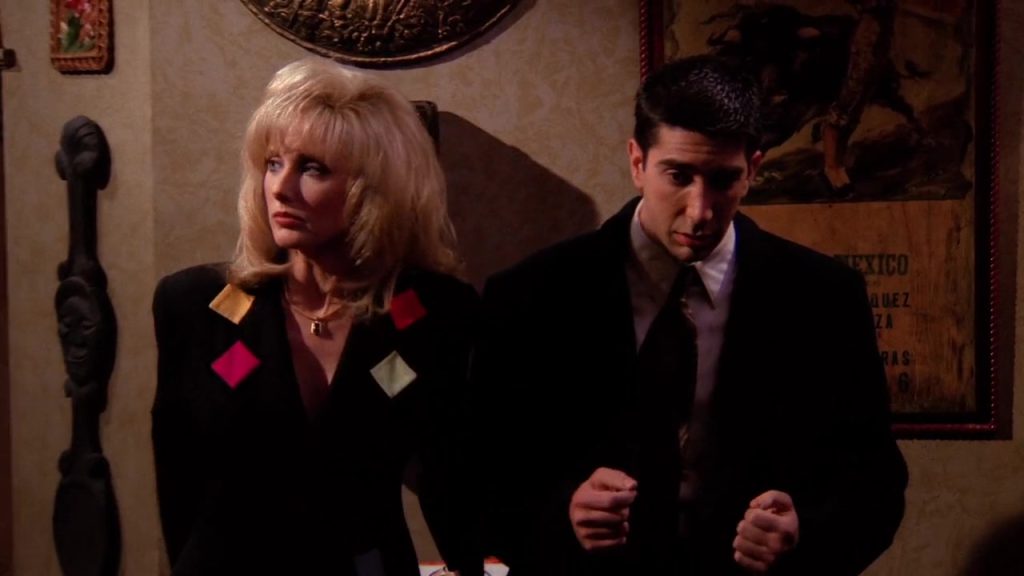
Monica: “…and plunge us into a pit of depression.”
Scene Description: Monica uses “plunge” metaphorically to describe falling into a deep emotional state, adding a dramatic tone.
Word Breakdown
- Definition: To jump or dive quickly and energetically; metaphorically, to fall suddenly into a state or condition.
- Part of Speech: Verb
- Pronunciation: /plʌndʒ/
- Etymology: From Old French “plonger,” meaning “to dive.”
Examples:
- “She decided to plunge into the icy waters.”
- “The company’s losses could plunge it into bankruptcy.”
Contextual Usage
- Formal: “Economic instability could plunge the country into recession.”
- Informal: “Don’t let one bad day plunge you into sadness.”
- Common Collocations: plunge into water, plunge into debt, plunge into darkness
Learning Insights
- Pronunciation Tip: Emphasize the first syllable: PLUN-ge.
- Common Mistake: Overemphasizing the second syllable, making it sound like “plunge.”
- Cultural Nuance: “Plunge” is often used in both literal and figurative contexts to describe sudden actions or changes.
Study Smart: Use FunFluen.com’s Jump to Sentence feature to revisit Monica’s line and see how “plunge” is used contextually.
11. Appraise
Original Movie Context
Ross: “Anyone want me to appraise anything?”
Scene Description: Ross, now drunk, offers to appraise items humorously, adding a light-hearted and amusing tone.
Word Breakdown
- Definition: To assess the value or quality of something.
- Part of Speech: Verb
- Pronunciation: /əˈpreɪz/
- Etymology: From Old French “appriser,” meaning “to value.”
Examples:
- “She asked him to appraise her antique vase.”
- “The real estate agent will appraise the property next week.”
Contextual Usage
- Formal: “The jeweler will appraise the diamond for insurance purposes.”
- Informal: “Can you appraise this painting for me?”
- Common Collocations: appraise property, appraise value, appraise skills
Learning Insights
- Pronunciation Tip: Stress the second syllable: a-PRAISE.
- Common Mistake: Misplacing the stress, making it sound like “AP-praise.”
- Cultural Nuance: “Appraise” is often used in professional contexts, such as real estate and insurance.
Quick Tip: Practice “appraise” using FunFluen.com’s Speech Challenger in Fluency Gym to perfect your pronunciation and usage.
12. Deficiency
Original Movie Context
Monica: “I wish we at least knew his name…”
Scene Description: Monica reflects on the unknown aspects of the guy in a coma, highlighting her desire for more information and control.
Word Breakdown
- Definition: A lack or shortage, especially of something essential.
- Part of Speech: Noun
- Pronunciation: /dɪˈfɪʃənsi/
- Etymology: From Latin “deficientia,” meaning “a failing.”
Examples:
- “The doctor noted a deficiency in her vitamin D levels.”
- “Economic deficiencies can lead to social issues.”
Contextual Usage
- Formal: “A deficiency in the budget requires immediate action.”
- Informal: “His diet has a deficiency of essential nutrients.”
- Common Collocations: vitamin deficiency, nutrient deficiency, performance deficiency
Learning Insights
- Pronunciation Tip: Emphasize the second syllable: de-FI-shen-cy.
- Common Mistake: Overemphasizing the first syllable, making it sound like “DE-fi-shen-cy.”
- Cultural Nuance: “Deficiency” is commonly used in medical, economic, and technical contexts.
Memorization Trick: Associate “deficiency” with “deficit” to remember it means lacking something important.
13. Complication
Original Movie Context
Mrs. Bing: “He’s a secondary character, a complication you eventually kill off.”
Scene Description: Mrs. Bing humorously discusses character development in her books, adding wit and creativity to her personality.
Word Breakdown
- Definition: A difficulty or problem that makes something more complex.
- Part of Speech: Noun
- Pronunciation: /ˌkɒmplɪˈkeɪʃən/
- Etymology: From Latin “complicatio,” meaning “folding together.”
Examples:
- “The plot thickened with every new complication.”
- “She faced several complications during her surgery.”
Contextual Usage
- Formal: “The legal complications delayed the project’s completion.”
- Informal: “Adding another task would just create more complications.”
- Common Collocations: legal complication, medical complication, plot complication
Learning Insights
- Pronunciation Tip: Stress the third syllable: com-pli-CA-tion.
- Common Mistake: Misplacing the stress, leading to awkward pronunciation.
- Cultural Nuance: “Complication” is versatile, used in storytelling, medicine, and everyday problems.
Study Smart: Use FunFluen.com’s Sidebar Display to access all instances of “complication” in the episode for better understanding.
14. Euphoria
Original Movie Context
Rachel: “I’ve read everything you’ve ever written. No, I mean it! I mean, when I read Euphoria at Midnight…”
Scene Description: Rachel praises Mrs. Bing’s book, adding enthusiasm and admiration to her character.
Word Breakdown
- Definition: A feeling or state of intense excitement and happiness.
- Part of Speech: Noun
- Pronunciation: /juːˈfɔːriə/
- Etymology: From Greek “euphoria,” meaning “power of enduring easily.”
Examples:
- “The concert gave her a sense of euphoria.”
- “Winning the championship brought a wave of euphoria to the team.”
Contextual Usage
- Formal: “The medication induced a temporary state of euphoria in the patient.”
- Informal: “He was in a state of euphoria after hearing the good news.”
- Common Collocations: state of euphoria, experience euphoria, feeling euphoria
Learning Insights
- Pronunciation Tip: Emphasize the second syllable: eu-PHO-ri-a.
- Common Mistake: Mispronouncing the “eu” as “you.”
- Cultural Nuance: “Euphoria” is often used to describe extreme joy or excitement in various contexts, from personal achievements to artistic expressions.
Quick Tip: Leverage FunFluen.com’s Word Pronunciation feature to hear “euphoria” pronounced correctly and practice saying it yourself.
15. Euphemistic
Original Movie Context
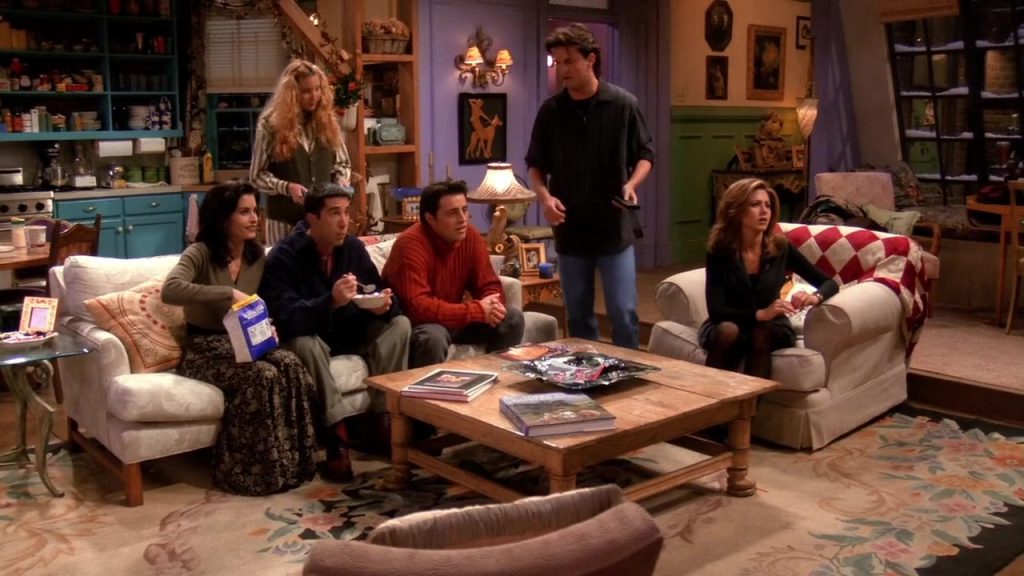
Mrs. Bing: “She just starts with half a dozen European cities, throw in thirty euphemisms for male genitalia, and bam! You have got yourself a book.”
Scene Description: Mrs. Bing humorously explains her writing technique, adding creativity and humor to her character.
Word Breakdown
- Definition: Using mild or indirect words or expressions to replace harsh or blunt ones.
- Part of Speech: Adjective
- Pronunciation: /ˌjuːfəˈmɪstɪk/
- Etymology: From “euphemism,” meaning “a mild or indirect word or expression.”
Examples:
- “She used euphemistic language to discuss sensitive topics.”
- “His euphemistic remarks softened the criticism.”
Contextual Usage
- Formal: “The report employs euphemistic terms to address controversial issues.”
- Informal: “He used a euphemistic phrase instead of directly saying it.”
- Common Collocations: euphemistic language, euphemistic expression, euphemistic phrase
Learning Insights
- Pronunciation Tip: Emphasize the third syllable: eu-phe-MIS-tic.
- Common Mistake: Misplacing the stress, leading to awkward pronunciation.
- Cultural Nuance: “Euphemistic” is often used in literature, media, and everyday conversations to discuss sensitive subjects politely.
Memorization Trick: Remember “euphemistic” as the adjective form of “euphemism,” helping you recall its meaning and usage.
Study Smart: Use FunFluen.com’s Fluency Gym to create sentences with “euphemistic,” reinforcing your understanding through interactive practice.
Making Language Learning Fun and Effective
Learning vocabulary doesn’t have to be boring. By watching Friends and using our Language Learning with Netflix approach, you immerse yourself in real-life contexts that make new words stick. Plus, with our innovative FunFluen.com extension, you can enhance your learning experience seamlessly:
- Mouse Dictionary: Hover over any unfamiliar word in the subtitles to see instant definitions and examples, just like we did with “horoscope” and “euphemism.”
- Fluency Gym: Transform passive vocabulary into active language skills with our interactive exercises. Practice pronunciation, create sentences, and engage in speaking challenges.
- Save Words: Easily save new vocabulary words for later review, ensuring you never forget what you’ve learned.
- Auto-Pause and Play: Control playback to give yourself time to process each sentence, making learning manageable and stress-free.
Why Choose FunFluen.com?
Our language learning extension is designed for motivated, tech-savvy learners who seek efficient and enjoyable methods to improve their English. Whether you’re an intermediate learner looking to expand your vocabulary or an advanced student aiming for fluency, FunFluen.com offers tools that make learning interactive and fun.
Highlighting Fluency Gym
Fluency Gym is your path to mastering English. It offers:
- Reading Mode: Engage with subtitles in your target language first, then reveal native subtitles for comparison.
- Listening Mode: Train your ear by listening without subtitles and then check your understanding.
- Speaking Mode: Practice pronunciation and intonation by repeating dialogues aloud.
With Fluency Gym, every movie becomes a new challenge, turning passive watching into an active learning adventure.
Ready to Transform Your Language Learning?
Embark on your language learning with Netflix journey today! Visit FunFluen.com to explore our language learning extension and discover how technology can make mastering English an exciting and rewarding experience.
Additional Vocabulary Boosters
To further enhance your learning, here are a few more words inspired by Friends S01E11:
- Whistle: “We should do something. Whistle.” – A playful action that can signify trying to catch someone’s attention.
- Turn around: “Monica turns Phoebe away and then around to face the guy.” – Changing direction or perspective.
- Appraise: “Anyone want me to appraise anything?” – Assessing the value or quality of something.
Use FunFluen.com’s Download Subtitles feature to export these examples and practice them offline, ensuring you have all the tools you need to succeed.
Conclusion
Language learning with Netflix is a powerful way to expand your English vocabulary while enjoying beloved shows like Friends. By exploring real dialogues and understanding the context, you make learning natural and enjoyable. With the help of FunFluen.com, your language journey becomes interactive, efficient, and fun. Start mastering English today and turn every movie night into a learning opportunity!
Ready to elevate your language skills? Try FunFluen.com’s Fluency Gym and see how our innovative features can transform your learning experience.