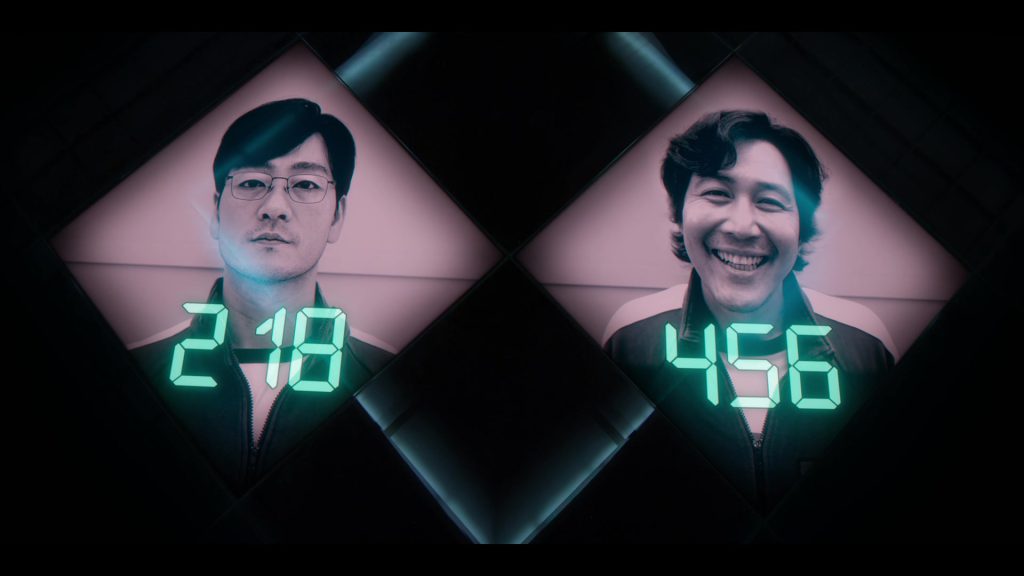
Language learning with Movie has revolutionized how we acquire new languages. By watching captivating series like “Squid Game S01 E09 (Final Episode),” you can learn English through movies while enjoying engaging storylines. In this article, we’ll dive into 15 carefully selected vocabulary words from the final episode of Squid Game. Each word is presented with its original movie context, breakdown, contextual usage, and learning insights to make your language journey both fun and effective. Plus, discover how FunFluen.com‘s innovative extension can enhance your learning experience seamlessly.
1. Handicap
Original Movie Context
[Front Man] The attacker is given a handicap. He can only hop on one foot until he crosses the squid’s neck.
Scene Description and Emotional Tone:
In a tense moment, the Front Man explains the rules of Squid Game, adding a challenging twist to the game by imposing a physical handicap on the attacker. The scene is filled with suspense and strategy.
Word Breakdown
- Definition: A disadvantage or limitation placed on someone to level the playing field.
- Part of Speech: Noun
- Pronunciation: /ˈhæn(d)ɪˌkæp/
- Etymology: Originates from the concept of handicapping in competitions to ensure fairness.
Contextual Usage
- Example Sentences:
- She received a handicap in the race due to her injury.
- The game imposed a handicap to make it more challenging.
- Formal vs. Informal:
- Formal: The project was given a handicap due to budget constraints.
- Informal: Having to work two jobs is quite a handicap.
- Common Collocations: impose a handicap, give a handicap, handicap system
Learning Insights
- Pronunciation Tip: Emphasize the first syllable: HAN-dicap.
- Common Mistakes: Confusing “handicap” with “handiwork.”
- Cultural Nuance: Often used in sports and competitions to ensure fairness among participants.
FunFluen Tip: Use the Mouse Dictionary feature to hover over “handicap” in subtitles and see its definition instantly, reinforcing your learning in real-time.
Through Netflix, language learning can seamlessly fit into your daily routine, blending relaxation with skill-building.
2. Withdraw
Original Movie Context
[Automated Voice] Checking your IC card information. WITHDRAWAL…
Scene Description and Emotional Tone:
Gi-hun interacts with an ATM, highlighting the importance of financial actions within the game’s high-stakes environment.
Word Breakdown
- Definition: To take money out of a bank account.
- Part of Speech: Verb
- Pronunciation: /wɪðˈdrɔː/
- Etymology: Derived from the Old English “withdragan,” meaning to draw back.
Contextual Usage
- Example Sentences:
- I need to withdraw some cash for the weekend.
- She decided to withdraw her application after reconsidering.
- Formal vs. Informal:
- Formal: The company may need to withdraw its offer.
- Informal: I’m going to withdraw money from the ATM.
- Common Collocations: withdraw funds, withdraw money, withdraw support
Learning Insights
- Pronunciation Tip: Stress the second syllable: with-DRAW.
- Common Mistakes: Mixing up “withdraw” with “withhold.”
- Cultural Nuance: Commonly used in banking and finance contexts.
FunFluen Tip: Save “withdraw” using the Save Words feature for later review and practice in your Fluency Gym sessions.
Whether you’re a beginner or advanced learner, language learning with Movie offers tailored ways to enhance your skills.
3. Suffering
Original Movie Context
[masked manager] That would be referring to the player’s death.
Scene Description and Emotional Tone:
A character justifies a grim action by stating it would end another’s suffering, adding emotional depth to the narrative.
Word Breakdown
- Definition: The state of undergoing pain, distress, or hardship.
- Part of Speech: Noun
- Pronunciation: /ˈsʌfərɪŋ/
- Etymology: From Old French “suffrir,” meaning to endure.
Contextual Usage
- Example Sentences:
- She couldn’t bear the thought of his suffering.
- The medicine aims to reduce suffering.
- Formal vs. Informal:
- Formal: Efforts were made to alleviate the suffering of the victims.
- Informal: It’s heartbreaking to see a friend in so much suffering.
- Common Collocations: reduce suffering, alleviate suffering, immense suffering
Learning Insights
- Pronunciation Tip: The “f” is soft, pronounced as /f/.
- Common Mistakes: Using “suffering” when “suffer” is needed.
- Cultural Nuance: Often used in contexts involving health, emotion, and empathy.
FunFluen Tip: Utilize the Word Pronunciation feature to hear “suffering” pronounced correctly, aiding your listening and speaking skills.
For those looking to enhance their speaking skills, learning language with Movie offers the perfect opportunity to mimic native speakers and practice pronunciation in a relaxed setting.
4. Secure
Original Movie Context
[masked manager] …tap the area inside the squid’s head with his foot to secure the win.
Scene Description and Emotional Tone:
The manager outlines the objective of securing victory in the game, emphasizing the strategic nature of the challenge.
Word Breakdown
- Definition: To obtain or achieve something, especially with effort.
- Part of Speech: Verb
- Pronunciation: /sɪˈkjʊər/
- Etymology: From Latin “securus,” meaning free from care.
Contextual Usage
- Example Sentences:
- They worked hard to secure a place in the finals.
- She secured her bag before leaving the café.
- Formal vs. Informal:
- Formal: The company secured a new contract with the client.
- Informal: I need to secure my phone in my pocket.
- Common Collocations: secure a win, secure funding, secure a position
Learning Insights
- Pronunciation Tip: Stress the second syllable: se-CURE.
- Common Mistakes: Mispronouncing as “secure” with stress on the first syllable.
- Cultural Nuance: Used in both literal and metaphorical contexts to imply safety and achievement.
FunFluen Tip: Highlight “secure” using the Mouse Dictionary to instantly access its definition and usage examples while watching.

5. Spectate
Original Movie Context
[Front Man] Just think of it that way. And it really wasn’t a bad one for you, either.
Scene Description and Emotional Tone:
Characters discuss the roles of players and VIPs, highlighting the difference between active participation and passive observation.
Word Breakdown
- Definition: To watch an event as a spectator without participating.
- Part of Speech: Verb
- Pronunciation: /ˈspɛk.teɪt/
- Etymology: From Latin “spectare,” meaning to watch.
Contextual Usage
- Example Sentences:
- They decided to spectate the championship game from the stands.
- She prefers to spectate rather than compete in the race.
- Formal vs. Informal:
- Formal: The public was invited to spectate the ceremony.
- Informal: We’re just going to spectate and cheer them on.
- Common Collocations: spectate a game, spectate an event, spectate quietly
Learning Insights
- Pronunciation Tip: Emphasize the first syllable: SPEC-tate.
- Common Mistakes: Confusing “spectate” with “speculate.”
- Cultural Nuance: Often used in sports and public events.
FunFluen Tip: Save “spectate” with the Save Words feature and review it during your next Fluency Gym session for better retention.
6. Defend
Original Movie Context
[masked manager] Player 218 will defend.
Scene Description and Emotional Tone:
The manager assigns roles to players, determining who will take on defensive positions, adding to the competitive tension.
Word Breakdown
- Definition: To protect or guard against attack or harm.
- Part of Speech: Verb
- Pronunciation: /dɪˈfɛnd/
- Etymology: From Latin “defendere,” meaning to ward off.
Contextual Usage
- Example Sentences:
- He will defend his title in the upcoming match.
- She took up arms to defend her village.
- Formal vs. Informal:
- Formal: The lawyer will defend her client in court.
- Informal: I need to defend my stance on this issue.
- Common Collocations: defend a position, defend oneself, defend against
Learning Insights
- Pronunciation Tip: Stress the second syllable: de-FEND.
- Common Mistakes: Using “defend” instead of “defensive.”
- Cultural Nuance: Frequently used in legal, military, and personal protection contexts.
FunFluen Tip: Click on “defend” using the Mouse Dictionary to see instant definitions and examples, enhancing your learning experience.
7. Advance
Original Movie Context
[masked manager] …block the attacker’s advance and force them outside of the court’s bounds in order to win.
Scene Description and Emotional Tone:
Strategic planning is emphasized as players discuss how to outmaneuver their opponents, heightening the suspense of the game.
Word Breakdown
- Definition: To move forward or make progress.
- Part of Speech: Verb
- Pronunciation: /ədˈvɑːns/
- Etymology: From Latin “advancare,” meaning to move forward.
Contextual Usage
- Example Sentences:
- The army decided to advance towards the enemy base.
- She plans to advance her career by gaining more experience.
- Formal vs. Informal:
- Formal: The company aims to advance its technological capabilities.
- Informal: Let’s advance to the next level in the game.
- Common Collocations: advance towards, advance a cause, advance in career
Learning Insights
- Pronunciation Tip: Emphasize the second syllable: ad-VANCE.
- Common Mistakes: Confusing “advance” with “advance” as a noun (e.g., a payment in advance).
- Cultural Nuance: Used in both literal movement and metaphorical progress.
FunFluen Tip: Use the Fluency Gym’s Reading Mode to see “advance” in context, helping you understand its various applications.
One effective way to boost your language proficiency is learning language with Movie , as it provides a diverse range of genres and accents to suit your learning preferences.
8. Guilt
Original Movie Context
[screams] You’re the reason that I had to kill her.
Scene Description and Emotional Tone:
In a heated confrontation, a character confronts another about the guilt associated with a tragic event, adding emotional intensity.
Word Breakdown
- Definition: A feeling of responsibility or remorse for wrongdoing.
- Part of Speech: Noun
- Pronunciation: /ɡɪlt/
- Etymology: From Old English “gylt,” meaning offense or sin.
Contextual Usage
- Example Sentences:
- He felt a deep sense of guilt after the accident.
- Her guilt prevented her from moving on.
- Formal vs. Informal:
- Formal: The witness expressed guilt over withholding information.
- Informal: I have such guilt over eating the last piece of cake.
- Common Collocations: feel guilt, overcome guilt, guilty conscience
Learning Insights
- Pronunciation Tip: Short “i” sound, rhyming with “built.”
- Common Mistakes: Mispronouncing the “ui” as in “guitar.”
- Cultural Nuance: Often linked to moral and ethical contexts, influencing behavior and emotions.
FunFluen Tip: Hear “guilt” pronounced correctly with the Word Pronunciation feature and practice using it in your Fluency Gym’s Speaking Mode. By using subtitles and audio settings, language learning with Movie becomes an accessible tool for improving vocabulary and listening skills.
9. Resemblance
Original Movie Context
[Gi-hun] The family resemblance is there.
Scene Description and Emotional Tone:
Gi-hun observes similarities between characters, adding depth to character relationships and familial ties within the storyline.
Word Breakdown
- Definition: The state of resembling or being alike.
- Part of Speech: Noun
- Pronunciation: /rɪˈzɛm.bləns/
- Etymology: From Latin “resemblare,” meaning to resemble.
Contextual Usage
- Example Sentences:
- There is a strong resemblance between the twins.
- Her voice has a resemblance to her mother’s.
- Formal vs. Informal:
- Formal: The report highlights the resemblance between the two cases.
- Informal: I can see the resemblance in their hairstyles.
- Common Collocations: bear resemblance, strong resemblance, physical resemblance
Learning Insights
- Pronunciation Tip: Emphasize the second syllable: re-SEM-blance.
- Common Mistakes: Misplacing the stress on the first syllable.
- Cultural Nuance: Often used in contexts involving family, biology, and similarities between objects or ideas.
FunFluen Tip: Save “resemblance” and revisit it during Fluency Gym’s Reading Mode to see it used in various contexts.

10. Consensus
Original Movie Context
[in Korean] Clause Three of the agreement. The players are able to end the game when… the majority agrees.
Scene Description and Emotional Tone:
Gi-hun references the consensus needed to end the deadly game, highlighting the power of collective decision-making amidst chaos.
Word Breakdown
- Definition: General agreement among a group.
- Part of Speech: Noun
- Pronunciation: /kənˈsɛnsəs/
- Etymology: From Latin “consensus,” meaning agreement.
Contextual Usage
- Example Sentences:
- The team reached a consensus on the project direction.
- There was no consensus among the committee members.
- Formal vs. Informal:
- Formal: The board achieved a consensus on the new policy.
- Informal: We need a consensus before making a decision.
- Common Collocations: reach a consensus, general consensus, build consensus
Learning Insights
- Pronunciation Tip: Stress the second syllable: con-SEN-sus.
- Common Mistakes: Mispronouncing as “consensus” with a different stress pattern.
- Cultural Nuance: Essential in decision-making processes, emphasizing unity and collective agreement.
FunFluen Tip: Use the Sidebar Display to view all your saved words, including “consensus,” enhancing your study sessions. Discover how language learning with Movie can turn your favorite series into an interactive educational experience.
11. Agreement
Original Movie Context
[in Korean] Clause Three of the agreement.
Scene Description and Emotional Tone:
The term is used to refer to the rules governing the game, stressing the importance of formal agreements in high-stakes situations.
Word Breakdown
- Definition: A mutual understanding or arrangement between parties.
- Part of Speech: Noun
- Pronunciation: /əˈɡriːmənt/
- Etymology: From Old French “agreer,” meaning to approve.
Contextual Usage
- Example Sentences:
- They signed a rental agreement for the apartment.
- The two countries reached an agreement on trade.
- Formal vs. Informal:
- Formal: The agreement outlines the terms and conditions.
- Informal: We have an agreement to meet every Friday.
- Common Collocations: reach an agreement, sign an agreement, mutual agreement
Learning Insights
- Pronunciation Tip: Emphasize the second syllable: a-GRE-ement.
- Common Mistakes: Confusing “agreement” with “acquaintance.”
- Cultural Nuance: Fundamental in legal, business, and personal contexts to ensure clear understanding.
FunFluen Tip: Highlight “agreement” using the Mouse Dictionary to access definitions and examples instantly, aiding comprehension.
12. Relinquish
Original Movie Context
[Gi-hun] So if we both give up now, you have to end it, right?
Scene Description and Emotional Tone:
Gi-hun proposes ending the game through mutual agreement, showcasing the concept of relinquishing one’s pursuit for peace.
Word Breakdown
- Definition: To voluntarily give up or surrender something.
- Part of Speech: Verb
- Pronunciation: /rɪˈlɪŋkwɪʃ/
- Etymology: From Latin “relinquere,” meaning to leave behind.
Contextual Usage
- Example Sentences:
- She decided to relinquish her claim to the property.
- They had to relinquish control of the company due to financial issues.
- Formal vs. Informal:
- Formal: He chose to relinquish his position as chairman.
- Informal: I’ll have to relinquish my seat for someone else.
- Common Collocations: relinquish control, relinquish rights, relinquish ownership
Learning Insights
- Pronunciation Tip: Emphasize the second syllable: re-LIN-quish.
- Common Mistakes: Mispronouncing the ending as “-quish” instead of “-kwish.”
- Cultural Nuance: Often used in legal and formal contexts to indicate surrender or giving up rights.
FunFluen Tip: Practice “relinquish” in Fluency Gym’s Speaking Mode to enhance your pronunciation and usage confidence. The versatility of language learning with Movie allows learners to combine leisure with productive study time.
13. Obligation
Original Movie Context
[gi-hun] …you have to end it, right?
Scene Description and Emotional Tone:
The characters discuss their responsibilities and the moral obligations tied to their actions within the game, adding layers to their motivations.
Word Breakdown
- Definition: A duty or commitment to do something.
- Part of Speech: Noun
- Pronunciation: /ˌɒblɪˈɡeɪʃən/
- Etymology: From Latin “obligare,” meaning to bind.
Contextual Usage
- Example Sentences:
- He felt a strong obligation to help his family.
- There is an obligation to follow the rules.
- Formal vs. Informal:
- Formal: Employees have an obligation to uphold company standards.
- Informal: I have an obligation to call my friend back.
- Common Collocations: sense of obligation, fulfill an obligation, legal obligation
Learning Insights
- Pronunciation Tip: Emphasize the third syllable: ob-li-GA-tion.
- Common Mistakes: Stressing the wrong syllable or mispronouncing as “obligation” with a different stress pattern.
- Cultural Nuance: Reflects societal and personal responsibilities, often used in professional and ethical discussions.
FunFluen Tip: Use the Jump to Sentence feature to revisit sentences with “obligation,” reinforcing your understanding through context.

14. Soothe
Original Movie Context
[Sang-woo’s mom] It’s all right. Give your mom any cash you got. She needs it more than I do.
Scene Description and Emotional Tone:
In a moment of comfort, Sang-woo’s mom tries to soothe Gi-hun, showcasing empathy and care amidst turmoil.
Word Breakdown
- Definition: To calm or relieve someone’s distress.
- Part of Speech: Verb
- Pronunciation: /suːð/
- Etymology: From Old English “sōthian,” meaning to comfort.
Contextual Usage
- Example Sentences:
- She used a gentle voice to soothe the crying baby.
- Listening to music can help soothe your mind.
- Formal vs. Informal:
- Formal: The therapist aims to soothe patients’ anxieties.
- Informal: A warm bath can soothe sore muscles.
- Common Collocations: soothe pain, soothe emotions, soothe fears
Learning Insights
- Pronunciation Tip: Pronounced with a long “oo” sound: soo-the.
- Common Mistakes: Mispronouncing the “th” sound as “d” or “t.”
- Cultural Nuance: Often associated with care, comfort, and emotional support.
FunFluen Tip: Practice “soothe” using Fluency Gym’s Speaking Mode to master its pronunciation and use it naturally in conversations. Whether you’re a beginner or advanced learner, language learning with Movie offers tailored ways to enhance your skills.
15. Defiant
Original Movie Context
[Gi-hun] Who are you? You think that you will stop walking and help that disgusting, stinking drunk, little piece of trash, huh?
Scene Description and Emotional Tone:
Gi-hun confronts a defiant character, highlighting resistance and rebellion within the narrative’s intense interactions.
Word Breakdown
- Definition: Showing resistance or bold disobedience.
- Part of Speech: Adjective
- Pronunciation: /dɪˈfaɪənt/
- Etymology: From Latin “defiantem,” meaning to resist.
Contextual Usage
- Example Sentences:
- Her defiant attitude often got her into trouble.
- He gave a defiant shrug when asked to comply.
- Formal vs. Informal:
- Formal: The defiant stance of the protesters was noted by authorities.
- Informal: She was defiant, refusing to follow the rules.
- Common Collocations: defiant attitude, defiant stance, defiant behavior
Learning Insights
- Pronunciation Tip: Emphasize the second syllable: de-FI-ant.
- Common Mistakes: Stressing the first syllable or mispronouncing the “ai” sound.
- Cultural Nuance: Often used to describe rebellious behavior, especially in youth and authority contexts.
FunFluen Tip: Use the Auto-Pause feature to pause after each sentence with “defiant,” allowing you to practice and absorb its usage effectively.
Learning language with Movie allows you to immerse yourself in authentic conversations, enhancing your listening and comprehension skills while enjoying your favorite shows.
Enhance Your Language Learning with FunFluen.com
Embarking on a journey of language learning with Movie has never been more exciting. By integrating these vocabulary words from “Squid Game S01 E09,” you not only expand your lexicon but also gain a deeper understanding of contextual usage. FunFluen.com’s language learning extension offers powerful features like the Mouse Dictionary, Save Words, and Fluency Gym to make your learning process interactive and enjoyable. Whether you’re pausing to review new words or practicing pronunciation in real-time, our tools seamlessly blend into your movie-watching experience.
Why Choose FunFluen.com?
- Fluency Gym: Elevate your reading, listening, and speaking skills with immersive modes like Reading Mode, Listening Mode, and Speaking Mode.
- Mouse Dictionary: Instantly access definitions by hovering over words, making vocabulary learning effortless.
- Save Words: Keep track of new vocabulary and review them anytime to reinforce your memory.
- Auto-Pause and Play: Control playback to ensure you fully grasp each sentence before moving forward.
By leveraging these features, language learning with Movie becomes a dynamic and effective method to achieve fluency. Dive into your favorite series, engage with rich vocabulary, and watch your English skills soar with FunFluen.com.
Ready to Transform Your Language Learning?
Join the FunFluen community today and discover how our extension can turn your movie nights into powerful learning sessions. Embrace the adventure of learning English through movies and unlock your full potential with technology designed to support your journey.
Start Your Free Trial and experience the future of language learning!
By exploring vocabulary within the context of “Squid Game S01 E09,” you make learning relevant and memorable. With tools like FunFluen.com, every movie becomes an opportunity to enhance your language skills, ensuring that language learning with Movie is both effective and enjoyable.