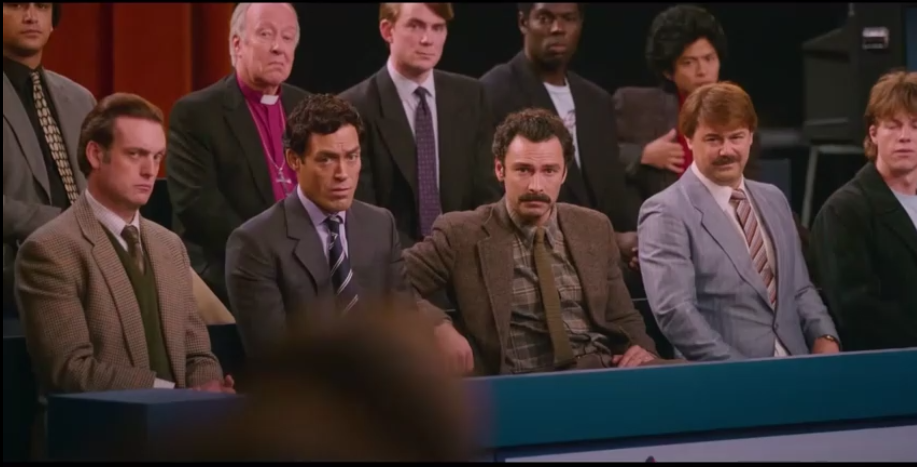
Welcome to the exciting world of Movie-Based Language Learning, where your favorite films become your classroom! In this article, we’ll dive into the vibrant vocabulary extracted from the hit movie Rivals, specifically from Rivals E08 (Final Episode). Whether you’re an intermediate learner aiming to advance or simply passionate about making language learning fun, this guide is tailored just for you. Plus, discover how our innovative language learning extension can elevate your experience seamlessly.
Vocabulary to Learn in This Article
- Consortium
- Franchise
- Stoicism
- Espionage
- Besotted
- Clinch
- Windfall
- Commune
- Squeeze out
- Pathetic
- Ragtag
- Brawling
- Frightened
- Prospect
- Blimey
1. Consortium
Original Movie Context
Dialogue: “We’re all adults. I’m not giving you up for the sake of any stupid franchise.”
Scene Description: Amidst a heated discussion about television franchises, the character emphasizes the importance of maintaining control over their existing network.
Word Breakdown
- Definition: A group formed by multiple entities (like companies or individuals) to work together on a common project or goal.
- Part of Speech: Noun
- Pronunciation: /kənˈsɔːr.si.əm/
- Etymology: Derived from the Latin word consortium, meaning “partnership” or “association.”
Examples:
- “Several universities formed a consortium to fund the new research center.”
- “The tech consortium aims to develop sustainable energy solutions.”
Contextual Usage
- Example Sentences:
- “A consortium of banks agreed to provide the necessary funding.”
- “She joined a consortium of artists collaborating on a mural.”
- Formal Speech:
- “The consortium will oversee the implementation of the project.”
- Informal Speech:
- “A bunch of companies formed a consortium to tackle the issue.”
- Common Collocations:
- Form a consortium
- Consortium agreement
- Academic consortium
Learning Insights
- Pronunciation Tip: Stress the second syllable: con-SOR-ti-um.
- Common Mistakes: Confusing “consortium” with “community.” Remember, a consortium is a formal group for a specific purpose.
- Cultural Nuances: Often used in business, academia, and technology contexts to describe collaborative efforts.
- Memorization Trick: Think of “consortium” as a team formed by different companies.
2. Franchise
Original Movie Context
Dialogue: “Regional television franchises are being renewed.”
Scene Description: Discussing the renewal of rights to operate a television network within a specific region.
Word Breakdown
- Definition: The rights granted to an individual or group to market a company’s goods or services in a particular territory.
- Part of Speech: Noun
- Pronunciation: /ˈfræn.tʃaɪz/
- Etymology: Originates from the Old French franchise, meaning “right” or “privilege.”
Examples:
- “She owns a franchise of the popular coffee chain.”
- “The fast-food franchise expanded to five new locations.”
Contextual Usage
- Example Sentences:
- “He decided to open a new franchise after successful training.”
- “Managing a franchise requires adherence to corporate standards.”
- Formal Speech:
- “The company is offering franchise opportunities in Europe.”
- Informal Speech:
- “I’m thinking about getting a franchise of that burger place.”
- Common Collocations:
- Fast-food franchise
- Franchise agreement
- Purchase a franchise
Learning Insights
- Pronunciation Tip: Emphasize the first syllable: FRAN-chise.
- Common Mistakes: Using “franchise” as a verb incorrectly; it’s primarily a noun.
- Cultural Nuances: Common in business contexts, especially in discussions about expansion and licensing.
- Memorization Trick: Link “franchise” with “fragrant cheese” to remember it’s about rights to a brand.
3. Stoicism
Original Movie Context
Dialogue: “I’ve been loyal all of these years, but even my stoicism has a limit.”
Scene Description: Expressing frustration while maintaining composure despite ongoing challenges.
Word Breakdown
- Definition: The endurance of pain or hardship without showing feelings or complaining.
- Part of Speech: Noun
- Pronunciation: /stiˈoʊ.sɪ.zəm/
- Etymology: From the ancient Greek philosophy of Stoicism, founded by Zeno of Citium.
Examples:
- “Her stoicism helped her get through the difficult times.”
- “He faced the challenges with remarkable stoicism.”
Contextual Usage
- Example Sentences:
- “Despite the chaos, she maintained her stoicism.”
- “His stoicism is admirable during crises.”
- Formal Speech:
- “The leader’s stoicism was pivotal in calming the team.”
- Informal Speech:
- “He just keeps his stoicism even when things get tough.”
- Common Collocations:
- Display stoicism
- Practice stoicism
- Stoic stoicism
Learning Insights
- Pronunciation Tip: Stress the second syllable: sto-IS-i-cum.
- Common Mistakes: Mispronouncing the word; remember the ‘o’ sounds.
- Cultural Nuances: Associated with philosophical resilience and emotional control.
- Memorization Trick: Think of “Stoic” as someone who doesn’t show feelings—stoicism.
4. Espionage
Original Movie Context
Dialogue: “Ginger did a little light espionage at Green Lawns.”
Scene Description: Referring to minor spying activities conducted by a character to gather information.
Word Breakdown
- Definition: The practice of spying or using spies to obtain secret information.
- Part of Speech: Noun
- Pronunciation: /ˌɛs.pi.əˈnɑːʒ/
- Etymology: From the French espionnage, derived from espion (spy).
Examples:
- “The novel revolves around international espionage.”
- “Corporate espionage can lead to significant losses.”
Contextual Usage
- Example Sentences:
- “He was caught engaging in espionage against the company.”
- “The film features thrilling scenes of espionage.”
- Formal Speech:
- “The government has stringent laws against espionage.”
- Informal Speech:
- “She’s obsessed with espionage movies.”
- Common Collocations:
- Engage in espionage
- Corporate espionage
- Espionage activities
Learning Insights
- Pronunciation Tip: Emphasize the third syllable: es-pi-o-NAGE.
- Common Mistakes: Confusing “espionage” with “explosion.” Remember it’s about spying.
- Cultural Nuances: Often linked to thrillers, intelligence agencies, and secrecy.
- Memorization Trick: Break it down to “espion” (spy) + “age” to remember it involves spying activities.

5. Besotted
Original Movie Context
Dialogue: “Beaver seems besotted with Miss Cook, doesn’t he?”
Scene Description: Observing a character’s intense infatuation with another person.
Word Breakdown
- Definition: Strongly infatuated or obsessed with someone.
- Part of Speech: Adjective
- Pronunciation: /bɪˈsɑː.t̬əd/
- Etymology: From the word besot, meaning to make foolishly infatuated.
Examples:
- “She is completely besotted with her new boyfriend.”
- “His besotted state was evident to everyone around him.”
Contextual Usage
- Example Sentences:
- “He’s besotted by her charm.”
- “Their besotted relationship is the talk of the town.”
- Formal Speech:
- “The ambassador appeared besotted during the negotiations.”
- Informal Speech:
- “He’s totally besotted with his favorite band.”
- Common Collocations:
- Be besotted with
- Become besotted
- Besotted look
Learning Insights
- Pronunciation Tip: Stress the second syllable: be-SOT-ted.
- Common Mistakes: Using it interchangeably with “infatuated”—though similar, “besotted” often implies a more foolish or excessive affection.
- Cultural Nuances: Commonly used to describe romantic obsession in literature and media.
- Memorization Trick: Link “besotted” with “soda”—imagine someone so sweet like soda they can’t get enough of it.
6. Clinch
Original Movie Context
Dialogue: “‘Rupert in clinch with cook’.”
Scene Description: Mentioned as a headline, indicating a close association or deal between characters.
Word Breakdown
- Definition: To secure a victory or agreement; to hold tightly.
- Part of Speech: Verb
- Pronunciation: /klɪntʃ/
- Etymology: From the Old French clinchier, meaning to secure or fasten.
Examples:
- “He managed to clinch the championship title.”
- “They clinch the deal after hours of negotiation.”
Contextual Usage
- Example Sentences:
- “She clenched the trophy tightly.”
- “The final goal clinched the win for the team.”
- Formal Speech:
- “The agreement was clinched during the summit.”
- Informal Speech:
- “They clinched the last ticket for the concert.”
- Common Collocations:
- Clinch a deal
- Clinch victory
- Clinch the title
Learning Insights
- Pronunciation Tip: Short and sharp sound: CLINCH.
- Common Mistakes: Confusing “clinch” with “clinch it” meaning to conclude something—focus on it meaning to secure.
- Cultural Nuances: Often used in sports and business contexts to describe decisive actions.
- Memorization Trick: Imagine a boxer clinching their opponent to secure a win.
7. Windfall
Original Movie Context
Dialogue: “The best way to take advantage of this little windfall is to pull apart every idea they’ve got.”
Scene Description: Discussing how to make the most of an unexpected benefit or opportunity.
Word Breakdown
- Definition: An unexpected and significant amount of money or benefit.
- Part of Speech: Noun
- Pronunciation: /ˈwɪnd.fɔːl/
- Etymology: From “windfall,” originally referring to fruit blown down by the wind, which was free for collection.
Examples:
- “She received a windfall when her favorite company went public.”
- “The inheritance was a generous windfall for the family.”
Contextual Usage
- Example Sentences:
- “Winning the lottery was a massive windfall for him.”
- “The unexpected windfall allowed them to renovate their home.”
- Formal Speech:
- “The windfall gain will significantly impact the company’s financials.”
- Informal Speech:
- “Getting that bonus was a sweet windfall.”
- Common Collocations:
- Receive a windfall
- Unexpected windfall
- Windfall profit
Learning Insights
- Pronunciation Tip: Emphasize the first syllable: WIND-fall.
- Common Mistakes: Mispronouncing “fall” as “foul”—remember it’s “fall.”
- Cultural Nuances: Often used in financial contexts to describe sudden gains.
- Memorization Trick: Think of “windfall” as something that falls from the wind—unexpected and free.
8. Commune
Original Movie Context
Dialogue: “People used to sit around the fire for their stories. Now we sit around the television. That is where we commune.”
Scene Description: Reflecting on how television has become the new gathering place for social interaction.
Word Breakdown
- Definition: To share one’s intimate thoughts or feelings with someone or to commune can mean to gather as a group.
- Part of Speech: Verb and Noun
- Pronunciation: /kəˈmjuːn/
- Etymology: From the Latin communis, meaning “common” or “shared.”
Examples:
- Verb: “They commune with nature during their hikes.”
- Noun: “The commune gathered to discuss their plans.”
Contextual Usage
- Example Sentences:
- Verb: “We like to commune by the lake every summer.”
- Noun: “The artist joined a commune to foster creativity.”
- Formal Speech:
- “They commune regularly to share their experiences.”
- Informal Speech:
- “Let’s commune over coffee and catch up.”
- Common Collocations:
- Commune with nature
- Communal commune
- Spiritual commune
Learning Insights
- Pronunciation Tip: Smooth flow: com-MUNE.
- Common Mistakes: Mixing up “commune” (to gather) with “communicate.” Remember, “commune” involves a deeper sharing.
- Cultural Nuances: Associated with deep conversations and spiritual gatherings.
- Memorization Trick: Link “commune” with “common ground” to remember it’s about sharing and gathering.
9. Squeeze Out
Original Movie Context
Dialogue: “They just squeeze us out like toothpaste.”
Scene Description: Expressing frustration about being gradually pushed aside in a situation.
Word Breakdown
- Definition: To remove or eliminate something gradually.
- Part of Speech: Phrasal Verb
- Pronunciation: /skwiːz aʊt/
- Etymology: Combines the verb “squeeze” with the preposition “out,” implying forcefully removing something.
Examples:
- “The new policies aim to squeeze out inefficiencies.”
- “Small businesses are being squeezed out by larger corporations.”
Contextual Usage
- Example Sentences:
- “They tried to squeeze out all the remaining resources.”
- “Market changes are squeezing out older models.”
- Formal Speech:
- “The regulation will squeeze out non-compliant firms.”
- Informal Speech:
- “It’s hard to squeeze out time for hobbies these days.”
- Common Collocations:
- Squeeze out competition
- Squeeze out resources
- Squeeze out remaining
Learning Insights
- Pronunciation Tip: Clear pronunciation of both words: squeeze OUT.
- Common Mistakes: Using “squeeze out” interchangeably with “force out”—while similar, “squeeze out” often implies gradual removal.
- Cultural Nuances: Frequently used in business and economic contexts to describe competitive pressures.
- Memorization Trick: Imagine squeezing toothpaste out of a tube to remember the gradual, forceful removal.

10. Ragtag
Original Movie Context
Dialogue: “Ragtag sort of bunch, aren’t they?”
Scene Description: Describing a disorganized or diverse group of people in a light-hearted manner.
Word Breakdown
- Definition: Disorganized or incongruously varied in character.
- Part of Speech: Adjective
- Pronunciation: /ˈræɡ.tæɡ/
- Etymology: Combines “rag” (a torn piece of cloth) with “tag,” suggesting a mixed or jumbled group.
Examples:
- “The team was a ragtag assortment of players from different backgrounds.”
- “They traveled with a ragtag crew of volunteers.”
Contextual Usage
- Example Sentences:
- “She assembled a ragtag group to tackle the project.”
- “Their ragtag band played at local venues.”
- Formal Speech:
- “The initiative was launched by a ragtag committee.”
- Informal Speech:
- “Look at this ragtag bunch we have here!”
- Common Collocations:
- Ragtag group
- Ragtag team
- Ragtag assortment
Learning Insights
- Pronunciation Tip: Emphasize the first syllable: RAG-tag.
- Common Mistakes: Mispronouncing the second syllable; ensure “tag” sounds clear.
- Cultural Nuances: Often used affectionately to describe groups that are diverse or not formally organized.
- Memorization Trick: Think of a “ragged tag” representing a mismatched, diverse group.
With Movie-Based Language, every scene becomes an opportunity to discover and practice new words in context.
11. Brawling
Original Movie Context
Dialogue: “Brawling and boozing and bedding other people’s wives.”
Scene Description: Highlighting negative behaviors within a group, emphasizing conflict and misconduct.
Word Breakdown
- Definition: Engaging in noisy, aggressive fighting; fighting physically.
- Part of Speech: Verb (present participle of “brawl”)
- Pronunciation: /ˈbrɔː.lɪŋ/
- Etymology: From the Old English brǣl, meaning “a rough or noisy fight.”
Examples:
- “The fans were brawling outside the stadium after the match.”
- “He got into a brawling dispute over the parking spot.”
Contextual Usage
- Example Sentences:
- “They were brawling in the back of the bar.”
- “The crowd started brawling as tensions rose.”
- Formal Speech:
- “The incident involved brawling among the participants.”
- Informal Speech:
- “There was some brawling at the concert last night.”
- Common Collocations:
- Brawling fight
- Brawling dispute
- Brawling crowd
Learning Insights
- Pronunciation Tip: Ensure a strong ‘br’ sound: BRAWL-ing.
- Common Mistakes: Confusing “brawling” with “rowing”—remember it’s about fighting.
- Cultural Nuances: Often associated with unruly behavior in social settings like bars, events, or gatherings.
- Memorization Trick: Link “brawling” with “rawlings” (fighting), emphasizing the aggressive aspect.
Our platform leverages Movie-Based Language resources to make studying English both effective and entertaining.
12. Frightened
Original Movie Context
Dialogue: “I got scared, but I couldn’t get out of the car. I’m sorry.”
Scene Description: A character apologizes for not being able to leave the car due to fear.
Word Breakdown
- Definition: Feeling afraid or scared.
- Part of Speech: Adjective
- Pronunciation: /ˈfraɪ.tənd/
- Etymology: From the verb “frighten,” derived from the Middle English frighte, meaning “fear.”
Examples:
- “She was frightened by the loud noise.”
- “The child looked frightened during the storm.”
Contextual Usage
- Example Sentences:
- “He felt frightened walking alone at night.”
- “The sudden appearance left them frightened.”
- Formal Speech:
- “The report indicated that many residents are frightened by the recent events.”
- Informal Speech:
- “I was really frightened during the horror movie.”
- Common Collocations:
- Frightened by
- Look frightened
- Feel frightened
Learning Insights
- Pronunciation Tip: Stress the first syllable: FRIGHT-end.
- Common Mistakes: Mispronouncing the ‘gh’ as a hard ‘g’—remember it’s silent.
- Cultural Nuances: Commonly used to describe emotional states in various contexts, from everyday fears to intense horror scenarios.
- Memorization Trick: Associate “frightened” with “frightening” to remember it describes being scared.
By integrating Movie-Based Language techniques, learners can experience authentic dialogues that enhance their comprehension skills.
13. Prospect
Original Movie Context
Dialogue: “Would you just go in and see she’s all right? Oh… …I think you could go in if it’s your wife, Paul.”
Scene Description: A character is contemplating the future possibilities and outcomes related to family dynamics.
Word Breakdown
- Definition: The possibility or likelihood of some future event occurring.
- Part of Speech: Noun
- Pronunciation: /ˈprɑː.spɛkt/
- Etymology: From Latin prospectus, meaning “a view” or “outlook.”
Examples:
- “The job offers great prospects for career growth.”
- “They are optimistic about the prospects of their new business.”
Contextual Usage
- Example Sentences:
- “She looked forward to the prospects of moving abroad.”
- “The prospects of rain have dampened their plans.”
- Formal Speech:
- “The economic prospects for the next quarter are promising.”
- Informal Speech:
- “What are your prospects for getting that promotion?”
- Common Collocations:
- Career prospects
- Bright prospects
- Prospects of
Learning Insights
- Pronunciation Tip: Emphasize the first syllable: PROS-pect.
- Common Mistakes: Confusing “prospect” with “prosper”—remember, “prospect” refers to potential events or outcomes.
- Cultural Nuances: Often used in discussions about future opportunities and potential scenarios.
- Memorization Trick: Link “prospect” with “prosperous outlook” to remember it involves future possibilities.
Movie-Based Language learning offers a unique way to absorb new vocabulary while enjoying your favorite films.

14. Blimey
Original Movie Context
Dialogue: “Blimey.”
Scene Description: An exclamation expressing surprise or disbelief.
Word Breakdown
- Definition: A British informal exclamation used to express surprise, shock, or disbelief.
- Part of Speech: Interjection
- Pronunciation: /ˈblaɪ.mi/
- Etymology: A euphemism for “God blind me,” softened over time to “blimey.”
Examples:
- “Blimey, that’s a huge spider!”
- “He ran past me so quickly—blimey!”
Contextual Usage
- Example Sentences:
- “Blimey, I didn’t see you there!”
- “Blimey, that’s expensive!”
- Formal Speech:
- Not typically used in formal contexts; more suited to casual conversations.
- Informal Speech:
- “You got tickets? Blimey, lucky you!”
- Common Collocations:
- Blimey! That’s amazing!
- Oh, blimey!
- Blimey, I forgot my keys.
Learning Insights
- Pronunciation Tip: Smooth and short: BLY-mee.
- Common Mistakes: Mispronouncing it as “blimy”—ensure clarity in the ‘me’ part.
- Cultural Nuances: A quintessentially British expression, adding local flavor and authenticity to dialogues.
- Memorization Trick: Think of “blimey” as a blend of “blimey” and “surprised me” to remember its use in expressing shock.
Making Language Learning Fun and Accessible
Learning English through Movie-Based Language is not only effective but also incredibly enjoyable. By immersing yourself in the context of Rivals, you can grasp new vocabulary in a natural and memorable way. Imagine watching your favorite scenes and effortlessly picking up words like “consortium” or “brawling” without even realizing it!
But why stop there? Enhance your learning journey with our language learning extension AppForLanguage.com. Features like the Mouse Dictionary allow you to hover over words for instant definitions, making every viewing session a rich learning experience. Plus, with Fluency Gym, you can practice your speaking and listening skills interactively, turning passive watching into active learning.
Embrace Technology in Your Language Learning
Our product is designed to integrate seamlessly into your movie-watching routine, making Movie-Based Language Learning more effective than ever. Whether it’s displaying multiple subtitles for comparison or saving new words for later review, every feature is crafted to support your language goals. Imagine pausing after each sentence to auto-play your new vocabulary or jumping to a specific dialogue for focused study—all at your fingertips.
Explore Our Unique Fluency Gym Feature
Fluency Gym is your path to mastering English. It transforms movie dialogues into interactive language challenges, helping you move from intermediate to advanced levels with ease. Guess, listen, and speak alongside native speakers, making your learning journey both fun and effective.
Check Out Our Previous Articles
If you enjoyed learning with Rivals, explore our related articles:
- Master 15 Essential Vocabulary Words with Rival Episode01: A Fun Approach to Language Learning Films
- Rival S01E03: 12 Essential Vocabulary Words to Learn Through Movie Dialogues
- Master Essential Vocabulary with Rival E05: Learn Languages Movies Made Fun!
- Mastering Vocabulary with Rivals E06: 15 Essential Words from Movie Language Practice
Each article offers unique insights and strategies to enhance your Movie-Based Language learning experience.
Emphasize How Technology Can Transform Language Learning
In today’s digital age, leveraging technology is key to efficient and enjoyable language acquisition. Our language learning extension empowers you to take control of your learning journey, making every movie a stepping stone towards fluency. From auto-pausing for better comprehension to word pronunciation features, our tools are designed to support your success.
Ready to Elevate Your Language Skills?
Embark on an exciting journey with our language learning extension AppForLanguage.com. Whether you’re watching Rivals or any other foreign film, our tools make Movie-Based Language Learning effortless and enjoyable. Dive into our Fluency Gym today and transform the way you learn English!
Soft Introduction to Our Language Learning Extension:
- Discover New Words Effortlessly: With our Mouse Dictionary, every unfamiliar word becomes a learning opportunity.
- Compare Subtitles Easily: Display second subtitles to see translations side by side.
- Customize Your Viewing Experience: Move subtitles independently to suit your learning style.
- Save and Review Words: Save words you learn for future study, ensuring retention.
- Interactive Learning with Fluency Gym: Engage with real-time dialogues to enhance speaking and listening skills.
- Flexible Subtitle Options: Upload your own subtitles or use machine translation for comprehensive learning.
- Export for Offline Study: Download subtitles in various formats to study anytime, anywhere.
- Control Playback for Better Comprehension: Use auto-pause to process each sentence thoroughly.
- Personalized Learning Environment: Adjust font size and color for optimal readability.
- Share and Collaborate: Share subtitles with friends or study groups effortlessly.
Conclusion
Movie-Based Language Learning offers a dynamic and engaging way to expand your English vocabulary. By exploring words from Rivals, you’ve taken a step towards mastering the language in a fun and contextual manner. Pair this approach with our advanced language learning extension to maximize your learning potential. Embrace technology, enjoy your favorite movies, and watch your language skills flourish!
Ready to transform your language learning journey? Visit AppForLanguage.com today and unlock a world of opportunities with our innovative tools!