
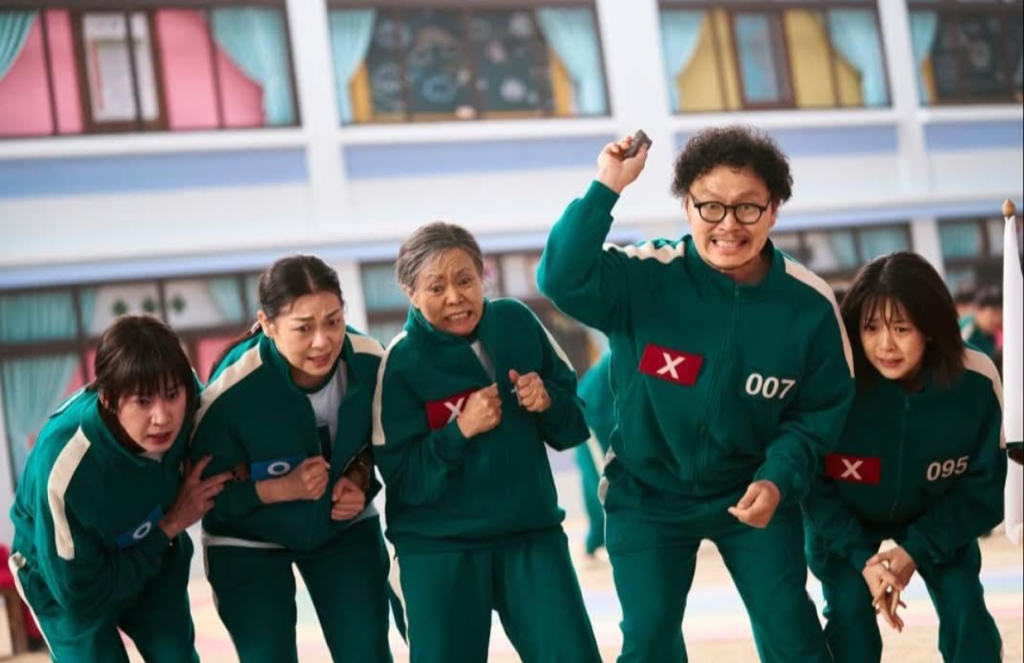
“This image shows a shiny pom-pom prop from Squid Game S02E05, symbolizing fun and excitement, while learning language through films with our extension.”
Are you ready to elevate your English skills while enjoying your favorite shows? Language Through Films offers an exciting way to learn new vocabulary, and Squid Game S02E05 is the perfect choice to dive into. In this article, we’ll explore 12 essential words and phrases extracted directly from the movie, helping you enhance your language learning journey with context, humor, and practical examples.
Vocabulary to Learn in This Article
- Pull ourselves together
- No fun passing everything without a hitch
- Cheapskate
- Asshole
- Ally
- Mercenary
- Huddle up
- Break the rules
- Steer clear
- Victory at all costs
- Ddakji
- Noona
Let’s dive into each of these vocabulary words and phrases, unpacking their meanings, usage, and the context in which they appear in Squid Game S02E05.
1. Pull Ourselves Together
Original Movie Context
- Subtitle/Dialog: “We have to end the games here. I will help you guys out when we get out. Please trust me and support this vote. Guys, all huddle up again. In one, two, three. Victory at all costs!”
- Scene Description: In a tense moment, Gi-hun urges his team to regain composure and work together to survive the deadly games.
- Emotional Tone: Determined and calming amidst chaos.
Word Breakdown
- Definition: To regain self-control and composure after being upset or distracted.
- Part of Speech: Verb phrase
- Pronunciation: /pʊl aʊərˈsɛlvz təˈɡɛðər/
- Etymology: Combines the verb “pull” with “ourselves” and “together,” emphasizing collective effort.
Examples:
- After hearing the bad news, she took a deep breath to pull herself together.
- The team needs to pull themselves together before the next challenge.
Contextual Usage
- Example Sentences:
- “Everyone, let’s pull ourselves together and focus on the task at hand.”
- “He struggled to pull himself together after the argument.”
- Formal/Informal Variations:
- Formal: “We need to regain our composure.”
- Informal: “Come on, let’s pull ourselves together.”
- Common Collocations:
- Pull together
- Pull oneself together
Learning Insights
- Pronunciation Tips: Emphasize the stress on “ourselves” and “together.”
- Common Mistakes: Mixing up “pull together” with “pull ourselves together.”
- Cultural Nuances: Often used in team settings to encourage unity and resilience.
- Memorization Tricks: Visualize a group of people physically pulling themselves up to regain balance.
By leveraging Language Through Films, you can turn your favorite shows into powerful learning tools that make mastering English both fun and effective.
2. No Fun Passing Everything Without a Hitch
Original Movie Context
- Subtitle/Dialog: “It’s okay, we’ve got enough time. Let’s go pick it up. Ready, go. No fun passing everything without a hitch.”
- Scene Description: Jungbae motivates his team to embrace challenges, suggesting that overcoming obstacles makes the experience more rewarding.
- Emotional Tone: Encouraging and strategic.
Word Breakdown
- Definition: Finding enjoyment in facing and overcoming challenges rather than having everything go smoothly.
- Part of Speech: Idiomatic expression
- Pronunciation: /noʊ fʌn ˈpæsɪŋ ˈɛvrɪθɪŋ wɪˈðaʊt ə hɪtʃ/
- Etymology: “Without a hitch” means without any problems or delays, originating from nautical terms where “hitch” referred to a snag or obstacle.
Examples:
- She believes no fun passing everything without a hitch, so she always looks for new challenges.
- Life is more exciting when there’s no fun passing everything without a hitch.
Contextual Usage
- Example Sentences:
- “If everything went smoothly, it would be no fun passing everything without a hitch.”
- “He thrives on difficulty because no fun passing everything without a hitch.”
- Formal/Informal Variations:
- Formal: “Overcoming challenges adds value to the experience.”
- Informal: “It’s no fun passing everything without a hitch.”
- Common Collocations:
- Pass without a hitch
- No fun dealing with
Learning Insights
- Pronunciation Tips: Stress on “without a hitch.”
- Common Mistakes: Misinterpreting “without a hitch” as “with a hitch.”
- Cultural Nuances: Reflects a mindset that values growth through adversity.
- Memorization Tricks: Imagine trying to pass a smooth path vs. a rocky one and choosing the rocky path for the thrill.
Our approach to Language Through Films ensures that every moment you spend watching is an opportunity to expand your vocabulary and understanding.
3. Cheapskate
Original Movie Context
- Subtitle/Dialog: “Seong Gihun, the cheapskate of Ssangmundong.”
- Scene Description: Jungbae teases Gihun for being frugal, lightening the mood among teammates.
- Emotional Tone: Playful teasing.
Word Breakdown
- Definition: A person who is reluctant to spend money; excessively frugal.
- Part of Speech: Noun
- Pronunciation: /ˈtʃiːpskeɪt/
- Etymology: Combines “cheap” with the diminutive “-skate,” similar to “hipster.”
Examples:
- Don’t be such a cheapskate; let’s go out for dinner.
- He’s known as a cheapskate among his friends.
Contextual Usage
- Example Sentences:
- “She’s a total cheapskate when it comes to buying gifts.”
- “Don’t act like a cheapskate; contribute to the group expense.”
- Formal/Informal Variations:
- Formal: “He is very frugal.”
- Informal: “Don’t be a cheapskate.”
- Common Collocations:
- Cheapskate behavior
- Act like a cheapskate
Learning Insights
- Pronunciation Tips: Emphasize the first syllable: CHEAPskate.
- Common Mistakes: Mispronouncing the first syllable as “cheap” vs. “cheep.”
- Cultural Nuances: Often used humorously among friends but can be offensive if used seriously.
- Memorization Tricks: Think of someone pinching pennies and refusing to spend.
Embracing Language Through Films allows learners to naturally absorb new words and phrases within engaging storylines.
4. Asshole
Original Movie Context
- Subtitle/Dialog: “That asshole ruined my fucking life!”
- Scene Description: Yongsik vents his anger towards someone who caused him significant distress.
- Emotional Tone: Frustrated and angry.
Word Breakdown
- Definition: A derogatory term for someone who is unpleasant or mean.
- Part of Speech: Noun
- Pronunciation: /ˈæsˌhoʊl/
- Etymology: Originates from the term for the anus, used metaphorically to describe someone with a negative personality.
Examples:
- Don’t be an asshole; treat others with respect.
- She called him an asshole after he refused to help.
Contextual Usage
- Example Sentences:
- “He acted like an asshole during the meeting.”
- “You’re such an asshole for not apologizing.”
- Formal/Informal Variations:
- Formal: “He is very unpleasant.”
- Informal: “Don’t be an asshole.”
- Common Collocations:
- Act like an asshole
- Call someone an asshole
Learning Insights
- Pronunciation Tips: Clear “ass” and strong “hole” sound.
- Common Mistakes: Using it in formal contexts where it’s inappropriate.
- Cultural Nuances: Highly offensive; use with caution and awareness of the setting.
- Memorization Tricks: Link the harshness of the term to strong negative feelings.
With Language Through Films, you immerse yourself in authentic dialogues, making it easier to grasp colloquial expressions and cultural nuances.
5. Ally
Original Movie Context
- Subtitle/Dialog: “Gi-hun allies with Jung-bae, Jun-hee, and Players 001 and 388.”
- Scene Description: Gi-hun forms strategic partnerships with other players to increase their chances of survival.
- Emotional Tone: Cooperative and strategic.
Word Breakdown
- Definition: To join or unite with others for a common purpose.
- Part of Speech: Verb
- Pronunciation: /ˈælaɪ/
- Etymology: From Old French “alier,” meaning to align or join.
Examples:
- They decided to ally with neighboring tribes for mutual protection.
- She allied herself with the environmental group to support their cause.
Contextual Usage
- Example Sentences:
- “The countries ally to form a stronger defense.”
- “He chose to ally with like-minded individuals.”
- Formal/Informal Variations:
- Formal: “They formed an alliance.”
- Informal: “Let’s ally up for this project.”
- Common Collocations:
- Ally with
- Ally against
Learning Insights
- Pronunciation Tips: Stress the first syllable: ALly.
- Common Mistakes: Confusing “ally” (verb) with “ally” (noun).
- Cultural Nuances: Often used in political or strategic contexts.
- Memorization Tricks: Think of “ally” as “a-ly,” someone who is ‘allied’ or connected to you.
Integrating Language Through Films into your study routine transforms passive watching into an active learning experience.
6. Mercenary
Original Movie Context
- Subtitle/Dialog: “Meanwhile, Jun-ho and Woo-seok, now with an expanded mercenary team, continue their search for the island.”
- Scene Description: Jun-ho and Woo-seok hire professional soldiers to aid in their mission.
- Emotional Tone: Determined and tactical.
Word Breakdown
- Definition: A soldier hired to serve in a foreign army or for personal gain.
- Part of Speech: Noun
- Pronunciation: /məˈsɛnəri/
- Etymology: From Latin “mercenarius,” meaning hired or paid.
Examples:
- The company hired mercenaries to protect their assets.
- Mercenary soldiers often work for the highest bidder.
Contextual Usage
- Example Sentences:
- “They employed mercenaries to secure the area.”
- “The conflict was exacerbated by the influx of mercenaries.”
- Formal/Informal Variations:
- Formal: “Hired military personnel.”
- Informal: “They brought in mercenaries to help out.”
- Common Collocations:
- Mercenary soldiers
- Hire mercenaries
Learning Insights
- Pronunciation Tips: Emphasize the second syllable: mer-CEN-ary.
- Common Mistakes: Mispronouncing the stress, e.g., MER-cen-ary.
- Cultural Nuances: Can carry negative connotations due to associations with greed and lack of loyalty.
- Memorization Tricks: Picture a soldier with a briefcase—someone hired rather than loyal.
Through Language Through Films, you can connect with characters and scenarios that bring new vocabulary to life.
7. Huddle Up
Original Movie Context
- Subtitle/Dialog: “Guys, all huddle up again.”
- Scene Description: Gi-hun calls his team to gather closely for a strategy meeting.
- Emotional Tone: Cooperative and focused.
Word Breakdown
- Definition: To gather closely together, often to discuss strategy or provide support.
- Part of Speech: Verb phrase
- Pronunciation: /ˈhʌdəl ʌp/
- Etymology: Derived from the noun “huddle,” meaning a close gathering, often used in sports.
Examples:
- The team decided to huddle up before the big game.
- Let’s huddle up and plan our next move.
Contextual Usage
- Example Sentences:
- “Before the presentation, we need to huddle up.”
- “The players huddled up to discuss their strategy.”
- Formal/Informal Variations:
- Formal: “Let’s gather for a brief meeting.”
- Informal: “Come on, huddle up and let’s talk.”
- Common Collocations:
- Huddle up together
- Huddle up for strategy
Learning Insights
- Pronunciation Tips: Smooth transition between “huddle” and “up.”
- Common Mistakes: Separating the phrase incorrectly, e.g., “huddle up” vs. “huddle-up.”
- Cultural Nuances: Commonly used in sports, military, and team settings.
- Memorization Tricks: Visualize a team pulling together in a circle to plan.
Our platform utilizes Language Through Films to provide a dynamic and interactive way to enhance your English skills.
8. Break the Rules
Original Movie Context
- Subtitle/Dialog: “What the hell is this? You’re breaking the rules.”
- Scene Description: A masked soldier confronts Noeul for not following game protocols.
- Emotional Tone: Authoritative and confrontational.
Word Breakdown
- Definition: To not follow established guidelines or regulations.
- Part of Speech: Verb phrase
- Pronunciation: /breɪk ðə rulz/
- Etymology: “Break” meaning to violate, combined with “the rules.”
Examples:
- He decided to break the rules to achieve his goals.
- She was punished for breaking the rules.
Contextual Usage
- Example Sentences:
- “If you break the rules, there will be consequences.”
- “Sometimes, innovators need to break the rules.”
- Formal/Informal Variations:
- Formal: “Violating the regulations.”
- Informal: “You’re breaking the rules.”
- Common Collocations:
- Break the law
- Break the rules deliberately
Learning Insights
- Pronunciation Tips: Clear articulation of “break” and “rules.”
- Common Mistakes: Misusing “break” with incorrect objects, e.g., “break a rule.”
- Cultural Nuances: Often implies a negative action, but can sometimes relate to creative innovation.
- Memorization Tricks: Imagine someone literally breaking a rulebook.
Using Language Through Films, you can effortlessly build your language proficiency while enjoying captivating movie plots.
9. Steer Clear
Original Movie Context
- Subtitle/Dialog: “You should’ve steered clear if you weren’t going to help.”
- Scene Description: An antagonist advises others to avoid involvement unless they intend to assist.
- Emotional Tone: Warning and assertive.
Word Breakdown
- Definition: To deliberately avoid someone or something.
- Part of Speech: Phrasal verb
- Pronunciation: /stɪr klɪər/
- Etymology: “Steer” meaning to guide, combined with “clear,” indicating avoidance.
Examples:
- You’d better steer clear of that area at night.
- She decided to steer clear of gossip at work.
Contextual Usage
- Example Sentences:
- “To avoid trouble, steer clear of those people.”
- “He steered clear of the argument to maintain peace.”
- Formal/Informal Variations:
- Formal: “Avoid that situation.”
- Informal: “Just steer clear of it.”
- Common Collocations:
- Steer clear of
- Steer clear for safety
Learning Insights
- Pronunciation Tips: Smooth transition between “steer” and “clear.”
- Common Mistakes: Misplacing the object, e.g., “steer clear him” instead of “steer clear of him.”
- Cultural Nuances: Used to advise caution and avoidance, often in safety contexts.
- Memorization Tricks: Picture someone steering a boat away from a rocky shore.
10. Victory at All Costs
Original Movie Context
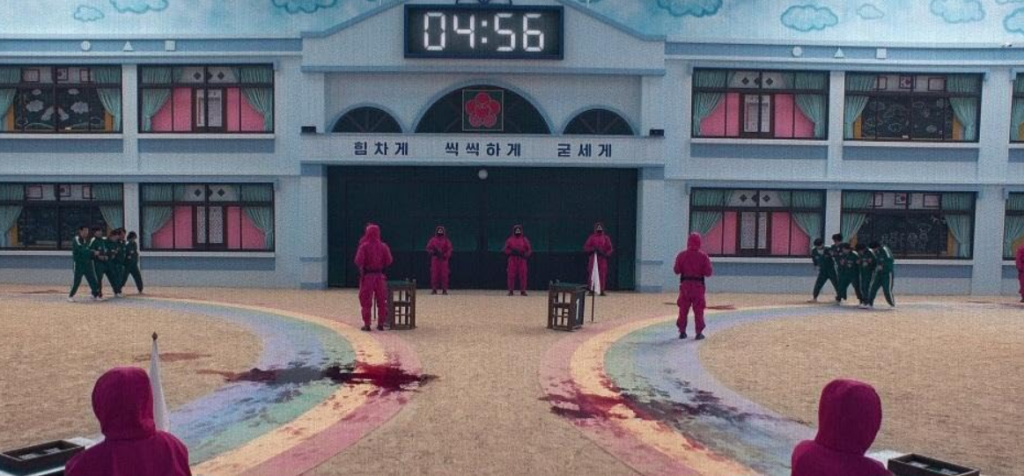
- Subtitle/Dialog: “Victory at all costs!”
- Scene Description: The team chants this phrase to reinforce their determination to win the deadly game.
- Emotional Tone: Motivational and desperate.
Word Breakdown
- Definition: An unwavering determination to achieve success, regardless of the means or consequences.
- Part of Speech: Idiomatic expression
- Pronunciation: /ˈvɪktəri æt ɔl kɔsts/
- Etymology: Combines “victory” with “at all costs,” emphasizing relentless pursuit.
Examples:
- Their mantra was victory at all costs.
- The team embraced a victory at all costs mentality.
Contextual Usage
- Example Sentences:
- “In the competition, they adopted a victory at all costs approach.”
- “His victory at all costs attitude alienated his teammates.”
- Formal/Informal Variations:
- Formal: “Achieving success regardless of the consequences.”
- Informal: “Victory at all costs!”
- Common Collocations:
- Victory at all costs mentality
- Chase victory at all costs
Learning Insights
- Pronunciation Tips: Emphasize each word clearly, especially “victory.”
- Common Mistakes: Misplacing “at all costs” in the sentence.
- Cultural Nuances: Reflects extreme dedication, sometimes criticized for ethical compromises.
- Memorization Tricks: Visualize a team determined to win no matter what obstacles arise.
Language Through Films not only improves your listening skills but also enriches your conversational abilities with practical examples.
11. Ddakji
Original Movie Context
- Subtitle/Dialog: “I used to play Ddakji with my friends when I was a kid.”
- Scene Description: A player reminisces about playing a traditional Korean game, highlighting cultural heritage.
- Emotional Tone: Nostalgic and reflective.
Word Breakdown
- Definition: A traditional Korean game involving flipping folded paper tiles by hitting them with another tile.
- Part of Speech: Noun
- Pronunciation: /ˈtækdʒi/
- Etymology: From Korean “딱지,” referring to the paper tiles used in the game.
Examples:
- They spent the afternoon playing Ddakji in the park.
- Ddakji requires skill and strategy to win.
Contextual Usage
- Example Sentences:
- “During recess, children often play Ddakji together.”
- “Learning Ddakji can improve hand-eye coordination.”
- Formal/Informal Variations:
- Formal: “The traditional game of Ddakji.”
- Informal: “Let’s play some Ddakji!”
- Common Collocations:
- Play Ddakji
- Ddakji game
Learning Insights
- Pronunciation Tips: “Ddakji” is pronounced with a hard “t” sound, similar to “duck-gee.”
- Common Mistakes: Pronouncing it with a soft “d” sound.
- Cultural Nuances: Symbolizes childhood and camaraderie in Korean culture.
- Memorization Tricks: Picture kids tossing paper tiles and strategizing their flips.
Discover the benefits of Language Through Films and watch your English fluency grow alongside your favorite series.
12. Noona
Original Movie Context
- Subtitle/Dialog: “Hey, call her noona since she’s older.”
- Scene Description: Characters navigate social hierarchies by using respectful terms.
- Emotional Tone: Respectful and familiar.
Word Breakdown
- Definition: A Korean term used by males to address older females, reflecting respect and familiarity.
- Part of Speech: Noun
- Pronunciation: /ˈnoʊnɑ/
- Etymology: Derived from Korean “누나,” meaning older sister, used by males.
Examples:
- He always calls his friend’s older sister noona.
- Noona, can you help me with my homework?
Contextual Usage
- Example Sentences:
- “When greeting her older female friend, he says noona.”
- “In Korean culture, using noona shows respect to older females.”
- Formal/Informal Variations:
- Formal: “Addressing someone older with respect.”
- Informal: “Using noona as a term of endearment.”
- Common Collocations:
- Call someone noona
- Respectful term noona
Learning Insights
- Pronunciation Tips: Emphasize the first syllable: NOOna.
- Common Mistakes: Mispronouncing the second syllable or using it incorrectly in English contexts.
- Cultural Nuances: Reflects Korean social structures and familial bonds; not directly translatable.
- Memorization Tricks: Link “noona” to the concept of an older sister in Korean culture.

Making Language Learning Fun and Accessible
Learning English through films like Squid Game S02E05 transforms the process into an engaging and immersive experience. By encountering words and phrases in their natural context, you not only understand their meanings but also see how they’re used in real-life situations. Plus, with tools like our language learning extension at FunFluen.com, you can enhance this journey even further.
How Our Extension Enhances Your Learning
Imagine watching Squid Game S02E05 and effortlessly saving new words like “cheapskate” or “huddle up” with just a click. Our extension offers features such as:
- Mouse Dictionary: Hover over any word in the subtitle to see instant definitions, making vocabulary building seamless.
- Save Words: Easily save new vocabulary for future review, ensuring you retain what you learn.
- Fluency Gym: Dive into our innovative feature designed to boost your reading, listening, and speaking skills through interactive movie dialogues.
Why Choose Fluency Gym?
Fluency Gym transforms passive vocabulary into active language skills. Whether you’re in Reading Mode building words, Listening Mode enhancing ear training, or Speaking Mode perfecting pronunciation, Fluency Gym offers a dynamic and enjoyable way to master English. Say goodbye to boring textbooks and hello to an immersive learning adventure!
Related Articles You Might Enjoy
Expand your learning journey with our previous articles that explore language learning through popular series and films:
- Language Learning with Netflix: 12 Must-Know Words from Squid Game S01 E03
- Mastering English Vocabulary with Squid Game S01 E06: Your Ultimate Learning Guide
- Master English Vocabulary with “Squid Game S01 E09”: A Language Learning Adventure with Netflix
- Language Learning With Netflix: Boost Your Vocabulary with Squid Game S02E02
Each article offers a unique perspective on how to harness the power of your favorite shows for effective language learning.
Embrace Technology to Transform Your Language Learning
In today’s digital age, technology can revolutionize how you learn languages. By integrating tools like our language learning extension, you can make the process interactive, efficient, and enjoyable. Whether you’re watching Squid Game S02E05 or any other engaging film, our features ensure you maximize every learning opportunity.
Ready to take your English skills to the next level? Visit FunFluen.com and discover how our extension can become your ultimate language learning companion. Start learning through films today and enjoy a fun, immersive journey to fluency!
Call to Action:
Don’t miss out on the chance to enhance your language skills effortlessly. Try our language learning extension at FunFluen.com and experience the benefits of learning English through your favorite movies. With features like Fluency Gym, Mouse Dictionary, and Save Words, your path to mastering English has never been more exciting. Join our community of motivated learners and transform your language journey today!