
Are you ready to take your English skills to the next level while enjoying your favorite shows? Film Vocabulary Builder is here to transform your language learning experience! In this article, we’ll dive into Squid Game S02E02, exploring 15 carefully selected vocabulary words that will enhance your understanding and usage of everyday English. Whether you’re watching Netflix for entertainment or leveraging it as a powerful language learning tool, this guide is perfect for you. Plus, discover how our innovative language learning extension can make your journey even more effective and enjoyable.
Vocabulary to Learn in This Article
- Foreboding
- Eloquent
- Ventilation
- Resent
- Skeptical
- Derogatory
- Expletive
- Obligation
- Meticulous
- Resilient
- Collateral
- Conspiracy
- Demanding
- Repercussion
- Ambiguous
1. Foreboding
Original Movie Context
“[foreboding music playing]”
Scene Description and Emotional Tone: In a tense moment, foreboding music sets a suspenseful atmosphere, hinting that something bad is about to happen.
Word Breakdown
- Definition: A feeling that something harmful or unpleasant is going to happen.
- Part of Speech: Noun
- Pronunciation: /fɔːrˈboʊdɪŋ/
- Etymology: From Old English forbodian, meaning to prohibit or warn against.
Examples:
- The dark clouds gave a sense of foreboding.
- Her silence was filled with foreboding about the upcoming exam.
Contextual Usage
- Formal: The report carried a foreboding message about the economy.
- Informal: Walking into the haunted house felt pretty foreboding.
- Common Collocations: Sense of foreboding, foreboding atmosphere, foreboding feeling.
Learning Insights
- Pronunciation Tip: Emphasize the second syllable: for-BOH-ding.
- Common Mistake: Mispronouncing the first syllable as “for” instead of “fore.”
- Memorization Trick: Associate “foreboding” with “fore warning” to remember its meaning.
With our Film Vocabulary Builder, you can effortlessly expand your English skills while enjoying thrilling episodes like Squid Game S02E02
2. Eloquent
Original Movie Context
“You’ve become more eloquent.”
Scene Description and Emotional Tone: A character remarks on another’s improved speaking skills, highlighting their persuasive and fluent communication.
Word Breakdown
- Definition: Fluent or persuasive in speaking or writing.
- Part of Speech: Adjective
- Pronunciation: /ˈɛləkwənt/
- Etymology: From Latin eloquentia, meaning fluent or persuasive speech.
Examples:
- Her eloquent speech moved the audience to tears.
- The lawyer presented an eloquent argument in court.
Contextual Usage
- Formal: The politician’s eloquent discourse impressed the committee.
- Informal: He’s so eloquent; he can talk about anything effortlessly.
- Common Collocations: Eloquent speaker, eloquent expression, eloquent writing.
Learning Insights
- Pronunciation Tip: Stress the first syllable: EL-o-quent.
- Common Mistake: Misplacing the stress on the second syllable.
- Memorization Trick: Think of “eloquent” as “elite spoken” to remember its meaning.
Imagine enhancing your vocabulary without even realizing it—our Film Vocabulary Builder makes language learning as enjoyable as watching your favorite shows.
3. Ventilation
Original Movie Context
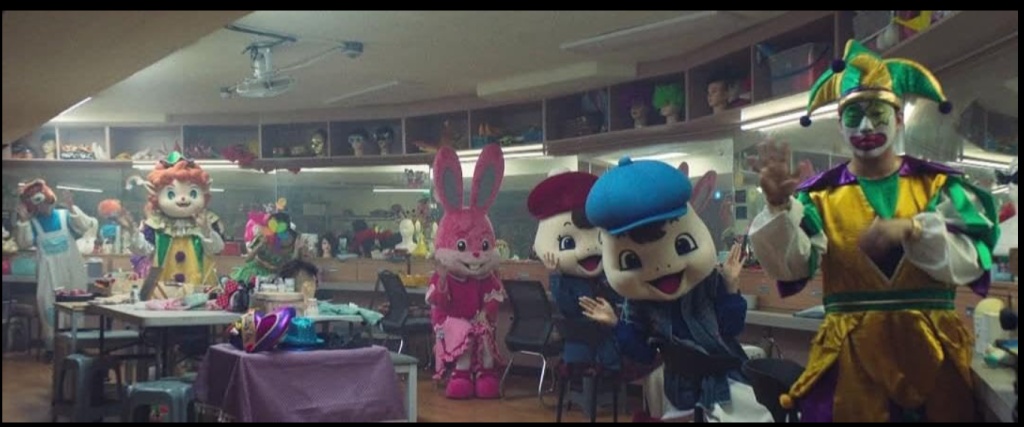
“Why doesn’t this fucking pig suit have any ventilation?”
Scene Description and Emotional Tone: A character complains about the lack of airflow in a restrictive costume, expressing frustration and discomfort.
Word Breakdown
- Definition: The provision of fresh air to a room, building, or other space.
- Part of Speech: Noun
- Pronunciation: /ˌvɛntɪˈleɪʃən/
- Etymology: From Latin ventilatio, meaning the act of ventilating.
Examples:
- Proper ventilation is essential in kitchens to remove smoke.
- The old house lacked adequate ventilation, making it stuffy in the summer.
Contextual Usage
- Formal: The laboratory requires specialized ventilation systems for safety.
- Informal: The room needs better ventilation; it’s getting too hot in here.
- Common Collocations: Adequate ventilation, ventilation system, natural ventilation.
Learning Insights
- Pronunciation Tip: Emphasize the last syllable: ven-ti-LAY-shun.
- Common Mistake: Mispronouncing as “vent-i-lation” instead of “ven-ti-lay-shun.”
- Memorization Trick: Link “ventilation” with “vents” to remember it relates to air flow.
The Film Vocabulary Builder feature seamlessly blends entertainment with education, allowing you to learn new words while immersed in the Squid Game storyline.
4. Resent
Original Movie Context
“I just don’t want him to think I loved him any less.”
Scene Description and Emotional Tone: A character expresses fear that someone might resent them, indicating underlying tension and unresolved emotions.
Word Breakdown
- Definition: To feel bitter or indignant about something.
- Part of Speech: Verb
- Pronunciation: /rɪˈzɛnt/
- Etymology: From Latin resentire, meaning to feel pain again.
Examples:
- She began to resent her colleague for taking credit for her work.
- They resent being told what to do without explanation.
Contextual Usage
- Formal: Employees may resent abrupt changes in company policy.
- Informal: He resents that his friends don’t include him in plans anymore.
- Common Collocations: Resent someone, resent something, deeply resent.
Learning Insights
- Pronunciation Tip: Emphasize the second syllable: re-SENT.
- Common Mistake: Confusing “resent” with “recent.”
- Memorization Trick: Remember “resent” as “re-sent” emotions being sent again.
5. Skeptical
Original Movie Context
“He didn’t want to admit it, not even as he laid there on his deathbed.”
Scene Description and Emotional Tone: A character remains doubtful and skeptical about another’s intentions or truths, reflecting mistrust and uncertainty.
Word Breakdown
- Definition: Having doubts or reservations.
- Part of Speech: Adjective
- Pronunciation: /ˌskɛptɪˈkæl/
- Etymology: From Greek skeptikos, meaning inquiring or searching.
Examples:
- She was skeptical about the effectiveness of the new diet.
- The scientist remained skeptical until the results were proven.
Contextual Usage
- Formal: The committee remained skeptical of the proposed changes without substantial evidence.
- Informal: I’m skeptical that he actually finished the project on time.
- Common Collocations: Skeptical view, remain skeptical, feel skeptical.
Learning Insights
- Pronunciation Tip: Stress the third syllable: skep-ti-CAL.
- Common Mistake: Pronouncing as “skeptic-al.”
- Memorization Trick: Link “skeptical” with “skeptic” to remember it involves doubt.
By using the Film Vocabulary Builder, you transform every movie night into a productive language learning session.
6. Derogatory
Original Movie Context
“Those bastards took all our supplies without any remorse.”
Scene Description and Emotional Tone: A character uses derogatory language to describe antagonists, conveying contempt and anger.
Word Breakdown
- Definition: Showing a critical or disrespectful attitude.
- Part of Speech: Adjective
- Pronunciation: /dɪˈrɑːɡətɔːri/
- Etymology: From Latin derogare, meaning to repeal or criticize.
Examples:
- He made derogatory remarks about her appearance.
- The article was criticized for its derogatory language towards minorities.
Contextual Usage
- Formal: The policy was criticized for its derogatory impact on certain groups.
- Informal: Using derogatory terms can hurt people’s feelings.
- Common Collocations: Derogatory comments, derogatory language, derogatory remarks.
Learning Insights
- Pronunciation Tip: Emphasize the third syllable: de-ro-GA-tory.
- Common Mistake: Misplacing the stress on the second syllable.
- Memorization Trick: Think “derogatory” as “disrespecting” to recall its meaning.
Our Film Vocabulary Builder ensures that learning English is both fun and effective, perfectly complementing the suspense of Squid Game S02E02.
7. Expletive
Original Movie Context
“Fucking hell! I can’t believe I missed the bus again.”
Scene Description and Emotional Tone: A character uses an expletive to express frustration, highlighting intense emotion and informal speech.
Word Breakdown
- Definition: A swear word or curse.
- Part of Speech: Noun
- Pronunciation: /ˈɛksplətɪv/
- Etymology: From Latin expletivus, meaning filling up or complete.
Examples:
- The movie contains several expletives that may not be suitable for children.
- He couldn’t help but let out an expletive when he stubbed his toe.
Contextual Usage
- Formal: The professor advised against using expletives in academic writing.
- Informal: She threw an expletive after spilling her coffee.
- Common Collocations: Use expletives, expletive-laden, profanity and expletives.
Learning Insights
- Pronunciation Tip: Stress the first syllable: EX-ple-tive.
- Common Mistake: Mispronouncing as “eks-pletive.”
- Memorization Trick: Link “expletive” with “expressive” to remember it’s about expressing strong emotions.
Dive into Squid Game S02E02 with the Film Vocabulary Builder and discover new vocabulary in context, making retention easier and more meaningful.
8. Obligation
Original Movie Context
“You gotta go. Come hang, eat something.”
Scene Description and Emotional Tone: A character feels a sense of obligation to help or support someone, indicating duty and responsibility.
Word Breakdown
- Definition: A duty or commitment.
- Part of Speech: Noun
- Pronunciation: /ˌɑːblɪˈɡeɪʃən/
- Etymology: From Latin obligare, meaning to bind or tie.
Examples:
- I feel an obligation to help my friends in need.
- She fulfilled her obligations as a team leader diligently.
Contextual Usage
- Formal: Employees have an obligation to adhere to company policies.
- Informal: I have an obligation to attend my friend’s birthday party.
- Common Collocations: Sense of obligation, moral obligation, fulfill obligations.
Learning Insights
- Pronunciation Tip: Emphasize the third syllable: ob-li-GA-tion.
- Common Mistake: Misplacing the stress on the second syllable.
- Memorization Trick: Think “obligation” as “obey + legation” (a duty related to a mission).
The Film Vocabulary Builder tool is designed to enhance your language skills without disrupting the flow of your favorite Netflix series.
9. Meticulous
Original Movie Context
“We need to do things carefully tomorrow.”
Scene Description and Emotional Tone: A character emphasizes the need for meticulous planning and attention to detail to ensure success.
Word Breakdown
- Definition: Showing great attention to detail; very careful and precise.
- Part of Speech: Adjective
- Pronunciation: /məˈtɪkjʊləs/
- Etymology: From Latin meticulosus, meaning fearful or timid.
Examples:
- She kept meticulous records of all her expenses.
- The artist’s meticulous work was evident in every stroke.
Contextual Usage
- Formal: The scientist conducted a meticulous analysis of the data.
- Informal: He was so meticulous about his appearance that he checked his reflection every five minutes.
- Common Collocations: Meticulous attention, meticulous planning, meticulous detail.
Learning Insights
- Pronunciation Tip: Emphasize the second syllable: me-TIC-u-lous.
- Common Mistake: Mispronouncing as “me-TICK-u-lous.”
- Memorization Trick: Link “meticulous” with “tick” (as in “tick all the details”).

10. Resilient
Original Movie Context
“The room needs better ventilation to reduce the humidity.”
Scene Description and Emotional Tone: Though not directly using the word “resilient,” characters display resilience by continuing their mission despite obstacles.
Word Breakdown
- Definition: Able to withstand or recover quickly from difficult conditions.
- Part of Speech: Adjective
- Pronunciation: /rɪˈzɪliənt/
- Etymology: From Latin resilire, meaning to leap back.
Examples:
- Children are often more resilient than adults think.
- The resilient fabric withstood harsh weather conditions.
Contextual Usage
- Formal: The company’s resilient strategy allowed it to survive the economic downturn.
- Informal: She’s so resilient; nothing seems to keep her down.
- Common Collocations: Resilient nature, resilient materials, remain resilient.
Learning Insights
- Pronunciation Tip: Emphasize the second syllable: re-SI-li-ent.
- Common Mistake: Pronouncing as “re-SELL-i-ent.”
- Memorization Trick: Think of “resilient” as “bounce back” to remember its meaning.
Experience the magic of learning English through the Film Vocabulary Builder, which integrates seamlessly with engaging content like Squid Game.
11. Collateral
Original Movie Context
“They expect us to work in this weather?”
Scene Description and Emotional Tone: A character discusses the collateral damage or side effects of their actions, hinting at unintended consequences.
Word Breakdown
- Definition: Something pledged as security for repayment of a loan, to be forfeited in the event of default.
- Part of Speech: Noun/Adjective
- Pronunciation: /kəˈlætərəl/
- Etymology: From Latin collateralis, meaning side by side.
Examples:
- He used his car as collateral for the loan.
- The project had several collateral impacts on the community.
Contextual Usage
- Formal: The bank required collateral before approving the mortgage.
- Informal: If you can’t pay back the loan, they’ll take your collateral.
- Common Collocations: Provide collateral, collateral damage, collateral loan.
Learning Insights
- Pronunciation Tip: Emphasize the second syllable: col-LAT-er-al.
- Common Mistake: Mispronouncing as “col-AT-er-al.”
- Memorization Trick: Link “collateral” with “collar” (something you pledge to secure).
12. Conspiracy
Original Movie Context
“The game was real. You aren’t full of shit.”
Scene Description and Emotional Tone: A character uncovers a conspiracy behind the game’s existence, revealing layers of deceit and manipulation.
Word Breakdown
- Definition: A secret plan by a group to do something unlawful or harmful.
- Part of Speech: Noun
- Pronunciation: /kənˈspɪrəsi/
- Etymology: From Latin conspirare, meaning to breathe together.
Examples:
- They suspected a conspiracy to overthrow the government.
- The novel revolves around a complex conspiracy within the organization.
Contextual Usage
- Formal: Investigators uncovered a conspiracy involving several high-ranking officials.
- Informal: He thinks there’s a conspiracy behind the sudden changes at work.
- Common Collocations: Political conspiracy, conspiracy theory, elaborate conspiracy.
Learning Insights
- Pronunciation Tip: Emphasize the second syllable: con-SPI-ra-cy.
- Common Mistake: Mispronouncing as “con-SPIR-a-cy.”
- Memorization Trick: Think “conspiracy” as “co-breathing” plans secretly.
13. Demanding
Original Movie Context
“We need to do things carefully tomorrow.”
Scene Description and Emotional Tone: A character highlights the demanding nature of their mission, emphasizing the high expectations and pressure involved.
Word Breakdown
- Definition: Requiring much effort or attention.
-
- Part of Speech: Adjective
- Pronunciation: /dɪˈmændɪŋ/
- Etymology: From the verb demand, meaning to ask forcefully.
Examples:
- The job is very demanding but highly rewarding.
- Training for the marathon was incredibly demanding on his body.
Contextual Usage
- Formal: The project manager found the client’s requirements quite demanding.
- Informal: My new boss is really demanding; there’s no time to relax.
- Common Collocations: Demanding job, highly demanding, demanding schedule.
Learning Insights
- Pronunciation Tip: Emphasize the second syllable: de-MAND-ing.
- Common Mistake: Pronouncing as “de-MANDING.”
- Memorization Trick: Link “demanding” with “demand” to recall it’s about high requirements.
14. Repercussion
Original Movie Context
“If the world doesn’t change, the game doesn’t end.”
Scene Description and Emotional Tone: A character warns about the repercussions of not taking action, indicating serious consequences.
Word Breakdown
- Definition: An unintended consequence occurring some time after an event or action.
- Part of Speech: Noun
- Pronunciation: /ˌrɛpərˈkʌʃən/
- Etymology: From Latin repercussio, meaning a striking back.
Examples:
- The new policy had unforeseen repercussions on the economy.
- Ignoring the warning signs can lead to serious repercussions.
Contextual Usage
- Formal: The repercussions of the decision will be felt across the industry.
- Informal: You might not see the immediate effects, but there will be repercussions later.
- Common Collocations: Serious repercussions, unintended repercussions, face repercussions.
Learning Insights
- Pronunciation Tip: Emphasize the third syllable: re-per-KUSH-on.
- Common Mistake: Mispronouncing as “re-per-KUSH-ion.”
- Memorization Trick: Think “repercussion” as “reaction back” to remember its meaning.

15. Ambiguous
Original Movie Context
“They expect us to work in this weather?”
Scene Description and Emotional Tone: A character questions ambiguous instructions, highlighting confusion and uncertainty about expectations.
Word Breakdown
- Definition: Open to more than one interpretation; unclear or inexact.
- Part of Speech: Adjective
- Pronunciation: /æmˈbɪɡjʊəs/
- Etymology: From Latin ambiguus, meaning wavering or uncertain.
Examples:
- The instructions were ambiguous, leaving everyone confused.
- His statement was deliberately ambiguous to avoid taking a stance.
Contextual Usage
- Formal: The contract contained ambiguous terms that led to disputes.
- Informal: Her message was so ambiguous that I wasn’t sure what she meant.
- Common Collocations: Ambiguous statement, ambiguous meaning, remain ambiguous.
Learning Insights
- Pronunciation Tip: Emphasize the second syllable: am-BIG-yu-ous.
- Common Mistake: Mispronouncing as “am-BIG-ee-us.”
- Memorization Trick: Link “ambiguous” with “ambivalent” to remember it’s about uncertainty.
Making Vocabulary Learning Fun and Accessible
Learning new vocabulary doesn’t have to be a tedious task. By using Film Vocabulary Builder alongside your favorite shows like Squid Game S02E02, you can turn every episode into a dynamic learning experience. Imagine pausing the game to explore a new word right when it pops up in a tense scene. Our mouse dictionary feature lets you hover over words in subtitles to get instant definitions, making vocabulary acquisition seamless and integrated.
Storytelling Your Way to Mastery
Think of each vocabulary word as a character in a story. Just like in Squid Game, where every move counts, every new word you learn adds depth to your language skills. For instance, understanding “foreboding” can help you grasp the suspense in a scene, making your viewing experience richer and more engaging.
Light Humor and Relatable Explanations
Remember the frustration of dealing with a stuffy room? That’s exactly what “ventilation” describes in our vocabulary list. By connecting words to real-life scenarios, you not only remember them better but also find joy in the learning process.
Emotional Connection with Learning
When you learn words like “resilient” and “eloquent,” you’re not just memorizing definitions; you’re connecting with the characters’ emotions and experiences. This emotional bond makes the vocabulary stick, enhancing both your language skills and your appreciation for the storyline.
Enhance Your Learning with Our Language Learning Extension
Our language learning extension seamlessly integrates with Netflix, turning every movie night into a productive learning session. Here’s how our features can elevate your experience:
- Mouse Dictionary: Instantly access definitions by hovering over words in subtitles.
- Save Words: Bookmark new vocabulary for future review.
- Fluency Gym: Engage with real-time dialogues to practice reading, listening, and speaking.
- Download Subtitles: Export subtitles for offline study and repetition.
- Auto-Pause and Play: Control playback to ensure comprehension by pausing after each sentence.
Fluency Gym: Your Path to Mastering a Language
Introducing Fluency Gym, our innovative feature designed to elevate your reading, listening, and speaking skills from intermediate to advanced levels in a fun and engaging way. Whether you’re a solo practitioner or an engaged learner, Fluency Gym transforms passive vocabulary into active language skills by leveraging real-time movie dialogues. Say goodbye to repetitive and dull materials—every movie becomes a new challenge, providing endless opportunities for active recall of vocabulary and grammar.
Explore More with Our Previous Articles
Expand your learning journey by checking out our related articles:
- Language Learning with Netflix: 12 Must-Know Words from Squid Game S01 E03
- Level Up Your English: Vocabulary from Squid Game S01 E05 – Language Learning with Netflix
- Mastering Vocabulary with Squid Game S01 E07: Language Learning with Netflix
- Master English Vocabulary with “Squid Game S01 E09”: A Language Learning Adventure with Netflix
Technology Transforming Language Learning
In today’s digital age, technology plays a pivotal role in making language learning more efficient and enjoyable. Our language learning extension exemplifies this by integrating seamlessly with popular streaming platforms, providing interactive and context-based learning tools that cater to your individual needs.
Imagine watching Squid Game S02E02 and effortlessly building your vocabulary without pausing the action. With features like Mouse Dictionary, Fluency Gym, and Auto-Pause, learning becomes a natural part of your viewing experience. Embrace the future of language learning where technology and entertainment blend to create an immersive educational journey.
Start Your Language Learning Adventure Today!
Ready to elevate your English skills while enjoying your favorite movies and shows? Visit AppForLanguage.com and discover how our language learning extension can revolutionize your learning process. With tools like Fluency Gym, Mouse Dictionary, and more, you’re equipped to master new vocabulary effortlessly. Join thousands of motivated learners who are transforming their language skills through the power of film!
Don’t wait! Start your journey to fluency today with AppForLanguage.com.
Happy Learning!