
Are you looking to learn English through movies? Language learning with Netflix is a fantastic way to enhance your vocabulary while enjoying your favorite shows. In this article, we dive into Friends S01E10 to uncover 15 essential vocabulary words that will elevate your English skills. Whether you’re an intermediate learner or aiming for advanced proficiency, these words will enrich your conversations and deepen your understanding of everyday English. Plus, discover how our language learning extension, FunFluen.com, can make this journey even more engaging!
1. Rescued
Original Movie Context
- Subtitle/Dialog: Ross: “My friend Bethel rescued him from some lab.”
- Scene Description & Emotional Tone: Ross introduces Marcel the monkey, explaining how his friend saved Marcel from a lab. The tone is heartfelt and informative.
Word Breakdown
- Definition: Saved from a dangerous or distressing situation.
- Part of Speech: Verb (past tense: rescued)
- Pronunciation: /ˈrɛskjuːd/
- Etymology: Derived from the Latin word rescuere, meaning “to save.”
Contextual Usage
- Example Sentences:
- “She rescued the kitten from the tree.”
- “The firefighters rescued the family from the burning building.”
- Formal vs. Informal:
- Formal: “The organization rescued numerous individuals during the crisis.”
- Informal: “He rescued his friend from drowning at the beach.”
- Common Collocations: rescue mission, rescue operation, rescue team
Learning Insights
- Pronunciation Tip: Emphasize the first syllable: RES-cued.
- Common Mistakes: Avoid confusing “rescued” with “rescue”; remember “rescued” is the past tense.
- Cultural Nuance: Acts of rescue are often portrayed heroically in movies and stories.
- Memorization Trick: Picture a lifeguard saving someone from the water to remember “rescued.”
2. Snapped
Original Movie Context
- Subtitle/Dialog: Chandler: “I snapped, okay? I couldn’t handle the pressure and I snapped.”
- Scene Description & Emotional Tone: Chandler admits losing his temper due to stress. The tone is apologetic and reflective.
Word Breakdown
- Definition: Suddenly lose control of one’s emotions; have a mental breakdown.
- Part of Speech: Verb (past tense: snapped)
- Pronunciation: /snæpt/
- Etymology: Comes from the idea of breaking like a snapped twig, symbolizing a sudden loss of composure.
Contextual Usage
- Example Sentences:
- “After weeks of overtime, she finally snapped and quit her job.”
- “He snapped when he heard the bad news.”
- Formal vs. Informal:
- Formal: “Under immense stress, he snapped and made several poor decisions.”
- Informal: “I snapped when my computer crashed for the third time.”
- Common Collocations: snapped under pressure, snapped at someone, snapped out of it
Learning Insights
- Pronunciation Tip: Short and sharp, as in the sound of a snap.
- Common Mistakes: Don’t use “snapped” to mean taking a photograph; that’s “snap a photo.”
- Cultural Nuance: “Snapping” is often used in casual conversations to describe sudden emotional outbursts.
- Memorization Trick: Imagine a rubber band snapping to represent losing control.
3. Pathetic
Original Movie Context
- Subtitle/Dialog: Ross: “Nah, I dunno… I think you reach a certain age, having a roommate is kinda pathe- [Realises] ….sorry, that’s, that’s ’pathet’, which is Sanskrit for ’really cool way to live’.”
- Scene Description & Emotional Tone: Ross attempts to use a sophisticated word but mistakenly says “pathetic,” leading to a humorous correction. The tone is lighthearted and funny.
Word Breakdown
- Definition: Arousing pity, especially through vulnerability or sadness; contemptibly inadequate.
- Part of Speech: Adjective
- Pronunciation: /pəˈθɛtɪk/
- Etymology: From the Greek pathētikos, meaning “capable of suffering.”
Contextual Usage
- Example Sentences:
- “The abandoned puppy looked so pathetic.”
- “His excuse for being late was downright pathetic.”
- Formal vs. Informal:
- Formal: “The proposal was deemed pathetic by the committee.”
- Informal: “That joke was pathetic.”
- Common Collocations: pathetic excuse, look pathetic, feel pathetic
Learning Insights
- Pronunciation Tip: Emphasize the second syllable: pa-THE-tic.
- Common Mistakes: Confuse “pathetic” with “pathos,” which refers to evoking pity.
- Cultural Nuance: Using “pathetic” can be offensive if directed at someone, as it implies weakness or inadequacy.
- Memorization Trick: Think of someone looking downcast or vulnerable to remember the meaning of “pathetic.”
4. Luminous
Original Movie Context
- Subtitle/Dialog: David: “…you are luminous with a kind of a delicate grace.”
- Scene Description & Emotional Tone: David compliments Phoebe, describing her as radiant and graceful. The tone is admiring and poetic.
Word Breakdown
- Definition: Emitting light; bright or shining, especially in the dark.
- Part of Speech: Adjective
- Pronunciation: /ˈluːmɪnəs/
- Etymology: From the Latin lūminōsus, meaning “full of light.”
Contextual Usage
- Example Sentences:
- “The luminous stars lit up the night sky.”
- “Her luminous smile brightened the room.”
- Formal vs. Informal:
- Formal: “The luminous quality of the painting captivated the audience.”
- Informal: “Her hair looked luminous under the sunlight.”
- Common Collocations: luminous glow, luminous object, luminous beauty
Learning Insights
- Pronunciation Tip: Emphasize the first syllable: LU-mi-nous.
- Common Mistakes: Don’t confuse “luminous” with “luminescent,” which specifically refers to light emitted without heat.
- Cultural Nuance: “Luminous” is often used in literary or artistic contexts to describe beauty and light.
- Memorization Trick: Picture a glowing lightbulb to associate with the meaning of “luminous.”
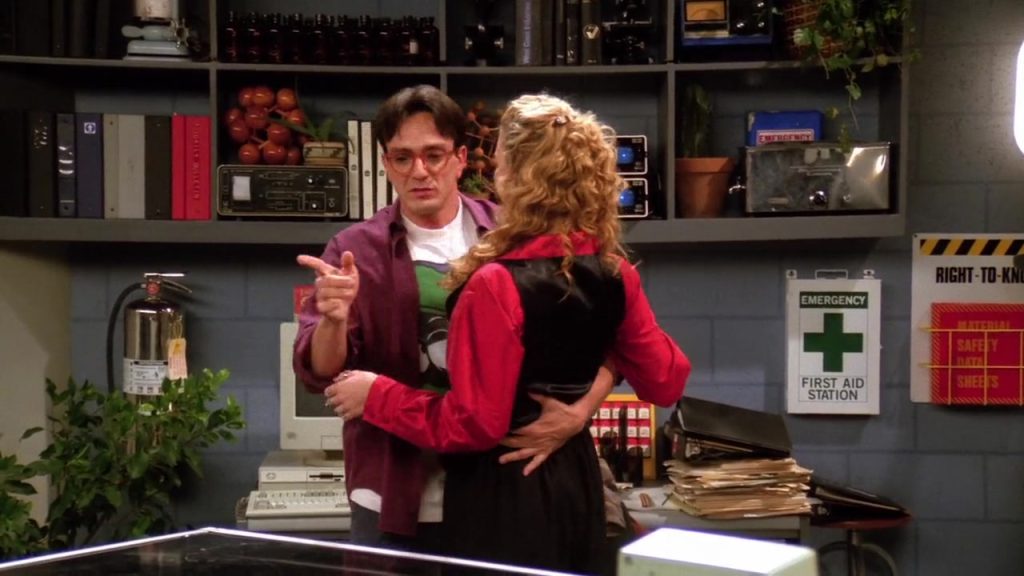
5. Mingling
Original Movie Context
- Subtitle/Dialog: Ross: “C’mon, Marcel, whaddya say you and I do a little mingling? [Marcel runs off]”
- Scene Description & Emotional Tone: Ross encourages Marcel to socialize at a party. The tone is playful and social.
Word Breakdown
- Definition: Moving around and interacting with others at a social event.
- Part of Speech: Verb (present participle: mingling)
- Pronunciation: /ˈmɪŋɡəlɪŋ/
- Etymology: From the verb “mingle,” meaning to mix or blend.
Contextual Usage
- Example Sentences:
- “She spent the evening mingling with guests at the reception.”
- “Mingling at parties can help you make new friends.”
- Formal vs. Informal:
- Formal: “Networking events provide excellent opportunities for mingling with industry leaders.”
- Informal: “He was busy mingling with everyone at the party.”
- Common Collocations: mingle with, mingling at, enjoy mingling
Learning Insights
- Pronunciation Tip: Soft “g” sound: MIN-gling.
- Common Mistakes: Don’t confuse “mingling” with “mixing”; “mingling” implies social interaction.
- Cultural Nuance: Mingling is a common activity at social gatherings and networking events.
- Memorization Trick: Imagine yourself moving around and chatting with different people to remember “mingling.”
6. Slap
Original Movie Context
- Subtitle/Dialog: Joey: “It’s just such a slap in the face, y’know?”
- Scene Description & Emotional Tone: Joey expresses his disappointment humorously. The tone is frustrated yet light-hearted.
Word Breakdown
- Definition: A sharp blow with the open hand or a flat object; a shocking or disappointing event.
- Part of Speech: Noun, Verb
- Pronunciation: /slæp/
- Etymology: From Old English slæp, meaning “a slap.”
Contextual Usage
- Example Sentences:
- Noun: “Getting fired was a slap in the face.”
- Verb: “She slapped the mosquito away.”
- Formal vs. Informal:
- Formal: “The sudden resignation was seen as a slap to the organization.”
- Informal: “That news was a real slap in the face.”
- Common Collocations: slap in the face, slap someone, receive a slap
Learning Insights
- Pronunciation Tip: Keep it short and crisp: slap.
- Common Mistakes: Don’t confuse “slap” with “slam,” which means to shut forcefully.
- Cultural Nuance: “Slap in the face” is an idiomatic expression indicating unexpected disappointment or insult.
- Memorization Trick: Visualize someone giving a playful slap to associate with the meaning.
7. Phenomenal
Original Movie Context
- Subtitle/Dialog: Phoebe: “…because, well, ’cause it’s you.”
- Scene Description & Emotional Tone: David describes his feelings towards Phoebe, aiming for a “phenomenal kiss.” The tone is romantic and sincere.
Word Breakdown
- Definition: Highly impressive or extraordinary.
- Part of Speech: Adjective
- Pronunciation: /fəˈnɒmənəl/
- Etymology: From Greek phainomenon, meaning “appearance” or “that which appears.”
Contextual Usage
- Example Sentences:
- “Her performance was absolutely phenomenal.”
- “They achieved phenomenal success in their first year.”
- Formal vs. Informal:
- Formal: “The scientist made a phenomenal breakthrough in renewable energy.”
- Informal: “That concert was phenomenal!”
- Common Collocations: phenomenal success, phenomenal achievement, phenomenal talent
Learning Insights
- Pronunciation Tip: Stress the second syllable: phe-NOM-e-nal.
- Common Mistakes: Don’t add unnecessary syllables; it’s “phenomenal,” not “phenomenally.”
- Cultural Nuance: “Phenomenal” is often used to praise extraordinary achievements or qualities.
- Memorization Trick: Think of “phenomenal” as something that stands out like a phenomenon.
8. Balled Up
Original Movie Context
- Subtitle/Dialog: Chandler: “He just balled up socks… and a melon…”
- Scene Description & Emotional Tone: Chandler explains how Marcel juggles objects, adding humor to the scene. The tone is amused and light-hearted.
Word Breakdown
- Definition: Rolled or twisted into a tight mass.
- Part of Speech: Verb (phrasal verb: balled up)
- Pronunciation: /ˈbɔːld ʌp/
- Etymology: “Balled” comes from “ball,” meaning to form into a ball.
Contextual Usage
- Example Sentences:
- “She balled up the paper into a tight sphere.”
- “He balled up his notes and threw them into his bag.”
- Formal vs. Informal:
- Formal: “The documents were balled up for storage.”
- Informal: “He balled up his shirt and tossed it aside.”
- Common Collocations: balled up paper, balled up clothes, balled up fists
Learning Insights
- Pronunciation Tip: Emphasize both words: balled up.
- Common Mistakes: Don’t say “balled up” when “rolled up” is intended; they have similar but distinct meanings.
- Cultural Nuance: “Balled up” is often used informally to describe tightly rolled objects.
- Memorization Trick: Imagine rolling a sock into a tight ball to remember “balled up.”
9. Stereotype
Original Movie Context
- Subtitle/Dialog: Phoebe: “You’re trapped inside a physicist’s body.”
- Scene Description & Emotional Tone: Phoebe humorously comments on David’s personality, implying he fits a scientist stereotype. The tone is playful and teasing.
Word Breakdown
- Definition: A widely held but fixed and oversimplified image or idea of a particular type of person or thing.
- Part of Speech: Noun, Verb
- Pronunciation: /ˈstɛriətaɪp/
- Etymology: From Greek stereos (solid) + type (impression).
Contextual Usage
- Example Sentences:
- Noun: “The stereotype of scientists being socially awkward is misleading.”
- Verb: “Don’t stereotype people based on their appearance.”
- Formal vs. Informal:
- Formal: “Challenging societal stereotypes is essential for progress.”
- Informal: “It’s unfair to stereotype someone just because of their job.”
- Common Collocations: break a stereotype, reinforce a stereotype, challenge stereotypes
Learning Insights
- Pronunciation Tip: Stress the first syllable: STER-eotype.
- Common Mistakes: Don’t confuse “stereotype” with “prototype”; one refers to a generalized image, the other to an original model.
- Cultural Nuance: Stereotypes can perpetuate biases and are often challenged in modern discourse.
- Memorization Trick: Think of a “stereo” playing the same tune repeatedly, representing the repetitive nature of stereotypes.
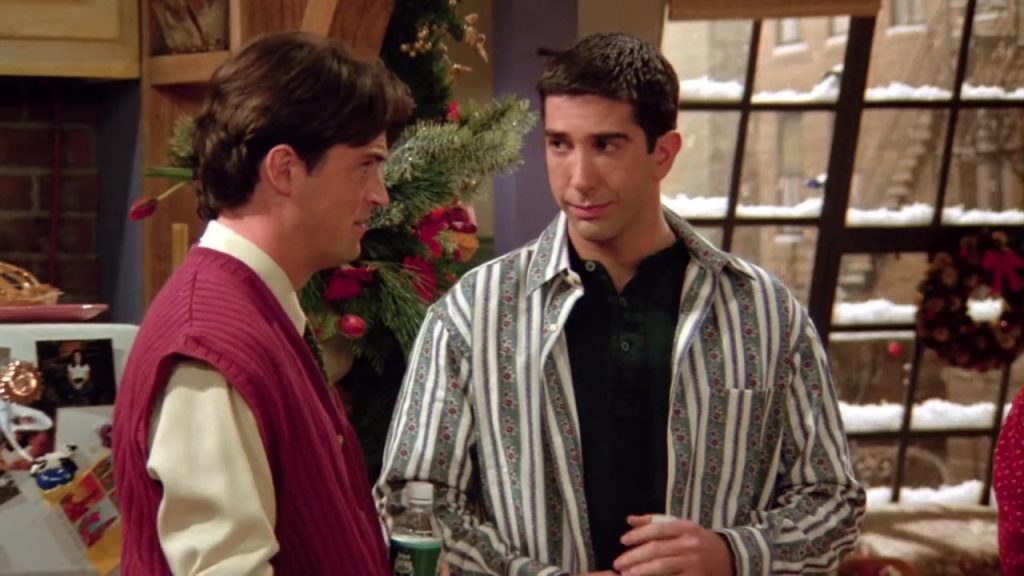
10. Confetti
Original Movie Context
- Subtitle/Dialog: Dick Clark (TV): “Hi, this is Dick Clark, live in Times Square. We’re in a virtual snowstorm of confetti here in Times Square…”
- Scene Description & Emotional Tone: Dick Clark announces the New Year celebration, describing the confetti-filled environment. The tone is festive and celebratory.
Word Breakdown
- Definition: Small pieces of colored paper thrown during celebrations, especially at parties.
- Part of Speech: Noun
- Pronunciation: /kənˈfɛti/
- Etymology: From Italian confetto, meaning “sweetmeat” or “small confection.”
Contextual Usage
- Example Sentences:
- “They threw confetti at the wedding ceremony.”
- “The streets were covered in colorful confetti after the parade.”
- Formal vs. Informal:
- Formal: “Confetti was distributed to guests during the gala.”
- Informal: “We tossed confetti everywhere when the band played.”
- Common Collocations: throw confetti, showered with confetti, colorful confetti
Learning Insights
- Pronunciation Tip: Stress the second syllable: con-FET-ti.
- Common Mistakes: Don’t use “confetti” as a verb; it is strictly a noun.
- Cultural Nuance: Confetti is synonymous with celebrations like weddings, parades, and New Year’s Eve.
- Memorization Trick: Visualize a vibrant shower of confetti to remember the word’s meaning.
11. Sweeping
Original Movie Context
- Subtitle/Dialog: Phoebe: “You can’t stay here just ’cause of me.”
- Scene Description & Emotional Tone: Phoebe encourages David to make a decision about staying or leaving. The tone is supportive yet firm.
- Additional Context: While not directly using “sweeping,” the action of sweeping papers symbolizes clearing away doubts.
Word Breakdown
- Definition: Cleaning by brushing away dirt or litter; thorough and comprehensive.
- Part of Speech: Verb (present participle: sweeping), Adjective
- Pronunciation: /ˈswipiŋ/
- Etymology: From Old English swēpan, meaning “to sweep.”
Contextual Usage
- Example Sentences:
- Verb: “She is sweeping the kitchen floor.”
- Adjective: “The company made a sweeping change to its policies.”
- Formal vs. Informal:
- Formal: “The new law introduced sweeping reforms in the education system.”
- Informal: “He was sweeping up the mess after the party.”
- Common Collocations: sweeping action, sweeping change, sweeping the floor
Learning Insights
- Pronunciation Tip: Start with a strong “sw” sound: SWEEP-ing.
- Common Mistakes: Don’t confuse “sweeping” with “sheeping,” which is not a word.
- Cultural Nuance: “Sweeping” changes imply significant, all-encompassing modifications.
- Memorization Trick: Picture someone sweeping a large area to remember both the physical and metaphorical uses.
12. Delicate
Original Movie Context
- Subtitle/Dialog: David: “You are luminous with a kind of a delicate grace.”
- Scene Description & Emotional Tone: David praises Phoebe’s graceful and gentle presence. The tone is affectionate and appreciative.
Word Breakdown
- Definition: Easily broken or damaged; requiring careful handling; fine and intricate.
- Part of Speech: Adjective
- Pronunciation: /ˈdɛlɪkət/
- Etymology: From Latin delicatus, meaning “fine, graceful.”
Contextual Usage
- Example Sentences:
- “She handled the delicate vase with care.”
- “The artist created a delicate sculpture from glass.”
- Formal vs. Informal:
- Formal: “The delicate balance of the ecosystem must be maintained.”
- Informal: “Her feelings are quite delicate after the breakup.”
- Common Collocations: delicate flower, delicate balance, delicate issue
Learning Insights
- Pronunciation Tip: Stress the first syllable: DEL-i-cate.
- Common Mistakes: Don’t confuse “delicate” with “delicious”; one refers to fragility, the other to taste.
- Cultural Nuance: “Delicate” often describes situations requiring tact or things that are fragile.
- Memorization Trick: Imagine a delicate flower petal to associate with the meaning of “delicate.”
13. Embarrassed
Original Movie Context
- Subtitle/Dialog: Rachel: “Did I just share too much?”
- Scene Description & Emotional Tone: Rachel realizes she may have overshared personal information, feeling self-conscious. The tone is sheepish and awkward.
Word Breakdown
- Definition: Feeling self-conscious, ashamed, or awkward.
- Part of Speech: Adjective
- Pronunciation: /ɛmˈbærəst/
- Etymology: From the verb “embarrass,” which comes from Spanish embarazar, meaning “to impede.”
Contextual Usage
- Example Sentences:
- “He felt embarrassed after tripping in front of everyone.”
- “She was embarrassed by her mistake during the presentation.”
- Formal vs. Informal:
- Formal: “He was visibly embarrassed by the oversight.”
- Informal: “I felt so embarrassed when I forgot her name.”
- Common Collocations: feel embarrassed, look embarrassed, embarrassed about
Learning Insights
- Pronunciation Tip: Emphasize the second syllable: em-BAR-rassed.
- Common Mistakes: Don’t confuse “embarrassed” with “barrassed”; the latter is not a word.
- Cultural Nuance: Embarrassment is a universal emotion, often depicted in social interactions in media.
- Memorization Trick: Picture someone blushing to represent feeling embarrassed.
14. Methodical
Original Movie Context
- Subtitle/Dialog: Phoebe: “David’s like, y’know, Scientist Guy. He’s very methodical.”
- Scene Description & Emotional Tone: Phoebe describes David’s organized and systematic nature. The tone is admiring and respectful.
Word Breakdown
- Definition: Done according to a systematic or established procedure.
- Part of Speech: Adjective
- Pronunciation: /məˈθɒdɪkəl/
- Etymology: From Greek methodikos, meaning “skilled in a method.”
Contextual Usage
- Example Sentences:
- “Her methodical approach ensured the project was completed on time.”
- “He is known for his methodical research techniques.”
- Formal vs. Informal:
- Formal: “The laboratory follows a methodical process for experiments.”
- Informal: “She is methodical about organizing her books.”
- Common Collocations: methodical approach, methodical process, methodical manner
Learning Insights
- Pronunciation Tip: Emphasize the second syllable: me-THO-di-cal.
- Common Mistakes: Don’t confuse “methodical” with “methodological,” which relates to methods in a broader sense.
- Cultural Nuance: Being methodical is often viewed positively as it implies thoroughness and reliability.
- Memorization Trick: Think of a scientist carefully following steps in an experiment to remember “methodical.”

15. Juggling
Original Movie Context
- Subtitle/Dialog: Chandler: “Yeah, we played, we watched TV.. that juggling thing is amazing.”
- Scene Description & Emotional Tone: Chandler talks about his activities with Marcel, highlighting the monkey’s talent. The tone is amused and proud.
Word Breakdown
- Definition: Continuously toss into the air and catch, typically multiple objects.
-
- Part of Speech: Verb (present participle: juggling), Noun
- Pronunciation: /ˈdʒʌɡlɪŋ/
- Etymology: From the word “juggle,” which may derive from the Latin jocus (joke), reflecting playful movement.
Contextual Usage
- Example Sentences:
- Verb: “She is juggling three jobs to support her family.”
- Noun: “His juggling requires great skill and concentration.”
- Formal vs. Informal:
- Formal: “The manager is juggling multiple projects simultaneously.”
- Informal: “He’s juggling work and school at the same time.”
- Common Collocations: juggling tasks, juggling responsibilities, juggling balls
Learning Insights
- Pronunciation Tip: Start with a soft “j” sound: JUG-gling.
- Common Mistakes: Don’t confuse “juggling” with “jostling,” which means pushing or shoving.
- Cultural Nuance: Juggling often symbolizes managing multiple tasks or responsibilities.
- Memorization Trick: Picture a performer juggling balls to remember the meaning of “juggling.”
Make Language Learning Fun and Effective with FunFluen.com
Learning new vocabulary doesn’t have to be tedious. With FunFluen.com, you can transform your language learning with Netflix experience into an interactive and enjoyable journey. Our extension offers features like the Mouse Dictionary, allowing you to hover over any word in the subtitles for instant definitions. Plus, with the Fluency Gym, you can engage in dynamic modes that enhance your reading, listening, and speaking skills all at once.
Imagine watching Friends S01E10 and effortlessly saving words like “phenomenal” or “methodical” to your personalized flashcards. Or using our Auto-Pause feature to ensure you fully comprehend each sentence before moving on. These tools seamlessly integrate into your viewing experience, making language learning as fun as watching your favorite show.
Why Choose FunFluen.com?
- Interactive Learning: Engage with real movie dialogues to make vocabulary stick.
- Convenient Features: Save and review words with ease using our extension tools.
- Personalized Experience: Customize your learning journey to fit your pace and style.
Start your adventure in language learning with Netflix today. Visit FunFluen.com and discover how our innovative features can help you master English effortlessly while enjoying the shows you love.
Conclusion
By exploring Friends S01E10, we’ve uncovered a wealth of vocabulary that not only enhances your English but also deepens your appreciation for the show. Embrace these words in your daily conversations, and watch your language skills flourish. Remember, language learning with Netflix is not just about watching—it’s about engaging, interacting, and enjoying the process.
Don’t forget to leverage tools like FunFluen.com to make your learning experience even more effective and enjoyable. With features designed to support every step of your journey, you’re well on your way to mastering English through the power of movies.
Happy learning!