
Welcome to the exciting world of Language Learning through movies! In this article, we dive into Friends S01 E15 to uncover 15 vibrant vocabulary words that will elevate your English skills. Whether you’re lounging with a cup of coffee at Central Perk or navigating Chandler’s quirky office antics, these words will enrich your conversations and boost your confidence. Plus, discover how our innovative language learning extension can seamlessly integrate these lessons into your daily streaming routine.
1. Disgust
Original Movie Context
- Dialogue: Monica puts her cup down in disgust.
- Scene Description: In Central Perk, Monica reacts negatively after discovering a swizzel stick in her coffee, showing her displeasure.
Word Breakdown
- Definition: A strong feeling of dislike or disapproval.
- Part of Speech: Noun
- Pronunciation: /dɪsˈɡʌst/
- Etymology: From Latin disgustus, meaning “a distaste.”
Examples:
- Formal: She felt a sense of disgust at the unethical practices.
- Informal: The smell of the garbage filled him with disgust.
Contextual Usage
- Example Sentences:
- “He looked at the messy room with disgust.”
- “Her disgust was evident when she tasted the spoiled milk.”
- Formal vs. Informal:
- Formal: The committee expressed disgust at the proposal.
- Informal: I felt disgust when I saw the dirty kitchen.
- Common Collocations: profound disgust, hide one’s disgust, show disgust
Learning Insights
- Pronunciation Tip: Emphasize the second syllable: dis-GUST.
- Common Mistakes: Mispronouncing the stress on the first syllable.
- Memorization Trick: Think of “disgust” as a “distaste,” both starting with “dis-.”
2. Ecclectic
Original Movie Context
- Dialogue: Phoebe mentions the restaurant wants “some eclectic” menu creation.
- Scene Description: Phoebe suggests Monica cook for a new restaurant, emphasizing a diverse menu.
Word Breakdown
- Definition: Deriving ideas, style, or taste from a broad and diverse range of sources.
- Part of Speech: Adjective
- Pronunciation: /ɪˈklɛktɪk/
- Etymology: From Greek eklektikos, meaning “selective.”
Examples:
- Formal: The art gallery features an eclectic mix of modern and classical pieces.
- Informal: Her music taste is so eclectic; she listens to everything from jazz to hip-hop.
Contextual Usage
- Example Sentences:
- “The restaurant offers an eclectic menu with dishes from around the world.”
- “His eclectic wardrobe includes vintage and contemporary styles.”
- Formal vs. Informal:
- Formal: The symposium showcased an eclectic range of topics.
- Informal: She has an eclectic taste in movies.
- Common Collocations: eclectic mix, eclectic style, eclectic taste
Learning Insights
- Pronunciation Tip: Emphasize the second syllable: e-CCLEC-tic.
- Common Mistakes: Mixing up with “eclectic.”
- Memorization Trick: Think “eclectic” means “selective” from various sources.
3. Aptitude
Original Movie Context
- Dialogue: Chandler discusses his eight and a half hours of aptitude tests.
- Scene Description: Chandler vents about the exhaustive testing process at his job.
Word Breakdown
- Definition: A natural ability to do something.
- Part of Speech: Noun
- Pronunciation: /ˈæptɪtjuːd/
- Etymology: From Latin aptitudo, meaning “fitness.”
Examples:
- Formal: She has a strong aptitude for mathematics.
- Informal: He showed an aptitude for playing the guitar at a young age.
Contextual Usage
- Example Sentences:
- “The aptitude test measures your problem-solving skills.”
- “Her aptitude in languages makes her an excellent translator.”
- Formal vs. Informal:
- Formal: Aptitude assessments are crucial for career placement.
- Informal: He has an aptitude for fixing cars.
- Common Collocations: demonstrate aptitude, aptitude test, natural aptitude
Learning Insights
- Pronunciation Tip: Emphasize the first syllable: AP-ti-tude.
- Common Mistakes: Pronouncing it as “a-pit-itude.”
- Memorization Trick: Link “aptitude” with “apt,” meaning suitable or skilled.
Our language extension makes language learning through movies effortless by offering real-time translation and vocabulary-building features.
4. Desperate
Original Movie Context
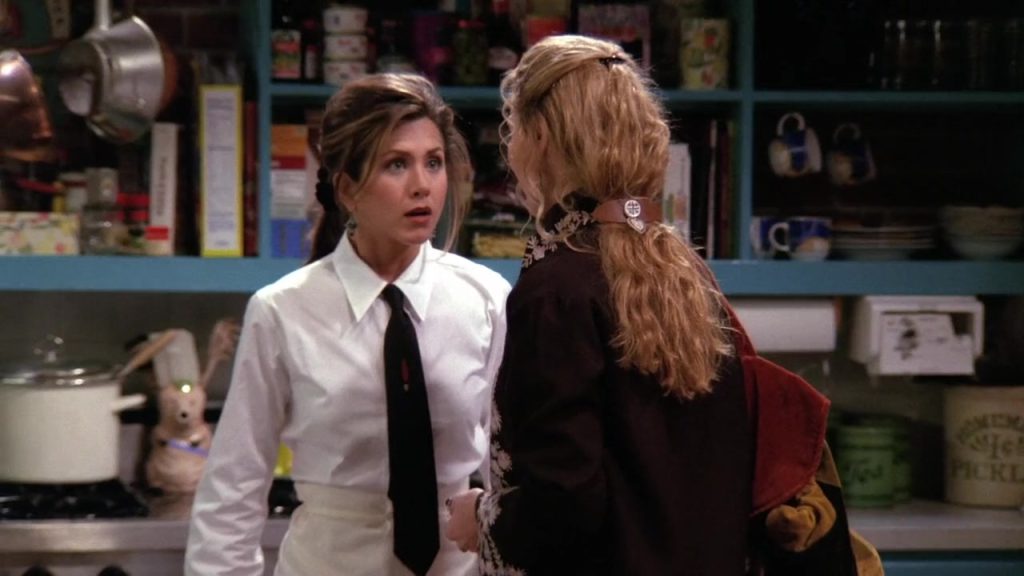
- Dialogue: Rachel expresses desperation in securing a waitress job.
- Scene Description: Rachel negotiates with Monica for a job, showing her urgent need.
Word Breakdown
- Definition: Feeling, showing, or involving a hopeless sense that a situation is so bad as to be impossible to deal with.
- Part of Speech: Adjective
- Pronunciation: /ˈdɛspərət/
- Etymology: From Latin desperatus, meaning “without hope.”
Examples:
- Formal: The organization is desperate for donations to continue its work.
- Informal: She was desperate to find her lost keys.
Contextual Usage
- Example Sentences:
- “They were desperate for a solution to the problem.”
- “He made a desperate attempt to win the game.”
- Formal vs. Informal:
- Formal: The company is in a desperate situation due to financial losses.
- Informal: I’m desperate for a good night’s sleep.
- Common Collocations: desperate times, desperate measures, feel desperate
Learning Insights
- Pronunciation Tip: Emphasize the first syllable: DES-perate.
- Common Mistakes: Confusing “desperate” with “despise.”
- Memorization Trick: Link “desperate” with “despair,” both conveying a sense of hopelessness.
5. Flattering
Original Movie Context
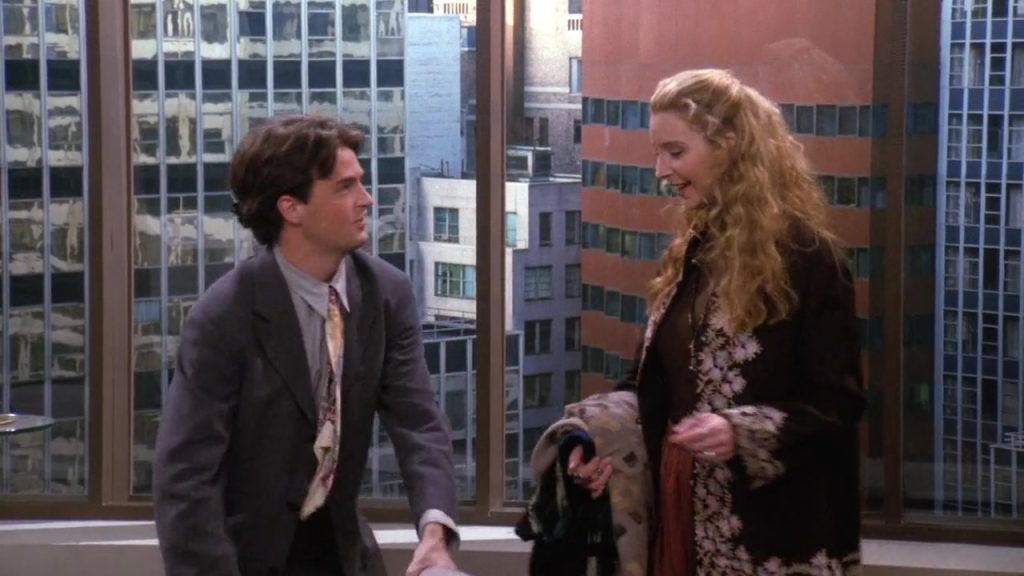
- Dialogue: Chandler compliments Ms. Tedlock’s sleeve length, saying it’s flattering.
- Scene Description: Chandler uses a polite compliment to praise his coworker.
Word Breakdown
- Definition: Pleasing or complimentary, especially to someone’s appearance.
- Part of Speech: Adjective
- Pronunciation: /ˈflætərɪŋ/
- Etymology: From Latin flattus, meaning “flat, smooth,” evolving to imply smooth or pleasing.
Examples:
- Formal: The dress was flattering on her, enhancing her natural beauty.
- Informal: That shirt looks really flattering on you!
Contextual Usage
- Example Sentences:
- “The lighting was flattering, highlighting his best features.”
- “She received flattering remarks about her presentation.”
- Formal vs. Informal:
- Formal: The design of the building is flattering to the surrounding landscape.
- Informal: Those sunglasses are so flattering!
- Common Collocations: flattering comment, flattering outfit, flattering light
Learning Insights
- Pronunciation Tip: Emphasize the first syllable: FLAT-tering.
- Common Mistakes: Misplacing the stress on the second syllable.
- Memorization Trick: Think of “flattering” as making someone “flat out” look better.
6. Blaze
Original Movie Context
- Dialogue: Phoebe mentions Steve “blazed up a doobie.”
- Scene Description: Phoebe refers to Steve smoking a joint, using slang.
Word Breakdown
- Definition: To burn brightly and powerfully; in slang, to smoke marijuana.
- Part of Speech: Verb (and noun)
- Pronunciation: /bleɪz/
- Etymology: From Old English blæse, meaning “fire” or “flame.”
Examples:
- Formal: The campfire continued to blaze throughout the night.
- Informal: They decided to blaze a trail through the forest.
Contextual Usage
- Example Sentences:
- Literal: The fireplace blazed, warming the entire room.
- Slang: They sat around blazin’ and talking about life.
- Formal vs. Informal:
- Formal: The sun blazes in the clear sky.
- Informal: Let’s blaze and chill this evening.
- Common Collocations: blaze a trail, blaze up, flames blaze
Learning Insights
- Pronunciation Tip: Rhymes with “glaze” – BLEAZE.
- Common Mistakes: Confusing “blaze” with “bless.”
- Memorization Trick: Associate “blaze” with “fire” to remember its meanings.
Make every episode count with language learning through movies, where each line of dialogue becomes a stepping stone toward fluency.
7. Metaphorically
Original Movie Context
- Dialogue: Chandler says, “And he’s not speaking metaphorically.”
- Scene Description: Chandler clarifies that his statement about Marcel isn’t figurative.
Word Breakdown
- Definition: In a metaphor; not literally.
- Part of Speech: Adverb
- Pronunciation: /ˌmɛtəˈfɔːrɪkli/
- Etymology: From “metaphor,” which originates from Greek metaphora, meaning “transfer.”
Examples:
- Formal: She was speaking metaphorically to emphasize her point.
- Informal: When he says he’s “running on empty,” he’s speaking metaphorically.
Contextual Usage
- Example Sentences:
- “He wasn’t serious; he was speaking metaphorically.”
- “The CEO spoke metaphorically about the company’s growth.”
- Formal vs. Informal:
- Formal: The author uses language metaphorically to convey deeper meanings.
- Informal: I’m not hungry, metaphorically speaking.
- Common Collocations: speak metaphorically, think metaphorically, use metaphorically
Learning Insights
- Pronunciation Tip: Break it down as met-a-for-IC-ally.
- Common Mistakes: Overemphasizing syllables, making it sound like “metaphorically.”
- Memorization Trick: Link “metaphorically” with “metaphor” to remember it refers to figurative language.
8. Perturbed
Original Movie Context
- Dialogue: An unamused woman walks into Chandler’s office, visibly perturbed.
- Scene Description: Chandler interacts with an annoyed coworker, highlighting tension.
Word Breakdown
- Definition: Anxious or unsettled; upset.
- Part of Speech: Adjective
- Pronunciation: /pərˈtɜːrbd/
- Etymology: From Latin perturbare, meaning “to disturb.”
Examples:
- Formal: The CEO was perturbed by the sudden drop in sales.
- Informal: She seemed perturbed after hearing the bad news.
Contextual Usage
- Example Sentences:
- “He was perturbed by the unexpected changes.”
- “Her perturbed expression revealed her true feelings.”
- Formal vs. Informal:
- Formal: The findings perturbed the scientific community.
- Informal: I was really perturbed when my phone died.
- Common Collocations: appear perturbed, feel perturbed, look perturbed
Learning Insights
- Pronunciation Tip: Emphasize the second syllable: per-TURBED.
- Common Mistakes: Mispronouncing the ‘t’ as a hard ‘d’ sound.
- Memorization Trick: Think “perturbed” as “disturbed,” both indicating unease.
Harness the power of language learning through movies to learn idioms, phrasal verbs, and cultural nuances directly from authentic dialogue.
9. Admitting
Original Movie Context
- Dialogue: Chandler says, “It’d be like admitting that this is what I actually do.”
- Scene Description: Chandler hesitates to accept a promotion, fearing it would reveal his true feelings about his job.
Word Breakdown
- Definition: Confessing or acknowledging something.
- Part of Speech: Verb (present participle)
- Pronunciation: /ədˈmɪtɪŋ/
- Etymology: From Latin admittere, meaning “to allow to enter.”
Examples:
- Formal: Admitting a mistake shows integrity.
- Informal: He’s admitting that he was wrong about the game.
Contextual Usage
- Example Sentences:
- “She is admitting her role in the project’s success.”
- “Admitting your fears can be the first step to overcoming them.”
- Formal vs. Informal:
- Formal: Admitting the error, the spokesperson issued a statement.
- Informal: I’m admitting that I forgot to call you back.
- Common Collocations: admitting fault, admitting mistake, admitting guilt
Learning Insights
- Pronunciation Tip: Emphasize the second syllable: ad-MIT-ing.
- Common Mistakes: Stressing the first syllable or mispronouncing the ‘t.’
- Memorization Trick: Link “admitting” with “admission,” both involving acknowledgment.
10. Motif
Original Movie Context
- Dialogue: Ross refers to different characters, plot lines, themes, and a motif in his dirty talk.
- Scene Description: Ross humorously describes his elaborate approach to conversation.
Word Breakdown
- Definition: A distinctive feature or dominant idea in an artistic or literary composition.
- Part of Speech: Noun
- Pronunciation: /ˈmoʊtɪf/
- Etymology: From French motif, meaning “theme,” from Latin motivus.
Examples:
- Formal: The recurring motif of light and darkness symbolizes good and evil.
- Informal: The movie’s main motif is friendship and loyalty.
Contextual Usage
- Example Sentences:
- “The artist used the motif of water to represent change.”
- “In the novel, the author employs a motif of isolation.”
- Formal vs. Informal:
- Formal: The motif of struggle is prevalent throughout the play.
- Informal: The theme of love is a central motif in many songs.
- Common Collocations: recurring motif, central motif, artistic motif
Learning Insights
- Pronunciation Tip: MO-tif, with a long “o” sound.
- Common Mistakes: Pronouncing it as “motive.”
- Memorization Trick: Think of “motif” as a “theme,” a recurring idea or element.
By watching Friends S01 E15, you can turn casual viewing into an effective session of language learning through movies, improving your vocabulary and comprehension.
11. Cuddling
Original Movie Context
- Dialogue: Ross and Joey discuss cuddling after their failed attempts at dirty talk.
- Scene Description: Ross describes a tender moment with Celia, highlighting vulnerability.
Word Breakdown
- Definition: Holding close in one’s arms as a way of showing love or affection.
- Part of Speech: Verb (gerund)
- Pronunciation: /ˈkʌdlɪŋ/
- Etymology: From Middle English cuddle, meaning “to embrace.”
Examples:
- Formal: Cuddling can enhance emotional bonds between partners.
- Informal: They spent the evening cuddling on the couch.
Contextual Usage
- Example Sentences:
- “After a long day, she enjoys cuddling with her pet.”
- “They were cuddling under the blankets during the movie.”
- Formal vs. Informal:
- Formal: Cuddling is often associated with emotional intimacy.
- Informal: Let’s cuddle and watch a movie.
- Common Collocations: cuddle up, start cuddling, cuddle partner
Learning Insights
- Pronunciation Tip: Emphasize the first syllable: CUD-dling.
- Common Mistakes: Mispronouncing the ‘d’ as a hard ‘t’ sound.
- Memorization Trick: Associate “cuddling” with “hugging” to remember its meaning.
Language learning through movies transforms your favorite shows into an engaging classroom, making the process enjoyable and efficient.
12. Negotiate
Original Movie Context
- Dialogue: Rachel negotiates her waitress salary with Monica.
- Scene Description: Rachel passionately tries to secure a better pay rate, showing determination.
Word Breakdown
- Definition: To discuss something formally in order to reach an agreement.
- Part of Speech: Verb
- Pronunciation: /nɪˈgoʊʃieɪt/
- Etymology: From Latin negotiari, meaning “to carry on business.”
Examples:
- Formal: They are negotiating the terms of the contract.
- Informal: We need to negotiate who does the dishes tonight.
Contextual Usage
- Example Sentences:
- “The two countries are negotiating a peace treaty.”
- “She negotiated a higher salary during her job interview.”
- Formal vs. Informal:
- Formal: The board will negotiate the merger details next week.
- Informal: Let’s negotiate the best time to meet up.
- Common Collocations: negotiate terms, negotiate a deal, negotiate salary
Learning Insights
- Pronunciation Tip: Emphasize the second syllable: ne-GO-ti-ate.
- Common Mistakes: Stressing the first syllable or mispronouncing the ‘ti.’
- Memorization Trick: Link “negotiate” with “negotiation,” the process of reaching an agreement.
13. Appetite
Original Movie Context
- Dialogue: Joey expresses his appetite for Monica’s salmon mousse.
- Scene Description: Joey talks about his enjoyment of the food, highlighting his hunger.
Word Breakdown
- Definition: A natural desire to satisfy a bodily need, especially for food.
- Part of Speech: Noun
- Pronunciation: /ˈæpɪtaɪt/
- Etymology: From Latin appetitus, meaning “desire, longing.”
Examples:
- Formal: A healthy appetite is essential for proper nutrition.
- Informal: I have a big appetite after the workout.
Contextual Usage
- Example Sentences:
- “Her appetite for success drove her to excel in her career.”
- “He lost his appetite after hearing the bad news.”
- Formal vs. Informal:
- Formal: Patients with a reduced appetite may require nutritional supplements.
- Informal: I’ve got no appetite for dessert tonight.
- Common Collocations: healthy appetite, big appetite, lose appetite
Learning Insights
- Pronunciation Tip: Emphasize the first syllable: AP-pe-tite.
- Common Mistakes: Misplacing the stress or shortening the last syllable.
- Memorization Trick: Think of “appetite” as your “appetizer” or desire for food.
Our extension is the ultimate tool for anyone interested in language learning through movies, as it allows you to pause, translate, and save words instantly.
14. Exasperated
Original Movie Context
- Dialogue: Monica becomes exasperated with Steve’s antics during dinner.
- Scene Description: Monica’s frustration grows as Steve disrupts the meal.
Word Breakdown
- Definition: Intensely irritated and frustrated.
- Part of Speech: Adjective
- Pronunciation: /ɪɡˈzæspəreɪtɪd/
- Etymology: From Latin exasperatus, meaning “made harsh.”
Examples:
- Formal: She was exasperated by the constant delays in the project.
- Informal: He looked exasperated when his computer crashed again.
Contextual Usage
- Example Sentences:
- “The teacher was exasperated with the students’ lack of effort.”
- “After hours of waiting, she felt exasperated.”
- Formal vs. Informal:
- Formal: The exasperated manager called an emergency meeting.
- Informal: I’m getting exasperated with all this traffic.
- Common Collocations: feel exasperated, become exasperated, look exasperated
Learning Insights
- Pronunciation Tip: Break it down as ex-as-PAR-ated.
- Common Mistakes: Overemphasizing syllables or mispronouncing “exasperate.”
- Memorization Trick: Link “exasperated” with “exhausted” and frustration.
15. Amazed
Original Movie Context
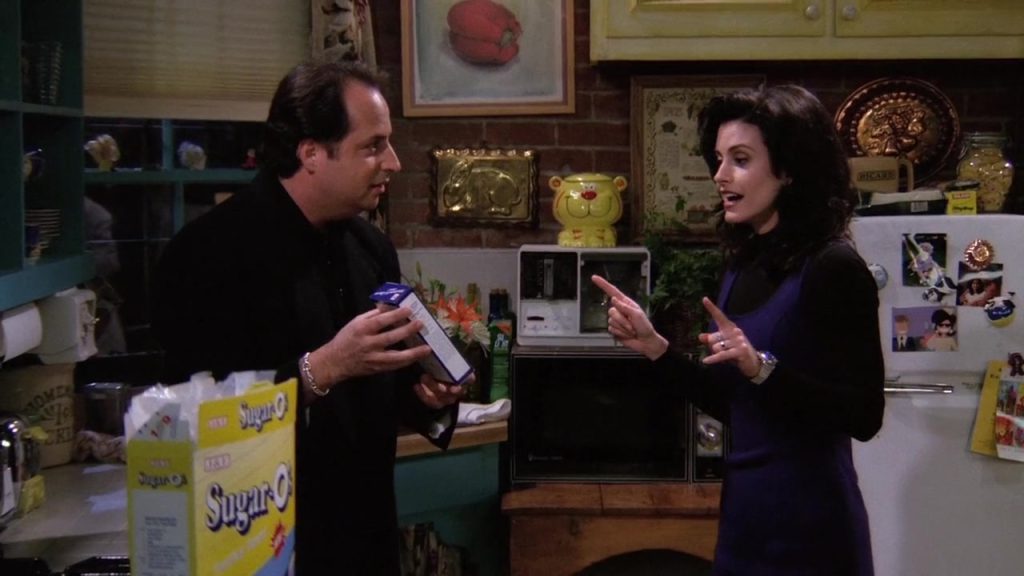
- Dialogue: Monica is amazed by Steve’s reaction to her cooking.
- Scene Description: Steve compliments Monica’s dishes, leaving her pleasantly surprised.
Word Breakdown
- Definition: Greatly surprised or impressed.
- Part of Speech: Adjective
- Pronunciation: /əˈmeɪzd/
- Etymology: From Middle English amased, meaning “astonished.”
Examples:
- Formal: She was amazed by the complexity of the architecture.
- Informal: I was amazed at how quickly he solved the puzzle.
Contextual Usage
- Example Sentences:
- “They were amazed by the magician’s tricks.”
- “He was amazed to see his old friend at the event.”
- Formal vs. Informal:
- Formal: The committee was amazed by the innovative proposal.
- Informal: I’m amazed you remembered my birthday!
- Common Collocations: be amazed, absolutely amazed, truly amazed
Learning Insights
- Pronunciation Tip: Emphasize the second syllable: a-MAZED.
- Common Mistakes: Misplacing the stress or shortening the ‘e’ sound.
- Memorization Trick: Associate “amazed” with “astonished” to remember its meaning.
Language learning through movies transforms your favorite shows into an engaging classroom, making the process enjoyable and efficient.
Unlock Your Language Potential with Our Learning Extension
Learning vocabulary through your favorite shows like Friends S01 E15 makes the process enjoyable and effective. Imagine seamlessly integrating these lessons with our language learning extension, AppForLanguage. Here’s how our features can enhance your experience:
- Mouse Dictionary: Hover over any word in the subtitles to see instant definitions, making it easier to learn new vocabulary in real-time.
- Save Words: Easily save new words you encounter for future review and study, ensuring you never forget them.
- Fluency Gym: Our unique Fluency Gym feature transforms passive vocabulary into active language skills. Engage with movie dialogues, guess meanings, listen, and speak alongside native speakers. It’s like having a personal trainer for your language skills!
- Auto-Pause and Play: Control playback with ease, pausing after every sentence to ensure comprehension and retention.
- Download Subtitles: Export subtitles in multiple formats for offline study, perfect for reviewing your favorite scenes anytime.
By leveraging these tools, your Language Learning through movies journey becomes more interactive and personalized. Start exploring Friends and other beloved series today, and watch your English skills soar!
Conclusion
From Monica’s culinary adventures to Chandler’s office dilemmas, Friends S01 E15 is a treasure trove of vocabulary gems. By incorporating these 15 words into your study routine, you not only enhance your English but also deepen your connection with one of the most beloved sitcoms ever. Pair this learning with our AppForLanguage extension, and transform your streaming sessions into powerful language practice opportunities. Embrace the fun, engage with relatable content, and watch your fluency grow effortlessly!