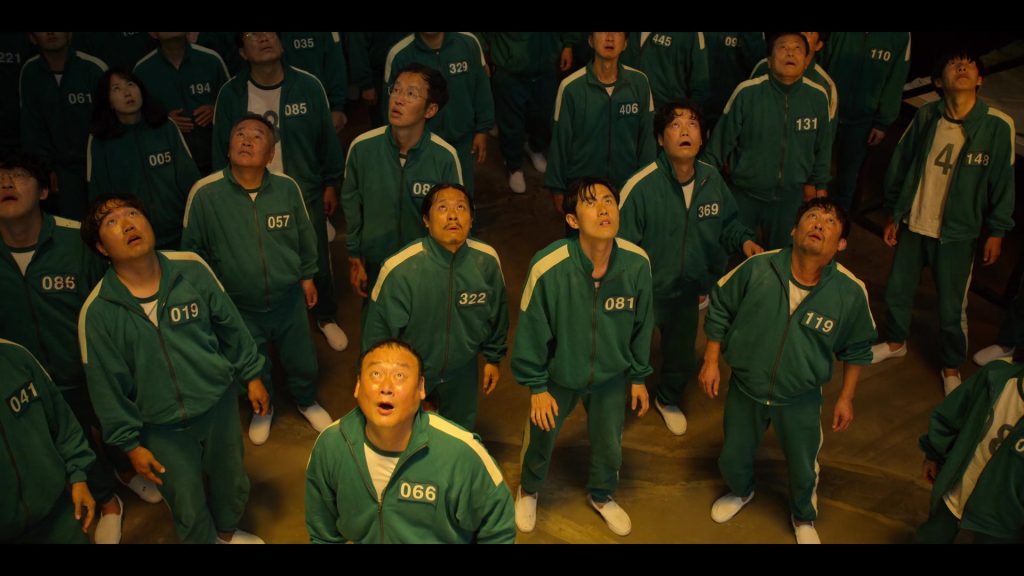
Language learning with Netflix has never been more thrilling! If you’re an intermediate English learner looking to expand your vocabulary while enjoying edge-of-your-seat drama, Squid Game Season 1 Episode 2 is your perfect classroom. Dive into the intense dialogues and high-stakes scenarios of this global sensation to pick up new words and phrases that will elevate your English skills. Let’s explore 15 carefully selected vocabulary words from the episode, complete with contextual understanding and fun learning tips.
1. Eliminated
Original Movie Context
- Subtitle: “Out of 456 players, 255 were eliminated.”
- Scene Description: The masked manager announces the results of the first game, revealing that over half the players have been eliminated.
- Emotional Tone: Tense and somber, highlighting the dire consequences of the game.
Word Breakdown
- Definition: Removed or excluded from a group or competition.
- Part of Speech: Adjective/Verb
- Pronunciation: /ɪˈlɪmɪneɪtɪd/
- Etymology: From the Latin eliminatus, past participle of eliminare (“to turn out of the door”).
Contextual Usage
- Example Sentences:
- Formal: “The candidates were eliminated after the second round of interviews.”
- Informal: “I was eliminated from the game too early.”
- Common Collocations: Eliminated from, eliminated by, be eliminated
Learning Insights
- Pronunciation Tip: Emphasize the second syllable: e-LIM-i-nated.
- Common Mistake: Confusing with “eliminate,” which is the verb form.
- Memorization Trick: Picture a door being shut, eliminating someone from the room.
2. Collateral
Original Movie Context
- Subtitle: “I used my car as collateral for the loan.”
- Scene Description: A character explains how they secured a loan by pledging their car as collateral.
- Emotional Tone: Desperate and worried about losing their asset.
Word Breakdown
- Definition: Security pledged for the repayment of a loan, to be forfeited in the event of a default.
- Part of Speech: Noun
- Pronunciation: /kəˈlætərəl/
- Etymology: From Medieval Latin collateralis, from collater- (“side by side”).
Contextual Usage
- Example Sentences:
- Formal: “She offered her house as collateral for the business loan.”
- Informal: “If you can’t pay back, they’ll take your collateral.”
- Common Collocations: Provide collateral, use collateral, pledge collateral
Learning Insights
- Pronunciation Tip: Stress on the second syllable: col-LAT-eral.
- Common Mistake: Mispronouncing the second ‘l’ as a hard ‘t’ sound.
- Memorization Trick: Think of “collateral” as something that’s collateral damage—something you give up if things go wrong.
3. Embezzlement
Original Movie Context
- Subtitle: “He’s charged with forgery, embezzlement, crimes that are all… some form of financial fraud.”
- Scene Description: Detectives interrogate a character, listing his criminal charges.
- Emotional Tone: Accusatory and investigative.
Word Breakdown
- Definition: The fraudulent taking of personal property by someone to whom it was entrusted.
- Part of Speech: Noun
- Pronunciation: /ɪmˈbɛzləmənt/
- Etymology: From Middle English embezzelen, influenced by Old French embesel (“to appropriate wrongly”).
Contextual Usage
- Example Sentences:
- Formal: “The accountant was convicted of embezzlement and sentenced to five years in prison.”
- Informal: “He got caught embezzling funds from the company.”
- Common Collocations: Commit embezzlement, convicted of embezzlement, embezzlement charges
Learning Insights
- Pronunciation Tip: Emphasize the second syllable: em-BEZ-el-ment.
- Common Mistake: Mixing up with “embezzle,” the verb form.
- Memorization Trick: Link “embezzlement” with “embezzle” – think of taking money secretly.
4. Subpoena
Original Movie Context
- Subtitle: “CYBER POLICE: SUBPOENA HAS BEEN SENT.”
- Scene Description: A character receives a legal notification from the cyber police.
- Emotional Tone: Official and intimidating.
Word Breakdown
- Definition: A writ ordering a person to attend a court.
- Part of Speech: Noun
- Pronunciation: /səbˈpiːnə/
- Etymology: From Latin sub poena, meaning “under penalty.”
Contextual Usage
- Example Sentences:
- Formal: “She received a subpoena to testify in the trial.”
- Informal: “Got a subpoena to show up in court next week.”
- Common Collocations: Receive a subpoena, serve a subpoena, issue a subpoena
Learning Insights
- Pronunciation Tip: Stress the second syllable: sub-PEE-na.
- Common Mistake: Mispronouncing it as “sub-piano.”
- Memorization Trick: Think of “subpoena” as something that compels someone to show up, like a subpoena pulling you under the law’s penalty.

5. Forgery
Original Movie Context
- Subtitle: “He’s charged with forgery, embezzlement…”
- Scene Description: A character is being accused of various financial crimes.
- Emotional Tone: Accusatory and serious.
Word Breakdown
- Definition: The action of forging or producing a copy of a document, signature, banknote, or work of art.
- Part of Speech: Noun
- Pronunciation: /ˈfɔːrdʒəri/
- Etymology: From Middle English forgery, from Old French forgier (“to forge”).
Contextual Usage
- Example Sentences:
- Formal: “He was arrested for forgery after signing fake checks.”
- Informal: “She got busted for forgery with those fake IDs.”
- Common Collocations: Commit forgery, charge with forgery, forgery case
Learning Insights
- Pronunciation Tip: Stress on the first syllable: FOR-ge-ry.
- Common Mistake: Confusing with “forge,” the verb meaning to create or shape metal.
- Memorization Trick: Link “forgery” with “fake” – think of fakes being forged.
6. Amputate
Original Movie Context
- Subtitle: “She might need to have her feet amputated.”
- Scene Description: A doctor discusses severe medical consequences.
- Emotional Tone: Desperate and urgent.
Word Breakdown
- Definition: To surgically remove a limb or part of a limb.
- Part of Speech: Verb
- Pronunciation: /ˈæmpjʊteɪt/
- Etymology: From Latin amputare, meaning “to cut away.”
Contextual Usage
- Example Sentences:
- Formal: “Due to severe infection, the doctor had to amputate his leg.”
- Informal: “He’s going to have his arm amputated after the accident.”
- Common Collocations: Amputate a limb, require amputation, amputate the toe
Learning Insights
- Pronunciation Tip: Emphasize the first syllable: AMP-u-tate.
- Common Mistake: Dropping the final “e,” making it “amputat.”
- Memorization Trick: Associate “amputate” with “amp” (short for amplifier) and “cut” – imagine cutting an amp.
7. Phonetics
Original Movie Context
- Subtitle: “Phonetics for Chinese, Japanese, Korean”
- Scene Description: The language learning extension features phonetic transcriptions for better pronunciation.
- Emotional Tone: Informative and helpful.
Word Breakdown
- Definition: The study and classification of speech sounds.
- Part of Speech: Noun
- Pronunciation: /fəˈnɛtɪks/
- Etymology: From Greek phōnētikos, meaning “vocal.”
Contextual Usage
- Example Sentences:
- Formal: “She specialized in phonetics to improve her teaching methods.”
- Informal: “Understanding phonetics helped him pronounce words correctly.”
- Common Collocations: Study phonetics, phonetics class, phonetics analysis
Learning Insights
- Pronunciation Tip: Stress on the second syllable: pho-NET-ics.
- Common Mistake: Pronouncing it as “phone-etics.”
- Memorization Trick: Think of “phonetics” as the “phony” sounds that help us speak.
8. Collateral Damage
Original Movie Context
- Subtitle: “Killing everyone out there was a… game to you, huh?”
- Scene Description: Players confront the masked managers about the loss of lives.
- Emotional Tone: Angry and confrontational.
Word Breakdown
- Definition: Unintended or incidental damage or casualties caused by an action.
- Part of Speech: Noun Phrase
- Pronunciation: /kəˈlætərəl ˈdæmɪdʒ/
- Etymology: “Collateral” (side) + “damage” (harm).
Contextual Usage
- Example Sentences:
- Formal: “The bombing caused significant collateral damage to nearby buildings.”
- Informal: “Sorry about the mess, it was just collateral damage.”
- Common Collocations: Cause collateral damage, incidental collateral damage, reduce collateral damage
Learning Insights
- Pronunciation Tip: Stress on “COL” in “collateral” and “DAM” in “damage.”
- Common Mistake: Mispronouncing “collateral” as “colon-elateral.”
- Memorization Trick: Picture collateral damage as side effects – not the main target.
9. Subside
Original Movie Context
- Subtitle: “I’m too tired to go on. Stop arguing with me.”
- Scene Description: A character’s emotional state starts to subside as tensions escalate.
- Emotional Tone: Frustration giving way to exhaustion.
Word Breakdown
- Definition: To become less intense, violent, or severe.
- Part of Speech: Verb
- Pronunciation: /səbˈsaɪd/
- Etymology: From Latin subsidius, meaning “helping, supporting.”
Contextual Usage
- Example Sentences:
- Formal: “The storm began to subside after midnight.”
- Informal: “Her anger finally subsided after they talked it out.”
- Common Collocations: Subside after, subside gradually, subside completely
Learning Insights
- Pronunciation Tip: Emphasize the second syllable: sub-SIDE.
- Common Mistake: Pronouncing it as “sub-sidee.”
- Memorization Trick: Think of “subside” as “subtle decrease” in intensity.

10. Condone
Original Movie Context
- Subtitle: “We will not condone any kind of act that impedes this democratic process.”
- Scene Description: The masked manager asserts the rules, refusing to accept disruptions.
- Emotional Tone: Authoritative and unyielding.
Word Breakdown
- Definition: To accept or allow behavior that is considered morally wrong or offensive.
- Part of Speech: Verb
- Pronunciation: /kənˈdoʊn/
- Etymology: From Latin condonare, meaning “to forgive, give up.”
Contextual Usage
- Example Sentences:
- Formal: “The company does not condone any form of harassment.”
- Informal: “I can’t condone your bad behavior at the party.”
- Common Collocations: Condone behavior, condone actions, not condone
Learning Insights
- Pronunciation Tip: Stress the second syllable: con-DONE.
- Common Mistake: Mispronouncing as “co-DONE.”
- Memorization Trick: Link “condone” with “condemn” but remember it means the opposite—allowing something.
11. Misunderstanding
Original Movie Context
- Subtitle: “There seems to be a misunderstanding.”
- Scene Description: The masked manager tries to calm the players by clarifying their intentions.
- Emotional Tone: Defensive and explanatory.
Word Breakdown
- Definition: A failure to understand something correctly.
- Part of Speech: Noun
- Pronunciation: /ˌmɪsʌndərˈstændɪŋ/
- Etymology: Prefix mis- (“wrong”) + understanding.
Contextual Usage
- Example Sentences:
- Formal: “The email led to a misunderstanding between the departments.”
- Informal: “I think there’s been a misunderstanding about our plans.”
- Common Collocations: Clear up a misunderstanding, have a misunderstanding, resolve a misunderstanding
Learning Insights
- Pronunciation Tip: Emphasize the third syllable: mis-un-der-STAND-ing.
- Common Mistake: Overemphasizing “mis,” making it sound like “MISS-understanding.”
- Memorization Trick: Break it down to “mis” + “understanding” to remember it’s about wrong understanding.
12. Doomed
Original Movie Context
- Subtitle: “You’re doomed if you don’t let us go!”
- Scene Description: Players threaten the masked manager, expressing their desperation.
- Emotional Tone: Aggressive and threatening.
Word Breakdown
- Definition: Likely to fail or suffer a terrible fate.
- Part of Speech: Adjective
- Pronunciation: /duːmd/
- Etymology: From Old English dom, meaning “judgment, decree.”
Contextual Usage
- Example Sentences:
- Formal: “Without proper funding, the project is doomed to fail.”
- Informal: “If you don’t study, you’re doomed to flunk the exam.”
- Common Collocations: Be doomed, seem doomed, feel doomed
Learning Insights
- Pronunciation Tip: Clear pronunciation of the “d” at both ends: DOOMED.
- Common Mistake: Dropping the ending “d,” making it sound like “doom.”
- Memorization Trick: Associate “doomed” with the concept of being “doomed to fail” like a sinking ship.
13. Terminate
Original Movie Context
- Subtitle: “We will terminate the game.”
- Scene Description: The masked manager announces the vote to end the game.
- Emotional Tone: Decisive and authoritative.
Word Breakdown
- Definition: To bring to an end; to conclude.
- Part of Speech: Verb
- Pronunciation: /ˈtɜːrmɪneɪt/
- Etymology: From Latin terminatus, past participle of terminare (“to end, limit”).
Contextual Usage
- Example Sentences:
- Formal: “The company decided to terminate his contract due to poor performance.”
- Informal: “We need to terminate this meeting; it’s getting too long.”
- Common Collocations: Terminate a contract, terminate employment, terminate the agreement
Learning Insights
- Pronunciation Tip: Emphasize the first syllable: TER-mi-nate.
- Common Mistake: Mispronouncing the second syllable as “min.”
- Memorization Trick: Think of “terminate” as “term” + “inate” – ending a term.
14. Reside
Original Movie Context
- Subtitle: “I live in Ssangmun-dong. My name is Seong Gi-hun.”
- Scene Description: A character introduces himself, mentioning where he lives.
- Emotional Tone: Neutral and informative.
Word Breakdown
- Definition: To have one’s home in a particular place.
- Part of Speech: Verb
- Pronunciation: /rɪˈzaɪd/
- Etymology: From Latin residere, meaning “to sit back.”
Contextual Usage
- Example Sentences:
- Formal: “She resides in New York City.”
- Informal: “Where do you reside?”
- Common Collocations: Reside in, reside at, reside permanently
Learning Insights
- Pronunciation Tip: Emphasize the second syllable: re-SIDE.
- Common Mistake: Overemphasizing the first syllable, making it sound like “RE-sid.”
- Memorization Trick: Link “reside” with “residence” – both relate to where you live.

15. Consent
Original Movie Context
- Subtitle: “Consent form clause 1.”
- Scene Description: The masked manager explains the rules of the game through the consent form.
- Emotional Tone: Authoritative and procedural.
Word Breakdown
- Definition: Permission for something to happen or agreement to do something.
- Part of Speech: Noun
- Pronunciation: /kənˈsɛnt/
- Etymology: From Latin consentire, meaning “to agree together.”
Contextual Usage
- Example Sentences:
- Formal: “You must give your consent before we proceed with the surgery.”
- Informal: “Do you consent to share your information?”
- Common Collocations: Give consent, obtain consent, consent to
Learning Insights
- Pronunciation Tip: Emphasize the second syllable: con-SENT.
- Common Mistake: Mispronouncing the second syllable as “sent” with a short “e.”
- Memorization Trick: Think of “consent” as “come-sent” – agreeing to send something forward.
Making Language Learning Fun and Effective
Learning English through Squid Game Season 1 Episode 2 not only immerses you in a captivating story but also helps you grasp new vocabulary in context. Imagine watching intense scenes where words like “embezzlement” and “collateral” pop up naturally, making them easier to remember and use.
But why stop there? With FunFluen.com, our innovative language learning extension, you can supercharge your learning experience. Here’s how:
- Mouse Dictionary: Hover over any word in the subtitle to see its definition instantly. No need to pause or search—learn seamlessly as you watch.
- Save Words: Encounter a new word? Click to save it for later review. Build your personalized vocabulary list effortlessly.
- Fluency Gym: Engage in dynamic modes like Reading, Listening, and Speaking, transforming passive vocabulary into active language skills. Practice alongside native dialogues and enhance your fluency interactively.
Embrace the Adventure of Learning
Language learning should be as exciting as your favorite shows. By integrating real movie dialogues and cultural contexts, you not only expand your vocabulary but also gain insights into societal nuances and expressions. Plus, with tools like Fluency Gym, you turn every viewing session into a productive learning adventure.
Ready to Level Up Your English?
Join the thousands of learners transforming their language skills with FunFluen.com. Experience how technology can make learning engaging, effective, and fun. Whether you’re a solo practitioner or looking for a dynamic way to advance your English, our extension is designed to meet your needs.
Start your journey today and make every movie a step toward mastering English. Visit FunFluen.com and discover the power of immersive language learning!
Embark on your language learning journey with the thrilling world of Squid Game and innovative tools from FunFluen.com. Make every episode count towards your English mastery!