Learning language with Netflix doesn’t have to be a monotonous task confined to textbooks and flashcards. What if you could enhance your vocabulary while laughing along with your favorite characters? Enter Friends Season 1 Episode 4—a treasure trove of relatable dialogues and humorous scenarios perfect for intermediate English learners. In this article, we’ll explore 15 carefully selected vocabulary words from this iconic episode, providing deep contextual understanding to make your language learning journey both fun and effective. Plus, discover how FunFluen, our innovative language learning extension, can elevate your Netflix sessions into dynamic learning experiences!
1. Omnipotent
Original Movie Context:
- Dialogue:
- Phoebe: “If I were omnipotent for a day, I would want, um, world peace, no more hunger, good things for the rain-forest…And bigger boobs!”
- Scene Description: Phoebe humorously imagines having unlimited power, blending noble aspirations with a playful personal wish.
- Emotional Tone: Light-hearted and humorous.
Word Breakdown:
- Definition: All-powerful; having unlimited power.
- Part of Speech: Adjective
- Pronunciation: /ɒmˈnɪpətənt/
- Etymology: From Latin omni (all) + potent (powerful).
- Examples:
- “In many religions, God is considered omnipotent.”
- “He acted like an omnipotent leader, making decisions without consulting anyone.”
Contextual Usage:
- Example Sentences:
- “She felt omnipotent after acing the exam.”
- “With the new software, you can have an omnipotent view of your data.”
- Variations:
- Formal: “The CEO’s omnipotent control over the company was evident.”
- Informal: “He acts like he’s omnipotent when he’s around his friends.”
- Common Collocations: Omnipotent being, omnipotent force, omnipotent ruler.
Learning Insights:
- Pronunciation Tip: Break it down into syllables: om-ni-po-tent.
- Common Mistake: Confusing it with omniscient (all-knowing).
- Cultural Nuance: Often used humorously or exaggeratedly to imply someone feels powerful.
2. Floopy
Original Movie Context:
- Dialogue:
- Rachel: “Everything’s just kinda like… floopy.”
- Monica: “So what? You’ve just gotta figure at some point it’s all gonna come together, and it’s just gonna be… un-floopy.”
- Scene Description: Rachel expresses her feelings of disarray and uncertainty after leaving her fiancé, with Monica offering reassurance.
- Emotional Tone: Reflective and slightly humorous.
Word Breakdown:
- Definition: (Slang) Unsettled, chaotic, or disorganized.
- Part of Speech: Adjective
- Pronunciation: /ˈfluːpi/
- Etymology: A playful, made-up word combining “fluffy” and “loopy.”
- Examples:
- “My schedule is so floopy this week with all the meetings.”
- “After moving to a new city, she felt a bit floopy.”
Contextual Usage:
- Example Sentences:
- “The plans are still floopy, nothing is finalized yet.”
- “His thoughts were all floopy after staying up late.”
- Variations:
- Formal: Not typically used formally.
- Informal: “This project is getting floopy, I need to organize it better.”
- Common Collocations: Floopy situation, feeling floopy, floopy days.
Learning Insights:
- Cultural Note: English speakers often invent playful words to express complex emotions, adding personality to conversations.
- Memorization Trick: Associate “floopy” with “fluffy” to remember its light-hearted connotation of disorder.
3. Consummate
Original Movie Context:
- Dialogue:
- Ross: “Today’s the day Carol and I first consummated our physical relationship.”
- Scene Description: Ross nostalgically recounts an important moment in his past relationship, emphasizing its significance.
- Emotional Tone: Reflective and serious.
Word Breakdown:
- Definition: To make something complete, particularly a marriage or relationship, through intimacy.
- Part of Speech: Verb
- Pronunciation: /ˈkɒnsəmeɪt/
- Etymology: From Latin consummatus (completed).
- Examples:
- “They consummated their marriage during their honeymoon.”
- “The deal was consummated after several rounds of negotiations.”
Contextual Usage:
- Example Sentences:
- “They consummated their partnership with a grand opening event.”
- “The treaty was consummated with the signing of the agreement.”
- Variations:
- Formal: “The couple consummated their union in a private ceremony.”
- Informal: Rarely used informally, might be mentioned jokingly.
- Common Collocations: Consummate a marriage, consummate a relationship, consummate agreement.
Learning Insights:
- Pronunciation Tip: Stress the first syllable: CON-su-mate.
- Common Mistake: Misusing as an adjective; it is primarily a verb.
- Cultural Nuance: Often used in formal contexts but can be humorous when used in casual conversations, as seen in Friends.
4. Bonehead
Original Movie Context:
- Dialogue:
- Pizza Guy: “Oh, bonehead, bonehead!”
- Scene Description: The delivery guy scolds himself humorously for mixing up pizza orders, displaying self-deprecation.
- Emotional Tone: Humorous and self-deprecating.
Word Breakdown:
- Definition: A silly or clumsy person.
- Part of Speech: Noun
- Pronunciation: /ˈboʊnˌhɛd/
- Etymology: Combines “bone” (suggesting hardness) and “head” (implying lack of intelligence).
- Examples:
- “I forgot my wallet again, such a bonehead move!”
- “Don’t be a bonehead—check your work twice!”
Contextual Usage:
- Example Sentences:
- “He called himself a bonehead after tripping over his own feet.”
- “You’re acting like a bonehead, but I know you didn’t mean it.”
- Variations:
- Formal: Rarely used formally; better suited for informal contexts.
- Informal: “Stop being such a bonehead and listen to me.”
- Common Collocations: Bonehead mistake, act like a bonehead, bonehead behavior.
Learning Insights:
- Pronunciation Tip: Emphasize both syllables: bone-HEAD.
- Common Mistake: Using it as an adjective; it’s a noun.
- Cultural Nuance: A lighthearted insult, often used humorously or self-deprecatingly.
5. Nodded Off
Original Movie Context:
- Dialogue:
- Ross: “It’s okay, y’know, you just nodded off again.”
- Scene Description: Ross notices Phoebe has fallen asleep again at Central Perk, highlighting her exhaustion.
- Emotional Tone: Casual and understanding.
Word Breakdown:
- Definition: To fall asleep briefly, often unintentionally.
- Part of Speech: Phrasal verb
- Pronunciation: /ˈnɒd.ɪd ˈɒf/
- Etymology: “Nodded” refers to the head motion when falling asleep, “off” implies briefly stopping activity.
- Examples:
- “He nodded off during the boring lecture.”
- “After a long day, I nodded off as soon as my head hit the pillow.”
Contextual Usage:
- Example Sentences:
- “She nodded off during the meeting and missed an important point.”
- “I almost nodded off while watching that slow movie.”
- Variations:
- Formal: “He inadvertently dozed off during the presentation.”
- Informal: “I totally nodded off during that movie.”
- Common Collocations: Nod off to sleep, nod off during, easily nod off.
Learning Insights:
- Pronunciation Tip: Blend the words smoothly: nod-ded-off.
- Common Mistake: Confusing “nodded off” with “nod off” (both are correct, but context matters).
- Cultural Nuance: Used casually to describe falling asleep without intending to.
6. Predicament
Original Movie Context:
- Dialogue:
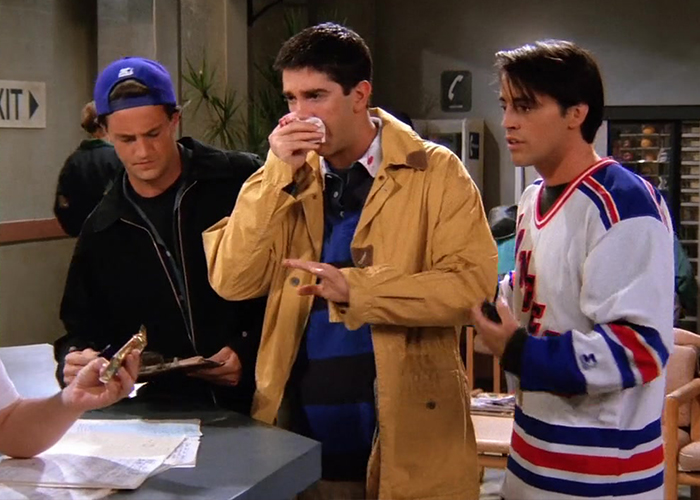
- Chandler: “Listen, it’s kind of an emergency. Well, I guess you know that, or we’d be in the predicament room.”
- Scene Description: Chandler refers to the difficult situation they’re in, needing urgent help.
- Emotional Tone: Slightly stressed but humorous.
Word Breakdown:
- Definition: A difficult, unpleasant, or embarrassing situation.
- Part of Speech: Noun
- Pronunciation: /prɪˈdɪkəmənt/
- Etymology: From Latin praedicamentum (a condition).
- Examples:
- “She found herself in a predicament when her car broke down in the middle of nowhere.”
- “Deciding between two job offers put him in a difficult predicament.”
Contextual Usage:
- Example Sentences:
- “They were in a predicament after losing their passports abroad.”
- “The sudden rain put us in a predicament during the picnic.”
- Variations:
- Formal: “The company is facing a financial predicament.”
- Informal: “We’re in a bit of a predicament with the lost keys.”
- Common Collocations: Find oneself in a predicament, financial predicament, tricky predicament.
Learning Insights:
- Pronunciation Tip: Emphasize the second syllable: pre-DI-ca-men-t.
- Common Mistake: Mispronouncing as “predi-cate,” which is a different word.
- Cultural Nuance: Often used to add formality when describing problems, but can be used humorously.
7. Duplex
Original Movie Context:
- Dialogue:
- Leslie: “I know. I know! I’m a duplex.”
- Scene Description: Leslie humorously describes her pregnancy by comparing herself to a duplex, emphasizing her physical changes.
- Emotional Tone: Light-hearted and funny.
Word Breakdown:
- Definition: A house divided into two separate living units, typically side by side.
- Part of Speech: Noun
- Pronunciation: /ˈdjuːplɛks/
- Etymology: From Latin duplex (double).
- Examples:
- “They bought a duplex to rent out one side and live in the other.”
- “The duplex has two kitchens and two bathrooms.”
Contextual Usage:
- Example Sentences:
- “Living in a duplex allows for privacy while staying close to family.”
- “The duplex was renovated last year to include modern amenities.”
- Variations:
- Formal: “They invested in a duplex for additional income.”
- Informal: “We’re moving into a duplex next month.”
- Common Collocations: Duplex house, own a duplex, live in a duplex.
Learning Insights:
- Pronunciation Tip: “Du-plex” – both syllables are stressed equally.
- Common Mistake: Confusing with “duplicate” or “duplexer.”
- Cultural Nuance: Used primarily in real estate contexts to describe housing arrangements.
Thank you for joining us again in our Friends-based language learning series. Learning language with Netflix not only makes studying enjoyable but also exposes you to cultural nuances and idiomatic expressions that are essential for fluency. Don’t miss our earlier post named : Mastering English with Friends Season 1 Episode 3: 12 Essential Vocabulary Words, which offers essential tips and techniques to support your progress in today’s article.
8. Slumber
Original Movie Context:
- Dialogue:
- (Multiple instances, such as characters sleeping)
- Scene Description: Characters taking naps or sleeping in various scenes, adding a relaxed atmosphere.
- Emotional Tone: Relaxed and casual.
Word Breakdown:
- Definition: Sleep, especially a deep and peaceful sleep.
- Part of Speech: Noun and verb
- Pronunciation: /ˈslʌmbər/
- Etymology: From Old English slumer.
- Examples:
- Noun: “After a long day, she enjoyed a peaceful slumber.”
- Verb: “He likes to slumber in on weekends.”
Contextual Usage:
- Example Sentences:
- “The baby’s slumber was undisturbed by the loud noises.”
- “They decided to slumber under the stars during their camping trip.”
- Variations:
- Formal: “The slumber of the community was disrupted by the storm.”
- Informal: “I could use a slumber right now.”
- Common Collocations: Peaceful slumber, deep slumber, slumber party.
Learning Insights:
- Pronunciation Tip: Stress the first syllable: SLUM-ber.
- Common Mistake: Mispronouncing as “slumbering” without the ‘u’ sound.
- Cultural Nuance: Can be used literally or metaphorically to describe inactivity.
9. Reassure
Original Movie Context:
- Dialogue:
- Phoebe: “…having to reassure each other that they’re having a good time.”
- Scene Description: Phoebe describes her grandmother’s relationship dynamic, where they reassure each other due to insecurities.
- Emotional Tone: Explanatory and sympathetic.
Word Breakdown:
- Definition: To say or do something to remove the doubts and fears of someone.
- Part of Speech: Verb
- Pronunciation: /ˌriːəˈʃʊr/
- Etymology: From Latin re (again) + assicurare (make sure).
- Examples:
- “She tried to reassure her friend that everything would be okay.”
- “The manager reassured the team that their jobs were safe.”
Contextual Usage:
- Example Sentences:
- “He reassured her that the exam wasn’t as difficult as she feared.”
- “Parents often reassure their children during thunderstorms.”
- Variations:
- Formal: “The spokesperson reassured the public about the safety measures.”
- Informal: “Don’t worry, I’ll reassure you that it’s going to be fine.”
- Common Collocations: Reassure someone, reassure about, reassured by.
Learning Insights:
- Pronunciation Tip: Re-ASSURE – stress on the second syllable.
- Common Mistake: Misplacing the stress or confusing with “ensure” or “insure.”
- Cultural Nuance: Used to comfort others, showing empathy and support.
10. Casual
Original Movie Context:
- Dialogue:
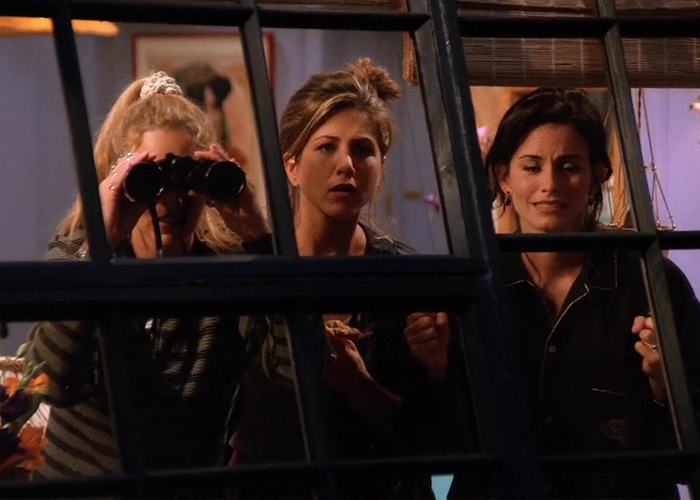
- Chandler: “He’s open!”
- Scene Description: Chandler uses “casual” language while discussing Ross’s situation, implying a relaxed or informal attitude.
- Emotional Tone: Light-hearted and slightly teasing.
Word Breakdown:
- Definition: Relaxed and unconcerned; not formal.
- Part of Speech: Adjective
- Pronunciation: /ˈkæʒuəl/
- Etymology: From Latin casualis, from casus (chance).
- Examples:
- “He wore casual clothes to the party.”
- “Their conversation was very casual and friendly.”
Contextual Usage:
- Example Sentences:
- “She prefers a casual dining experience over a formal one.”
- “The meeting had a casual atmosphere, making everyone feel comfortable.”
- Variations:
- Formal: “The event maintained a casual yet professional ambiance.”
- Informal: “Let’s keep it casual, no need for suits.”
- Common Collocations: Casual wear, casual conversation, casual attitude.
Learning Insights:
- Pronunciation Tip: Emphasize the first syllable: CA-sual.
- Common Mistake: Pronouncing it as “cazual.”
- Cultural Nuance: Often used to describe informal settings or attire.
11. Scream
Original Movie Context:
- Dialogue:
- Rachel, Leslie, Kiki, Joanne: Screaming in excitement and surprise.
- Scene Description: Characters react loudly with screams when seeing each other, displaying strong emotions.
- Emotional Tone: Excited and surprised.
Word Breakdown:
- Definition: A loud, high-pitched sound made in fear, pain, or excitement.
- Part of Speech: Verb and noun
- Pronunciation: /skriːm/
- Etymology: From Old English scrēam, related to similar words in Germanic languages.
- Examples:
- Verb: “She screamed when she saw the spider.”
- Noun: “There was a scream in the middle of the night.”
Contextual Usage:
- Example Sentences:
- “The children screamed with delight at the amusement park.”
- “He let out a scream of frustration.”
- Variations:
- Formal: “The crowd emitted a collective scream of approval.”
- Informal: “She gave a little scream when she won the prize.”
- Common Collocations: Scream for, scream at, loud scream, high-pitched scream.
Learning Insights:
- Pronunciation Tip: Keep it smooth: “scream.”
- Common Mistake: Adding extra syllables or mispronouncing the ‘ea’ sound.
- Cultural Nuance: Used to express strong emotions, both positive and negative.
We’re excited to continue our Friends-themed language lessons! If you need a recap, check out our previous post name Mastering English with Netflix: 15 Essential Vocabulary Words from Friends Season 1 Episode 2
12. Mischief
Original Movie Context:
- Dialogue:
- Chandler and Joey: Kicking a can, causing mischief.
- Scene Description: The guys engage in playful, trouble-making activities while watching a hockey game.
- Emotional Tone: Playful and slightly rebellious.
Word Breakdown:
- Definition: Playful misbehavior or troublemaking, especially in a playful way.
- Part of Speech: Noun
- Pronunciation: /ˈmɪstʃɪf/
- Etymology: From Old French meschief (bad fortune), shifting to mean misbehavior.
- Examples:
- “The children were full of mischief during the summer vacation.”
- “He got into some mischief at school but always managed to charm his way out.”
Contextual Usage:
- Example Sentences:
- “The puppy got into some mischief when left alone.”
- “Her mischievous grin hinted at a prank.”
- Variations:
- Formal: “The employee’s mischief was causing disruptions in the office.”
- Informal: “They were up to some mischief at the party.”
- Common Collocations: Get into mischief, mischievous behavior, playful mischief.
Learning Insights:
- Pronunciation Tip: Emphasize the first syllable: MIS-chief.
- Common Mistake: Confusing with mischievous; mischief is the noun, mischievous is the adjective.
- Cultural Nuance: Often associated with playful or harmless trouble, not serious wrongdoing.
13. Confused
Original Movie Context:
- Dialogue:
- Ross: “Carol was wearing boots just like those the night that we- we first- y’know.”
- Scene Description: Ross struggles to remember past events clearly, showing confusion and hesitance.
- Emotional Tone: Uncertain and hesitant.
Word Breakdown:
- Definition: Unable to think clearly; bewildered.
- Part of Speech: Adjective
- Pronunciation: /kənˈfjuːzd/
- Etymology: From Latin confundere (to pour together), meaning to mix up.
- Examples:
- “He looked confused when I explained the instructions.”
- “The new policy left many employees confused.”
Contextual Usage:
- Example Sentences:
- “She was confused by the complex math problem.”
- “After the long journey, he felt confused about which way to go.”
- Variations:
- Formal: “The instructions were ambiguous, causing widespread confusion.”
- Informal: “I’m confused, can you explain that again?”
- Common Collocations: Feel confused, look confused, confused about.
Learning Insights:
- Pronunciation Tip: Emphasize the second syllable: con-FUSED.
- Common Mistake: Mispronouncing with a hard ‘c’ instead of ‘k’.
- Cultural Nuance: Used to describe lack of understanding or clarity in situations.
14. Floppy
Original Movie Context:
- Dialogue:
- Phoebe: “Look, look, I have elbows!” (Potential confusion with floopy).
- Scene Description: Characters joke about physical attributes, using playful language to tease each other.
- Emotional Tone: Humorous and teasing.
Word Breakdown:
- Definition: Soft and flexible; bending easily.
- Part of Speech: Adjective
- Pronunciation: /ˈflɒpi/
- Etymology: From Middle English floppy, possibly imitative of the sound or motion.
- Examples:
- “The pillow is too floppy, it doesn’t provide enough support.”
- “Her hair was curly and floppy.”
Contextual Usage:
- Example Sentences:
- “He has floppy ears like a dog.”
- “The dress was made of a floppy fabric that draped beautifully.”
- Variations:
- Formal: “The document was floppy, requiring reinforcement.”
- Informal: “I love the floppy style of these slippers.”
- Common Collocations: Floppy hat, floppy disk (historical), floppy dress.
Learning Insights:
- Pronunciation Tip: Keep it short and clear: FLOP-py.
- Common Mistake: Adding extra syllables or mispronouncing the ‘o’ sound.
- Cultural Nuance: Often used to describe physical softness or lack of firmness; sometimes used humorously.
15. Scenario
Original Movie Context:
- Dialogue:
- Chandler: “We’re taking you.”
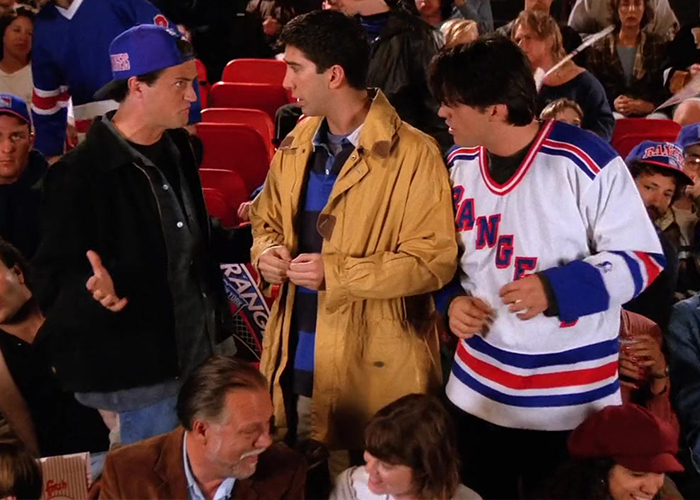
- Scene Description: Chandler refers to the situation or plan during the group’s discussion about attending the hockey game.
- Emotional Tone: Strategic and planning.
Word Breakdown:
- Definition: A possible situation or sequence of events.
- Part of Speech: Noun
- Pronunciation: /sɪˈnɑːrioʊ/
- Etymology: From Italian scenario, from Latin scena (scene).
- Examples:
- “They discussed different scenarios before making a decision.”
- “The emergency response team prepared for various scenarios.”
Contextual Usage:
- Example Sentences:
- “In this scenario, we would need to increase production.”
- “What’s the worst-case scenario if we miss the deadline?”
- Variations:
- Formal: “Various economic scenarios were considered in the analysis.”
- Informal: “Let’s think through this scenario before acting.”
- Common Collocations: Possible scenario, worst-case scenario, hypothetical scenario.
Learning Insights:
- Pronunciation Tip: Focus on the ‘sci’ sounding like ‘see’: see-NAR-ee-oh.
- Common Mistake: Mispronouncing the ‘c’ as ‘sh’ instead of ‘s’.
- Cultural Nuance: Used to discuss potential outcomes and plans, both in professional and casual contexts.
How to Learn Vocabulary Effectivel
y While Watching Friends
Learning English through movies like Friends is not only effective but also incredibly enjoyable. One effective way to boost your language proficiency is learning language with Netflix, as it provides a diverse range of genres and accents to suit your learning preferences. Here’s how you can maximize your vocabulary learning with our FunFluen extension:
c learning experience!
By immersing yourself in the rich, contextual dialogues of Friends, and utilizing smart tools like FunFluen, you can make your language learning journey both efficient and enjoyable. So, grab your favorite episode, sit back, and let the learning begin!