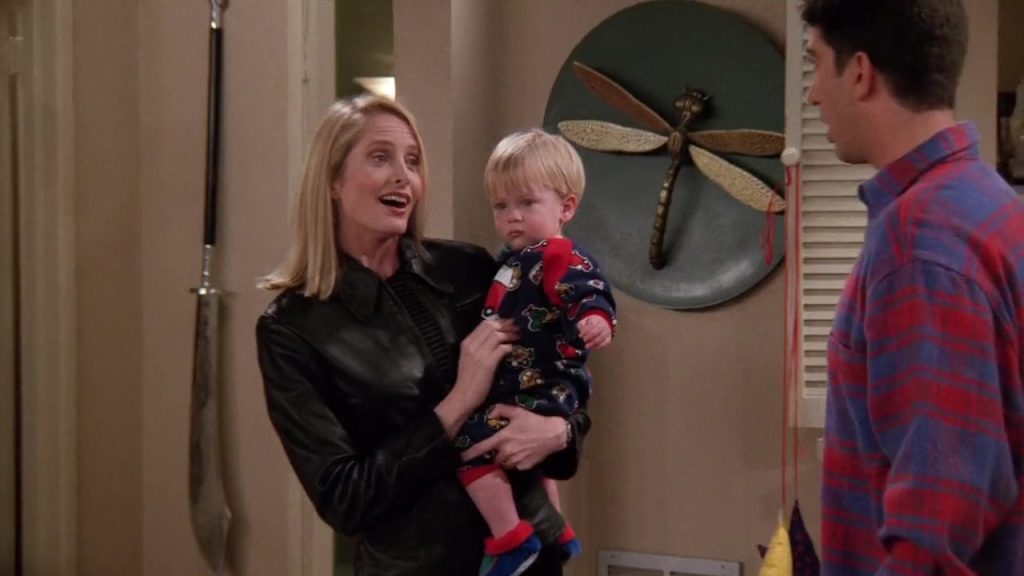
Are you ready to enhance your English vocabulary while watching Friends? Language learning with Netflix has never been more fun or effective! In this article, we’ll dive into 10 essential vocabulary words and idioms from Friends S02E20, where Monica, Rachel, Phoebe, and the gang are up to their usual hilarious antics. These words aren’t just any random vocabulary—they come from real-life conversations that you’ll hear all the time in everyday English.Learning English online has never been more engaging, especially with tools that allow you to immerse yourself in real conversations from shows like Friends.
But first, let’s take a look at the Vocabulary to Learn in This Article:
- Snuff Film
- Minty Fresh
- Breath Issues
- Poking
- Bizillionth
- The End
- What’s About to Happen?
- Take Someone On His Jag
- Watcha Doin’
- Bruises You
- Leftovers
- Frontier Fun
- Rabies
- Extra Ticket
- Jag
Ready to make learning English online fun and effective? Let’s jump right in!
1. Snuff Film
- Original Movie Context
- Dialogue: “OK, what kind of a sick doggie snuff film is this?” — Phoebe, reacting to a heartbreaking scene in Old Yeller.
- Scene Description: The group is watching Old Yeller, but Phoebe is blissfully unaware of the sad ending. When she realizes what’s happening, she humorously calls it a “snuff film,” not understanding the depth of the scene.
- Word Breakdown
- Definition: A movie that shows real-life violence or death, often for exploitation.
- Part of Speech: Noun
- Pronunciation: /snʌf fɪlm/
- Etymology: The term “snuff” originally referred to killing or extinguishing (as in snuffing out a candle), which evolved into this darker term for violent films.
- Examples:
- “The documentary depicted some disturbing images, almost like a snuff film.”
- “Is that movie a snuff film or just an over-the-top horror flick?”
- Contextual Usage
- In Formal Speech: “The movie was too violent for me; it felt like a snuff film.”
- In Informal Speech: “That scene felt like a total snuff film!”
- Learning Insights
- Cultural Note: “Snuff film” is a strong term and is typically used to describe exploitative media. Phoebe’s humorous usage of it adds a playful tone.
- Pronunciation Tip: Focus on the “u” sound in “snuff” and the short “i” in “film.”
If you’re looking for an interactive way to practice while watching your favorite movies or shows, learning English online can be both fun and effective.
2. Minty Fresh
- Original Movie Context
- Dialogue: “Keeps his fingers to himself and he’s always minty fresh.” — Monica, describing Richard in a humorous way.
- Scene Description: Monica is teasing Joey and Chandler about Richard’s cleanliness and how he always smells good.
- Word Breakdown
- Definition: Fresh, clean, and pleasantly scented. Often used in a humorous or exaggerated way to describe someone who smells very fresh.
- Part of Speech: Adjective
- Pronunciation: /ˈmɪnti frɛʃ/
- Etymology: “Minty” comes from “mint,” a plant known for its fresh, strong aroma.
- Examples:
- “After the shower, I always feel minty fresh.”
- “She loves that minty fresh toothpaste!”
- Contextual Usage
- In Formal Speech: “His clothes always smell minty fresh, which is quite impressive.”
- In Informal Speech: “He’s always minty fresh—no wonder she likes him!”
- Learning Insights
- Cultural Nuance: In English-speaking cultures, “minty fresh” is a playful way of complimenting someone’s cleanliness.
- Pronunciation Tip: Make sure to emphasize the “m” in minty and the “f” in fresh.
Whether you’re watching Netflix or YouTube, learning English online through real-world context is one of the best ways to improve your vocabulary naturally.
3. Breath Issues
- Original Movie Context
- Dialogue: “Yeah, Ross can’t go so it’s between my friend Eric Prower who has breath issues and Dan with the poking.” — Chandler.
- Scene Description: Chandler is humorously discussing the dilemma of choosing between two friends to go to the Knicks game. One has “breath issues,” which is a polite way of saying the friend has bad breath.
- Word Breakdown
- Definition: A polite way to describe someone’s bad breath.
- Part of Speech: Noun
- Pronunciation: /brɛθ ˈɪʃuːz/
- Etymology: The phrase “breath issues” is a more tactful or polite way of referring to “bad breath.”
- Examples:
- “He’s really nice, but he has some breath issues.”
- “Before a date, I make sure to use mouthwash—I don’t want any breath issues.”
- Contextual Usage
- In Formal Speech: “He had some breath issues, so I offered him some gum.”
- In Informal Speech: “Man, that guy’s got major breath issues!”
- Learning Insights
- Cultural Nuance: This term is used in polite conversation to avoid directly calling out someone’s bad breath.
- Pronunciation Tip: Practice the “th” sound in “breath” for smooth pronunciation.
With the right tools, learning English online can become a personalized journey, helping you build confidence as you learn through familiar scenes and dialogues.
4. Poking
- Original Movie Context
- Dialogue: “Dan with the poking.” — Chandler, referring to a friend’s tendency to poke others.
- Scene Description: Chandler humorously compares two friends, one with bad breath and one who has a habit of poking people to annoy them.
- Word Breakdown
- Definition: The act of prodding or jabbing someone, typically with a finger.
- Part of Speech: Verb (to poke) / Noun (poking)
- Pronunciation: /poʊkɪŋ/
- Etymology: The verb “poke” comes from the Old French word “poquer,” meaning to thrust or prod.
- Examples:
- “Stop poking me! It’s annoying!”
- “She kept poking at the computer screen, trying to find the right file.”
- Contextual Usage
- In Formal Speech: “He kept poking at his keyboard instead of focusing on the task.”
- In Informal Speech: “Quit poking me, man!”
- Learning Insights
- Cultural Nuance: Poking can be playful or irritating, depending on the situation.
- Pronunciation Tip: Make sure to elongate the “o” sound in “poke” for clear pronunciation.
5. Bizillionth
- Original Movie Context
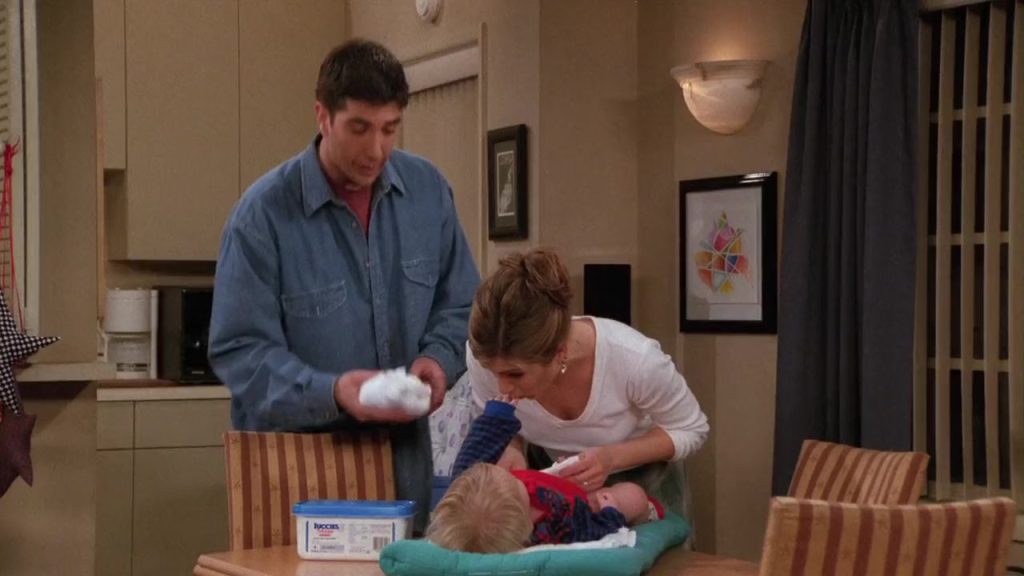
- Dialogue: “For the bizillionth time, yes, I see other women in the shower at the gym, and no I don’t look.” — Monica, frustrated with repeated questions.
- Scene Description: Monica is humorously exaggerating how often she’s been asked the same question.
- Word Breakdown
- Definition: An exaggerated number, indicating that something has happened many times.
- Part of Speech: Noun
- Pronunciation: /bɪˈzɪljənθ/
- Etymology: “Bizillionth” is a playful version of “billionth,” with an over-the-top twist.
- Examples:
- “I’ve told you the answer a bizillionth time, stop asking!”
- “This is the bizillionth time I’ve been to this restaurant.”
- Contextual Usage
- In Formal Speech: “For the billionth time, please remember to lock the door.”
- In Informal Speech: “Ugh, I’ve had to explain this bizillionth time!”
- Learning Insights
- Cultural Nuance: “Bizillionth” is a humorous, exaggerated version of “billionth” that shows frustration or exaggeration.
- Pronunciation Tip: Focus on the stress in the middle syllable: “bi-ZIL-lionth.”
Learning English online isn’t just about textbooks – it’s about connecting with real conversations and cultural contexts from movies and TV shows.
6. The End
- Original Movie Context
- Dialogue: “And that’s the end of the story.” — Ross
- Scene Description: Ross finishes a story with a dramatic, almost sarcastic conclusion, emphasizing that the conversation is over.
- Word Breakdown
- Definition: A phrase used to indicate the conclusion or finality of a situation or story.
- Part of Speech: Noun (phrase)
- Pronunciation: /ðə ɛnd/
- Examples:
- “And that’s the end of that discussion!”
- “The end of the movie was so unexpected!”
- Contextual Usage
- In Formal Speech: “This chapter concludes here, and that’s the end.”
- In Informal Speech: “The end, dude, the end!”
If you want to level up your English, learning online with media like Netflix makes the process enjoyable and easy to stick with.
7. What’s About to Happen?
- Original Movie Context
- Dialogue: “What’s about to happen here?” — Joey
- Scene Description: Joey asks, with confusion and curiosity, what’s going on in the scene, trying to understand the situation.
- Word Breakdown
- Definition: A question asking what will occur next, indicating curiosity or suspense.
- Part of Speech: Interrogative phrase
- Pronunciation: /wʌts əˈbaʊt tə ˈhæpən/
- Examples:
- “What’s about to happen at the party?”
- “I wonder what’s about to happen in the next scene.”
- Contextual Usage
- In Formal Speech: “Could you explain what’s about to happen during this procedure?”
- In Informal Speech: “What’s about to happen, man? This is crazy!”
Explore the world of learning English online through immersive video content and interactive features that make every session both educational and enjoyable.
8. Take Someone On His Jag
- Original Movie Context
- Dialogue: “He’s taking her on his jag.” — Chandler
- Scene Description: Chandler humorously describes how Richard is taking Monica on a fun but slightly erratic trip.
- Word Breakdown
- Definition: To take someone on a wild, unpredictable, or intense journey, either physically or emotionally.
- Part of Speech: Verb phrase
- Pronunciation: /teɪk ˈsʌmwʌn ɒn hɪz dʒæɡ/
- Examples:
- “He took me on a jag to the top of the mountain.”
- “She’s been on a jag of late-night working.”
- Contextual Usage
- In Formal Speech: “He took me on an unusual trip to the museum.”
- In Informal Speech: “He’s on a jag to fix everything!”
9. Watcha Doin’
- Original Movie Context
- Dialogue: “Watcha doin’?” — Phoebe
- Scene Description: Phoebe casually asks what someone is doing, using informal and colloquial speech.
- Word Breakdown
- Definition: A very informal way of asking, “What are you doing?”
- Part of Speech: Interrogative (informal)
- Pronunciation: /ˈwɒtʃə dʊɪn/
- Examples:
- “Watcha doin’ this weekend?”
- “Watcha doin’? You look busy!”
- Contextual Usage
- In Formal Speech: “What are you doing?”
- In Informal Speech: “Hey, watcha doin’?”
10. Bruises You
- Original Movie Context
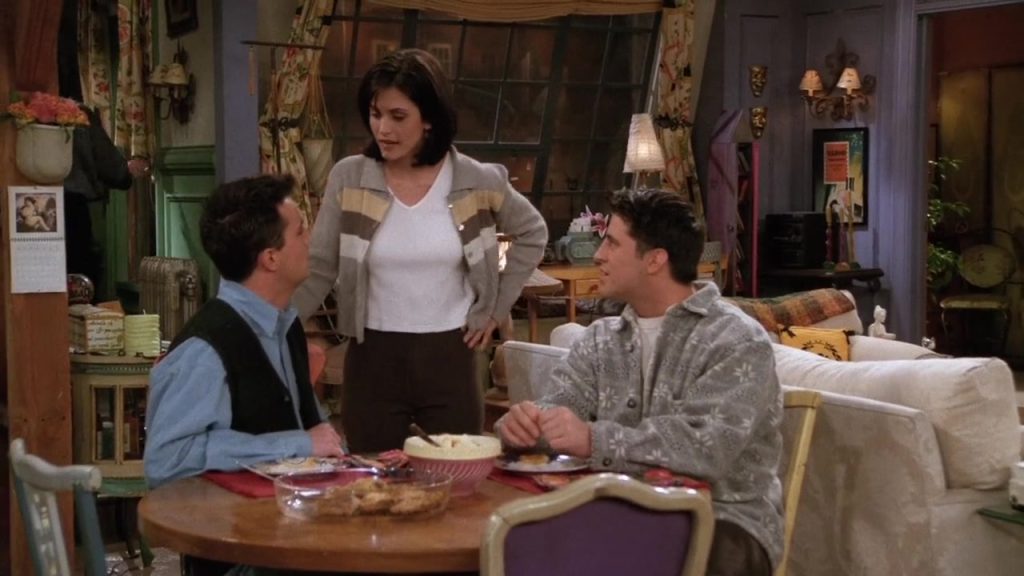
- Dialogue: “Yeah, that kind of stuff really bruises you.” — Chandler
- Scene Description: Chandler sarcastically comments on how emotional situations or relationships can leave lasting impressions.
- Word Breakdown
- Definition: To emotionally hurt or cause distress.
- Part of Speech: Verb (informal)
- Pronunciation: /ˈbruːzɪz ju/
- Examples:
- “That criticism really bruises you.”
- “She’s so sensitive—every little thing bruises her.”
- Contextual Usage
- In Formal Speech: “The criticism didn’t bruise him as much as I thought.”
- In Informal Speech: “That really bruised you, huh?”
11. Leftovers
- Original Movie Context
- Dialogue: “You’re still eating the leftovers?” — Monica
- Scene Description: Monica jokes with Rachel about eating leftover food from the fridge, a typical sitcom conversation.
- Word Breakdown
- Definition: Food that remains after a meal, often eaten later.
- Part of Speech: Noun
- Pronunciation: /ˈlɛftˌoʊvərz/
- Examples:
- “We had pizza leftovers for lunch.”
- “There’s some pasta leftover in the fridge.”
- Contextual Usage
- In Formal Speech: “We have leftovers from last night’s dinner.”
- In Informal Speech: “Leftovers again? Yuck!”
12. Frontier Fun
- Original Movie Context
- Dialogue: “It’s like frontier fun!” — Joey
- Scene Description: Joey makes a playful remark about a challenging yet fun experience that’s new and exciting.
- Word Breakdown
- Definition: Fun derived from trying something new or uncharted, often involving adventure or challenge.
- Part of Speech: Noun (informal)
- Pronunciation: /frʌnˈtɪə fʌn/
- Examples:
- “Camping in the wild is frontier fun!”
- “Exploring new tech trends can be frontier fun!”
- Contextual Usage
- In Formal Speech: “The event was challenging but had a sense of frontier fun.”
- In Informal Speech: “This is frontier fun! Let’s do it!”
13. Rabies
- Original Movie Context
- Dialogue: “Do you think it could be rabies?” — Chandler
- Scene Description: Chandler humorously tries to diagnose a dog’s behavior in the episode.
- Word Breakdown
- Definition: A viral disease, typically spread by the bite of an infected animal, causing inflammation of the brain.
- Part of Speech: Noun
- Pronunciation: /ˈreɪbiːz/
- Examples:
- “The dog bit him, and they thought it could be rabies.”
- “I’m not sure, but rabies is no joke!”
- Contextual Usage
- In Formal Speech: “The animal’s behavior was indicative of rabies.”
- In Informal Speech: “Rabies? Seriously?”
14. Extra Ticket
- Original Movie Context
- Dialogue: “I got an extra ticket for the game.” — Ross
- Scene Description: Ross offers a spare ticket to someone who’s interested in going to the game.
- Word Breakdown
- Definition: A spare or additional ticket available for use.
- Part of Speech: Noun
- Pronunciation: /ˈɛkstrə ˈtɪkɪt/
- Examples:
- “I have an extra ticket if you want to come.”
- “She gave me an extra ticket for the concert.”
- Contextual Usage
- In Formal Speech: “Would you like to join me? I have an extra ticket.”
- In Informal Speech: “I’ve got an extra ticket—wanna go?”
15. Jag
- Original Movie Context
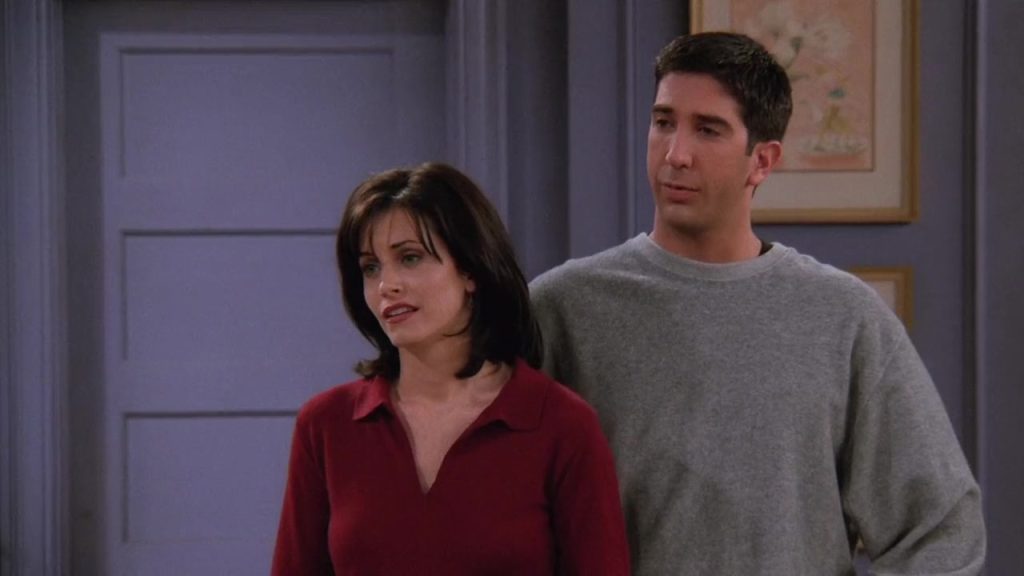
- Dialogue: “I’m going on a jag.” — Chandler
- Scene Description: Chandler refers to going on a personal “jag,” which implies an intense focus or obsession with something for a period of time.
- Word Breakdown
- Definition: A period of intense activity or behavior, often linked to a particular interest or habit.
- Part of Speech: Noun
- Pronunciation: /dʒæɡ/
- Examples:
- “He’s been on a shopping jag lately, buying everything.”
- “I’m on a workout jag, I’ve been hitting the gym every day.”
- Contextual Usage
- In Formal Speech: “She’s been on a research jag, studying late into the night.”
- In Informal Speech: “He’s on a jag with this new game—can’t stop playing!”
Learning Insights & Tips
- Pronunciation Tips
- For words like snuff film and minty fresh, make sure to emphasize the correct syllables—/snʌf/ and /ˈmɪnti/—so you sound more natural. Practice by repeating the words aloud, listening for the rhythm in the dialogue from the show.
- In phrases like watcha doin’ or extra ticket, the pronunciation tends to be faster and more informal. This is common in natural conversation, so practicing these informal phrases will make your speech sound more fluent and relaxed.
- Common Mistakes to Avoid
- For rabies, ensure you’re saying it with the correct “ray” sound. Many learners mistakenly say “rab-ees” instead of the more natural “ray-bees.”
- For poking, avoid overusing the word—it’s best suited for informal situations and might sound out of place in more serious contexts.
- Cultural Nuances
- Snuff films are a dark concept and likely not a common topic in casual conversation. It’s used humorously in the show to exaggerate an emotional reaction.
- Frontier fun is a playful phrase that draws on the historical idea of the “wild frontier.” It’s often used humorously to describe any unpredictable or out-of-the-ordinary experience.
- Memorization Tricks
- To remember words like minty fresh, associate them with experiences (like brushing your teeth) or products you use regularly (think toothpaste!).
- For the informal phrases like watcha doin’, practice using them in different conversations with friends, just as Joey and Phoebe would in the show.
How Technology Transforms Language Learning
Incorporating technology into your learning process can truly elevate your experience. For example, if you’re watching Friends or any other Netflix movie, our language learning extension can enhance your learning by displaying dual subtitles, letting you see the words in both your native language and the target language.
Fluency Gym is another powerful feature that allows you to actively practice speaking while you watch. You can mimic the actors’ dialogues, practice pronunciation, and make real-time corrections. This interactive approach bridges the gap between passive vocabulary and active fluency.
Additionally, our mouse dictionary allows you to instantly look up any unfamiliar word in the subtitles just by hovering over it—no need to pause or interrupt your learning flow.
Related Articles
- Language Learning with Netflix: Mastering Vocabulary from Friends S01E11
- Mastering English Vocabulary with Friends S01 E15: Fun Lessons from Central Perk
- Mastering Vocabulary with Friends S01 E21: Movie Language Practice Made Fun
- Mastering English with Friends S02E04: Vocabulary to Learn in This Article
Final Thoughts
Learning English with Netflix doesn’t just mean watching a show passively—it’s about immersing yourself in the language, actively engaging with the dialogue, and practicing what you learn. With the right tools and features, like AppForLanguage ’s Fluency Gym, you can turn each movie into a language-learning adventure. Whether it’s through our interactive subtitles, real-time word-saving, or engaging playback controls, technology is transforming the way we learn.
Ready to get started? Download AppForLanguage now and take your language learning to the next level!