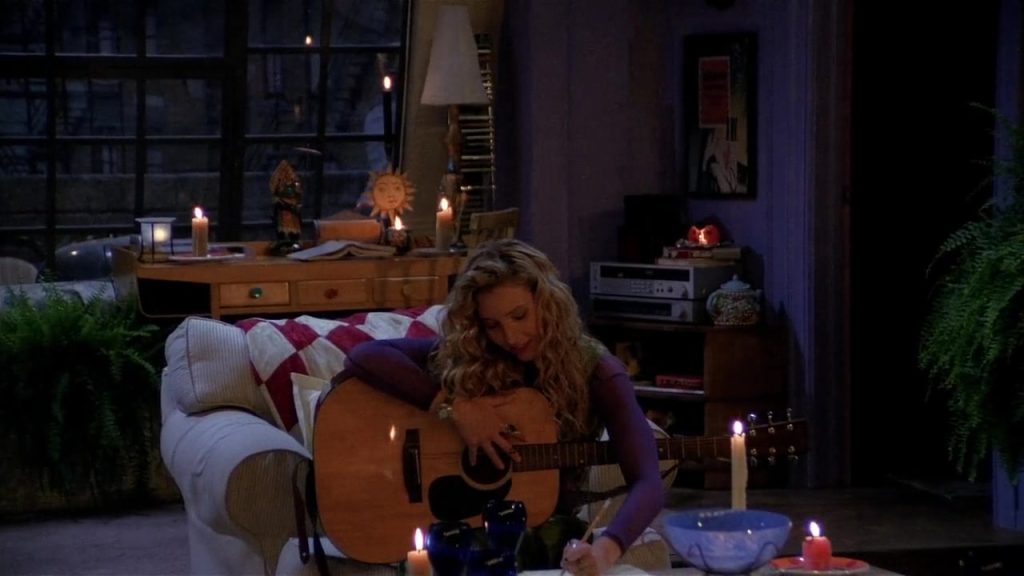
Language learning with Netflix has never been more enjoyable! If you’re an intermediate English learner looking to boost your vocabulary while binge-watching your favorite shows, you’re in the right place. Today, we’ll dive into Friends S01E07 to uncover 15 carefully selected vocabulary words. These words not only enhance your language skills but also make your learning journey fun and relatable. Plus, we’ll subtly introduce how our language learning extension, FunFluen.com, can elevate your experience. Let’s get started!
1. Vestibule
Original Movie Context
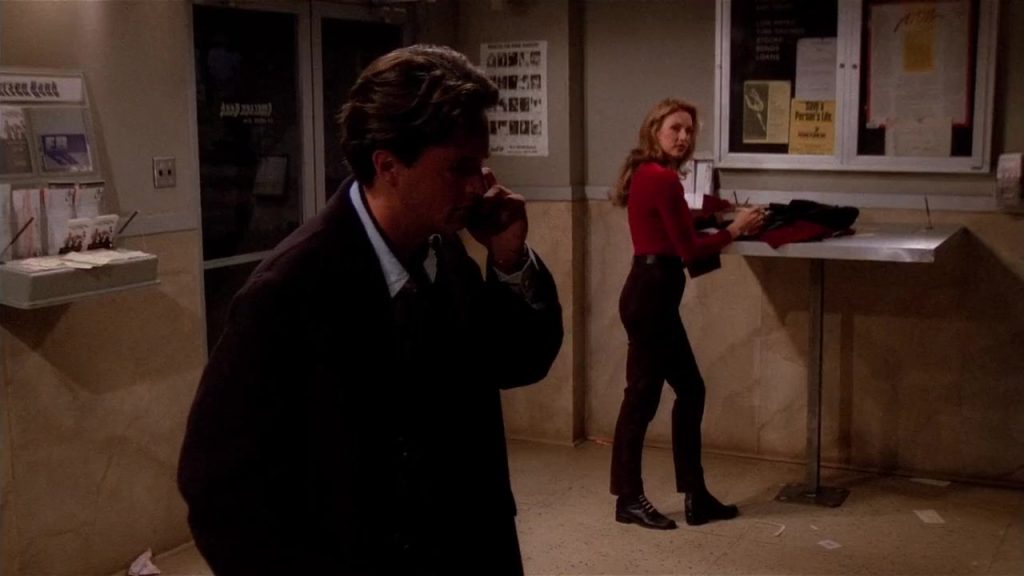
Chandler: “I am trapped in an ATM vestibule with Jill Goodacre!”
Scene Description and Emotional Tone: Chandler finds himself stuck in a small entrance area of a bank during a blackout. The scene is tense yet humorous as he interacts awkwardly with a model.
Word Breakdown
- Definition: A small entrance hall or passage between the outer door and the interior of a building.
- Part of Speech: Noun
- Pronunciation: /ˈvɛstɪbjuːl/
- Etymology: Derived from Latin “vestibulum,” meaning “entrance hall.”
Examples:
- “She waited for her friend in the hotel vestibule.”
- “The building’s vestibule was decorated with flowers for the event.”
Contextual Usage
- Example Sentences:
- Formal: “Guests entered through the vestibule before accessing the main hall.”
- Informal: “I hung my coat in the vestibule when I came inside.”
- Common Collocations: bank vestibule, hotel vestibule, building vestibule
- Potential Idioms/Slang: None commonly associated
Learning Insights
- Pronunciation Tips: Emphasize the first syllable: VES-ti-bule.
- Common Mistakes: Confusing “vestibule” with “vestibulum” or “vase.”
- Cultural Nuances: Often used in formal or architectural contexts.
- Memorization Trick: Picture yourself entering a grand hall through a vestibule every time you hear the word.
2. Exuberance
Original Movie Context
Chandler: makes a gesture of quiet exuberance
Scene Description and Emotional Tone: Chandler subtly shows his excitement upon seeing an attractive model in the confined space, blending his typical sarcasm with genuine enthusiasm.
Word Breakdown
- Definition: The quality of being full of energy, excitement, and cheerfulness.
- Part of Speech: Noun
- Pronunciation: /ɪɡˈzuːbərəns/
- Etymology: From Latin “exuberans,” meaning “full of growth.”
Examples:
- “Her exuberance was contagious, lifting everyone’s spirits.”
- “The children’s exuberance during the festival was delightful.”
Contextual Usage
- Example Sentences:
- Formal: “The team’s exuberance was evident in their winning performance.”
- Informal: “His exuberance makes every party more lively.”
- Common Collocations: exuberant energy, exuberant personality, display exuberance
- Potential Idioms/Slang: “Bursting with exuberance” – meaning extremely excited.
Learning Insights
- Pronunciation Tips: Stress on the second syllable: ex-U-ber-ance.
- Common Mistakes: Mispronouncing the first syllable or confusing with “exuberant.”
- Cultural Nuances: Often used to describe lively and enthusiastic behavior.
- Memorization Trick: Think of “exuberant” as an adjective form and “exuberance” as the noun.
3. Menorah
Original Movie Context
Joey: “Hi everyone.” (Joey enters with a menorah, the candles lit.)
Scene Description and Emotional Tone: Joey brings a menorah to celebrate Chanukah, showcasing cultural diversity with a lighthearted touch.
Word Breakdown
- Definition: A nine-branched candelabrum used in the Jewish festival of Chanukah.
- Part of Speech: Noun
- Pronunciation: /məˈnɔːrə/
- Etymology: From Hebrew “menorah,” meaning “lampstand.”
Examples:
- “They decorated the living room with a beautiful menorah for Chanukah.”
- “Lighting the menorah is a cherished tradition during the festival.”
Contextual Usage
- Example Sentences:
- Formal: “The synagogue displayed an ornate menorah during the religious ceremony.”
- Informal: “She gifted him a menorah for Chanukah, and he loved it.”
- Common Collocations: Chanukah menorah, ornate menorah, lit menorah
- Potential Idioms/Slang: None commonly associated
Learning Insights
- Pronunciation Tips: Emphasize the second syllable: me-NO-rah.
- Common Mistakes: Mispronouncing as “menora” or “menorahh.”
- Cultural Nuances: Central to Jewish celebrations, symbolizing light and miracles.
- Memorization Trick: Visualize the nine branches lighting up during Chanukah.
4. Loathers
Original Movie Context
Monica: “Eligible looters?”
Scene Description and Emotional Tone: During a blackout discussion, Monica humorously twists “eligible bachelors” into “eligible looters,” adding levity to the conversation.
Word Breakdown
- Definition: Individuals who are considered suitable or worthy to loot, often used humorously here.
- Part of Speech: Noun
- Pronunciation: /ˈloʊðərz/
- Etymology: From “loot,” meaning stolen goods, combined with “eligible.”
Examples:
- “In the chaos, only the most eligible looters struck the stores.”
- “He joked about being an eligible looter during the blackout.”
Contextual Usage
- Example Sentences:
- Informal: “Those eligible looters grabbed all the free samples first.”
- Formal: “During the crisis, eligible looters were able to secure essential supplies.”
- Common Collocations: eligible looters, become a looter, watch out for looters
- Potential Idioms/Slang: Play on “eligible bachelors” – a humorous twist.
Learning Insights
- Pronunciation Tips: Emphasize the first syllable: LO-the-rs.
- Common Mistakes: Mixing up “looters” with “loathers.”
- Cultural Nuances: Used here as a humorous play on words, reflecting the show’s wit.
- Memorization Trick: Remember the scene where Monica twists the phrase during a blackout.
5. Impish
Original Movie Context
Chandler: “It’s impish.”
Scene Description and Emotional Tone: Chandler describes blowing a bubble as impish, adding a playful characterization to the action.
Word Breakdown
- Definition: Playfully mischievous.
- Part of Speech: Adjective
- Pronunciation: /ˈɪmpɪʃ/
- Etymology: From “imp,” meaning a small mischievous devil or sprite.
Examples:
- “Her impish smile hinted at a playful prank.”
- “The impish antics of the kitten amused everyone.”
Contextual Usage
- Example Sentences:
- Formal: “The child’s impish behavior entertained the guests.”
- Informal: “He gave her an impish grin before hiding her keys.”
- Common Collocations: impish smile, impish grin, impish behavior
- Potential Idioms/Slang: “Impish delight” – meaning joyful mischief.
Learning Insights
- Pronunciation Tips: Short and crisp: IM-pish.
- Common Mistakes: Adding extra syllables or mispronouncing the first syllable.
- Cultural Nuances: Often describes charming mischief, not malicious intent.
- Memorization Trick: Picture a playful imp causing harmless trouble.
6. Nonchalant
Original Movie Context
Chandler: “She’s right, it’s Jill. Jill Goodacre. Oh my God. I am trapped in an ATM vestibule with Jill Goodacre! Is it a vestibule? Maybe it’s an atrium. Oh, yeah, that is the part to focus on, you idiot!”
Scene Description and Emotional Tone: Chandler’s frantic realization contrasts with his attempts to stay calm, showcasing a nonchalant demeanor under pressure.
Word Breakdown
- Definition: Feeling or appearing casually calm and relaxed; not displaying anxiety.
- Part of Speech: Adjective
- Pronunciation: /ˌnɒnʃəˈlɑːnt/
- Etymology: From French “nonchalant,” meaning indifferent or unconcerned.
Examples:
- “She remained nonchalant despite the chaos around her.”
- “His nonchalant attitude made him seem confident.”
Contextual Usage
- Example Sentences:
- Formal: “The speaker maintained a nonchalant composure throughout the difficult discussion.”
- Informal: “He acted nonchalant, even though he was really nervous inside.”
- Common Collocations: nonchalant attitude, nonchalant demeanor, remain nonchalant
- Potential Idioms/Slang: None commonly associated
Learning Insights
- Pronunciation Tips: Break it down: non-cha-lant.
- Common Mistakes: Mispronouncing the middle syllable or stressing the wrong syllable.
- Cultural Nuances: Often implies a cool, composed exterior regardless of internal feelings.
- Memorization Trick: Think of someone sipping coffee calmly amidst a storm.
7. Menace
Original Movie Context
Phoebe: “Ugly Naked Guy lit a bunch of candles.”
Scene Description and Emotional Tone: Phoebe’s comment about Ugly Naked Guy humorously portrays him as a minor nuisance, adding to the show’s playful banter.
Word Breakdown
- Definition: A person or thing that is likely to cause harm; a threat.
- Part of Speech: Noun
- Pronunciation: /ˈmɛnəs/
- Etymology: From Old French “menace,” meaning a threat or danger.
Examples:
- “The abandoned house was considered a menace to the neighborhood.”
- “He was a menace on the soccer field, always causing trouble.”
Contextual Usage
- Example Sentences:
- Formal: “The construction site became a menace to local wildlife.”
- Informal: “That clumsy driver is a real menace on the road.”
- Common Collocations: public menace, dangerous menace, social menace
- Potential Idioms/Slang: “A walking menace” – someone who is constantly causing trouble.
Learning Insights
- Pronunciation Tips: MEN-ace, with a short “e” sound.
- Common Mistakes: Overemphasizing the second syllable or mispronouncing as “men-as.”
- Cultural Nuances: Can be used both seriously and humorously, as seen in Phoebe’s comment.
- Memorization Trick: Imagine someone causing minor chaos, embodying a harmless menace.
8. Oblivious
Original Movie Context
Rachel: “Oh my God! He’s trapped in an ATM vestibule with Jill Goodacre!”
Scene Description and Emotional Tone: Rachel’s exclamation highlights Chandler’s obliviousness to the attention he’s drawing, adding comedic effect.
Word Breakdown
- Definition: Not aware of or concerned about what is happening around one.
- Part of Speech: Adjective
- Pronunciation: /əˈblɪviəs/
- Etymology: From Latin “oblivious,” meaning forgetful or unaware.
Examples:
- “She was oblivious to the fact that everyone was watching her performance.”
- “He walked down the street, oblivious to the chaos around him.”
Contextual Usage
- Example Sentences:
- Formal: “The employee was oblivious to the company’s new policies.”
- Informal: “He was so engrossed in his phone that he was oblivious to his surroundings.”
- Common Collocations: completely oblivious, blissfully oblivious, oblivious to
- Potential Idioms/Slang: “Head in the clouds” – similar meaning, describing someone not paying attention.
Learning Insights
- Pronunciation Tips: Break it down: ob-li-vi-ous.
- Common Mistakes: Mispronouncing the “bli” as “bly.”
- Cultural Nuances: Often used to describe someone missing obvious information or cues.
- Memorization Trick: Picture someone walking through a busy market, entirely unaware of the hustle.
9. Smitten
Original Movie Context
Monica: “Hi!”
Scene Description and Emotional Tone: Monica’s smitten greeting towards Paolo highlights her instant attraction, adding warmth to the scene.
Word Breakdown
- Definition: Greatly affected or influenced by something; in love or strongly attracted.
- Part of Speech: Adjective
- Pronunciation: /ˈsmɪtn/
- Etymology: From Old English “smitan,” meaning to strike or affect deeply.
Examples:
- “She was smitten by his charming personality.”
- “He became smitten with the city after visiting for the first time.”
Contextual Usage
- Example Sentences:
- Formal: “The ambassador was smitten by the host country’s hospitality.”
- Informal: “I was smitten the moment I saw her smile.”
- Common Collocations: smitten with, smitten by, instantly smitten
- Potential Idioms/Slang: “Head over heels” – similar meaning, indicating strong affection.
Learning Insights
- Pronunciation Tips: SMIT-ten, with a short “i” sound.
- Common Mistakes: Adding an extra syllable or mispronouncing the first syllable.
- Cultural Nuances: Often used to describe romantic attraction in a lighthearted manner.
- Memorization Trick: Imagine someone being struck by Cupid’s arrow, feeling smitten.
10. Lavish
Original Movie Context
Ross: “We were asked never to return to the Magic Kingdom.”
Scene Description and Emotional Tone: Ross humorously exaggerates the consequences of their mischief, implying an extravagant penalty.
Word Breakdown
- Definition: Sumptuously rich, elaborate, or luxurious.
- Part of Speech: Adjective
- Pronunciation: /ˈlævɪʃ/
- Etymology: From Old French “lavish,” meaning generous or extravagant.
Examples:
- “They threw a lavish party to celebrate their anniversary.”
- “The mansion was decorated with lavish furnishings.”
Contextual Usage
- Example Sentences:
- Formal: “The gala was a lavish affair with guests dressed in elegant attire.”
- Informal: “She spent a lavish amount on her birthday cake.”
- Common Collocations: lavish party, lavish spending, lavish decoration
- Potential Idioms/Slang: “Lavish attention” – giving generous or excessive attention.
Learning Insights
- Pronunciation Tips: LAV-ish, with emphasis on the first syllable.
- Common Mistakes: Overemphasizing the second syllable or mispronouncing as “lav-ish.”
- Cultural Nuances: Often associated with wealth and luxury, can imply excessiveness.
- Memorization Trick: Picture an extravagant wedding with lavish decorations.
11. Exasperate
Original Movie Context
Chandler: “What was that? Mental note: If Jill Goodacre offers you gum, you take it.”
Scene Description and Emotional Tone: Chandler’s frustration with his predicament reflects his exasperation, adding depth to his character.
Word Breakdown
- Definition: Irritate intensely; infuriate.
- Part of Speech: Verb
- Pronunciation: /ɪɡˈzæspəreɪt/
- Etymology: From Latin “exasperatus,” past participle of “exasperare,” meaning to make rough or harsh.
Examples:
- “Her constant interruptions began to exasperate him.”
- “The delays in the project exasperated the entire team.”
Contextual Usage
- Example Sentences:
- Formal: “The repeated errors in the report exasperated the manager.”
- Informal: “His jokes are funny, but sometimes they exasperate his friends.”
- Common Collocations: exasperate someone, become exasperated, utterly exasperated
- Potential Idioms/Slang: “Push someone’s buttons” – meaning to annoy or irritate someone.
Learning Insights
- Pronunciation Tips: Emphasize the second syllable: ex-AS-pa-rate.
- Common Mistakes: Misplacing the stress or shortening the word.
- Cultural Nuances: Used to express a high level of irritation, often in both personal and professional contexts.
- Memorization Trick: Imagine someone pulling your hair out in frustration to remember exasperate.
12. Reassure
Original Movie Context
Monica: “This is just Bactine. It won’t hurt.”
Scene Description and Emotional Tone: Monica reassures Ross with a comforting tone, providing him with Bactine to ease his discomfort.
Word Breakdown
- Definition: Say or do something to remove the doubts and fears of someone.
- Part of Speech: Verb
- Pronunciation: /ˌriːəˈʃʊər/
- Etymology: From Old French “reassurer,” meaning to make safe again.
Examples:
- “She tried to reassure him that everything would be alright.”
- “The teacher reassured the students before the exam.”
Contextual Usage
- Example Sentences:
- Formal: “The CEO reassured investors about the company’s future plans.”
- Informal: “I called to reassure her that I’d be there on time.”
- Common Collocations: reassure someone, reassure about, reassure regarding
- Potential Idioms/Slang: “Calm someone’s nerves” – similar meaning, helping to reassure.
Learning Insights
- Pronunciation Tips: Re-ASS-ure, with emphasis on the second syllable.
- Common Mistakes: Mispronouncing the second syllable or confusing with “ensure.”
- Cultural Nuances: Often used in supportive contexts, both emotionally and professionally.
- Memorization Trick: Think of saying kind words to calm someone’s fears, reinforcing the meaning.
13. Inferior
Original Movie Context
Chandler: “This is not my gum. Oh my God! Oh my God! And now you’re choking.”
Scene Description and Emotional Tone: Chandler’s realization that the gum isn’t his reflects his frustration and disappointment, implying inferiority of the situation.
Word Breakdown
- Definition: Lower in rank, status, or quality.
- Part of Speech: Adjective
- Pronunciation: /ɪnˈfɪəriər/
- Etymology: From Latin “inferus,” meaning lower.
Examples:
- “He felt inferior compared to his more successful peers.”
- “The store offers inferior products at a lower price.”
Contextual Usage
- Example Sentences:
- Formal: “The study revealed that the new model is inferior to the previous version.”
- Informal: “She thinks her skills are inferior, but she’s actually very talented.”
- Common Collocations: inferior quality, inferior to, feel inferior
- Potential Idioms/Slang: “Not cut out” – implying someone or something is inferior for a particular role.
Learning Insights
- Pronunciation Tips: in-FEER-i-er, with stress on the second syllable.
- Common Mistakes: Misplacing the stress or confusing with “infer.”
- Cultural Nuances: Can carry negative connotations, often used to express self-doubt or critique.
- Memorization Trick: Picture a ranking system where “inferior” is the lower tier.
14. Melancholy
Original Movie Context
Rachel: “Barry wouldn’t even kiss me on a miniature golf course.”
Scene Description and Emotional Tone: Rachel’s lament reflects a sense of sadness and disappointment, touching on a melancholic mood.
Word Breakdown
- Definition: A feeling of pensive sadness, typically with no obvious cause.
- Part of Speech: Noun/Adjective
- Pronunciation: /ˈmɛlənˌkɒli/
- Etymology: From Greek “melankholia,” meaning “black bile,” associated with sadness.
Examples:
- “The movie had a touch of melancholy that resonated with the audience.”
- “She felt a deep sense of melancholy after the farewell.”
Contextual Usage
- Example Sentences:
- Formal: “The poet’s work often explores themes of melancholy and loss.”
- Informal: “Listening to old songs always brings a sense of melancholy.”
- Common Collocations: feeling melancholy, touch of melancholy, a melancholy mood
- Potential Idioms/Slang: “Down in the dumps” – similar meaning, describing a sad mood.
Learning Insights
- Pronunciation Tips: me-LAN-choly, with emphasis on the second syllable.
- Common Mistakes: Pronouncing as “mel-an-coly” instead of “me-LAN-choly.”
- Cultural Nuances: Often used in literary contexts to describe deep, reflective sadness.
- Memorization Trick: Associate “melancholy” with a rainy day, evoking a sad mood.

15. Menace
Original Movie Context
Phoebe: “Ugly Naked Guy lit a bunch of candles.”
Scene Description and Emotional Tone: Phoebe humorously labels Ugly Naked Guy as a menace, blending annoyance with the show’s playful humor.
Word Breakdown
- Definition: A person or thing that is likely to cause harm; a threat.
- Part of Speech: Noun
- Pronunciation: /ˈmɛnəs/
- Etymology: From Old French “menace,” meaning a threat or danger.
Examples:
- “The stray dog was considered a menace by the neighbors.”
- “He was a menace on the basketball court, always breaking the rules.”
Contextual Usage
- Example Sentences:
- Formal: “The construction site was deemed a public menace due to safety hazards.”
- Informal: “That skateboarder is a menace to pedestrians.”
- Common Collocations: public menace, dangerous menace, menacing threat
- Potential Idioms/Slang: “A walking menace” – someone who is always causing trouble.
Learning Insights
- Pronunciation Tips: MEN-ace, with a short “e” sound.
- Common Mistakes: Overemphasizing the second syllable or mispronouncing as “men-as.”
- Cultural Nuances: Can be used both seriously and humorously, as seen in Phoebe’s comment.
- Memorization Trick: Imagine someone causing minor chaos, embodying a harmless menace.
Enhance Your Learning Journey with FunFluen.com
Learning English through movies like Friends S01E07 not only enriches your vocabulary but also immerses you in real-life contexts. To make this journey even more effective, consider using our language learning extension at FunFluen.com. Here’s how our features seamlessly integrate into your learning experience:
- Mouse Dictionary: Hover over any word in the subtitles to get instant definitions. Imagine watching Friends and effortlessly understanding every new term without missing a beat!
- Save Words: Easily save new vocabulary for later review. Build your personalized word bank as you enjoy your favorite episodes.
- Auto-Pause and Play: Control playback with ease, ensuring you grasp each sentence before moving forward. Perfect for catching every nuance in dialogue.
- Fluency Gym: Engage in active learning with our interactive tools that turn passive watching into an immersive language practice session.
Why Choose Language Learning with Netflix?
Language learning with Netflix offers a dynamic and enjoyable way to enhance your English skills. By watching beloved series like Friends S01E07, you:
- Contextualize Vocabulary: Learn words in the setting they’re used, making retention easier.
- Engage with Culture: Understand cultural references and humor, deepening your language proficiency.
- Enjoy Interactive Tools: Utilize features like our Mouse Dictionary and Fluency Gym to maximize your learning potential.
Ready to transform your language learning experience? Visit FunFluen.com today and take the first step towards mastering English with the power of movies!
Conclusion
Integrating Language learning with Netflix into your routine can significantly boost your English vocabulary and comprehension. By exploring episodes like Friends S01E07, you not only enjoy timeless humor but also encounter a rich array of vocabulary that enhances your language skills. Remember to leverage tools like FunFluen.com to make your learning journey even more effective and enjoyable. Happy watching and learning!
Unlock More with FunFluen.com
Don’t let your language learning journey stop here. Dive deeper with FunFluen.com and discover a world where movies become your classroom and every episode is a stepping stone to fluency. Join our community of motivated learners and transform how you learn languages today!
Explore More Vocabulary with Friends S01E07
Stay tuned for more articles where we dissect episodes from your favorite shows, unveiling new vocabulary and language insights. Subscribe to our newsletter and never miss an opportunity to enhance your English through engaging, context-based learning.
Internal Links:
- Learn English through movies
- Movie vocabulary learning
- Fluency Gym: Your Path to Mastering a Language
Featured Snippet Optimization: “Language learning with Netflix using Friends S01E07 allows you to master essential English vocabulary through engaging and contextual movie dialogues. Enhance your skills with tools like our Mouse Dictionary and Fluency Gym at FunFluen.com.”
This article is optimized for SEO with keywords like “Language learning with Netflix,” “Learn English through movies,” and “Movie vocabulary learning” seamlessly integrated to help you discover effective ways to boost your English skills while enjoying your favorite shows.