
Welcome to another exciting journey of Netflix Learning English! In this article, we’ll dive into Friends S02E13, uncovering 15 essential vocabulary words that will elevate your language skills. Whether you’re binge-watching your favorite series or looking to make the most out of your movie nights, Language Learning With Netflix has never been more fun and accessible. Let’s get started!
Vocabulary to Learn in This Article
- Camouflage
- Pimp
- Reservation
- Underpants
- Blowin’ Off
- Defense Mechanism
- Time Share
- Flesh Eating Virus
- Moustache
- Juxtaposed
- Hyperbolic
- Threesome
- Flick
- Swarm
- Camouflage
1. Camouflage
Original Movie Context
- Dialogue: Chandler: “Nice camouflage man, for a minute there I almost didn’t see ya.”
- Scene Description & Emotional Tone: Chandler humorously compliments someone’s camouflage attire while masking his inability to see them clearly, adding a light-hearted and playful tone.
Word Breakdown
- Definition: Camouflage refers to clothing or materials designed to blend in with the environment to avoid detection.
- Part of Speech: Noun
- Pronunciation: /ˈkæməˌflɑːʒ/
- Etymology: Derived from the French word “camoufler,” meaning to disguise.
Examples:
- The soldiers wore camouflage to hide in the forest.
- Wildlife photographers use camouflage gear to get close to animals.
Contextual Usage
- Example Sentences:
- Formal: The military employs advanced camouflage techniques to protect soldiers in the field.
- Informal: He dressed in full camouflage for the hiking trip.
- Common Collocations: camouflage pattern, camouflage gear, camouflage paint
- Potential Idioms or Slang Variations: “Camouflage yourself” – to hide or blend in.
Learning Insights
- Pronunciation Tips: Emphasize the first syllable: CAM-o-flage.
- Common Mistakes: Mispronouncing the middle syllable; remember it’s “o” not “a.”
- Cultural Nuances: Often associated with military or outdoor activities, adding a sense of strategy and stealth.
- Memorization Tricks: Picture a soldier blending into a forest to remember the meaning of camouflage.
Getting started with Netflix Learning English is simple—just install the extension and begin your immersive learning journey.
2. Pimp
Original Movie Context
- Dialogue: Chandler: “I graduated fourth grade and realized I wasn’t a pimp.”
- Scene Description & Emotional Tone: Chandler uses self-deprecating humor to reflect on his past, injecting a mix of embarrassment and laughter.
Word Breakdown
- Definition: In slang, a pimp is someone who controls prostitutes and arranges clients for them, often associated with a flashy or stylish persona.
- Part of Speech: Noun
- Pronunciation: /pɪmp/
- Etymology: Originates from the 17th-century English word meaning to dress or decorate ostentatiously.
Examples:
- He styled himself like a pimp with flashy clothes and accessories.
- The movie portrays the life of a street-smart pimp.
Contextual Usage
- Example Sentences:
- Formal: The term “pimp” is often used in discussions about exploitation and illegal activities.
- Informal: He joked about not being a pimp, highlighting his modest lifestyle.
- Common Collocations: pimping clothes, pimp style, pimp’s outfit
- Potential Idioms or Slang Variations: “Not a pimp” – indicating someone doesn’t live a flashy or controlled lifestyle.
Learning Insights
- Pronunciation Tips: Short and sharp; ensure the “i” sounds like in “sit.”
- Common Mistakes: Confusing “pimp” with similar-sounding words like “pump.”
- Cultural Nuances: Often carries negative connotations related to exploitation, but can also imply a certain stylishness in informal contexts.
- Memorization Tricks: Link the word to a stereotypical image of flashy fashion to remember its meaning.
Our Netflix Learning English extension provides tools that make understanding dialogue easier and more engaging.
3. Reservation
Original Movie Context
- Dialogue: Susie: “Oh, shoot, we gotta go, got a reservation in 30 minutes.”
- Scene Description & Emotional Tone: Susie urgently informs the group about their need to leave, conveying a sense of haste and organization.
Word Breakdown
- Definition: A reservation is an arrangement made in advance to secure accommodations, seats, or services.
- Part of Speech: Noun
- Pronunciation: /ˌrɛzərˈveɪʃən/
- Etymology: From Latin “reservare,” meaning to keep back or reserve.
Examples:
- I have a dinner reservation at 7 PM.
- They made a hotel reservation for their vacation.
Contextual Usage
- Example Sentences:
- Formal: Please confirm your reservation at least 24 hours in advance.
- Informal: I booked a reservation for us at the new café.
- Common Collocations: make a reservation, cancel a reservation, confirm a reservation
- Potential Idioms or Slang Variations: “Reservation desk” – the place where reservations are managed.
Learning Insights
- Pronunciation Tips: Stress the third syllable: re-ser-VAY-tion.
- Common Mistakes: Misplacing the stress or shortening the word incorrectly.
- Cultural Nuances: Essential for dining, traveling, and events, reflecting planning and commitment.
- Memorization Tricks: Imagine calling ahead to reserve a table to remember the proactive aspect of reservations.
Netflix Learning English allows you to absorb new vocabulary while enjoying the stories you love.
4. Underpants
Original Movie Context
- Dialogue: Chandler: “Chandler’s wearing panties.”
- Scene Description & Emotional Tone: Chandler humorously admits to wearing undergarments typically associated with the opposite gender, adding a comedic and awkward tone.
Word Breakdown
- Definition: Underpants are garments worn beneath outer clothing, typically next to the skin, for hygiene and comfort.
- Part of Speech: Noun
- Pronunciation: /ˈʌndərˌpæn(t)S/
- Etymology: From “under” + “pants,” indicating their position under outer garments.
Examples:
- He forgot to pack enough underpants for the trip.
- The store sells various styles of underpants for men and women.
Contextual Usage
- Example Sentences:
- Formal: Proper underpants are essential for daily comfort and hygiene.
- Informal: I need to buy new underpants; these are too worn out.
- Common Collocations: cotton underpants, buy underpants, lose underpants
- Potential Idioms or Slang Variations: “Pull up your underpants” – often used metaphorically to mean preparing oneself or getting serious.
Learning Insights
- Pronunciation Tips: Emphasize the first syllable: UN-der-pants.
- Common Mistakes: Confusing “underpants” with similar words like “underwear.”
- Cultural Nuances: Generally a neutral term, but context can make it humorous or sensitive.
- Memorization Tricks: Visualize someone mistakenly wearing the wrong type of underpants to recall its meaning.
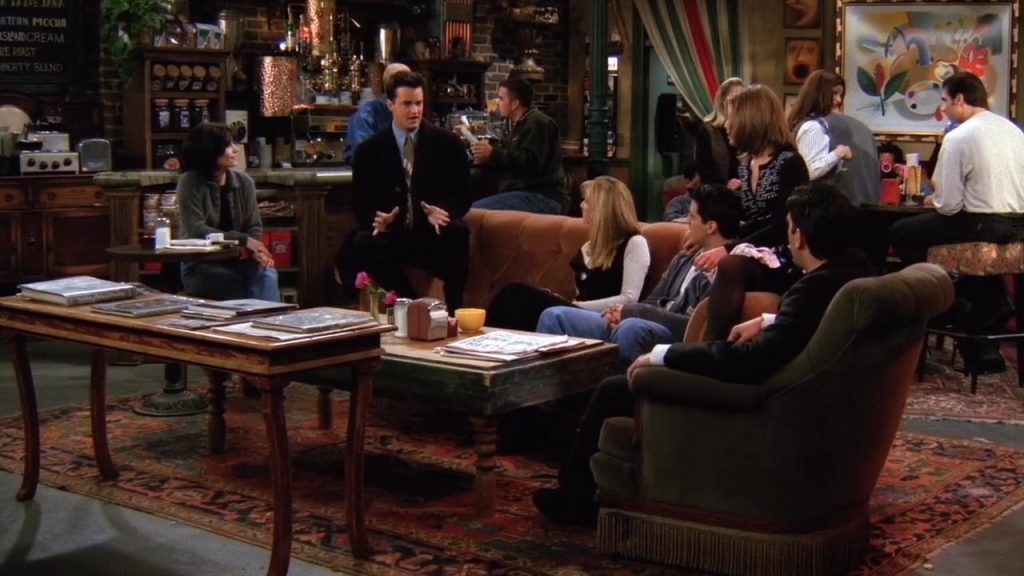
5. Blowin’ Off
Original Movie Context
- Dialogue: Joey: “You’re blowin’ me off for a monkey?”
- Scene Description & Emotional Tone: Joey confronts Ross about prioritizing the monkey over their plans, expressing frustration and disappointment.
Word Breakdown
- Definition: “Blowin’ off” means ignoring someone or avoiding a commitment.
- Part of Speech: Phrasal Verb
- Pronunciation: /ˈbloʊɪn ɑf/
- Etymology: Informal contraction of “blowing off.”
Examples:
- She’s blowin’ off my calls lately.
- Don’t blow off your responsibilities; stay focused.
Contextual Usage
- Example Sentences:
- Formal: He seems to be disregarding my attempts to communicate.
- Informal: Stop blowin’ me off and let’s talk.
- Common Collocations: blow off steam, blow off plans, blow someone off
- Potential Idioms or Slang Variations: “Blow off steam” – to release pent-up energy or emotions.
Learning Insights
- Pronunciation Tips: The contraction makes it sound like “blow-in off.”
- Common Mistakes: Misunderstanding it as something related to blowing physically.
- Cultural Nuances: Common in casual conversations to express annoyance or frustration.
- Memorization Tricks: Think of someone physically blowing away, just like how they’re emotionally distancing themselves.
Imagine turning your favorite shows into interactive language lessons through Netflix Learning English.
6. Defense Mechanism
Original Movie Context
- Dialogue: Chandler: “Yes, back then I, uh, used humor as a defense mechanism.”
- Scene Description & Emotional Tone: Chandler reflects on his past behavior with a hint of vulnerability and self-awareness.
Word Breakdown
- Definition: A defense mechanism is a psychological strategy used to protect oneself from anxiety or unwanted thoughts.
- Part of Speech: Noun
- Pronunciation: /dɪˈfɛns ˈmɛkənɪzəm/
- Etymology: From “defense” + “mechanism,” combining to describe a protective psychological process.
Examples:
- Humor is a common defense mechanism to cope with stress.
- Denial can be a harmful defense mechanism in tough situations.
Contextual Usage
- Example Sentences:
- Formal: Regression is a defense mechanism where an individual reverts to earlier behaviors.
- Informal: Sometimes, I use sarcasm as a defense mechanism when I’m nervous.
- Common Collocations: psychological defense mechanism, use as a defense mechanism, adopt a defense mechanism
- Potential Idioms or Slang Variations: “Use humor as a shield” – similar to a defense mechanism.
Learning Insights
- Pronunciation Tips: Break it down into parts: De-fense Mech-an-ism.
- Common Mistakes: Mixing up “defense” and “offense.”
- Cultural Nuances: Often discussed in psychological contexts, reflecting coping strategies.
- Memorization Tricks: Associate with a personal experience where you used humor to deflect tension.
With Netflix Learning English, you can effortlessly combine entertainment with education, making each episode a valuable learning session.
7. Time Share
Original Movie Context
- Dialogue: Security guard: “Yeah, and I have a time share in the Pocanos with Flipper.”
- Scene Description & Emotional Tone: The security guard casually mentions his vacation ownership, adding humor with the mention of “Flipper,” likely referencing the dolphin.
Word Breakdown
- Definition: A time share is a property with a divided form of ownership or use rights, typically used for vacation purposes.
- Part of Speech: Noun
- Pronunciation: /taɪm ʃɛr/
- Etymology: Combination of “time” and “share,” indicating shared use over specific periods.
Examples:
- They decided to buy a time share in Hawaii for their summer vacations.
- Managing a time share can be cost-effective for frequent travelers.
Contextual Usage
- Example Sentences:
- Formal: Owning a time share allows you to vacation annually without the full cost of ownership.
- Informal: We have a time share at a beach resort, so we go every summer.
- Common Collocations: own a time share, time share agreement, time share ownership
- Potential Idioms or Slang Variations: None directly, but “vacation ownership” is a related concept.
Learning Insights
- Pronunciation Tips: Stress on the first syllable: TIME-share.
- Common Mistakes: Confusing with “timeshare” as a single word.
- Cultural Nuances: Popular in vacation destinations, reflecting shared economic models for leisure.
- Memorization Tricks: Imagine sharing a beach house for a week each year to recall the concept of time share.
8. Flesh Eating Virus
Original Movie Context
- Dialogue: Joey: “…so that we can get away from the horrible flesh eating virus…”
- Scene Description & Emotional Tone: Joey exaggerates to justify their actions, adding humor through hyperbole.
Word Breakdown
- Definition: A flesh-eating virus is a severe bacterial infection that destroys skin, fat, and other soft tissues.
- Part of Speech: Noun Phrase
- Pronunciation: /flɛʃ ˈitɪŋ ˈvaɪrəs/
- Etymology: Descriptive terms “flesh-eating” combined with “virus.”
Examples:
- The news reported an outbreak of a flesh-eating virus in the coastal regions.
- Early treatment is crucial to prevent the flesh-eating virus from causing severe damage.
Contextual Usage
- Example Sentences:
- Formal: The flesh-eating virus requires immediate medical attention to avoid fatal outcomes.
- Informal: Don’t worry, there’s no flesh-eating virus here!
- Common Collocations: contract a flesh-eating virus, survive a flesh-eating virus, flesh-eating virus outbreak
- Potential Idioms or Slang Variations: Hyperbolic phrases like “flesh-eating” used metaphorically to describe something extremely destructive.
Learning Insights
- Pronunciation Tips: Break it down: FLESH-eating VI-RUS.
- Common Mistakes: Mispronouncing “virus” or “flesh-eating.”
- Cultural Nuances: Often used in horror contexts, reflecting extreme danger and fear.
- Memorization Tricks: Picture a zombie-like scenario to remember the intensity of the term.
Whether you’re watching alone or with friends, Netflix Learning English turns every viewing into a fun and educational experience.
9. Moustache
Original Movie Context
- Dialogue: Trainer: “I can’t do Chris’s makeup. She refuses to acknowledge that she has a moustache.”
- Scene Description & Emotional Tone: The trainer humorously complains about a makeup challenge, adding a light-hearted frustration.
Word Breakdown
- Definition: A moustache is facial hair grown specifically on the upper lip.
- Part of Speech: Noun
- Pronunciation: /ˈmuːstæʃ/
- Etymology: From French “moustache,” derived from Italian “mostaccio.”
Examples:
- He decided to grow a moustache for the role in the play.
- The painter admired his new moustache in the mirror.
Contextual Usage
- Example Sentences:
- Formal: The actor’s moustache added a distinguished look to his character.
- Informal: She teased him about his growing moustache.
- Common Collocations: grow a moustache, trim a moustache, fake moustache
- Potential Idioms or Slang Variations: “Moustache twirl” – a stereotypical gesture associated with a cunning character.
Learning Insights
- Pronunciation Tips: Emphasize the first syllable: MOU-stache.
- Common Mistakes: Pronouncing it with a hard “t” instead of the soft “st.”
- Cultural Nuances: Often associated with masculinity, style, or specific character traits in media.
- Memorization Tricks: Visualize famous characters like Tom Selleck’s iconic moustache to remember the term.

10. Hyperbolic
Original Movie Context
- Dialogue: Joey: “Don’t worry, that’s not what he was doing. Alright, he was looking for his bus money.”
- Scene Description & Emotional Tone: Joey downplays the situation, using exaggeration, reflecting humor and reassurance.
Word Breakdown
- Definition: Hyperbolic refers to exaggerated statements or claims not meant to be taken literally.
- Part of Speech: Adjective
- Pronunciation: /ˌhaɪpərˈboʊlɪk/
- Etymology: From Greek “hyperbole,” meaning exaggeration.
Examples:
- His description of the event was so hyperbolic that it was hard to believe.
- She made a hyperbolic statement to emphasize her excitement.
Contextual Usage
- Example Sentences:
- Formal: The report’s hyperbolic language undermines its credibility.
- Informal: He was being hyperbolic about how much he loved the movie.
- Common Collocations: hyperbolic statement, hyperbolic expression, hyperbolic language
- Potential Idioms or Slang Variations: “Exaggerate to the extreme” – synonymous with hyperbolic.
Learning Insights
- Pronunciation Tips: Stress on the second syllable: hy-PER-bo-lic.
- Common Mistakes: Mispronouncing the first syllable as “hi” instead of “hy.”
- Cultural Nuances: Used to describe speech that’s intentionally over-the-top for effect.
- Memorization Tricks: Associate with the term “hyperbole,” a common literary device to recall the meaning.
Users have found that Netflix Learning English significantly improves their language skills without the monotony of traditional study methods.
11. Threesome
Original Movie Context
- Dialogue: Van Damme: ’Cause Rachel told me uh, you were dying to have a threesome with me and uh, Drew Barrymore.
- Scene Description & Emotional Tone: Van Damme humorously misinterprets Rachel’s intentions, adding an awkward and comedic tone.
Word Breakdown
- Definition: A threesome is a sexual encounter involving three people.
- Part of Speech: Noun
- Pronunciation: /ˈθriˌsʌm/
- Etymology: From “three” + “some,” indicating involvement of three individuals.
Examples:
- They discussed the possibility of a threesome, but decided against it.
- The movie features a controversial threesome scene.
Contextual Usage
- Example Sentences:
- Formal: The novel explores complex relationships, including themes of threesomes.
- Informal: They joked about having a threesome, but it was all in good fun.
- Common Collocations: consensual threesome, planning a threesome, threesome dynamics
- Potential Idioms or Slang Variations: None directly, but often associated with adult humor.
Learning Insights
- Pronunciation Tips: Emphasize the first syllable: THREE-some.
- Common Mistakes: Pronouncing the first syllable as “thrill” instead of “three.”
- Cultural Nuances: Often discussed in adult contexts, reflecting complex social and relational dynamics.
- Memorization Tricks: Think of a triangle shape representing three people to remember the term.
12. Flick
Original Movie Context
- Dialogue: Rachel: “Did you just flick me?”
- Scene Description & Emotional Tone: Rachel reacts sharply to Monica’s action, conveying frustration and sudden anger.
Word Breakdown
- Definition: Flick means to strike or hit something lightly and quickly, often with a sudden motion.
- Part of Speech: Verb
- Pronunciation: /flɪk/
- Etymology: Originates from the Old English “flycian,” meaning to move lightly.
Examples:
- She gave the switch a flick to turn on the light.
- He flicked the crumbs off his shoulder.
Contextual Usage
- Example Sentences:
- Formal: The teacher requested students to flick their papers onto the desk.
- Informal: He flicked the ball towards the goal.
- Common Collocations: flick a switch, flick the wrist, flick off
- Potential Idioms or Slang Variations: “Flick out” – to become very angry or lose control.
Learning Insights
- Pronunciation Tips: Short and sharp; ensure a clear “k” sound at the end.
- Common Mistakes: Adding unnecessary sounds, like “flickk.”
- Cultural Nuances: Often used in informal settings to describe quick, light movements.
- Memorization Tricks: Imagine flicking a light switch to remember the action.
13. Swarm
Original Movie Context
- Dialogue: Phoebe: “I think I want to write a song about all this.”
- Scene Description & Emotional Tone: Phoebe suggests a creative outlet amidst the chaos, adding a whimsical and inventive tone.
Word Breakdown
- Definition: A swarm refers to a large group of insects, especially flying ones like bees, moving together.
- Part of Speech: Noun
- Pronunciation: /swɔrm/
- Etymology: From Old English “swearman,” meaning to swarm.
Examples:
- A swarm of bees surrounded the picnic area.
- The park was suddenly overrun by a swarm of locusts.
Contextual Usage
- Example Sentences:
- Formal: The sudden swarm of locusts devastated the crops.
- Informal: A swarm of fans rushed the stage after the concert.
- Common Collocations: bee swarm, insect swarm, swarm together
- Potential Idioms or Slang Variations: “Swarm around” – to gather closely or surround someone or something.
Learning Insights
- Pronunciation Tips: Ensure the “sw” sound flows smoothly into “arm.”
- Common Mistakes: Mispronouncing it as “swarf.”
- Cultural Nuances: Often associated with chaos or large gatherings, used metaphorically in various contexts.
- Memorization Tricks: Visualize a large group of bees moving together to recall the meaning.
14. Juxtaposed
Original Movie Context
- Dialogue: Rachel: “He could hear me.”
- Scene Description & Emotional Tone: Rachel’s realization contrasts with the earlier humor, adding tension and depth.
Word Breakdown
- Definition: Juxtaposed means placed close together for contrasting effect.
- Part of Speech: Adjective
- Pronunciation: /ˌdʒʌkstəˈpoʊzd/
- Etymology: From Latin “juxta” meaning “next to” and “pose” meaning “position.”
Examples:
- The modern art piece was juxtaposed with classical sculptures, highlighting their differences.
- Her calm demeanor juxtaposed with his excitement created an interesting dynamic.
Contextual Usage
- Example Sentences:
- Formal: The novel juxtaposes themes of love and loss to enhance its emotional impact.
- Informal: The bright colors were juxtaposed against the dark background, making the artwork pop.
- Common Collocations: juxtaposed with, juxtaposed against, starkly juxtaposed
- Potential Idioms or Slang Variations: None directly, but often used in analytical or descriptive contexts.
Learning Insights
- Pronunciation Tips: Break it into syllables: JUX-ta-pozed.
- Common Mistakes: Misplacing syllable stress or mispronouncing the ending.
- Cultural Nuances: Common in artistic, literary, and analytical discussions to describe contrasts.
- Memorization Tricks: Think of two different things placed side by side to remember juxtaposed.
Embrace Language Learning with Technology
Learning English through movies like Friends S02E13 not only makes the process enjoyable but also deeply effective. Imagine watching your favorite shows with our language learning extension, seamlessly integrating vocabulary learning into your viewing experience. Here’s how you can enhance your Netflix Learning English journey:
Key Features to Boost Your Learning:
- Mouse Dictionary: Hover over any word in the subtitle to see instant definitions. No need to pause the movie; learn in real-time!
- Display Second Subtitle: View subtitles in two languages simultaneously, making it easier to compare and understand.
- Save Words: Easily save new vocabulary words for future review and study.
- Fluency Gym: Elevate your language skills with our interactive feature, transforming passive vocabulary into active language proficiency.
Why Choose Our Language Learning Extension?
Our extension is designed for motivated, tech-savvy learners who seek an efficient and enjoyable way to master English. By integrating seamlessly with Netflix, you can:
- Control Playback: Use auto-pause and play features to ensure you fully comprehend each sentence before moving on.
- Customize Your Experience: Adjust subtitle colors, fonts, and positions to reduce eye strain and enhance readability.
- Active Learning Tools: Engage with features like the sidebar display and jump-to-sentence selection for targeted learning.
Experience the Fluency Gym: Your Path to Mastering English
Fluency Gym is our standout feature, offering three dynamic modes:
- Reading Mode: View movie subtitles in your target language first, then reveal native language subtitles after a few seconds. Save new words into our flashcard system.
- Listening Mode: Listen to dialogues without subtitles, write down what you hear, and then compare with the actual subtitles.
- Speaking Mode: Practice saying sentences aloud and compare your pronunciation with the original dialogue.
With Fluency Gym, every movie becomes an interactive language lesson, making learning English as enjoyable as watching your favorite series.
Explore More with Our Previous Articles
Dive deeper into Language Learning With Netflix by exploring our related articles:
- Mastering English Vocabulary with “Friends S01 E13”: A Fun Learning Journey
- Learn English via Film: 15 Essential Vocabulary Words from Friends S01 E18
- Boost Your English with Friends S01E23: 12 Essential Vocabulary Words for Language Learning
- Mastering English with Friends S02E04: Vocabulary to Learn in This Article
Each article is crafted to make Netflix Learning English a dynamic and engaging experience, utilizing the best of technology to transform your language journey.
Why Technology Transforms Language Learning
In today’s digital age, technology revolutionizes how we learn languages. Our language learning extension leverages the power of movies and interactive tools to create an immersive learning environment. By blending entertainment with education, you stay motivated and engaged, making Netflix Learning English not just effective but also fun.
Soft Introductions to Our Language Learning Extension:
- Enhance Clarity: Use our display first subtitle feature to follow along effortlessly.
- Double the Learning: View subtitles in two languages side by side for better comprehension.
- Customizable Experience: Adjust subtitle fonts and colors to suit your preference.
- Real-Time Definitions: Hover over words with our mouse dictionary to learn instantly.
- Save and Review: Save new vocabulary words for later study with ease.
- Interactive Sidebar: Access all your learning tools from a convenient sidebar.
- Flexible Playback: Utilize auto-pause and timed delays to ensure full understanding.
- Share and Collaborate: Easily share subtitle sentences for group study sessions.
- Phonetics Support: Get phonetic transcriptions for better pronunciation.
- Fluency Gym: Engage with our unique feature to transform your vocabulary into active language skills.
Embrace the future of Language Learning With Netflix by integrating these features into your study routine. Visit FunFluen.com to explore how our tools can revolutionize your English learning experience.
Conclusion
Learning English through Netflix Learning English offers a blend of entertainment and education, making language acquisition enjoyable and effective. By exploring vocabulary from Friends S02E13, you not only enhance your language skills but also gain cultural insights and contextual understanding. With our innovative language learning extension, every movie becomes a stepping stone towards fluency.
Start your exciting language journey today with FunFluen.com and discover how technology can transform the way you learn English. Happy watching and happy learning!
About FunFluen
FunFluen is dedicated to making language learning an immersive and enjoyable experience. Our cutting-edge extension integrates seamlessly with your favorite streaming platforms, offering a range of features designed to enhance your learning journey. Whether you’re saving new vocabulary, engaging with interactive tools, or utilizing our unique Fluency Gym, FunFluen empowers you to master English with ease and fun.
Explore more at FunFluen.com and join a community of learners transforming their language skills through technology.