
Learning English can be an exciting adventure, especially when you combine it with your favorite TV shows. Movie vocabulary learning offers a unique and engaging way to enhance your language skills. In this article, we’ll dive into Friends S01E16, extracting 15 carefully selected vocabulary words that will elevate your English proficiency. Whether you’re an intermediate learner or aiming for advanced fluency, these words are sure to enrich your everyday conversations. Plus, we’ll introduce you to some fantastic language learning tools that make this journey even more enjoyable!
1. Unbelievable
Original Movie Context
Chandler: “This is unbelievable. It’s been like a half an hour. If this was a cartoon, you’d be looking like a ham right about now.”
Scene Description and Emotional Tone: Chandler expresses frustration over a prolonged wait, using humor to lighten the mood.
Word Breakdown
- Definition: Difficult to believe; extraordinary.
- Part of Speech: Adjective
- Pronunciation: /ˌʌnbɪˈliːvəbəl/
- Etymology: From “un-” (not) + “believable” (capable of being believed).
Examples:
- “The magician’s tricks were absolutely unbelievable.”
- “It’s unbelievable how quickly the project was completed.”
Contextual Usage
- Formal: “The results of the study are unbelievable.”
- Informal: “That party was unbelievable!”
- Common Collocations: Unbelievable story, unbelievable speed, unbelievable talent.
Learning Insights
- Pronunciation Tips: Emphasize the third syllable: un-be-LIE-va-ble.
- Common Mistakes: Don’t confuse with “believable,” which means something that can be believed.
- Cultural Nuances: Often used to express amazement or disbelief in both positive and negative contexts.
- Memorization Tricks: Think of “unbelievable” as something so surprising that it’s hard to believe.
Movie vocabulary learning is a fun and effective way to expand your language skills while enjoying your favorite shows.
2. Apron
Original Movie Context
Ursula: “Yeah, ’cause it’s close to where I live, and the aprons are really cute.”
Scene Description and Emotional Tone: Ursula explains why she works at a particular place, highlighting her liking for the aprons.
Word Breakdown
- Definition: A protective garment worn over clothing to keep it clean.
- Part of Speech: Noun
- Pronunciation: /ˈeɪprən/
- Etymology: From Old French “napron,” from Late Latin “adprandium” meaning “dinner.”
Examples:
- “She wore a colorful apron while cooking.”
- “The artist’s apron was covered in paint.”
Contextual Usage
- Formal: “Please wear an apron in the laboratory.”
- Informal: “I need to clean my apron after baking.”
- Common Collocations: Kitchen apron, disposable apron, cute apron.
Learning Insights
- Pronunciation Tips: Stress the first syllable: A-pron.
- Common Mistakes: Don’t confuse with “apronement,” which refers to the act of donning an apron.
- Cultural Nuances: Aprons are commonly associated with cooking, crafting, and various professions requiring protective clothing.
- Memorization Tricks: Picture yourself wearing an apron while cooking your favorite meal.
Friends S01E16 is an excellent example of how movie vocabulary learning can turn entertaining scenes into valuable language lessons.
3. Testing
Original Movie Context
Ross: “I don’t know whether he’s testing me, or just acting out…”
Scene Description and Emotional Tone: Ross is uncertain about someone’s behavior, contemplating if it’s a test or mere acting.
Word Breakdown
- Definition: The act of assessing or evaluating someone or something.
- Part of Speech: Verb (gerund form)
- Pronunciation: /ˈtɛstɪŋ/
- Etymology: From the noun “test,” originating from Latin “testum,” meaning “earthen pot” (used in trials).
Examples:
- “She is testing her knowledge with a series of quizzes.”
- “The teacher is testing the students’ understanding of the material.”
Contextual Usage
- Formal: “The company is testing new software for efficiency.”
- Informal: “Are you testing me with these tricky questions?”
- Common Collocations: Testing phase, testing environment, testing skills.
Learning Insights
- Pronunciation Tips: The “ing” at the end is pronounced softly: test-ING.
- Common Mistakes: Avoid confusing with “taste” or “texting.”
- Cultural Nuances: “Testing” can imply a challenge or trial, often used in both educational and professional settings.
- Memorization Tricks: Think of “testing” as putting something or someone through a trial to see how they perform.
By incorporating movie vocabulary learning into your routine, you can make language practice more engaging and enjoyable.
4. Erase
Original Movie Context
Ross: “…but he keeps erasing the messages on my machine, supposedly by accident.”
Scene Description and Emotional Tone: Ross is frustrated as someone keeps deleting his messages, claiming it’s unintentional.
Word Breakdown
- Definition: To remove or delete written or recorded information.
- Part of Speech: Verb
- Pronunciation: /ɪˈreɪs/
- Etymology: From Latin “erasus,” past participle of “erare,” meaning “to wipe out.”
Examples:
- “Please erase your handwriting before submitting the form.”
- “He erased all the photos from his phone.”
Contextual Usage
- Formal: “The data was erased to protect privacy.”
- Informal: “I accidentally erased your message.”
- Common Collocations: Erase memory, erase data, erase board.
Learning Insights
- Pronunciation Tips: Emphasize the second syllable: e-RASE.
- Common Mistakes: Do not confuse with “ignore” or “delete.”
- Cultural Nuances: Often used in digital contexts, such as deleting files or messages.
- Memorization Tricks: Imagine using an eraser to wipe out pencil marks on paper.
5. Twins
Original Movie Context
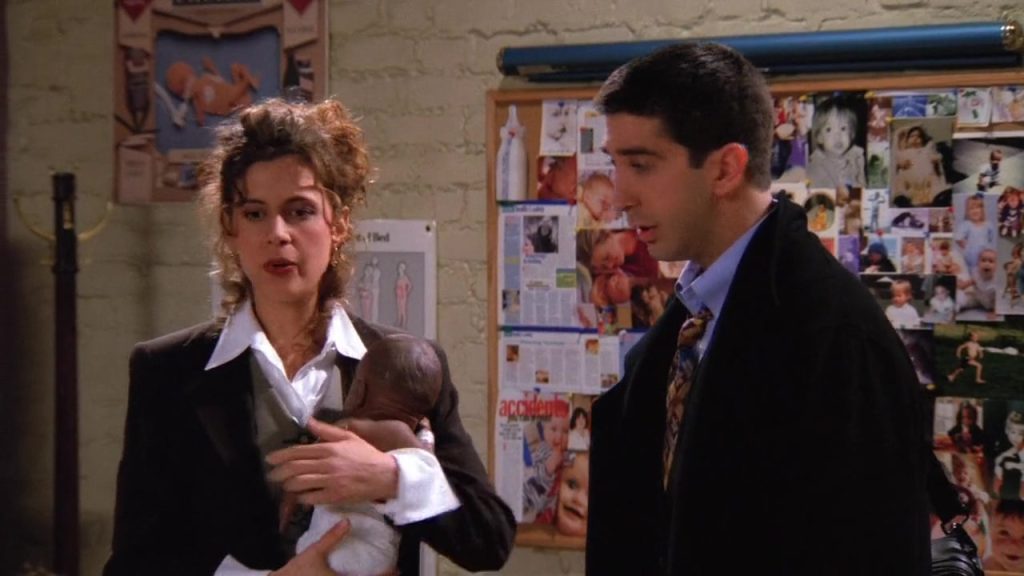
Chandler: “They’re twins!” Joey: “I’m sayin’ I see a difference.”
Scene Description and Emotional Tone: Chandler corrects Joey, emphasizing that the two people are identical siblings.
Word Breakdown
- Definition: Two children born at the same birth.
- Part of Speech: Noun
- Pronunciation: /twɪnz/
- Etymology: From Old English “twīn,” meaning “two.”
Examples:
- “My sister and I are twins.”
- “The twins look exactly alike.”
Contextual Usage
- Formal: “The twins were born prematurely.”
- Informal: “Those twins are so cute!”
- Common Collocations: Identical twins, fraternal twins, twin siblings.
Learning Insights
- Pronunciation Tips: Short “i” sound: twi-nz.
- Common Mistakes: Don’t use “twins” to refer to more than two siblings.
- Cultural Nuances: Twins are often subjects of fascination and are celebrated in many cultures.
- Memorization Tricks: Picture two children who look exactly alike to remember “twins.”
If you’re looking for a dynamic approach to improving your English, movie vocabulary learning offers a creative solution.
6. Psychiatrist
Original Movie Context
Chandler: “…after I let her go, uh, I got a call from her psychiatrist…”
Scene Description and Emotional Tone: Chandler discusses a colleague’s mental health support after firing her.
Word Breakdown
- Definition: A medical practitioner specializing in mental health.
- Part of Speech: Noun
- Pronunciation: /saɪˈkaɪətrɪst/
- Etymology: From Greek “psyche” (mind) + “iatros” (physician).
Examples:
- “She visits her psychiatrist regularly to manage anxiety.”
- “The psychiatrist recommended cognitive behavioral therapy.”
Contextual Usage
- Formal: “He was referred to a psychiatrist for further evaluation.”
- Informal: “My friend is seeing a psychiatrist to help with stress.”
- Common Collocations: Mental health psychiatrist, consulting psychiatrist, child psychiatrist.
Learning Insights
- Pronunciation Tips: Emphasize the second syllable: psy-CHI-a-trist.
- Common Mistakes: Don’t confuse with “psychologist,” who typically holds a doctorate in psychology but may not have medical training.
- Cultural Nuances: Psychiatry is a respected profession, but stigma may still exist in some cultures.
- Memorization Tricks: Associate “psychiatrist” with “psyche” (mind) to remember their focus on mental health.
The dialogue in Friends is packed with phrases and expressions that make movie vocabulary learning both entertaining and practical.
7. Cleansing
Original Movie Context
Teacher: “Good for you. Next?”
Scene Description and Emotional Tone: The teacher instructs parents during a first-stage breathing exercise in a childbirth class.
Word Breakdown
- Definition: The act of making something clean or pure.
- Part of Speech: Adjective (participle form)
- Pronunciation: /ˈkliːnzɪŋ/
- Etymology: From “cleanse,” which comes from Old French “cleanser.”
Examples:
- “She followed a cleansing diet to detoxify her body.”
- “The cleansing ritual was important in their culture.”
Contextual Usage
- Formal: “Cleansing the workspace is essential for maintaining hygiene.”
- Informal: “I need a cleansing facial after a long week.”
- Common Collocations: Cleansing ritual, cleansing diet, cleansing process.
Learning Insights
- Pronunciation Tips: The “eansing” part sounds like “zinz-ing.”
- Common Mistakes: Don’t confuse with “cleaning,” which is more general.
- Cultural Nuances: Cleansing often relates to spiritual or health-related practices.
- Memorization Tricks: Think of “cleansing” as making something not just clean, but pure and refreshed.
With tools like Funfluen, you can enhance your movie vocabulary learning experience by saving words directly from subtitles.
8. Thinnest
Original Movie Context
Monica: “Congratulations, I think you’ve found the world’s thinnest argument.”
Scene Description and Emotional Tone: Monica sarcastically comments on Chandler’s weak argument, using humor.
Word Breakdown
- Definition: Having little thickness; very slim.
- Part of Speech: Adjective (superlative form)
- Pronunciation: /ˈθɪnɪst/
- Etymology: From “thin,” with the superlative ending “-est.”
Examples:
- “This paper is the thinnest I’ve ever used.”
- “She has the thinnest hair in her family.”
Contextual Usage
- Formal: “The thinnest margin of error was observed in the experiment.”
- Informal: “That’s the thinnest excuse I’ve heard.”
- Common Collocations: Thinnest line, thinnest paper, thinnest argument.
Learning Insights
- Pronunciation Tips: Emphasize the first syllable: THIN-nest.
- Common Mistakes: Avoid using “thinest,” which is incorrect.
- Cultural Nuances: Often used metaphorically to describe weak or insubstantial things.
- Memorization Tricks: Remember “thinnest” by associating it with the word “thin” and adding the superlative “-est.”
Imagine how much faster you’ll improve your English by combining movie vocabulary learning with interactive features like dual subtitles.
9. Capade
Original Movie Context
Joey: “Yep. Ice Capades.”
Scene Description and Emotional Tone: Joey refers to the ice skating show in a playful manner.
Word Breakdown
- Definition: A playful variation of “escapade,” meaning an adventurous or daring experience.
- Part of Speech: Noun
- Pronunciation: /kəˈpeɪd/
- Etymology: Shortened form of “escapade,” from French “escapade.”
Examples:
- “Their weekend capade involved hiking and camping in the mountains.”
- “The kids went on a little capade around the neighborhood.”
Contextual Usage
- Formal: “Their capade through the city was documented for the film.”
- Informal: “We had a fun capade exploring the new mall.”
- Common Collocations: Weekend capade, adventurous capade, spontaneous capade.
Learning Insights
- Pronunciation Tips: Emphasize the second syllable: ca-PADE.
- Common Mistakes: Ensure not to confuse with “caper,” which has a different meaning.
- Cultural Nuances: “Capade” adds a whimsical twist to “escapade,” often used humorously.
- Memorization Tricks: Link “capade” with “escapade” to remember it refers to a fun adventure.

10. Frenzy
Original Movie Context
Chandler: “…she took the news rather badly. In fact, he uh, mentioned the word ‘frenzy’.”
Scene Description and Emotional Tone: Chandler discusses the intense reaction of a colleague after being fired.
Word Breakdown
- Definition: A state of uncontrolled excitement or wild behavior.
- Part of Speech: Noun
- Pronunciation: /ˈfrɛnzi/
- Etymology: From Latin “frenzīa,” meaning “insanity.”
Examples:
- “The crowd went into a frenzy when the band took the stage.”
- “She was in a frenzy trying to finish the project on time.”
Contextual Usage
- Formal: “There was a frenzy of activity in the emergency room.”
- Informal: “He was in a frenzy buying last-minute gifts.”
- Common Collocations: Shopping frenzy, media frenzy, frenzy of emotions.
Learning Insights
- Pronunciation Tips: Emphasize the first syllable: FREN-zy.
- Common Mistakes: Don’t mix up with “frantic,” which is an adjective.
- Cultural Nuances: “Frenzy” often conveys a negative connotation, indicating chaos or lack of control.
- Memorization Tricks: Picture a wild, chaotic scene to remember the meaning of “frenzy.”
One of the best aspects of movie vocabulary learning is its ability to teach you real-world phrases and expressions.
11. Annual
Original Movie Context
Mr. Douglas: “It’s been better. The Annual Net Usage Statistics are in.”
Scene Description and Emotional Tone: Mr. Douglas refers to the yearly report, indicating corporate performance.
Word Breakdown
- Definition: Occurring once every year.
- Part of Speech: Adjective
- Pronunciation: /ˈænjuəl/
- Etymology: From Latin “annus,” meaning “year.”
Examples:
- “The company holds an annual meeting every December.”
- “She received her annual bonus for outstanding performance.”
Contextual Usage
- Formal: “The annual report highlights the company’s financial growth.”
- Informal: “We have our annual family reunion next month.”
- Common Collocations: Annual meeting, annual event, annual report.
Learning Insights
- Pronunciation Tips: Stress the first syllable: AN-nu-al.
- Common Mistakes: Avoid confusing with “annually,” which is an adverb.
- Cultural Nuances: “Annual” is often used in business and organizational contexts to signify regularity.
- Memorization Tricks: Link “annual” with “yearly” to remember it pertains to something that happens every year.
Using Friends for movie vocabulary learning not only helps you understand new words but also gives you insight into cultural nuances and humor.
12. WENUS (Weekly Estimated Net Usage Statistics)
Original Movie Context
Chandler: “It throws my WENUS out of whack.”
Scene Description and Emotional Tone: Chandler uses a fictional acronym humorously to describe confusing statistics.
Word Breakdown
- Definition: A fictional term mimicking corporate jargon, standing for Weekly Estimated Net Usage Statistics.
- Part of Speech: Noun (acronym)
- Pronunciation: /ˈwɛnəs/
- Etymology: Created as a playful acronym combining “weekly,” “estimated,” “net,” “usage,” and “statistics.”
Examples:
- “Our WENUS indicate a steady increase in user engagement.”
- “The latest WENUS report shows a decline in productivity.”
Contextual Usage
- Formal: “According to the WENUS, our quarterly targets were met.”
- Informal: “I can’t keep up with these WENUS anymore!”
- Common Collocations: WENUS data, WENUS report, WENUS analysis.
Learning Insights
- Pronunciation Tips: Pronounce it as a single word: WEH-nus.
- Common Mistakes: Since WENUS is fictional, use it contextually as a humorous term rather than a standard vocabulary word.
- Cultural Nuances: Reflects corporate speak and the tendency to create acronyms in business environments.
- Memorization Tricks: Remember WENUS by associating it with “weekly usage statistics” to grasp its intended meaning.
Whether you’re watching for entertainment or education, movie vocabulary learning transforms casual viewing into an interactive language journey.
13. Lay Off
Original Movie Context
Mr. Douglas: “We’re gonna be layin’ off people in every department.”
Scene Description and Emotional Tone: Mr. Douglas announces layoffs, conveying a serious and somber tone.
Word Breakdown
- Definition: To terminate someone’s employment.
- Part of Speech: Phrasal Verb
- Pronunciation: /leɪ ɔf/
- Etymology: Combination of “lay” (to put) and “off” (away).
Examples:
- “The company had to lay off several employees due to budget cuts.”
- “She was laid off last month but is actively seeking new opportunities.”
Contextual Usage
- Formal: “Due to restructuring, we will be laying off staff in the marketing department.”
- Informal: “They laid me off, so I’m looking for a new job.”
- Common Collocations: Lay off employees, lay off workers, lay off someone.
Learning Insights
- Pronunciation Tips: “Lay” rhymes with “day,” and “off” is pronounced clearly.
- Common Mistakes: Avoid saying “lay offs,” instead use “layoffs.”
- Cultural Nuances: Layoffs are often associated with economic downturns or company reorganization.
- Memorization Tricks: Think of “laying someone off” as putting them away from their job.
14. Psychological
Original Movie Context
Chandler: “…send her psychological profile to personnel?”
Scene Description and Emotional Tone: Chandler discusses sharing mental health information, highlighting workplace protocols.
Word Breakdown
- Definition: Relating to the mind or mental processes.
- Part of Speech: Adjective
- Pronunciation: /ˌsaɪkəˈlɑdʒɪkəl/
- Etymology: From “psychology,” which comes from Greek “psyche” (mind) + “logia” (study).
Examples:
- “She underwent a psychological evaluation before the trial.”
- “The novel explores the psychological impact of isolation.”
Contextual Usage
- Formal: “The study focuses on the psychological effects of stress.”
- Informal: “He needs some psychological support after the breakup.”
- Common Collocations: Psychological impact, psychological study, psychological support.
Learning Insights
- Pronunciation Tips: Break it down into syllables: psy-cho-LO-gi-cal.
- Common Mistakes: Don’t confuse with “physical,” which relates to the body.
- Cultural Nuances: Psychological aspects are crucial in understanding behavior and mental health.
- Memorization Tricks: Associate “psychological” with “psyche” (mind) to remember its meaning.
15. Stupid
Original Movie Context
Phoebe: “…it’s just, you know, it’s this whole stupid Ursula thing.”
Scene Description and Emotional Tone: Phoebe vents her frustration about her sister Ursula, using strong language to express annoyance.
Word Breakdown
- Definition: Lacking intelligence or common sense; foolish.
- Part of Speech: Adjective
- Pronunciation: /ˈstuːpɪd/
- Etymology: From Middle English “stupide,” from Latin “stupidus,” meaning “amazed, stunned.”
Examples:
- “It was a stupid mistake that cost him the job.”
- “Don’t be so stupid; think before you act.”
Contextual Usage
- Formal: “Making such a decision without proper analysis could be considered unwise.”
- Informal: “That was a stupid thing to do!”
- Common Collocations: Stupid mistake, stupid idea, feeling stupid.
Learning Insights
- Pronunciation Tips: Emphasize the first syllable: STU-pid.
- Common Mistakes: Avoid overusing or using it inappropriately as it can be offensive.
- Cultural Nuances: “Stupid” is a strong term and can be hurtful; use it cautiously in conversations.
- Memorization Tricks: Link “stupid” with “not smart” to remember its meaning, but be mindful of its impact.
Enhance Your Learning Journey with Funfluen
Learning English through movies like Friends S01E16 makes language acquisition enjoyable and effective. To take your movie vocabulary learning to the next level, consider using Funfluen, a language learning extension designed to transform your viewing experience. With features like the Mouse Dictionary, you can hover over any word in the subtitles to see instant definitions, boosting your vocabulary in real-time. Save new words for future review, customize your subtitle display, and enjoy interactive tools like Fluency Gym to master pronunciation and speaking skills. Embrace technology to make your language learning journey as entertaining as watching your favorite sitcom!
Conclusion
Movie vocabulary learning offers a dynamic and immersive way to enhance your English skills. By exploring vocabulary from Friends S01E16, you’ve gained a deeper understanding of words in context, enriched your vocabulary, and learned how to apply these words in various scenarios. Remember, language learning is a journey filled with discovery and fun. Tools like Funfluen can seamlessly integrate into your learning process, making it more interactive and effective. So, grab your favorite movie, start learning, and enjoy the ride to English fluency!