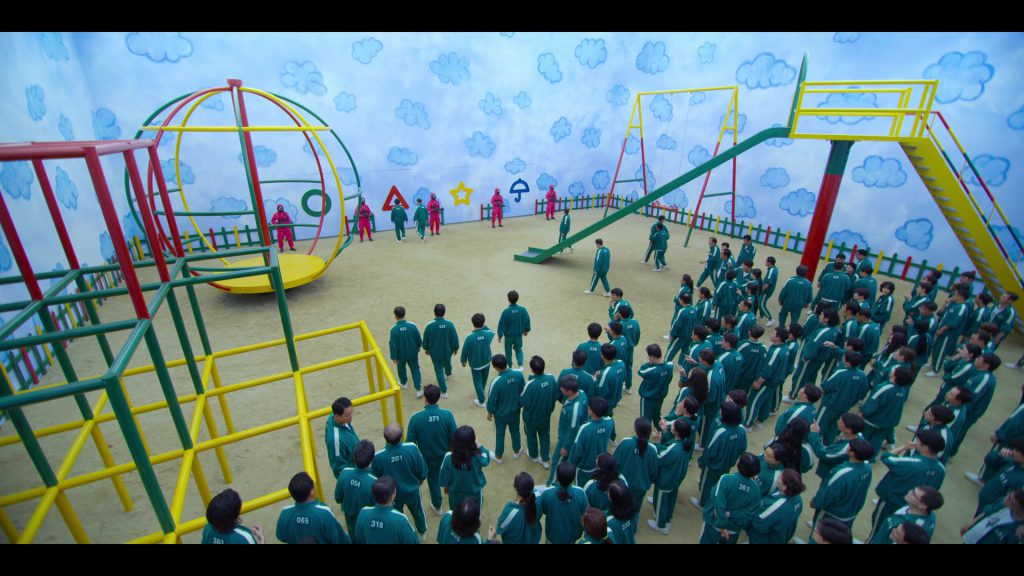
When it comes to improving your English skills, Language learning with Netflix can make the process far more enjoyable. After all, why not turn your favorite shows into a powerful learning experience? Today, we will dive into Squid Game S01 E03 (a thrilling series episode) to extract 12 useful vocabulary words and phrases. These terms will not only deepen your understanding of the plot but also expand your everyday English usage. Plus, we’ll explore how embracing Movie vocabulary learning and taking advantage of tools that let you Learn English through movies can boost your fluency. By the end, you will feel more confident, more connected, and more excited about your English journey!
Before we start, remember that Language learning with Netflix gets even easier with helpful features like mouse dictionaries, subtitle downloads, and integrated flashcards. Transitioning from passive watching to active learning is simple when you have the right tools. Ready? Let’s explore these 12 words now.
1. Seasick
Original Movie Context
Dialogue: “I just got seasick.”
Scene Description: A character explains why he’s feeling unwell on a boat. The tone is uneasy and apologetic, reflecting discomfort in a tense environment.
Word Breakdown
- Definition: Feeling nauseous due to the motion of a boat.
- Part of Speech: Adjective
- Pronunciation: /ˈsiː.sɪk/
- Etymology: From “sea” + “sick,” first noted in English in the 17th century.
Examples:
- “I felt seasick the first time I went fishing.”
- “Don’t worry, these pills will help if you get seasick.”
Variations: “Carsick,” “airsick” for similar sensations in other vehicles.
Contextual Usage
- Example Sentences:
- “She always gets seasick on long boat trips.”
- “After a few hours at sea, he started to feel seasick.”
- Variations in Speech:
- Formal: “He experiences motion sickness while on boats.”
- Informal: “He gets really seasick when he’s on a boat.”
- Common Collocations: “Seasick symptoms,” “feeling seasick”
Learning Insights
Pronounce it slowly: “sea-sick.” To remember, think of “sick by the sea.” If you ever felt dizzy on a boat ride, you know the feeling. Try pairing with Language learning with Netflix by watching sea travel scenes in other shows, then noting how often “seasick” appears.
2. Head Honcho
Original Movie Context
Dialogue: “…after his head honcho’s pockets…”
Scene Description: A character talks about someone daring to steal from the leader. The emotional tone is a mix of danger and respect for authority.
Word Breakdown
- Definition: The person in charge, the boss.
- Part of Speech: Noun (informal)
- Etymology: “Honcho” comes from Japanese “hancho,” meaning “group leader.” Adopted into English after WWII.
Examples:
- “Sarah is the head honcho of the marketing team.”
- “The head honcho gave everyone the day off.”
Common Collocations: “The head honcho at the office,” “Corporate head honcho”
Contextual Usage
- Example Sentences:
- “As the head honcho, he makes all the final decisions.”
- “Everyone respects the head honcho in the company.”
- Variations in Speech:
- Formal: “The CEO is the head of the company.”
- Informal: “He’s the head honcho around here.”
- Common Collocations: “Head honcho role,” “Head honcho position”
Learning Insights
Use “head honcho” in informal settings. Think of it as the top person. Practicing with Movie vocabulary learning tools can help you find other leadership-related terms. Use the “Mouse Dictionary” feature in a language extension to quickly check definitions while streaming your shows.
3. Craving
Original Movie Context
Dialogue: “I’m craving something sweet.”
Scene Description: Someone longs for sugar in a tense, uncertain environment. The tone is slightly desperate yet relatable.
Word Breakdown
- Definition: A strong desire for something, usually food.
- Part of Speech: Verb or Noun (e.g., “I have a craving”)
- Pronunciation: /ˈkreɪ.vɪŋ/
Examples:
- “She’s craving chocolate right now.”
- “I have a craving for ice cream.”
Contextual Usage
- Example Sentences:
- “After the workout, he was craving a protein shake.”
- “Late at night, I often crave something salty.”
- Variations in Speech:
- Formal: “I have a strong desire for a sweet treat.”
- Informal: “I’m really craving some pizza.”
- Common Collocations: “Craving for,” “Craving something”
Learning Insights
Think of a time you really wanted a snack. That’s a craving. While you Learn English through movies, try identifying character cravings—maybe for freedom, safety, or comfort. Save these words in your “Saved Words” list using a subtitle extension’s features.
4. Briquette
Original Movie Context
Dialogue: “The little briquette stove we had…”
Scene Description: A nostalgic recall of heating lunches with a briquette stove. The tone is warm, nostalgic, and cultural.
Word Breakdown
- Definition: A small, compressed block of coal or charcoal used as fuel.
- Part of Speech: Noun
- Etymology: From French “briquet,” meaning small brick.
Examples:
- “We cooked our food over briquettes at the campsite.”
- “The old kitchen still uses a briquette stove.”
Contextual Usage
- Example Sentences:
- “Camping trips are more enjoyable with a reliable briquette stove.”
- “He collected briquettes for the winter heating.”
- Variations in Speech:
- Formal: “The briquette stove was essential for cooking.”
- Informal: “We used briquettes to keep the fire going.”
- Common Collocations: “Briquette stove,” “Use briquettes”
Learning Insights
Briquettes often appear in historical or cultural scenes. Next time you practice Language learning with Netflix, pay attention to culturally rich shows that mention old heating methods. You can even “Upload Second Subtitle” in your target language to see how “briquette” translates.
5. Scorch (Scorched)
Original Movie Context
Dialogue: “the rice’d get all scorched.”
Scene Description: Describing rice that became burnt and crispy. The tone is nostalgic and slightly humorous.
Word Breakdown
- Definition: To burn the surface of something.
- Part of Speech: Verb
- Pronunciation: /skɔːrtʃ/
Examples:
- “Don’t scorch the pancakes!”
- “The sun scorched the grass.”
Contextual Usage
- Example Sentences:
- “Be careful not to scorch the vegetables.”
- “The intense heat scorched the paint on the walls.”
- Variations in Speech:
- Formal: “The material became scorched due to excessive heat.”
- Informal: “Oops, I scorched the toast again.”
- Common Collocations: “Scorch the surface,” “Scorching temperature”
Learning Insights
Avoiding scorching your food is simple, but remembering the word might not be. Link “scorch” to “torch” (both suggest burning). Once you identify it in a show, use the “Save Words” feature to build flashcards. Focus on active recall—like the Fluency Gym mode in your language learning extension!
6. Defector
Original Movie Context
Dialogue: “You’re a defector, right?”
Scene Description: Addressing someone who left their home country. The mood is tense and slightly suspicious.
Word Breakdown
- Definition: A person who abandons their country or group in favor of another.
- Part of Speech: Noun
Examples:
- “The defector sought asylum in a neighboring country.”
- “As a defector, she faced many challenges adjusting to her new life.”
Contextual Usage
- Example Sentences:
- “During the Cold War, many defectors fled to the West.”
- “He was labeled a defector by his former allies.”
- Variations in Speech:
- Formal: “The defector provided valuable intelligence to the government.”
- Informal: “He’s a defector from the old regime.”
- Common Collocations: “Political defector,” “Military defector”
Learning Insights
This word has serious political weight. While you engage in Movie vocabulary learning, notice how often political terms appear. Use “Auto-Pause” features to reflect on context and meaning. This helps reinforce complex words like “defector.”
you can also see other posts like : Learn English with Squid Game S01 E02: 15 Essential Vocabulary Words to learn more phrase
7. Melting
Original Movie Context
Dialogue: “They were melting sugar in there.”
Scene Description: Observing secretive activities with heated sugar. The atmosphere is curious and tense.
Word Breakdown
- Definition: Changing from solid to liquid due to heat.
- Part of Speech: Verb (to melt), “melting” as a present participle.
Examples:
- “The ice is melting in the sun.”
- “Melting chocolate is necessary for this recipe.”
Contextual Usage
- Example Sentences:
- “The metal begins melting at high temperatures.”
- “She loves the sound of melting wax in candles.”
- Variations in Speech:
- Formal: “The substance starts melting under extreme heat.”
- Informal: “My ice cream is melting too fast!”
- Common Collocations: “Melting point,” “Melting process”
Learning Insights
Imagine chocolate melting to form a delicious dessert. When practicing Language learning with Netflix, you might catch cooking scenes—hit pause, think of “melting,” then resume. This triggers memory through sensory imagery.

8. Honeycomb
Original Movie Context
Dialogue: “The second game is sugar honeycombs.”
Scene Description: Players must carve shapes out of a brittle sugar candy. The tone is suspenseful.
Word Breakdown
- Definition: A structure made by bees, but in this context, a sweet candy resembling that structure.
- Part of Speech: Noun
Examples:
- “Real honeycomb is full of sweet honey.”
- “This honeycomb candy is delicious and crunchy.”
Contextual Usage
- Example Sentences:
- “Beekeepers harvest honeycomb from the hives.”
- “The dessert was topped with a generous portion of honeycomb.”
- Variations in Speech:
- Formal: “The honeycomb structure is essential for bees.”
- Informal: “I love spreading honey on my honeycomb toast.”
- Common Collocations: “Honeycomb structure,” “Honeycomb pattern”
Learning Insights
Honeycomb can be literal (bees) or figurative (candy). Next time you watch a baking show, listen for “honeycomb.” Using a “Mouse Dictionary” allows you to hover over words and catch definitions instantly, enhancing Movie vocabulary learning.
9. Gonggi
Original Movie Context
Dialogue: “For girls, there’s Gonggi…”
Scene Description: Listing childhood games. The mood is nostalgic, referencing a traditional Korean game played with small stones.
Word Breakdown
- Definition: A Korean children’s game involving small plastic or stone pebbles tossed and caught in sequence.
- Part of Speech: Noun (Proper noun for the game)
Examples:
- “In elementary school, we played Gonggi during breaks.”
- “Gonggi requires both skill and patience.”
Contextual Usage
- Example Sentences:
- “She excelled at Gonggi, winning every competition.”
- “Gonggi is a fun way to develop hand-eye coordination.”
- Variations in Speech:
- Formal: “Gonggi is a traditional game enjoyed by many Korean children.”
- Informal: “Let’s play Gonggi after school!”
- Common Collocations: “Play Gonggi,” “Gonggi game”
Learning Insights
This word reflects cultural nuance. When you Learn English through movies, you’ll encounter foreign terms. You can use “Phonetics for Korean” to see how it’s pronounced, or “Upload Second Subtitle” in Korean to understand Gonggi’s explanation in the native language.
10. Jerk
Original Movie Context
Dialogue: “Worry about your own ass, okay? … Jerks!”
Scene Description: An insult directed at others. The tone is hostile and frustrated.
Word Breakdown
- Definition: A rude, annoying, or mean person.
- Part of Speech: Noun (slang)
Examples:
- “Don’t be a jerk to your classmates.”
- “That guy who cut in line was such a jerk!”
Contextual Usage
- Example Sentences:
- “She couldn’t believe her friend was acting like a jerk.”
- “Don’t worry about that jerk; he doesn’t deserve your time.”
- Variations in Speech:
- Formal: “He behaves in an unpleasant manner.”
- Informal: “He’s a real jerk sometimes.”
- Common Collocations: “Act like a jerk,” “Calling someone a jerk”
Learning Insights
“Jerk” is informal and somewhat rude. Be cautious using it. With Language learning with Netflix, you’ll notice characters use slang when emotions run high. Use “Show/Hide Second Subtitles” to focus on slang meanings in just one language at a time.
11. Umbrella
Original Movie Context
Dialogue: “I’m choosing the umbrella.”
Scene Description: A character picks an umbrella shape for the honeycomb challenge. The mood is tense and uncertain.
Word Breakdown
- Definition: A device used to protect from rain or sun.
- Part of Speech: Noun
Examples:
- “Don’t forget your umbrella; it might rain.”
- “She opened her umbrella to shield herself from the sun.”
Contextual Usage
- Example Sentences:
- “He always carries an umbrella in case it rains.”
- “The colorful umbrellas added charm to the street festival.”
- Variations in Speech:
- Formal: “An umbrella is essential for protection against the elements.”
- Informal: “Grab your umbrella before we leave.”
- Common Collocations: “Carry an umbrella,” “Open an umbrella”
Learning Insights
Umbrella is simple yet symbolic. Sometimes it represents protection. With Movie vocabulary learning, noticing metaphors helps. “Umbrella” might show up in idioms or brand names. Use “Download Subtitles” to study related phrases offline.
12. Communist
Original Movie Context
Dialogue: “You communist little bitch!”
Scene Description: An insult with political undertones. The tone is angry and confrontational.
Word Breakdown
- Definition: Relating to Communism (a political and economic ideology). As an insult, it’s used derogatorily.
- Part of Speech: Noun or adjective
Examples:
- As a noun: “He was a known communist in the 1950s.”
- As an adjective: “They studied communist literature in class.”
Contextual Usage
- Example Sentences:
- “The group advocated for communist principles.”
- “He was labeled a communist by his opponents.”
- Variations in Speech:
- Formal: “Communist ideology emphasizes collective ownership.”
- Informal: “Don’t be such a communist about it!”
- Common Collocations: “Communist party,” “Communist government”
Learning Insights
Political words carry historical and cultural weight. Be mindful of context. Re-watching scenes with “Auto-Pause” after each sentence helps you understand how politically charged terms fit into the dialogue. This makes Language learning with Netflix more nuanced and comprehensive.
Making Vocabulary Stick: Practical Tips
Now that you have explored these words from Squid Game S01 E03, try to integrate them into your daily life. Say them out loud. Create silly sentences. Draw a picture of “honeycomb” candy, or think of when you were “seasick.” Don’t be shy, have fun!
For even better results, consider using a language learning extension like FunFluen.com. This tool can enhance your Movie vocabulary learning by allowing you to save words, show multiple subtitles, and even practice active recall with features like “Fluency Gym.” With “Fluency Gym,” you get:
- Reading Mode (Word Builder): Reveal subtitles gradually, save words, and form your own flashcards.
- Listening Mode (Ear Training): Listen without subtitles, guess what’s said, then compare to the original.
- Speaking Mode (Speech Challenger): Practice pronouncing lines before hearing them, turning passive vocabulary into active speech.
Using these features, Language learning with Netflix transforms from passive watching into an exciting, dynamic language workout. You can pause after each sentence, save new words you discover, and replay tricky dialogues at your own pace. By doing so, you’ll gain confidence and make steady progress toward fluency.
Building Confidence Through Consistent Practice
Remember, vocabulary is just the beginning. As you embrace Learn English through movies, pay attention to facial expressions, tone, and cultural references. Notice how characters use words like “jerk” or “head honcho” in real situations. Over time, these words will become part of your active vocabulary.
Plus, you can download your saved words and review them anywhere—on your commute, during a break, or while sipping your morning coffee. Add a timed delay after each sentence to process what you’ve heard, or blur subtitles to train your listening skills. All these integrated tools help keep your journey fun and interactive.
Conclusion: From Entertainment to Mastery
As you see, Language learning with Netflix is more than a trend. It’s a door to a new, exciting world of language improvement. With shows like Squid Game S01 E03, you’re not only entertained but also challenged and inspired. By extracting real words, practicing their pronunciation, and understanding their cultural context, you’re turning each Netflix session into a mini-classroom filled with humor, suspense, and discovery.
The next time you hit “play,” remember that every line is an opportunity to grow. Don’t just watch—engage! Use a language extension to save words, practice pronunciation with “Fluency Gym,” and review your flashcards whenever you like. Soon, you’ll realize that improving English can be as thrilling as your favorite movie scene.
Ready to start your next episode of Language learning with Netflix? Lights, camera, vocab!
Explore More Language Learning Tips:
- Top Strategies for Learning English Through Movies
- How to Use Subtitles Effectively in Language Learning
- Enhance Your Vocabulary with FunFluen.com’s Fluency Gym
Happy learning!