
Language learning with Netflix has never been more exciting! Imagine immersing yourself in the thrilling world of Squid Game S01 E06 while effortlessly expanding your English vocabulary. Whether you’re an intermediate or advanced learner, this guide will introduce you to 15 carefully selected words from the movie, complete with deep, contextual understandings to make your learning journey both fun and effective. Plus, discover how our innovative language learning extension, FunFluen.com, can elevate your experience even further!
1. Swiftly
Original Movie Context
- Dialogue: “Please follow the staff’s instructions and swiftly make your way towards the game hall.”
- Scene Description: Amidst the chaos, a calm authority figure instructs players to move quickly towards the game hall.
- Emotional Tone: Urgent and commanding.
Word Breakdown
- Definition: Quickly and efficiently.
- Part of Speech: Adverb.
- Pronunciation: /ˈswɪf.tli/
- Etymology: Derived from the adjective “swift,” meaning fast.
Examples:
- She swiftly closed the door before leaving.
- The team moved swiftly to secure the victory.
Contextual Usage
- Formal: The manager requested that the reports be completed swiftly.
- Informal: Hurry up and get there swiftly!
- Common Collocations: Swiftly respond, swiftly move, act swiftly.
- Potential Idioms: “Swift as the wind” – moving very quickly.
Learning Insights
- Pronunciation Tips: Emphasize the first syllable: SWIFT-ly.
- Common Mistakes: Confusing “swiftly” with “shiftily” (which means deceitfully).
- Cultural Nuances: Often used in formal instructions or urgent situations.
- Memorization Tricks: Associate “swiftly” with “swift” (fast) to remember its meaning.
2. Discrimination
Original Movie Context
- Dialogue: “You must be guaranteed the same opportunities without being disadvantaged or facing any kind of discrimination.”
- Scene Description: The masked manager addresses players about fairness within the facility.
- Emotional Tone: Sincere and apologetic.
Word Breakdown
- Definition: Unfair treatment of different categories of people, especially based on race, age, or sex.
- Part of Speech: Noun.
- Pronunciation: /dɪˌskrɪm.ɪˈneɪ.ʃən/
- Etymology: From Latin “discriminare,” meaning to divide.
Examples:
- The company has a strict policy against discrimination.
- She filed a complaint alleging discrimination at work.
Contextual Usage
- Formal: Legislation aims to reduce discrimination in hiring practices.
- Informal: It’s wrong to discriminate against someone just because of their background.
- Common Collocations: Racial discrimination, gender discrimination, age discrimination.
- Potential Idioms: “Stand against discrimination” – oppose unfair treatment.
Learning Insights
- Pronunciation Tips: Stress the third syllable: dis-cri-mi-NA-tion.
- Common Mistakes: Mixing up with “discriminating” (having good taste).
- Cultural Nuances: A critical social issue addressed globally.
- Memorization Tricks: Think of “discrimination” as dividing people unfairly.
3. Asshole
Original Movie Context
- Dialogue: “You are all assholes!”
- Scene Description: A character vents frustration aggressively.
- Emotional Tone: Angry and insulting.
Word Breakdown
- Definition: A derogatory term for someone who is mean, unpleasant, or inconsiderate.
- Part of Speech: Noun.
- Pronunciation: /ˈæs.hoʊl/
- Etymology: Slang term, origin uncertain but widely used in informal speech.
Examples:
- Don’t be such an asshole to your classmates.
- He became an asshole after losing the game.
Contextual Usage
- Formal: Not typically used in formal settings.
- Informal: Commonly used among friends (though offensive).
- Common Collocations: Total asshole, asshole behavior, call someone an asshole.
- Potential Idioms: “Asshole move” – an action that is unfair or inconsiderate.
Learning Insights
- Pronunciation Tips: Short “a” sound in the first syllable: ASS-hole.
- Common Mistakes: Mispronouncing as “ash-hole.”
- Cultural Nuances: Strong insult; offensive and should be used cautiously.
- Memorization Tricks: Remember it as a compound of “ass” and “hole” to grasp its derogatory nature.
4. Wager
Original Movie Context
- Dialogue: “What’s your wager?”
- Scene Description: Players are about to place bets in a game.
- Emotional Tone: Serious and anticipatory.
Word Breakdown
- Definition: A bet or stake.
- Part of Speech: Noun and Verb.
- Pronunciation: /ˈweɪ.dʒər/
- Etymology: From Old North French “wagier,” meaning to bet.
Examples:
- She placed a wager on the horse race.
- They wagered their savings on the outcome.
Contextual Usage
- Formal: The board approved a wager for the investment.
- Informal: Let’s make a wager on who wins the game.
- Common Collocations: Place a wager, accept a wager, high-stakes wager.
- Potential Idioms: “No wager” – no bet or no chance.
Learning Insights
- Pronunciation Tips: Emphasize the first syllable: WAG-er.
- Common Mistakes: Confusing with “wage” (a salary).
- Cultural Nuances: Often associated with gambling and games.
- Memorization Tricks: Think of “wager” as “to wager is to bet.”
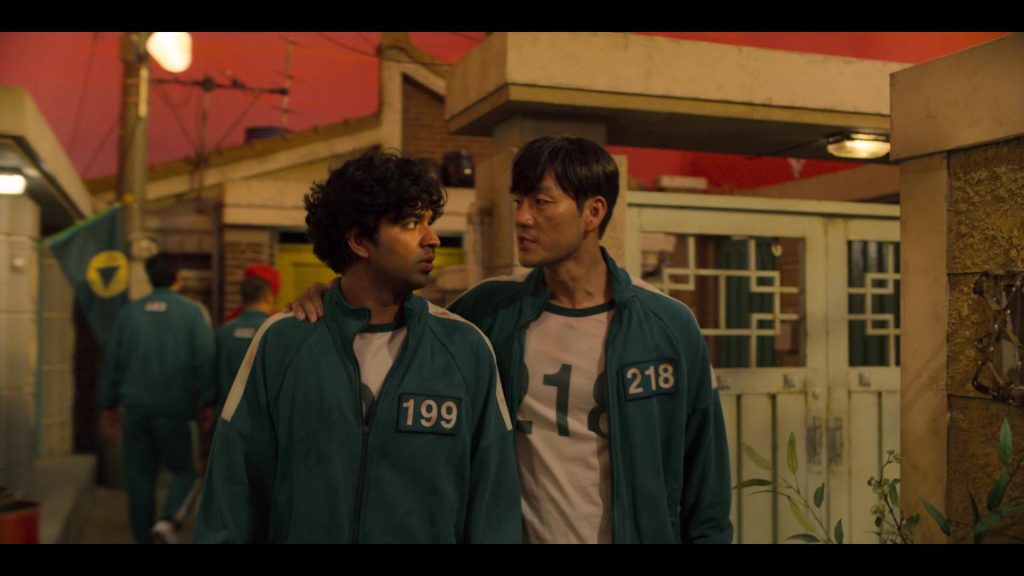
5. Eliminate
Original Movie Context
- Dialogue: “Player 278, eliminated.”
- Scene Description: A player is removed from the game.
- Emotional Tone: Formal and final.
Word Breakdown
- Definition: To remove or get rid of something or someone.
- Part of Speech: Verb.
- Pronunciation: /ɪˈlɪm.ɪ.neɪt/
- Etymology: From Latin “eliminare,” meaning to shut out.
Examples:
- The team was eliminated from the competition.
- They decided to eliminate unnecessary expenses.
Contextual Usage
- Formal: The committee will eliminate candidates who do not meet the criteria.
- Informal: Let’s eliminate the bad ideas from our plan.
- Common Collocations: Eliminate obstacles, eliminate waste, eliminate a player.
- Potential Idioms: “Eliminate the doubt” – remove uncertainty.
Learning Insights
- Pronunciation Tips: Stress on the second syllable: e-LIM-i-nate.
- Common Mistakes: Using “eliminate” when “elapse” is intended.
- Cultural Nuances: Often used in competitive contexts.
- Memorization Tricks: Think of “eliminate” as “to remove completely.”
6. Disturbance
Original Movie Context
- Dialogue: “A minor disturbance took place.”
- Scene Description: Announcement about a small incident.
- Emotional Tone: Calm and informative.
Word Breakdown
- Definition: An interruption or problem that causes confusion or disorder.
- Part of Speech: Noun.
- Pronunciation: /dɪˈstɜːr.bəns/
- Etymology: From Latin “disturbare,” meaning to confuse.
Examples:
- The storm caused a significant disturbance in the area.
- There was a disturbance in the office yesterday.
Contextual Usage
- Formal: The building manager addressed the disturbance promptly.
- Informal: Sorry for the disturbance, I didn’t mean to interrupt.
- Common Collocations: Cause a disturbance, minor disturbance, social disturbance.
- Potential Idioms: “Cause a disturbance” – create chaos or confusion.
Learning Insights
- Pronunciation Tips: Stress the second syllable: dis-TUR-bance.
- Common Mistakes: Mispronouncing as “disturbence.”
- Cultural Nuances: Can refer to both minor and major interruptions.
- Memorization Tricks: Associate “disturbance” with “disturb” to remember its meaning.
7. Devastate
Original Movie Context
- Dialogue: “They tainted the pure and fair ideology everything here has been built upon.”
- Scene Description: Reflection on corruption within the facility.
- Emotional Tone: Sad and regretful.
Word Breakdown
- Definition: To cause severe emotional shock or distress.
- Part of Speech: Verb.
- Pronunciation: /ˈdɛv.ə.steɪt/
- Etymology: From Latin “devastare,” meaning to lay waste.
Examples:
- The news of her passing devastated the community.
- The earthquake devastated the region.
Contextual Usage
- Formal: The loss of the project devastated the team.
- Informal: His sudden move devastated her.
- Common Collocations: Devastate emotionally, devastated by, completely devastate.
- Potential Idioms: “Devastate one’s heart” – cause great emotional pain.
Learning Insights
- Pronunciation Tips: Emphasize the first syllable: DEV-a-state.
- Common Mistakes: Using “devastate” instead of “deviate.”
- Cultural Nuances: Often used to describe profound emotional impacts.
- Memorization Tricks: Think of “devastate” as “destroy emotions.”
8. Equally
Original Movie Context
- Dialogue: “Each and every one of you is considered an equal within the walls of this facility.”
- Scene Description: Manager emphasizes fairness.
- Emotional Tone: Sincere and reassuring.
Word Breakdown
- Definition: In the same manner or to the same extent.
- Part of Speech: Adverb.
- Pronunciation: /ˈiː.kwəli/
- Etymology: From Latin “aequalis,” meaning equal.
Examples:
- All employees should be treated equally.
- The benefits are shared equally among team members.
Contextual Usage
- Formal: The policy ensures that all applicants are judged equally.
- Informal: We should split the bill equally.
- Common Collocations: Treated equally, share equally, support equally.
- Potential Idioms: “Equally important” – of the same level of importance.
Learning Insights
- Pronunciation Tips: Emphasize the first syllable: E-qua-lly.
- Common Mistakes: Confusing with “equally” and “equal.”
- Cultural Nuances: Central to discussions about fairness and equality.
- Memorization Tricks: Relate “equally” to “equal” to remember it signifies sameness.
9. Gganbu
Original Movie Context
- Dialogue: “Gganbu always share everything with each other no matter what.”
- Scene Description: Characters discuss their deep bond.
- Emotional Tone: Warm and affectionate.
Word Breakdown
- Definition: A Korean term meaning a close friend or buddy.
- Part of Speech: Noun.
- Pronunciation: /ɡɑn-boo/
- Etymology: From Korean culture, signifying a lifelong friendship.
Examples:
- They’ve been gganbu since childhood.
- As gganbu, they support each other through thick and thin.
Contextual Usage
- Formal: Not commonly used in formal English contexts.
- Informal: Used among Korean speakers or those familiar with the term.
- Common Collocations: True gganbu, loyal gganbu, best gganbu.
- Potential Idioms: “Gganbu for life” – lifelong friends.
Learning Insights
- Pronunciation Tips: Pronounce both syllables clearly: GGAN-boo.
- Common Mistakes: Mispronouncing as “gan-boo” without the double ‘g’.
- Cultural Nuances: Reflects the importance of deep friendships in Korean society.
- Memorization Tricks: Associate “gganbu” with “gang-buddy” to remember it means close friends.

10. Pronunciation
Original Movie Context
- Dialogue: “He played different roles than women.”
- Scene Description: Characters discuss gender roles.
- Emotional Tone: Reflective and analytical.
Word Breakdown
- Definition: The way in which a word is pronounced.
- Part of Speech: Noun.
- Pronunciation: /prəˌnʌn.siˈeɪ.ʃən/
- Etymology: From Latin “pronuntiatio,” meaning speaking forth.
Examples:
- Her pronunciation of French words is excellent.
- Practice your pronunciation to sound more natural.
Contextual Usage
- Formal: Clear pronunciation is crucial for effective communication.
- Informal: I need to work on my pronunciation.
- Common Collocations: Correct pronunciation, clear pronunciation, pronunciation guide.
- Potential Idioms: “Pronunciation matters” – how you say something can affect its reception.
Learning Insights
- Pronunciation Tips: Break the word into syllables: pro-nun-ci-a-tion.
- Common Mistakes: Stressing the wrong syllable or blending syllables.
- Cultural Nuances: Important for non-native speakers to ensure understanding.
- Memorization Tricks: Link “pronunciation” with “pronounce” to remember it relates to speaking words correctly.
11. Obvious
Original Movie Context
- Dialogue: “It’s nothing. That brat was so desperate, she said whatever she could.”
- Scene Description: A character dismisses another’s concerns.
- Emotional Tone: Dismissive and frustrated.
Word Breakdown
- Definition: Easily perceived or understood; clear, self-evident.
- Part of Speech: Adjective.
- Pronunciation: /ˈɑːb.vi.əs/
- Etymology: From Latin “obvius,” meaning in the way.
Examples:
- It was obvious that he was upset.
- The solution to the problem was obvious.
Contextual Usage
- Formal: The results were obvious to all observers.
- Informal: It’s obvious you need a break.
- Common Collocations: Obvious mistake, make obvious, obviously obvious.
- Potential Idioms: “Make it obvious” – ensure something is clear.
Learning Insights
- Pronunciation Tips: Emphasize the first syllable: OB-vi-ous.
- Common Mistakes: Mispronouncing as “obviouss” with an extra ‘s’.
- Cultural Nuances: Used to highlight clarity or self-evidence.
- Memorization Tricks: Remember “obvious” as something that stands out clearly.
12. Forfeit
Original Movie Context
- Dialogue: “He’s not gonna play. So that means he forfeited, right?”
- Scene Description: Discussing a player who can’t continue.
- Emotional Tone: Confirmatory and logical.
Word Breakdown
- Definition: To lose or give up something as a penalty.
- Part of Speech: Verb and Noun.
- Pronunciation: /ˈfɔːr.fɪt/
- Etymology: From Old French “forfait,” meaning a breach of faith.
Examples:
- If you don’t show up, you forfeit your chance.
- The team had to forfeit the match due to injuries.
Contextual Usage
- Formal: Failure to comply may result in forfeiture of rights.
- Informal: If you quit now, you’ll forfeit everything.
- Common Collocations: Forfeit a game, forfeit rights, forfeit a prize.
- Potential Idioms: “Forfeit your place” – lose your position or spot.
Learning Insights
- Pronunciation Tips: Stress the first syllable: FOR-fit.
- Common Mistakes: Confusing “forfeit” with “for instance.”
- Cultural Nuances: Often used in rules and regulations within games or contracts.
- Memorization Tricks: Link “forfeit” with “forcefully give up.”
13. Bluff
Original Movie Context
- Dialogue: “You think I’ll be thankful that you did this, huh?”
- Scene Description: A player confronts another after a deceitful move.
- Emotional Tone: Accusatory and confrontational.
Word Breakdown
- Definition: An attempt to deceive someone into believing that one can or will do something.
- Part of Speech: Verb and Noun.
- Pronunciation: /blʌf/
- Etymology: From Middle English “bluff,” meaning steep or rounded cliff, metaphorically implying deception by appearing strong.
Examples:
- He decided to bluff his way through the interview.
- Her entire strategy was a bluff to gain an advantage.
Contextual Usage
- Formal: The negotiation tactics included several strategic bluffs.
- Informal: Don’t bluff me—I know what you did.
- Common Collocations: Bluff your way, call someone’s bluff, poker bluff.
- Potential Idioms: “Bluffing the system” – deceiving the established order.
Learning Insights
- Pronunciation Tips: Simple one-syllable word: Bluff.
- Common Mistakes: Confusing “bluff” with “buff.”
- Cultural Nuances: Common in games, negotiations, and situations requiring deception.
- Memorization Tricks: Think of a “bluff” as a deceptive high ground, hiding true intentions.
14. Sabotage
Original Movie Context
- Dialogue: “He played you. He just wanted to save his own ass, so he kept it secret from you all.”
- Scene Description: A player reveals deceitful actions.
- Emotional Tone: Betrayal and frustration.
Word Breakdown
- Definition: Deliberately destroy, damage, or obstruct something.
- Part of Speech: Verb and Noun.
- Pronunciation: /ˈsæb.ə.tɑːʒ/
- Etymology: From French “sabotage,” from “sabot” (wooden shoe), implying workers throwing their shoes to disrupt machinery.
Examples:
- The employee was fired for sabotaging the project.
- There was an act of sabotage during the event setup.
Contextual Usage
- Formal: The report highlighted several acts of sabotage within the organization.
- Informal: Someone tried to sabotage our plans by spreading rumors.
- Common Collocations: Industrial sabotage, political sabotage, act of sabotage.
- Potential Idioms: “Sabotage one’s efforts” – deliberately hinder someone’s progress.
Learning Insights
- Pronunciation Tips: Stress the first syllable: SAB-o-tage.
- Common Mistakes: Mispronouncing the final syllable as “-taj.”
- Cultural Nuances: Often associated with hostile or covert actions to undermine.
- Memorization Tricks: Link “sabotage” with “sabot” (shoe) to remember the idea of disrupting machinery.

15. Holler
Original Movie Context
- Dialogue: “Hey, sing my song. Sing it loud for me, sir.”
- Scene Description: A character encourages another to express themselves loudly.
- Emotional Tone: Enthusiastic and supportive.
Word Breakdown
- Definition: To shout loudly.
- Part of Speech: Verb.
- Pronunciation: /ˈhɑː.lər/
- Etymology: Informal variant of “holler,” originating from American English.
Examples:
- She couldn’t help but holler when she saw her favorite band.
- Don’t holler at me like that!
Contextual Usage
- Formal: Not typically used in formal contexts.
- Informal: Commonly used among friends or in casual settings.
- Common Collocations: Holler loudly, give a holler, holler for help.
- Potential Idioms: “Holler back” – respond or reply loudly.
Learning Insights
- Pronunciation Tips: Short “o” sound: HOL-ler.
- Common Mistakes: Mispronouncing as “holler” with an extended vowel.
- Cultural Nuances: Associated with rural or Southern American English dialects.
- Memorization Tricks: Remember “holler” as a louder version of “call.”
Enhance Your Learning Journey with FunFluen.com
As you dive into Squid Game S01 E06 and expand your vocabulary, imagine having a tool that seamlessly integrates into your viewing experience. That’s where FunFluen.com comes in! Our language learning extension is designed to make language learning with Netflix effortless and enjoyable. Here’s how:
Mouse Dictionary
Hover over any word in the subtitles to see instant definitions. No need to pause or search elsewhere!
Save Words
Easily save new vocabulary words for future review. Build your personalized word bank as you watch.
Fluency Gym: Your Path to Mastering a Language
Engage with interactive modes like Reading, Listening, and Speaking, turning every movie into a dynamic learning session.
Auto-Pause and Play
Control playback to ensure you fully grasp each sentence before moving on. Perfect for absorbing new words and phrases.
Sidebar Display
Access all your settings, saved words, and subtitles in one convenient place without disrupting your viewing experience.
By integrating these features, FunFluen.com transforms passive watching into an active learning adventure. Imagine watching your favorite series while effortlessly learning and retaining new vocabulary!
Conclusion
Language learning with Netflix opens up a world of opportunities to enhance your English skills in a natural and enjoyable way. By exploring vocabulary from Squid Game S01 E06, you’ve not only learned new words but also gained insights into their usage and cultural context. Remember, every episode is a new chance to learn and grow.
Ready to take your language learning to the next level? Try FunFluen.com today and transform how you learn languages while enjoying your favorite shows. With tools like Mouse Dictionary, Save Words, and Fluency Gym, mastering English has never been more engaging or accessible. Dive into the world of movies and make every viewing session a step towards fluency!
Happy learning and happy watching!
Learn More
- 10 Tips for Effective Language Learning with Movies
- How to Use Subtitles to Improve Your English
- Top 5 Shows for Advanced English Learners
Keywords: Language learning with Netflix, Learn English through movies, Movie vocabulary learning