
Are you eager to learn English with TV series? Look no further! In this article, we dive into Friends S02E17, extracting valuable vocabulary to boost your language skills. Whether you’re watching Friends on Netflix or any other platform, this guide will make your language learning journey both fun and effective. Plus, discover how our innovative language learning extension can enhance your experience!
Vocabulary to Learn in This Article
- Tacky
- Get out
- Have a ball
- Bite me
- Du-fus
- Rebound
- Chorizo
- Velociraptor
- Cranial ridge
- Diaphragm
- Moose hat
- Blow drying
- Predators
- Entertainment Tonight
- Smelly Cat
1. Tacky
Original Movie Context
Subtitle/Dialogues:
- Joey has decorated the place with tons of tacky stuff.
Scene Description and Emotional Tone: In Joey’s new apartment, he proudly showcases his eclectic and somewhat gaudy decorations. The tone is humorous and slightly critical as friends react to his choices.
Word Breakdown
- Definition:
- Tacky (adjective) – Lacking in style or good taste; gaudy.
- Pronunciation: /ˈtæki/
- Etymology: Originates from the late 16th century, possibly from the obsolete word tackey, meaning low-quality.
Examples:
- She wore a tacky sequined dress to the office party.
- The hotel lobby was decorated with tacky neon signs.
Contextual Usage
- Formal:
- The decor in the conference room was considered tacky by many attendees.
- Informal:
- I love your outfit! It’s so tacky in the best way.
- Common Collocations:
- Tacky decorations, tacky outfit, tacky accessories
Learning Insights
- Pronunciation Tips: Emphasize the first syllable: TAC-ky.
- Common Mistakes: Confusing tacky with tacky meaning sticky; remember it refers to poor taste.
- Cultural Nuances: In the US, tacky often implies something flashy and cheap, while in other cultures, it might have slightly different connotations.
- Memorization Trick: Think of a tacky outfit with too much glitter—over the top and lacking subtlety.
2. Get out
Original Movie Context
Subtitle/Dialogues:
- Ross: Get out.
Scene Description and Emotional Tone: Ross uses this phrase abruptly, reflecting his frustration or disbelief at Joey’s extravagant apartment decorations. The tone is dismissive and slightly exasperated.
Word Breakdown
- Definition:
- Get out (phrasal verb) – To leave a place or situation; also used colloquially to express disbelief.
- Pronunciation: /ɡɛt aʊt/
- Etymology: A combination of the verb get and the preposition out, forming a common phrasal verb in English.
Examples:
- Please get out of my room.
- “You won the lottery?” “Get out!”
Contextual Usage
- Formal:
- The manager asked the employee to get out of the office immediately.
- Informal:
- “You’re moving to Mars?” “Get out!”
- Common Collocations:
- Get out of here, get out now, get out quickly
Learning Insights
- Pronunciation Tips: Blend the words smoothly: GET-OUT.
- Common Mistakes: Using get out when a more polite phrase is needed in formal settings.
- Cultural Nuances: In informal speech, it can convey surprise or skepticism, much like saying “No way!”
- Memorization Trick: Imagine someone literally trying to leave a room—get out means to exit.
3. Have a ball
Original Movie Context
Subtitle/Dialogues:
- Joey: I’m havin’ a ball.
Scene Description and Emotional Tone: Joey expresses his enjoyment while showing off his apartment. The tone is upbeat and jovial, highlighting Joey’s carefree personality.
Word Breakdown
- Definition:
- Have a ball (idiom) – To have a great time; to enjoy oneself immensely.
- Pronunciation: /hæv ə bɔːl/
- Etymology: Originates from the imagery of having fun at a party or celebration, often associated with dancing with a ball.
Examples:
- We had a ball at the concert last night.
- She’s having a ball at her new job.
Contextual Usage
- Formal:
- The attendees had a ball during the company’s annual gala.
- Informal:
- We had a ball hanging out at the beach all day.
- Common Collocations:
- Have a ball at, having a ball doing something
Learning Insights
- Pronunciation Tips: Keep it smooth: HAVE-a-ball.
- Common Mistakes: Misunderstanding it as a literal ball rather than an enjoyable experience.
- Cultural Nuances: Commonly used in American English to describe fun events.
- Memorization Trick: Picture yourself having fun with a literal ball—having a ball means enjoying yourself.
Embrace the joy of learning English with TV series and watch your proficiency grow with every episode you enjoy.
4. Bite me
Original Movie Context
Subtitle/Dialogues:
- Monica: Bite me.
Scene Description and Emotional Tone: Monica uses this phrase in a moment of frustration, adding humor to the interaction. The tone is playful yet defiant.
Word Breakdown
- Definition:
- Bite me (idiom/slang) – A rude or dismissive retort, similar to saying “Leave me alone” or “I don’t care.”
- Pronunciation: /baɪt miː/
- Etymology: Originates from rebellious slang, popularized in the late 20th century.
Examples:
- “You forgot my birthday?” “Bite me!”
- When teased, she simply replied, “Bite me.”
Contextual Usage
- Formal:
- Not typically used in formal settings; can be considered offensive.
- Informal:
- After the argument, he said, “Bite me,” and walked away.
- Common Collocations:
- Bite me attitude, bite me response
Learning Insights
- Pronunciation Tips: Clear enunciation of both words: BITE-me.
- Common Mistakes: Using it in inappropriate contexts; it’s best reserved for casual or humorous situations.
- Cultural Nuances: Seen as edgy or rebellious, often used among friends jokingly.
- Memorization Trick: Think of it as a playful jab when someone is being annoying.
5. Du-fus
Original Movie Context
Subtitle/Dialogues:
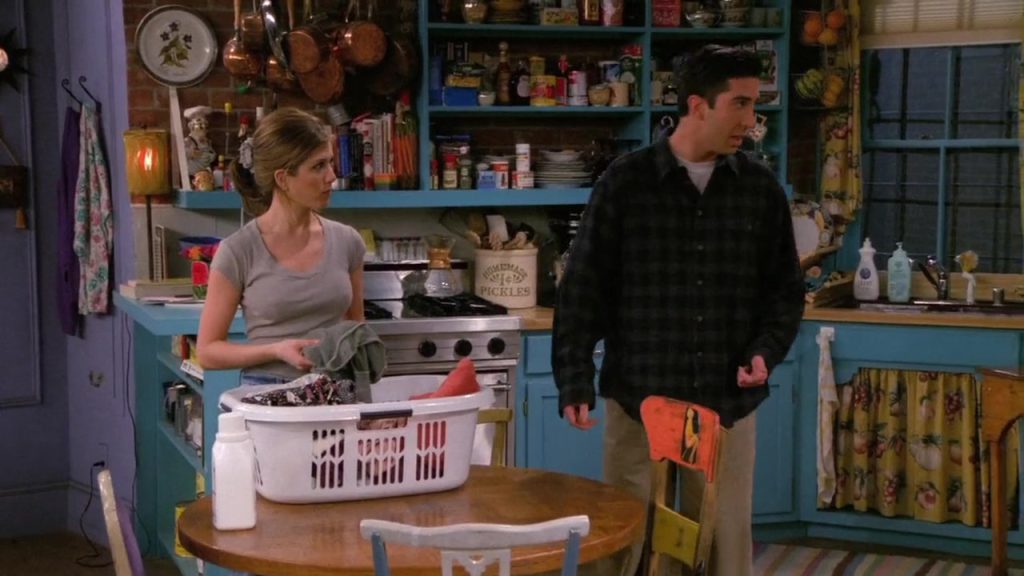
- Monica: GET OUT YOU DUFUS!!
Scene Description and Emotional Tone: Monica shouts this playful insult during a heated moment, adding humor to her frustration. The tone is exaggerated and comedic.
Word Breakdown
- Definition:
- Du-fus (slang) – A playful or humorous term for an idiot or foolish person.
- Pronunciation: /ˈdjuː.fəs/
- Etymology: A variation of duffus, a slang term for someone foolish or silly.
Examples:
- “You lost your keys again?” “Du-fus!”
- He’s such a du-fus when it comes to technology.
Contextual Usage
- Formal:
- Not suitable for formal communication; considered informal and humorous.
- Informal:
- Stop acting like a du-fus and help us move the furniture.
- Common Collocations:
- Call someone a du-fus, du-fus behavior
Learning Insights
- Pronunciation Tips: Emphasize the first syllable: DU-fus.
- Common Mistakes: Mispronouncing it as du-fuzz; ensure clarity.
- Cultural Nuances: Often used jokingly among friends; can be offensive if used harshly.
- Memorization Trick: Picture a silly character acting foolishly—du-fus means silly or foolish.
Using these vocabulary words will not only expand your lexicon but also help you learn English with TV series more effectively.
6. Rebound
Original Movie Context
Subtitle/Dialogues:
- Rachel: It’ll never last, he’s just a rebound roommate.
Scene Description and Emotional Tone: Rachel refers to Joey’s new roommate, suggesting he’s a temporary substitute after a breakup. The tone is analytical with a hint of skepticism.
Word Breakdown
- Definition:
- Rebound (adjective/noun) –
- Adjective: Serving as a substitute temporarily.
- Noun: A person someone starts a new relationship with shortly after a breakup.
- Rebound (adjective/noun) –
- Pronunciation: /ˈriː.baʊnd/
- Etymology: Originally related to sports (like rebounding in basketball), later adopted in relationship contexts.
Examples:
- After her breakup, she quickly dated a rebound.
- His rebound purchase was a trendy but unnecessary gadget.
Contextual Usage
- Formal:
- The company’s rebound growth was unexpected after the recession.
- Informal:
- He’s dating her as a rebound after his last relationship ended.
- Common Collocations:
- Rebound relationship, rebound purchase, rebound success
Learning Insights
- Pronunciation Tips: Smooth pronunciation: RE-bound.
- Common Mistakes: Confusing the noun and adjective forms; remember context.
- Cultural Nuances: Often carries a negative connotation, implying temporary or insincere.
- Memorization Trick: Think of bouncing back quickly—rebound implies a quick return or substitute.
Ready to enhance your ability to learn English with TV series? Visit AppForLanguage.com and start your journey today.
7. Chorizo
Original Movie Context
Subtitle/Dialogues:
- Eddie: I helped him pick out a chorizo.
Scene Description and Emotional Tone: Chandler introduces Eddie as Joey’s new roommate, mentioning how Eddie helped him choose chorizo at the supermarket. The tone is casual and friendly.
Word Breakdown
- Definition:
- Chorizo (noun) – A type of spicy sausage, commonly used in Spanish and Mexican cuisines.
- Pronunciation: /tʃəˈriː.soʊ/
- Etymology: From Spanish, where chorizo refers to a variety of pork sausages.
Examples:
- I added some chorizo to the pasta for extra flavor.
- Chorizo is a staple in many traditional Spanish dishes.
Contextual Usage
- Formal:
- The culinary menu features a variety of chorizo dishes.
- Informal:
- Let’s grill some chorizo for the barbecue tonight.
- Common Collocations:
- Chorizo sausage, spicy chorizo, cooked chorizo
Learning Insights
- Pronunciation Tips: Break it into syllables: cho-RI-zo.
- Common Mistakes: Mispronouncing the ‘ch’ sound; ensure it sounds like “ch” in “chocolate.”
- Cultural Nuances: Chorizo is a beloved ingredient in many Spanish and Latin American dishes, often associated with hearty, flavorful meals.
- Memorization Trick: Picture a sizzling pan of spicy sausage—chorizo adds zest to any dish.
Integrate the habit to learn English with TV series into your daily routine and watch your language skills soar
8. Velociraptor
Original Movie Context
Subtitle/Dialogues:
- Ross: If Dino was a velociraptor, he would have eaten the Flintstones.
Scene Description and Emotional Tone: Ross humorously debates whether someone could be a velociraptor, blending dinosaur facts with pop culture. The tone is playful and imaginative.
Word Breakdown
- Definition:
- Velociraptor (noun) – A small, agile, and fast-running dinosaur from the Cretaceous period.
- Pronunciation: /vəˌlɑː.sɪˈræp.tər/
- Etymology: Derived from Latin, where velox means swift and raptor means thief or seizer.
Examples:
- The velociraptor was one of the most intelligent dinosaurs.
- In Jurassic Park, the velociraptors are portrayed as cunning predators.
Contextual Usage
- Formal:
- Paleontologists study velociraptors to understand dinosaur behavior.
- Informal:
- I wish I had the speed of a velociraptor during my morning jog.
- Common Collocations:
- Velociraptor species, velociraptor fossils, velociraptor hunting
Contextual Usage
- Example Sentences:
- During the museum tour, we saw a skeleton of a velociraptor.
- The movie featured a velociraptor chasing the protagonists through the jungle.
- Variations in Formal/Informal Speech:
- Formal: “The velociraptor exhibited advanced hunting strategies.”
- Informal: “That velociraptor was so cool in the movie!”
- Common Collocations:
- Velociraptor fossils, velociraptor hunting techniques, velociraptor behavior
- Potential Idioms or Slang Variations:
- While there are no direct idioms, describing someone as swift or cunning can draw parallels to a velociraptor.
Learning Insights
- Pronunciation Tips: Emphasize the third syllable: ve-lo-ci-RAP-tor.
- Common Mistakes: Misplacing the stress on syllables; ensure correct pronunciation.
- Cultural Nuances: Velociraptors are popular in movies and literature, symbolizing speed and intelligence.
- Memorization Trick: Imagine a speedy dinosaur—velociraptor means swift thief.
With Fluency Gym, you can take your ability to learn English with TV series to the next level, making every episode a learning opportunity.
9. Cranial ridge
Original Movie Context
Subtitle/Dialogues:
- Ross: Look at the cranial ridge.
Scene Description and Emotional Tone: Ross humorously analyzes a dinosaur’s skull feature, blending scientific terms with lighthearted conversation. The tone is educational yet amusing.
Word Breakdown
- Definition:
- Cranial ridge (noun) – A bony ridge on the skull.
- Pronunciation: /ˈkreɪ.ni.əl rɪdʒ/
- Etymology: Cranial relates to the skull, from Latin cranialis; ridge refers to a long, narrow elevated landform or feature.
Examples:
- The archaeologist examined the cranial ridge for signs of disease.
- In some dinosaurs, the cranial ridge was used for display or combat.
Contextual Usage
- Formal:
- The cranial ridge of the specimen indicates it belongs to the theropod family.
- Informal:
- Check out the cranial ridge on that dinosaur model—it’s pretty detailed!
- Common Collocations:
- Pronounced cranial ridge, develop a cranial ridge, cranial ridge analysis
Learning Insights
- Pronunciation Tips: Clear enunciation of both words: CRAN-ial RIDGE.
- Common Mistakes: Mispronouncing cranial as cranial without stressing the first syllable.
- Cultural Nuances: Often used in scientific contexts; understanding such terms can enhance knowledge in paleontology and biology.
- Memorization Trick: Visualize the ridge on a dinosaur’s skull—it’s a key feature called the cranial ridge.
10. Diaphragm
Original Movie Context
Subtitle/Dialogues:
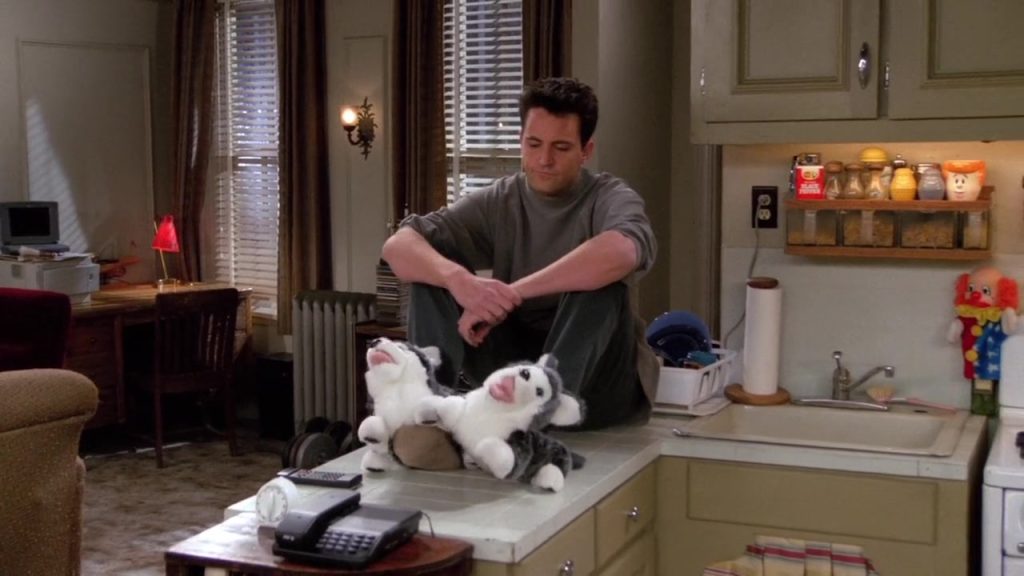
- Monica: Did I leave my diaphragm at your place?
Scene Description and Emotional Tone: Monica asks Ross if she left her contraceptive device at his place, blending personal conversation with humor. The tone is casual and slightly embarrassed.
Word Breakdown
- Definition:
- Diaphragm (noun) – A barrier method of contraception placed inside the vagina to prevent pregnancy.
- Pronunciation: /ˌdaɪ.əˈfræm/
- Etymology: From Greek diaphragma, meaning “a thing that divides.”
Examples:
- She always carries a diaphragm as a backup contraceptive method.
- Using a diaphragm requires proper placement for effectiveness.
Contextual Usage
- Formal:
- The clinic provides information on various contraceptive options, including diaphragms.
- Informal:
- I forgot my diaphragm at home, so I need to get a new one.
- Common Collocations:
- Insert a diaphragm, diaphragm placement, use a diaphragm
Learning Insights
- Pronunciation Tips: Emphasize the second syllable: di-a-FRAM.
- Common Mistakes: Confusing diaphragm with the anatomical term; in context, it refers to contraception.
- Cultural Nuances: Diaphragms are a less commonly used form of contraception today but are still relevant in discussions about birth control methods.
- Memorization Trick: Think of the diaphragm as a “divider” inside—diaphragm prevents pregnancy by dividing.
Our language learning extension is designed to help you learn English with TV series effortlessly, enhancing your overall experience.
11. Moose hat
Original Movie Context
Subtitle/Dialogues:
- Chandler: When’d you start usin’ mousse in your hair?
- Joey: [puts on moose hat]
Scene Description and Emotional Tone: Chandler jokes about Joey’s new hat, playfully teasing him. The tone is light-hearted and humorous.
Word Breakdown
- Definition:
- Moose hat (noun) – A hat shaped like a moose, often seen as quirky or humorous.
- Pronunciation: /muːs hæt/
- Etymology: Combination of “moose” (a large animal) and “hat” (headwear), creating a whimsical term.
Examples:
- He wore a moose hat to the costume party, making everyone laugh.
- Her moose hat became a signature accessory at every event.
Contextual Usage
- Formal:
- Not typically used in formal contexts; seen as a playful or novelty item.
- Informal:
- Check out my new moose hat—it’s perfect for winter!
- Common Collocations:
- Wear a moose hat, quirky moose hat, moose hat accessory
Learning Insights
- Pronunciation Tips: Clearly pronounce both words: MOOSE-hat.
- Common Mistakes: Mispronouncing moose as mousse (the dessert); remember it refers to the animal.
- Cultural Nuances: Moose hats are often associated with humor, novelty, and winter attire in certain cultures.
- Memorization Trick: Imagine a giant moose’s antlers on a hat—moose hat is a fun and quirky accessory.
By choosing to learn English with TV series, you make the learning process both fun and effective.
12. Blow drying
Original Movie Context
Subtitle/Dialogues:
- Ross: Calm down, I’m blow drying.
Scene Description and Emotional Tone: Ross responds to Monica’s frustration by explaining he’s blow drying his hair, adding a humorous twist. The tone is mildly exasperated yet comedic.
Word Breakdown
- Definition:
- Blow drying (verb) – The process of drying hair using a hairdryer.
- Pronunciation: /bloʊ ˈdraɪ.ɪŋ/
- Etymology: Combination of “blow” (to direct air) and “drying” (removing moisture).
Examples:
- She spent an hour blow drying her hair before the party.
- Blow drying can sometimes damage your hair if done excessively.
Contextual Usage
- Formal:
- The salon offers professional blow drying services for all hair types.
- Informal:
- I need to blow dry my hair before we leave.
- Common Collocations:
- Blow dry hair, professional blow drying, blow drying technique
Learning Insights
- Pronunciation Tips: Emphasize both words: BLOW-DRY-ing.
- Common Mistakes: Omitting the “ing” or mispronouncing “blow” as “blow” like “blow a kiss” instead of “drying”.
- Cultural Nuances: Blow drying is a common daily routine in many cultures, especially in professional settings.
- Memorization Trick: Visualize using a hairdryer to dry your hair—blow drying is the action.
Understanding these words will help you better learn English with TV series and appreciate the nuances in dialogues
13. Predators
Original Movie Context
Subtitle/Dialogues:
- Ross: Tough noogies, we’re watching Predators of the Serengetti.
Scene Description and Emotional Tone: Ross refers to a fictional or humorous show, blending real words with creative titles. The tone is playful and slightly mocking.
Word Breakdown
- Definition:
- Predators (noun) – Animals that hunt other animals for food.
- Pronunciation: /ˈprɛd.ə.tərz/
- Etymology: From Latin praedator, meaning “plunderer” or “pirate.”
Examples:
- Lions and tigers are apex predators in their ecosystems.
- The documentary focused on the behavior of Arctic predators.
Contextual Usage
- Formal:
- The study examines the impact of predators on the population of herbivores.
- Informal:
- We stayed up all night watching Predators on TV.
- Common Collocations:
- Apex predators, marine predators, predator-prey relationships
Learning Insights
- Pronunciation Tips: Clearly pronounce both syllables: PREH-duh-tors.
- Common Mistakes: Mispronouncing the second syllable; ensure it sounds like “-tors.”
- Cultural Nuances: Predators are often featured in documentaries and wildlife programs, symbolizing strength and survival.
- Memorization Trick: Picture a lion hunting—it’s a predator in action.
If you’re looking for an enjoyable way to learn English with TV series, Friends S02E17 offers the perfect blend of entertainment and education.
14. Entertainment Tonight
Original Movie Context
Subtitle/Dialogues:
- Monica: I wanna watch Entertainment Tonight.
Scene Description and Emotional Tone: Monica expresses her desire to watch a popular entertainment news show, highlighting her interest in celebrity news. The tone is casual and relatable.
Word Breakdown
- Definition:
- Entertainment Tonight (proper noun) – A long-running American television entertainment news show.
- Pronunciation: /ɛn.tərˈteɪn.mənt taɪˈnaɪt.li/
- Etymology: The name combines “entertainment” with “tonight” to signify nightly entertainment news.
Examples:
- She always watches Entertainment Tonight to stay updated on celebrity gossip.
- Entertainment Tonight featured an exclusive interview with the actor.
Contextual Usage
- Formal:
- Entertainment Tonight provides comprehensive coverage of the latest in the entertainment industry.
- Informal:
- Let’s catch up on Entertainment Tonight after dinner.
- Common Collocations:
- Watch Entertainment Tonight, Entertainment Tonight segment, Entertainment Tonight news
Learning Insights
- Pronunciation Tips: Break it down clearly: En-ter-TAIN-ment To-NIGHT-ly.
- Common Mistakes: Mispronouncing entertainment due to its length; practice each syllable.
- Cultural Nuances: Entertainment Tonight is a staple for fans of celebrity news and pop culture, making it a recognizable reference in American media.
- Memorization Trick: Think of watching the latest celebrity news—Entertainment Tonight is your go-to show.
15. Smelly Cat
Original Movie Context
Subtitle/Dialogues:
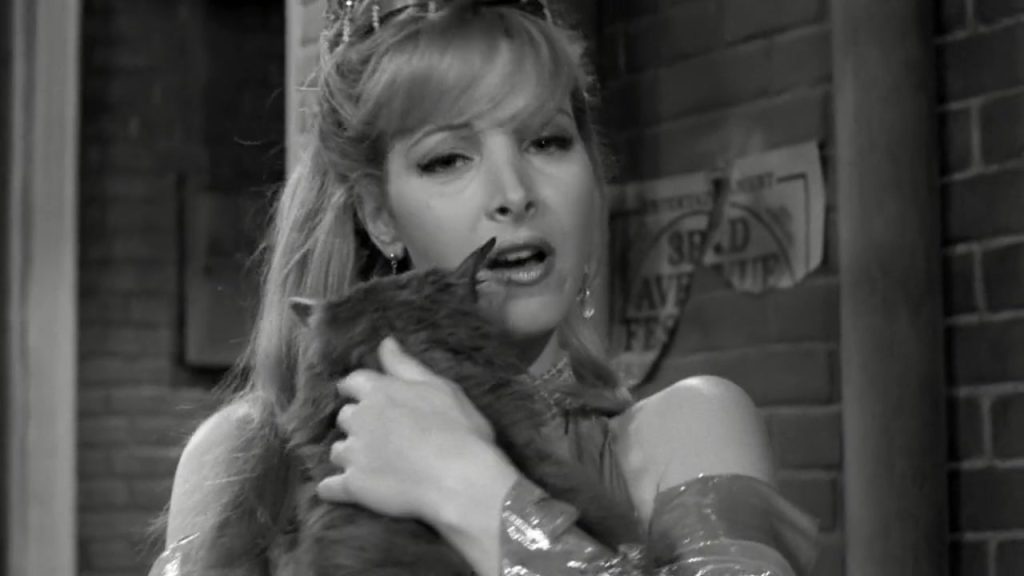
- Phoebe: Smelly cat, smell-ly cat, what are they feeding you?
Scene Description and Emotional Tone: Phoebe performs her quirky song “Smelly Cat,” showcasing her unique and humorous personality. The tone is whimsical and endearing.
Word Breakdown
- Definition:
- Smelly Cat (proper noun) – A fictional, humorous song performed by Phoebe in Friends.
- Pronunciation: /ˈsmɛ.li kæt/
- Etymology: Combines “smelly” (having a strong odor) with “cat” to create a playful title.
Examples:
- Phoebe’s song “Smelly Cat” became a fan favorite.
- Every time she sings Smelly Cat, the whole group laughs.
Contextual Usage
- Formal:
- “Smelly Cat” is an iconic song from the sitcom Friends, representing Phoebe’s creative expression.
- Informal:
- I can’t stop humming Smelly Cat—it’s so catchy!
- Common Collocations:
- Sing Smelly Cat, Smelly Cat lyrics, perform Smelly Cat
Learning Insights
- Pronunciation Tips: Ensure both words are clear: SMEL-ly CAT.
- Common Mistakes: Mixing up the words; remember it’s a playful song title.
- Cultural Nuances: Smelly Cat symbolizes Phoebe’s quirky charm and has become a beloved element of the show.
- Memorization Trick: Imagine a cat with a funny smell—Smelly Cat is both humorous and memorable.
Embrace Fun and Effective Language Learning
Learning English through your favorite TV series like Friends S02E17 can transform your language journey into an enjoyable adventure. By understanding these carefully selected vocabulary words in context, you not only expand your lexicon but also grasp the nuances of everyday conversations.
Why Technology Matters in Language Learning
Incorporating technology can significantly enhance your learning experience. Our language learning extension, AppForLanguage.com, offers a suite of features designed to make learning seamless and interactive:
- Mouse Dictionary: Hover over words in the subtitles to see instant definitions, boosting vocabulary in real-time.
- Save Words: Easily save new words you learn for future review and study.
- Fluency Gym: Elevate your reading, listening, and speaking skills with interactive movie dialogues.
- Auto-Pause and Play: Control playback with ease, ensuring comprehension by pausing after every sentence.
- Sidebar Display: Access all subtitles, settings, and saved words in one convenient place.
Discover Fluency Gym: Your Path to Mastering English
Introducing Fluency Gym, our innovative feature that transforms passive vocabulary into active language skills. Perfect for intermediate learners, Fluency Gym uses real-time movie dialogues to enhance your language proficiency. Whether you’re focusing on expanding your vocabulary, honing your listening skills, or improving your speaking fluency, Fluency Gym provides an immersive and effective way to achieve your language goals.
Explore More with Our Previous Articles
To further enhance your learning, check out our related articles:
- Language Learning with Netflix: Mastering Vocabulary from Friends S01E11
- Mastering English Vocabulary with Friends S01 E15: Fun Lessons from Central Perk
- Mastering Vocabulary with Friends S01 E21: Movie Language Practice Made Fun
- Mastering English with Friends S02E04: Vocabulary to Learn in This Article
Make Learning a Natural Part of Your Life
With our extension, learning English with TV series like Friends becomes a natural and enjoyable part of your daily routine. Save your favorite words, listen to their pronunciations, and even practice speaking alongside your favorite characters. Technology can transform your language learning experience, making it more interactive and engaging than ever before.
Ready to Elevate Your English Skills?
Start your journey with AppForLanguage.com today and discover how our features can make learning English fun and effective. Whether you’re watching Friends or any other series, our tools are designed to support your language learning every step of the way.
Embrace the joy of learning English through the shows you love. With the right tools and a bit of dedication, you’ll find yourself mastering new vocabulary and enjoying every step of the journey. Happy learning!